Quick Summary
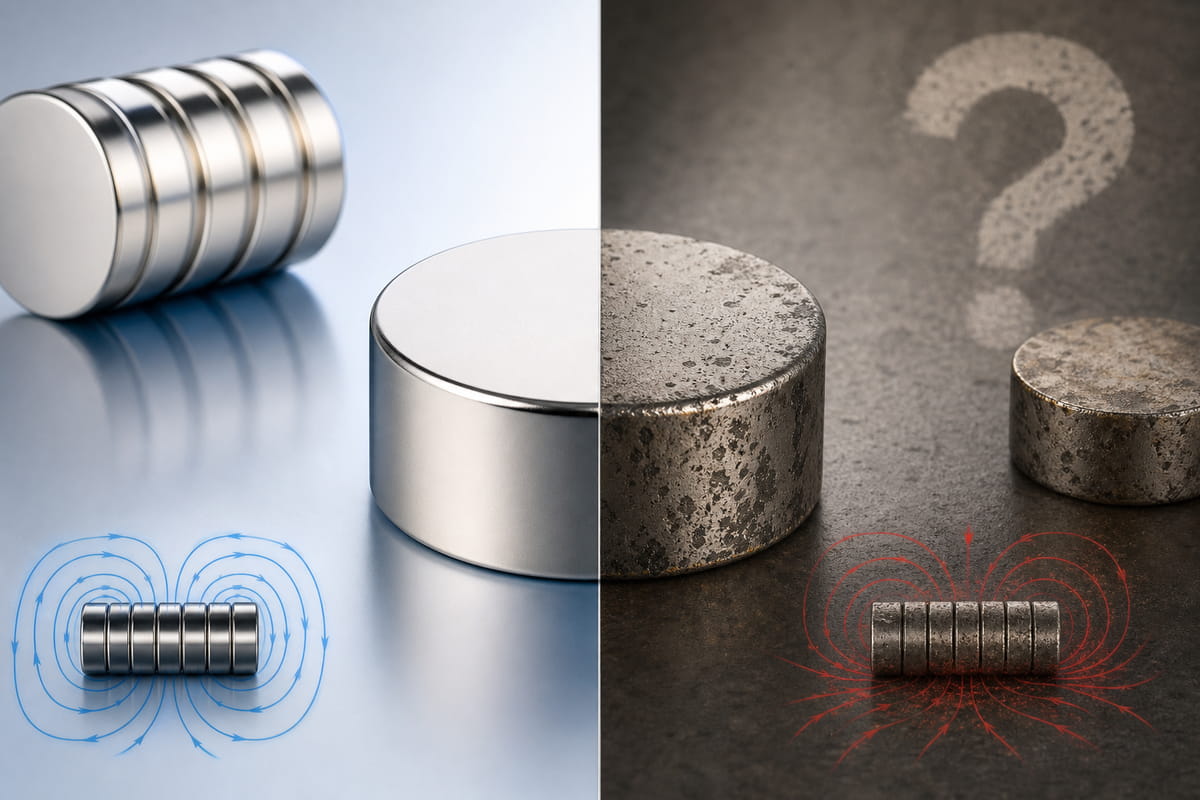
Neodymium magnets stick strongly to ferritic and martensitic stainless steel (grades 430, 410, 409) because they contain high iron and little to no nickel. They stick weakly or not at all to standard austenitic grades (304, 316) — the most common type in fridges and cookware — due to high nickel content that cancels magnetism.
Heavily bent or cold-worked austenitic steel may catch a magnet weakly, and duplex grades (like 2205) offer partial attraction.
To check yours, touch a small neodymium disc to the surface: a firm grip means ferritic, no pull means austenitic, and weak pull means duplex or cold-worked steel.
In this guide, as a professional neodymium magnets manufacturer, I will share EXACTLY when a neodymium magnet will grab onto stainless steel like its life depends on it… and when it’ll slide right off without the slightest hint of attraction.
Let me explain.
Will Neodymium Magnets Stick to Stainless Steel
Neodymium magnets stick to some types of stainless steel, weakly to others, and not at all to many of the most common varieties.
Stainless steel isn’t a single material. It’s a family of alloys made mostly from iron, chromium, and (sometimes) nickel. And that recipe is what decides whether your magnet sticks or not.
So let’s break it down.
Why Stainless Steel Confuses Everyone
Most people assume that because stainless steel is “steel,” and steel comes from iron, magnets should stick to it.
The magnetic behavior of stainless steel comes down to its crystal structure and alloy composition, not just the fact that it contains iron.
When manufacturers add high levels of nickel and chromium, they change the way the atoms arrange themselves inside the metal. And in certain arrangements, those atoms cancel out the magnetic properties entirely.
That’s why your fancy stainless steel fridge might reject magnets… while a cheap stainless steel knife holder grips them just fine.
It’s all about the type.
The 3 Scenarios: Will Your Magnet Stick?
To keep things simple, every piece of stainless steel falls into one of three buckets when it comes to neodymium magnets.
1. Yes (Strongly)
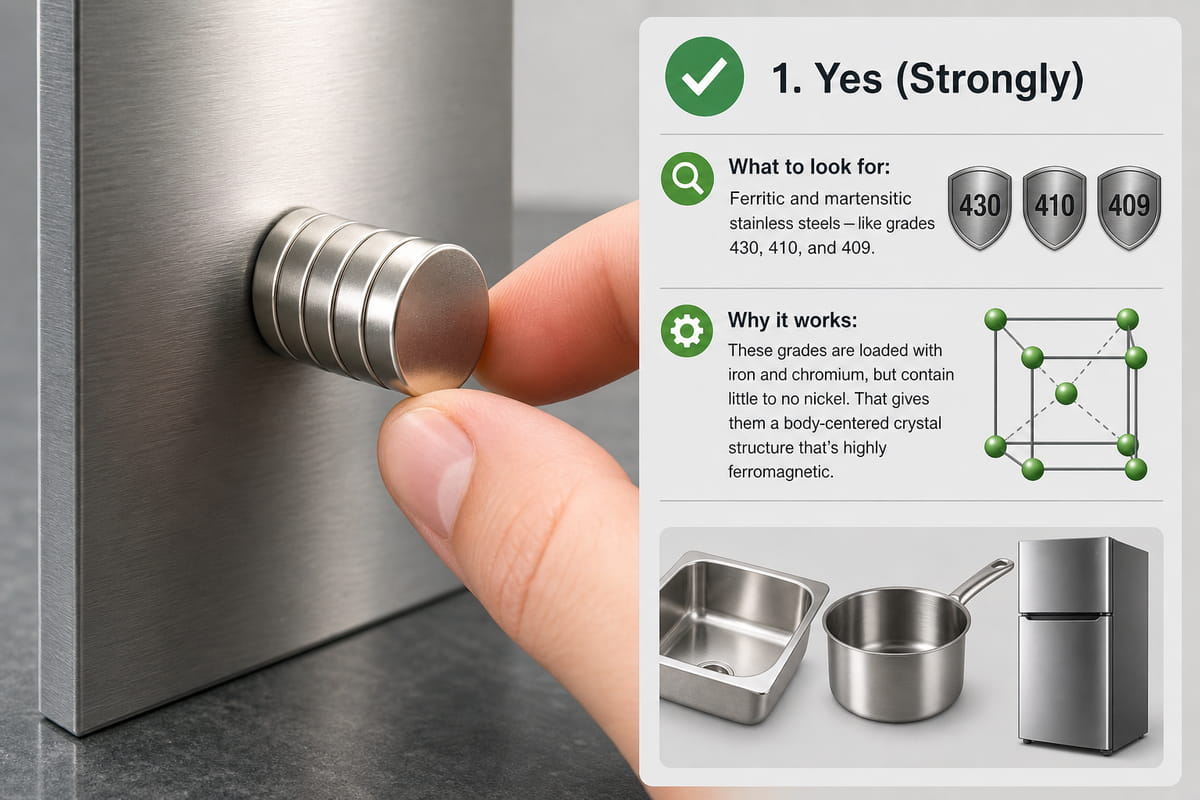
What to look for: Ferritic and martensitic stainless steels — like grades 430, 410, and 409.
Why it works: These grades are loaded with iron and chromium, but contain little to no nickel. That gives them a body-centered crystal structure that’s highly ferromagnetic.
In plain English? A neodymium magnet will SNAP onto these surfaces and hold tight.
You’ll find these grades in things like:
- Magnetic knife holders
- Automotive parts (grade 409 is common here)
- Some appliances and decorative trim
- Cutlery and tools (martensitic grades like 410 and 420)
Pro Tip: Martensitic stainless steels can actually get more magnetic after heat treatment. So if you need both hardness AND magnetism, this is your go-to.
2. Maybe (Weakly)
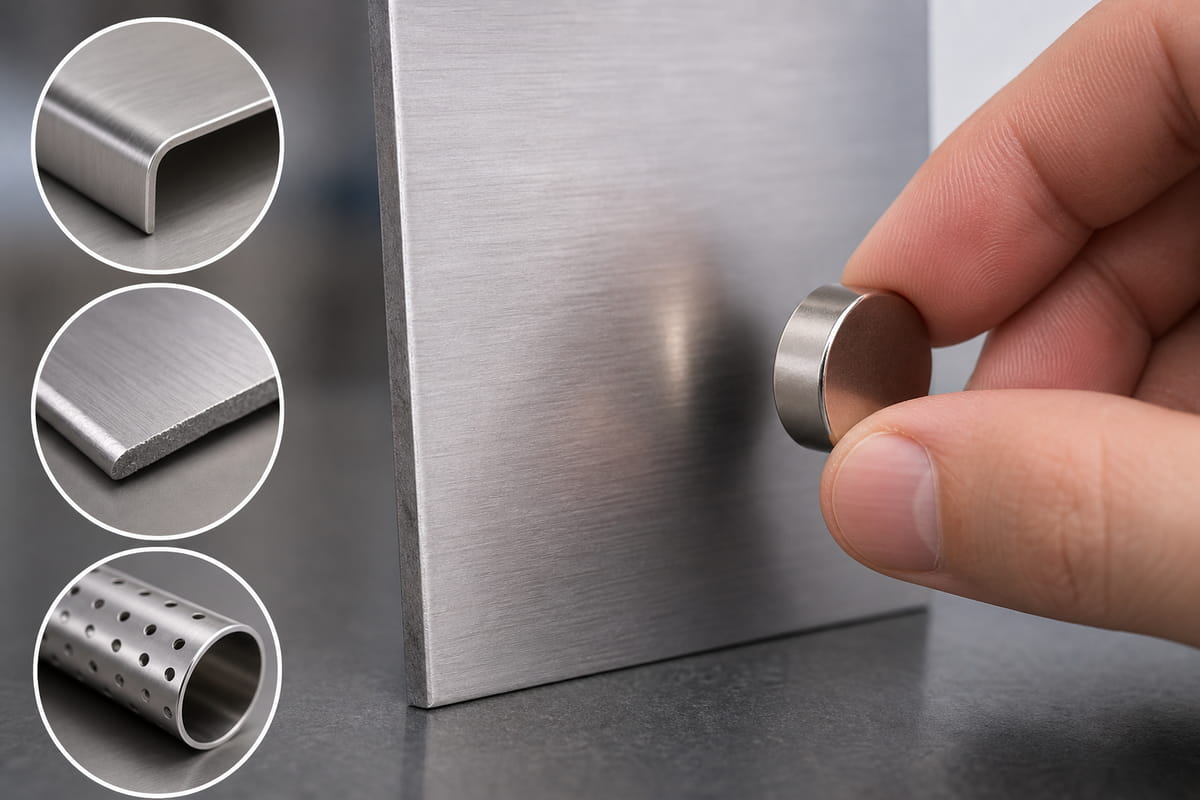
What to look for: Austenitic stainless steels (like grades 304 and 316) that have been bent, cut, or heavily cold-worked.
Why it sort of works: In their normal state, these steels are non-magnetic. But here’s the interesting part…
Heavy physical deformation can trigger a microstructural change. Some of the austenite converts into martensite, which makes the steel slightly magnetic.
So a strong neodymium magnet might catch weakly on the bent edges or stressed-out spots.
But don’t expect much. It’ll never grip like a true ferritic surface.
3. No (Not at all)
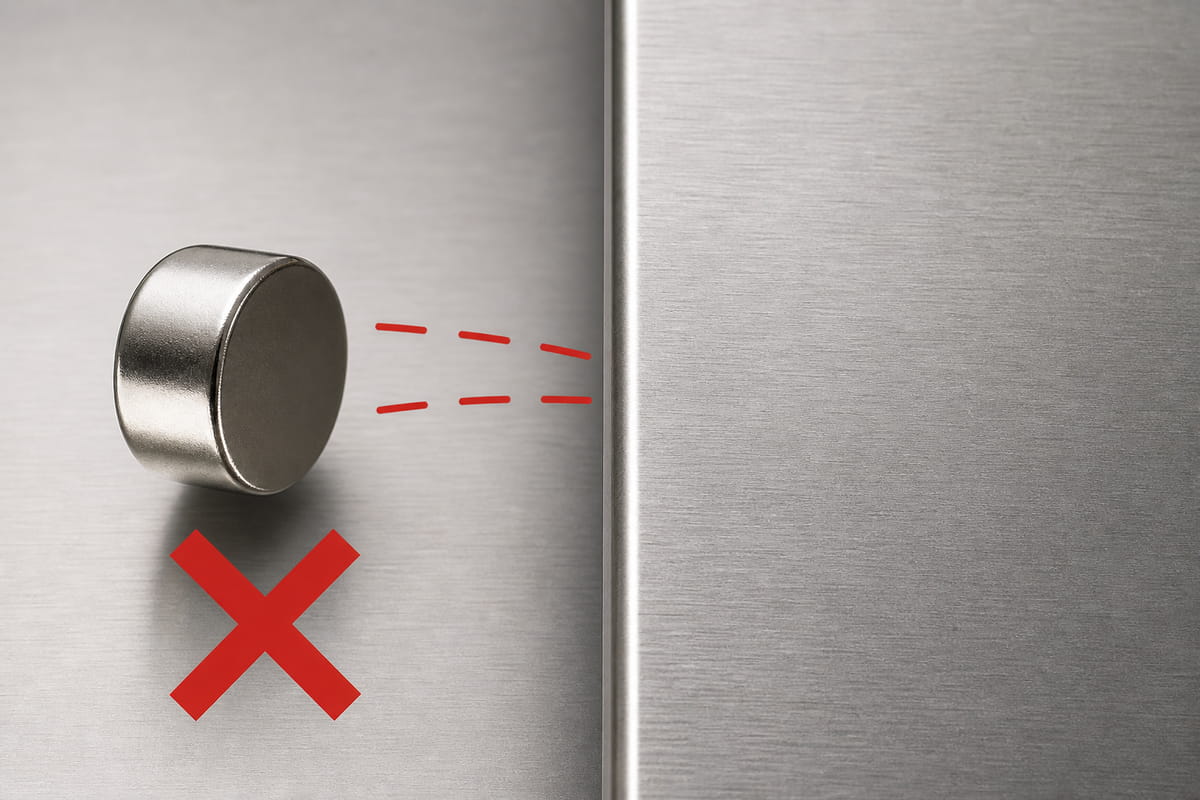
What to look for: Standard austenitic stainless steels — grades 304 and 316 — in their normal, annealed state.
Why it fails: These steels are packed with nickel (8–14%) and chromium. That combination creates a face-centered cubic structure that flat-out cancels magnetic properties.
And this is the kicker:
Grades 304 and 316 are EVERYWHERE. They’re used in:
- High-end cookware
- Food prep surfaces
- Marine and outdoor equipment
- Most modern stainless steel refrigerators
So if you’ve ever tried to stick a magnet to your fridge and watched it tumble to the floor… now you know why.
Why Won’t My Magnet Stick to My Stainless Steel Fridge?
This is probably the #1 reason people end up asking this question in the first place.
Here’s what’s happening:
Appliance manufacturers LOVE austenitic stainless steel (especially type 304). It’s shiny, corrosion-resistant, and resists fingerprints.
The downside? It’s non-magnetic.
Older refrigerators often used ferritic stainless steel, which is why magnets stuck just fine on grandma’s old fridge. But modern stainless finishes in 2026 are usually chosen for looks, not magnetic function.
And it gets trickier.
Some appliances (like certain GE models) don’t even use real stainless steel. They use a stainless-look finish — a polymer or composite layer over steel or aluminum. These finishes mimic the metal’s shine but lack the ferromagnetic core needed for magnetism.
So your magnet doesn’t stand a chance.
What About Duplex Stainless Steel?
There’s actually a fourth type worth mentioning: duplex stainless steel (like grade 2205).
Duplex is a hybrid. It combines the structure of both austenitic AND ferritic steels, which gives it partial magnetism.
A strong neodymium magnet will usually stick to duplex stainless steel, but the strength of that grip will vary depending on the exact composition.
In my experience, this is the “it could go either way” category. When in doubt, test it.
A Quick Comparison Table
Here’s a cheat sheet you can save for later:
| Grade | Magnetic? | Nickel Content | Common Uses |
|---|---|---|---|
| 304 | No | 8–10% | Kitchen appliances |
| 316 | No | 10–14% | Marine, outdoor |
| 409 | Yes | <1% | Automotive |
| 430 | Yes | 0% | Appliances, trim |
| 410/420 | Yes | Low | Cutlery, tools |
| 2205 (Duplex) | Partial | Varies | Industrial, high-strength |
How to Test Your Stainless Steel with a Neodymium Magnet
You don’t need a chemistry lab to figure out what you’re working with.
In fact, the best tool for the job is the very thing you’re asking about: a neodymium magnet.

Here’s exactly how to do it:
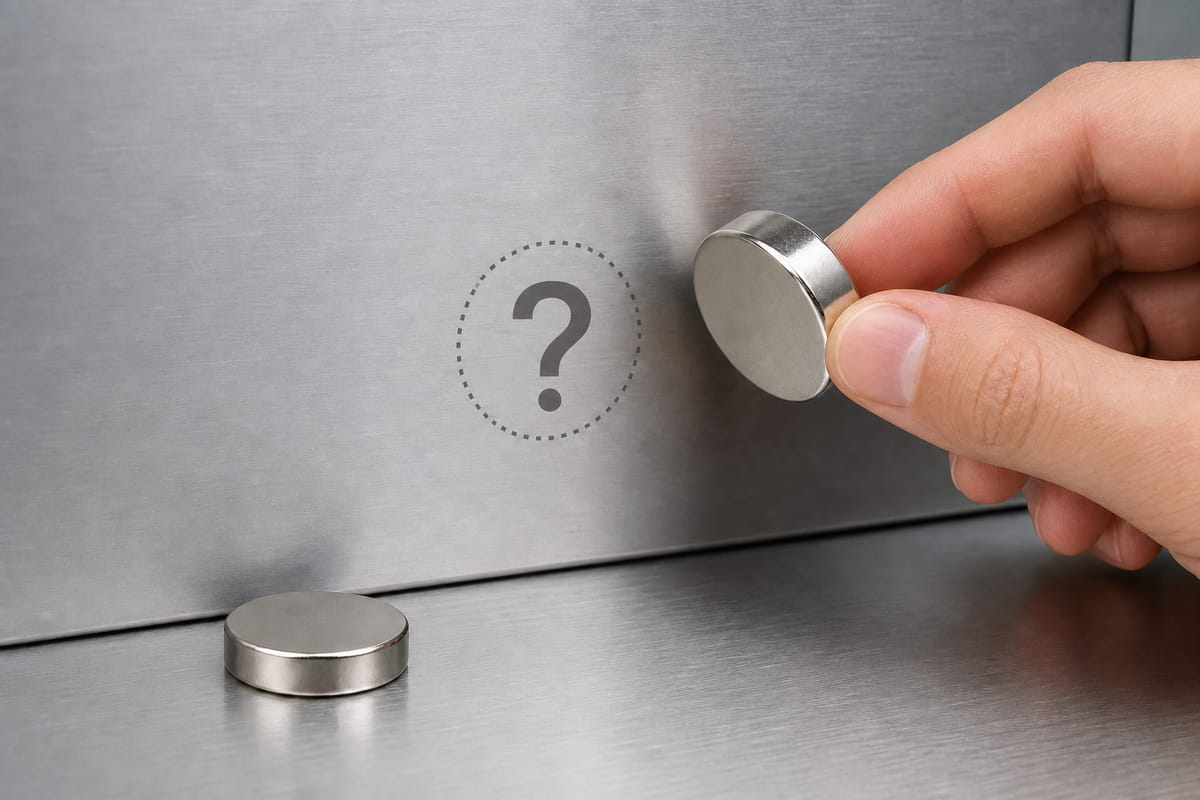
- Grab a small neodymium disc magnet. (Rare-earth magnets are perfect because they’re strong enough to reveal even faint magnetism.)
- Gently touch it to the stainless steel surface.
- Watch what happens.
And here’s how to read the results:
- Strong, firm grip → Likely ferritic stainless steel (like 430 or 409)
- No pull whatsoever → Likely austenitic stainless steel (like 304 or 316), or a coated finish
- Weak or partial attraction → Possibly duplex stainless steel, or a cold-worked austenitic grade
Pro Tip: Be careful not to scratch polished surfaces during testing. Neodymium magnets are powerful, and they can snap onto metal hard enough to leave a mark.
Why Neodymium Magnets Are the Best Tool for This
Quick side note on why I keep recommending neodymium magnets specifically.
Neodymium magnets (made from an alloy of neodymium, iron, and boron) are the strongest commercially available magnets on the planet. Even a tiny one can hold many times its own weight.
That strength matters here.
A weak ceramic magnet might fail to stick to a genuinely magnetic stainless steel surface, leaving you with a false negative. But a strong neodymium magnet gives you a clear, accurate read every time.
The bottom line? If you want to test stainless steel, use the strongest magnet you have.
A Few Things to Keep in Mind
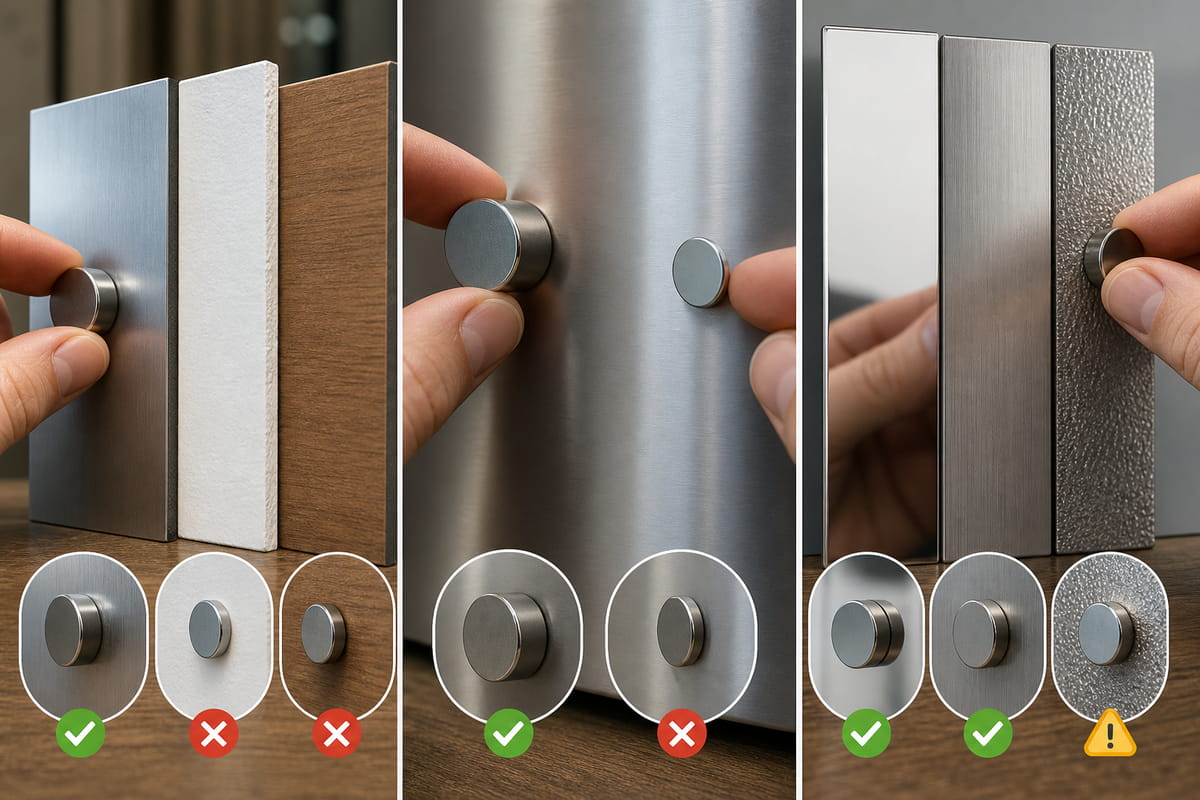
Before you go magnet-testing everything in your kitchen, here are a couple of factors that can affect your results:
Surface coatings. Thick paint, plastic laminates, or protective coatings can weaken or block magnetic attraction, even on magnetic steel underneath. Don’t be fooled.
Magnet strength. As I mentioned, a strong enough magnet may cling weakly to “non-magnetic” austenitic steel, while a weak magnet may fail on a ferritic surface. The magnet matters as much as the metal.
Surface finish. Polished or textured surfaces can reduce the contact area, which slightly weakens the grip even on compatible steel.
What If My Stainless Steel Isn’t Magnetic?
Don’t panic. You’ve still got options.
If you’re trying to stick reminders, photos, or notes to a non-magnetic stainless fridge, you can use:
- Adhesive hooks
- Suction cups
- Magnetic boards mounted with removable strips
- Static-cling organizers and non-residue tapes
These keep that sleek stainless look intact while giving you the same functionality. No magnetism required.
The Bottom Line
So, will neodymium magnets stick to stainless steel?
Here’s the honest answer:
It depends entirely on the type of stainless steel you’re dealing with.
- Ferritic and martensitic grades (like 430, 410, and 409)? Absolutely. Neodymium magnets grip them like crazy.
- Austenitic grades (like 304 and 316)? Usually not — unless they’ve been heavily worked.
- Duplex steels? Partially, depending on the blend.
The good news is that you don’t have to guess. A quick test with a strong neodymium magnet will tell you everything you need to know in about two seconds.
So the next time someone asks you whether neodymium magnets stick to stainless steel, you can confidently say: “Hand me a magnet, and I’ll show you.”
Now it’s your turn. Grab a neodymium magnet, find some stainless steel, and put this knowledge to the test.