Do neodymium magnets wear out? Under normal use, no—they lose less than 1% per decade. But heat, corrosion, physical shock, and opposing fields can destroy them.
In this article, as a professional custom neodymium magnets manufacturer, I want to break down exactly what kills these magnets. I’ll also show you how to make yours last for decades (or even centuries).
4 Factors Leading Neodymium Magnet Wear Out
Factor #1: Heat (The Silent Killer)
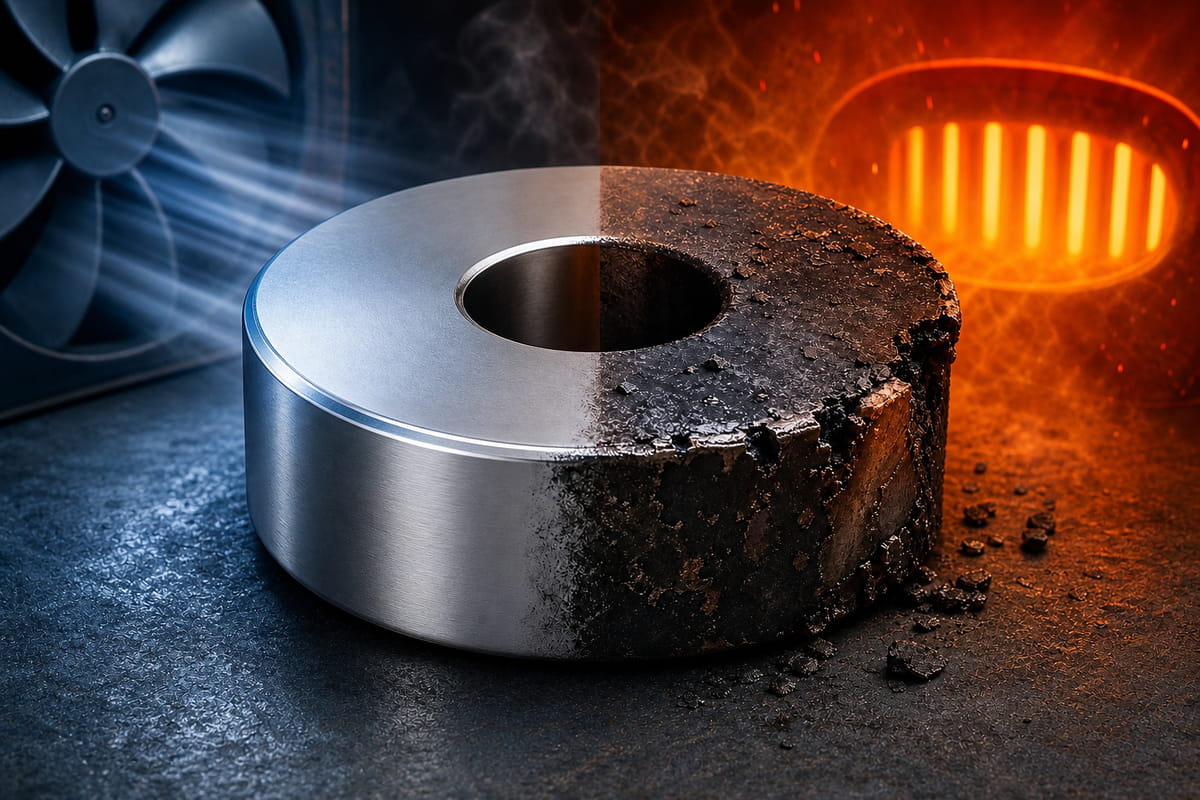
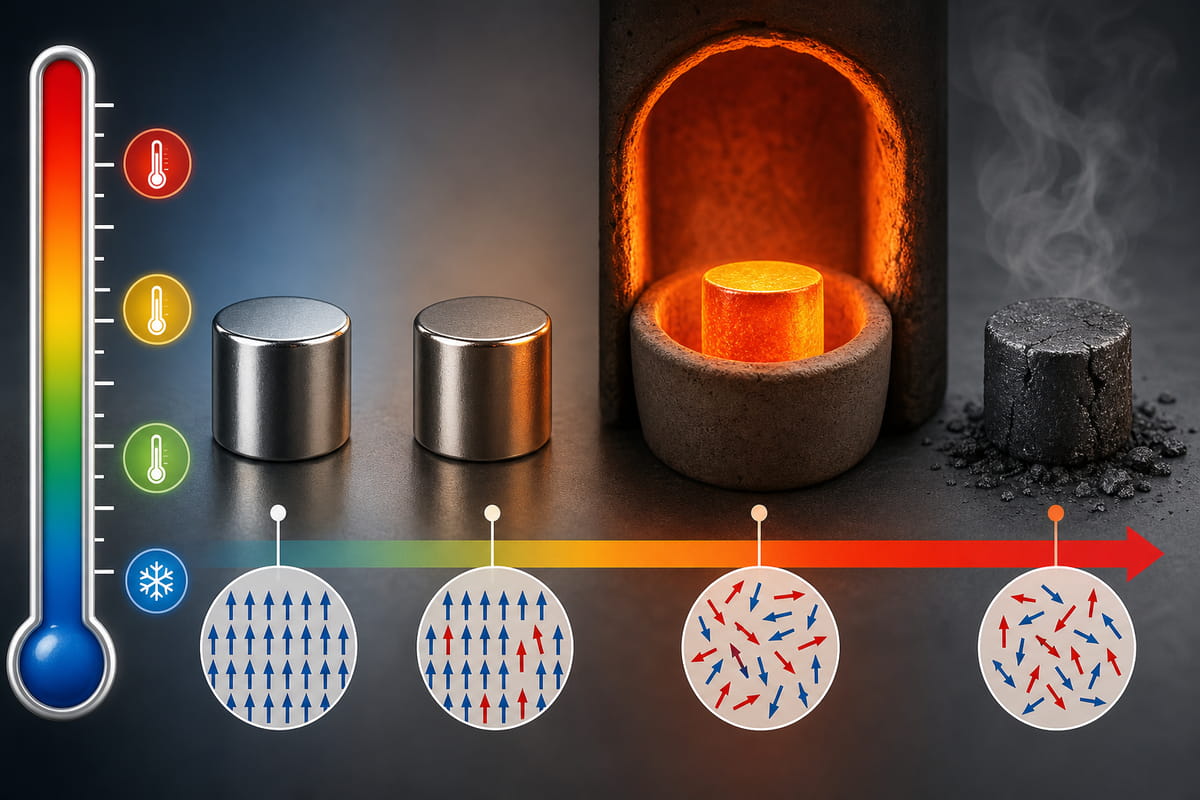
Heat is the #1 enemy of neodymium magnets.
Most standard grades have a maximum operating temperature of 80°C (176°F).
Push past that? You start messing with the magnet’s internal alignment.
I like to think of it like this:
Imagine a stadium full of people all facing the same direction. That’s a fully magnetized magnet.
Now, crank up the heat. Those people start jumping around. They lose focus. They face different directions.
That’s thermal demagnetization.
And here’s the scary part: if you exceed the Curie temperature, the damage is permanent. The magnet won’t recover.
Pro Tip: If your application runs hot, don’t use a standard N42 magnet. Grab a high-temperature variant (like N42SH or N42UH). These can handle up to 200°C (392°F).
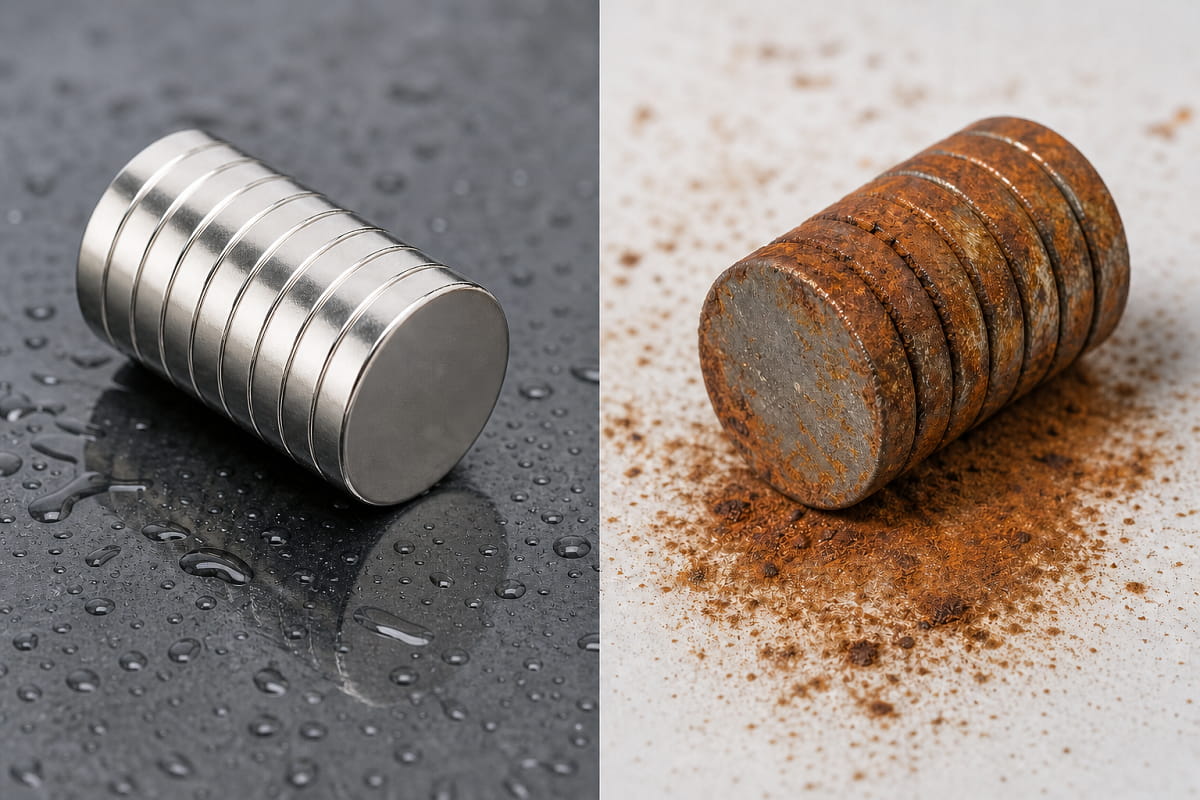
Factor #2: Corrosion (Rust Never Sleeps)
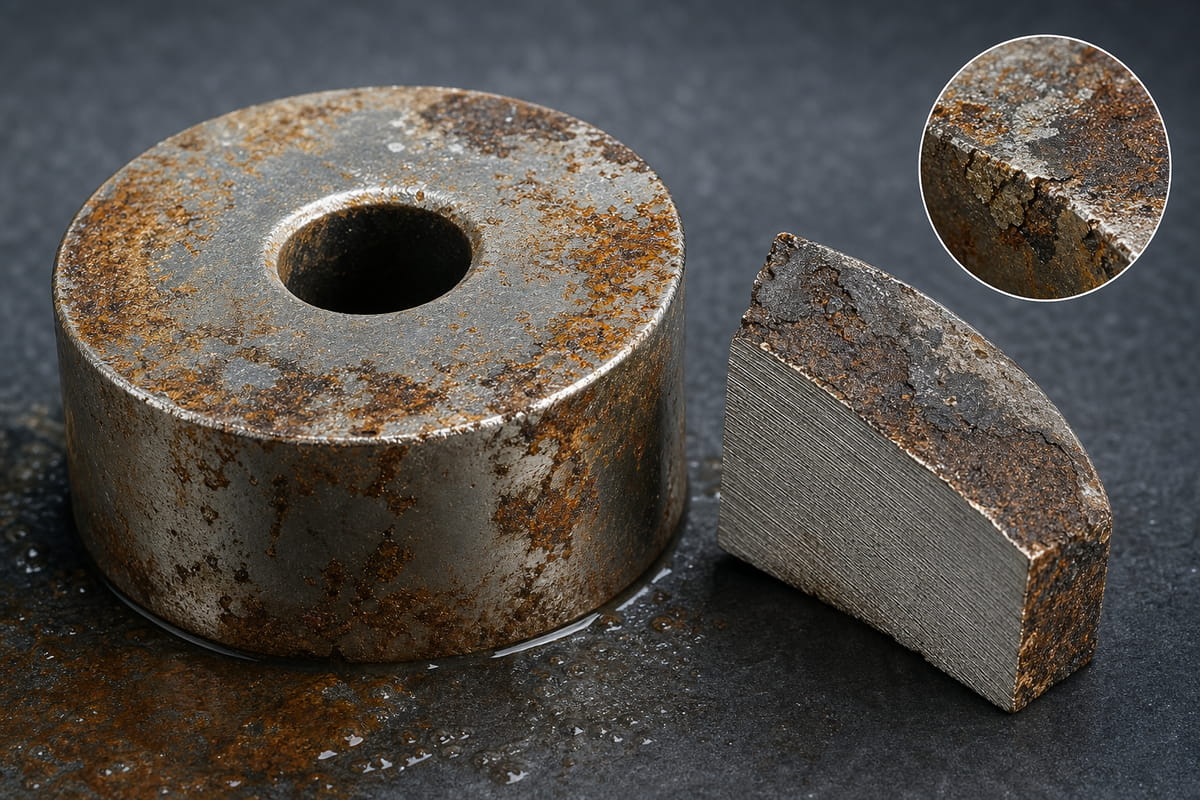
Neodymium magnets are made of an alloy of neodymium, iron, and boron.
And iron? It loves to rust.
If the protective coating—usually nickel, epoxy, or gold—gets scratched, moisture seeps in.
Once that happens, the magnet starts to oxidize from the inside out.
I’ve seen it happen. The magnet literally crumbles into a black dust.
Real-World Example: A friend of mine used an uncoated neodymium magnet in his saltwater aquarium pump. Three months later? It was gone. Completely disintegrated.
How to fix it: Always use magnets with a protective coating like nickel-copper-nickel (Ni-Cu-Ni). And if the coating chips, replace the magnet.
Factor #3: Physical Shock (They’re Brittle)
Here’s something most people don’t realize:
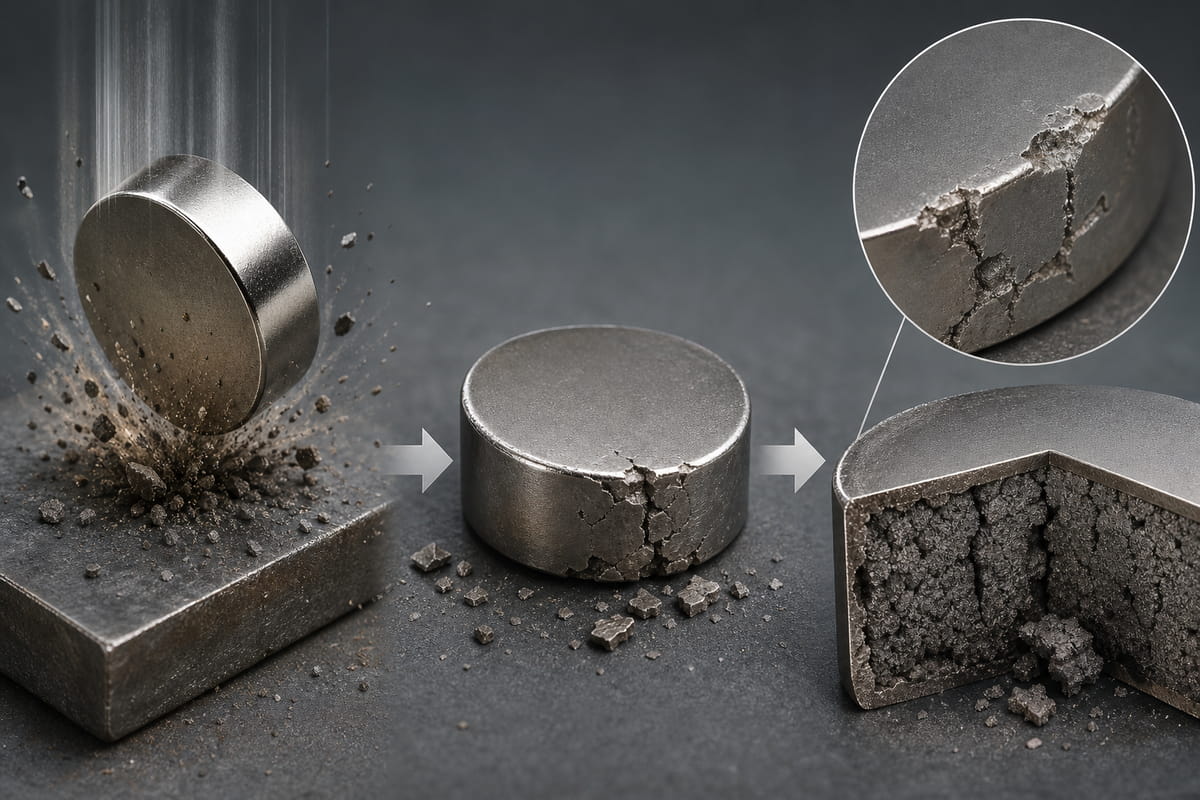
Neodymium magnets are incredibly strong magnetically. But physically? They’re as brittle as glass.
Drop one on a concrete floor? It might shatter.
Let two snap together from a few inches away? They’ll chip or crack.
And while a small chip won’t instantly kill the magnetism, it disrupts the internal structure. That leads to gradual magnetic decay over time.
My advice: Handle them like eggs. Use plastic or wood spacers when storing multiple magnets. And never—and I mean never—let them slam together uncontrolled.
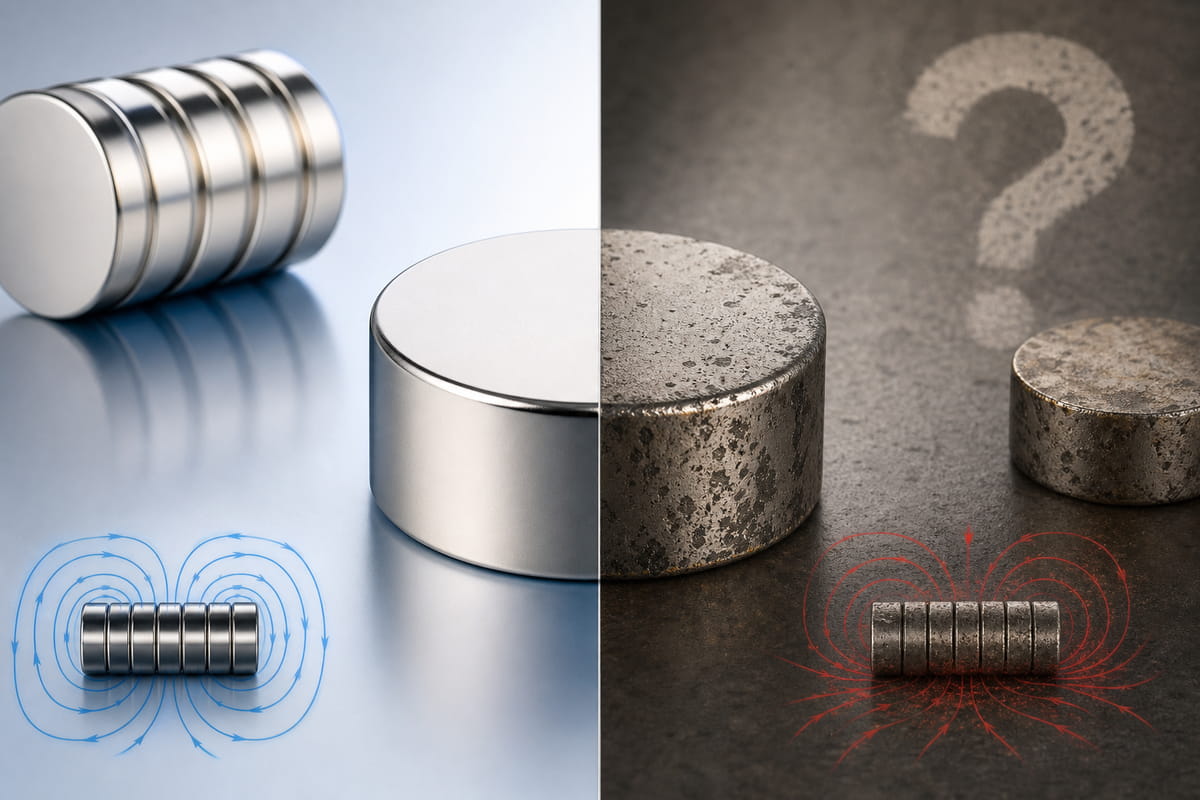
Factor #4: Strong Opposing Fields
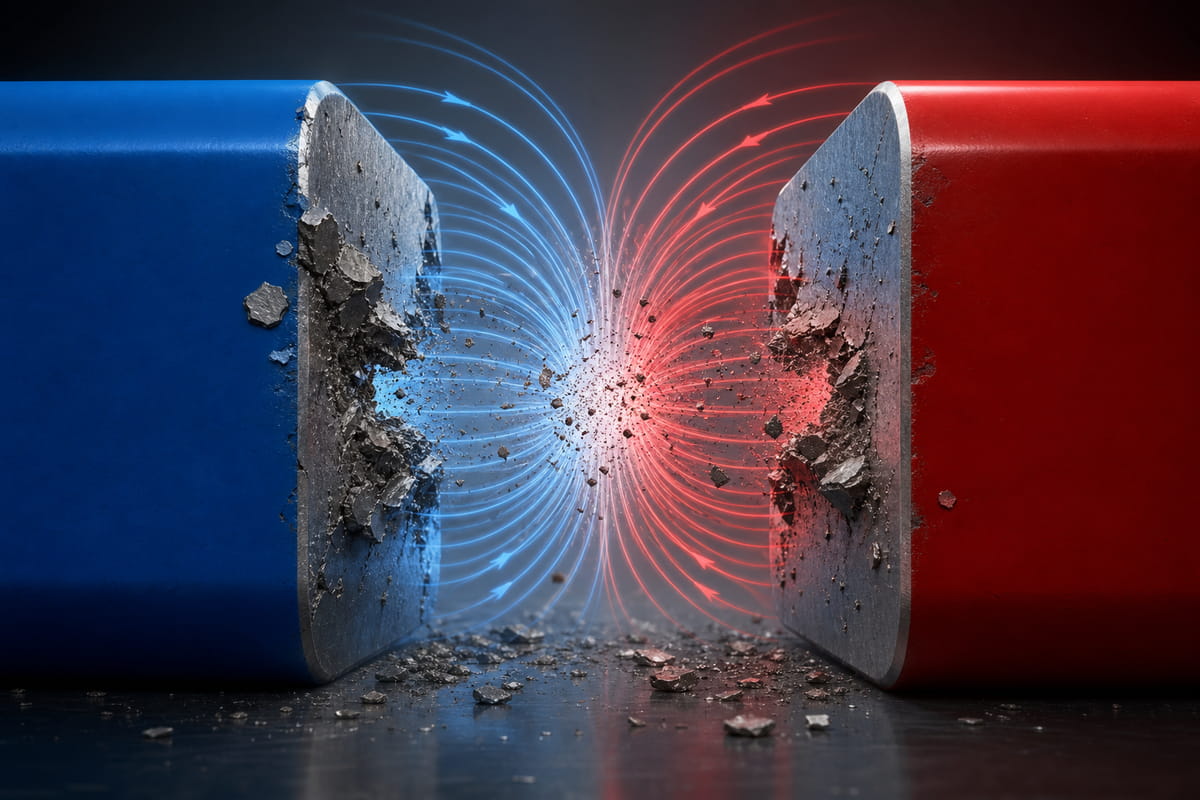
This one is rare. But it’s worth knowing.
If you expose a neodymium magnet to an extremely strong external magnetic field pointing the opposite direction, you can disrupt its magnetic domains.
This is called “magnetic saturation.”
In everyday life? You probably won’t run into this. But if you work near industrial electromagnets or MRI machines, keep your neodymium magnets far away.
Do Neodymium Magnets Lose Strength Over Time? (The Data)
Let’s look at the numbers.
In ideal conditions—cool, dry, and safe from shocks—neodymium magnets lose less than 1% of their strength every 100 years.
Yes, you read that right. Per century.
That means a neodymium magnet could theoretically retain useful magnetism for over 1,000 years.
But here’s the thing:
Most of us don’t live in “ideal conditions.”
We live in the real world. Where it gets hot. Where humidity exists. Where magnets get dropped.
So when someone asks, “Do neodymium magnets wear out?” — my honest answer is:
“Only if you let them.”
How Long Will a Neodymium Magnet Last in Real Life?
Let me give you three real-world scenarios.
Scenario 1: Inside a Speaker (Ideal Conditions)
That speaker in your car? It’s got a neodymium magnet inside.
It’s protected from moisture. It stays at room temperature. It never gets hit.
Lifespan: 50–100+ years.
Scenario 2: In a Workshop (Moderate Conditions)
You’ve got a magnetic tool holder near your workbench. It gets warm in the summer. Maybe a little dust. But overall, it’s fine.
Lifespan: 20–30 years.
Scenario 3: Outdoors in a Humid Climate (Harsh Conditions)
A magnetic latch on a garden shed. Direct sun. Rain. Salt air.
If the coating fails? You might get 2–5 years before corrosion kills it.
The bottom line? Environment is everything.
Case Study: How I Made a “Dead” Magnet Come Back to Life
A few years ago, a customer sent me an email.
He had a neodymium magnet that felt “weak.” He was sure it was worn out.
I asked him a few questions.
Turns out? He had stored it next to a much larger, stronger magnet for months. The opposing field had partially demagnetized it.
I told him to try something:
Expose it to a very strong external magnetic field from the same polarity.
He borrowed a 1.5 Tesla magnet from a local lab. Gave it a quick “zap.”
And just like that? The magnetic strength came back.
Not 100%. But close.
So to answer the question do neodymium magnets wear out in a way that’s irreversible?
Sometimes. But not always.
5 Tips to Maximize the Lifespan of Your Neodymium Magnets
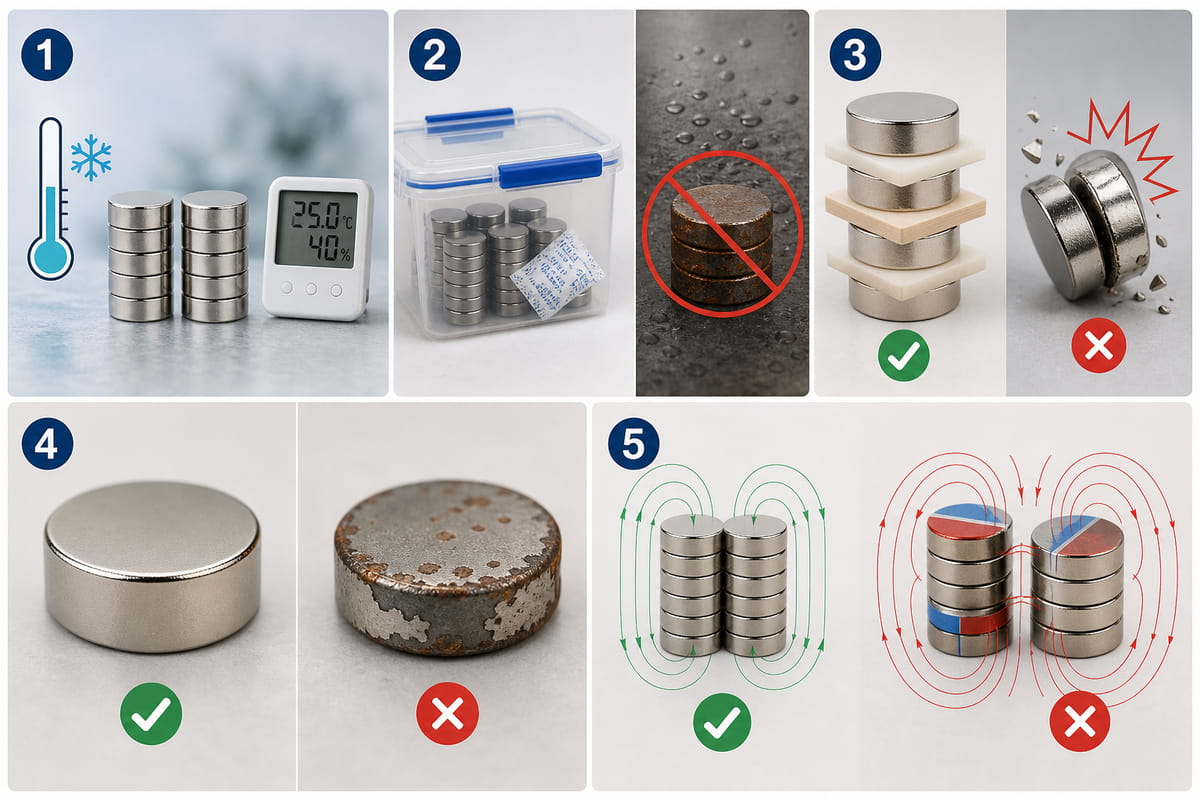
Let me save you years of frustration.
Here’s exactly how to keep your magnets strong:
1. Keep them cool. Store below 80°C (176°F). If you need high-temp performance, buy high-temp grades (SH, UH, EH).
2. Control humidity. Use silica gel packs in storage boxes. Never store uncoated magnets in a damp basement.
3. Use spacers. Plastic or wood separators prevent violent snapping and chipping.
4. Inspect coatings. If you see rust or flaking, retire the magnet. It’s already compromised.
5. Avoid opposing fields. Don’t stack them haphazardly with other strong magnets facing the wrong way.
Follow these steps? Your magnets will outlast you.
Common Myths (Busted)
Myth #1: “Magnets wear out from being used.”
Truth: Using a magnet doesn’t drain it. Only external factors (heat, corrosion, shock, opposing fields) cause degradation.
Myth #2: “All magnets lose strength at the same rate.”
Truth: Neodymium is far more stable than ceramic or alnico. But it’s also more sensitive to corrosion.
Myth #3: “If a magnet weakens, it’s garbage.”
Truth: Sometimes you can re-magnetize it with a strong external field. Not always. But sometimes.
Final Verdict
Do neodymium magnets wear out from just sitting there? Absolutely not.
But if you expose them to excessive heat, moisture, physical shock, or opposing magnetic fields? Yes. They can and will degrade.
The good news is that you control those variables.
Store them correctly. Handle them gently. Protect the coating.
Do that, and your neodymium magnets will easily last 50, 100, even 200 years.