
Neodymium Magnet Temperature Resistance Guide
Learn how temperature affects neodymium magnet performance, understand maximum operating temperatures for different NdFeB grades, and select the appropriate magnet material for high-temperature industrial applications.
Osenc Magnets provides engineering guidance and custom high-temperature neodymium magnet solutions for motors, automation systems, renewable energy equipment, medical devices, and industrial applications.
Why Temperature Resistance Matters
Temperature significantly affects the magnetic performance and long-term stability of neodymium magnets.
If a magnet exceeds its rated operating temperature, partial or irreversible demagnetization may occur, reducing magnetic field strength and pull force performance.
Selecting the appropriate temperature grade is critical for applications exposed to:
- Continuous heat
- Thermal cycling
- Motor-generated heat
- Industrial operating environments

What Is Maximum Operating Temperature?
The maximum operating temperature is the highest recommended temperature at which a magnet can maintain stable magnetic performance without significant irreversible demagnetization.
This value depends on:
- Magnet grade
- Intrinsic coercivity (Hcj)
- Magnetic circuit design
- Environmental conditions
Neodymium Magnet Temperature Grade Chart
| Grade Type | Maximum Operating Temperature |
|---|---|
| Standard | 80°C |
| M | 100°C |
| H | 120°C |
| SH | 150°C |
| UH | 180°C |
| EH | 200°C |
| AH | 220°C |
Understanding High-Temperature Grade Designations
Example
N42SH
Meaning
- N42 = Magnetic strength level
- SH = Maximum operating temperature up to 150°C
High-temperature suffixes indicate increased resistance to thermal demagnetization.
How Temperature Affects Magnetic Performance
As temperature increases:
- Magnetic flux density decreases
- Pull force weakens
- Risk of irreversible demagnetization increases

Magnetic Flux Density Trend
B(T)=B0(1−αΔT)
Variables
- B(T) = Magnetic flux density at temperature T
- B₀ = Initial magnetic flux density
- α = Temperature coefficient
- ΔT = Temperature increase
Reversible vs Irreversible Demagnetization
Reversible Demagnetization
Temporary magnetic strength reduction caused by elevated temperature.
Magnetic performance may recover after cooling.
Irreversible Demagnetization
Permanent loss of magnetic performance caused by exceeding temperature limits or coercivity thresholds.
This damage cannot be recovered.
Curie Temperature of NdFeB Magnets
The Curie temperature is the temperature at which the magnet material loses ferromagnetic properties entirely.
Typical NdFeB Curie Temperature
- Approximately 310°C to 400°C depending on composition
However, magnets should never operate near Curie temperature in practical applications.
Temperature Resistance by Magnet Grade
Standard Grades
- Higher magnetic strength
- Lower thermal stability
- Common operating limit: 80°C
Typical Applications
- Consumer electronics
- Standard holding systems
- Sensors

High-Temperature Grades
- Improved coercivity
- Better thermal stability
- Reduced demagnetization risk
Typical Applications
- EV motors
- Industrial automation
- Renewable energy systems
- Aerospace equipment

Choosing the Right Temperature Grade
Consider Operating Temperature
Estimate both normal and peak operating temperatures.
Consider Internal Heat Generation
Motors and electromagnetic systems may generate significant internal heat.
Consider Safety Margin
Engineering designs typically include thermal safety margins to prevent long-term degradation.
Consider Demagnetization Risk
Opposing magnetic fields combined with heat increase demagnetization risk.

Temperature Grade Selection by Application
| Application | Recommended Grades |
|---|---|
| Consumer Electronics | N35–N42 |
| Industrial Sensors | N42–N48H |
| EV Motors | N42SH–N52UH |
| Wind Turbines | N42SH–N48UH |
| Robotics | N42H–N52SH |
| Medical Devices | N42–N52H |
| Aerospace Systems | UH / EH / AH |
High-Temperature Applications

EV Traction Motors
Electric vehicle motors generate substantial operating heat and often require SH, UH, or EH grades.

Wind Turbine Generators
Renewable energy systems may experience continuous thermal cycling and elevated operating temperatures.

Industrial Automation Equipment
Industrial machinery often operates continuously in high-temperature environments.

Aerospace Systems
Aerospace applications may require magnets capable of maintaining performance under thermal stress.
Temperature and Pull Force
Elevated temperature reduces magnetic field strength and pull force performance.
Example Trend
| Temperature | Relative Pull Force |
|---|---|
| 25°C | 100% |
| 80°C | Reduced |
| 150°C | Further Reduced |
Actual values vary by magnet grade and magnetic circuit configuration.
Temperature and Coercivity
Intrinsic coercivity (Hcj) improves resistance to thermal demagnetization.
Higher Coercivity Benefits
- Improved thermal stability
- Better resistance to opposing magnetic fields
- Reduced irreversible flux loss

Surface Coatings and Temperature Resistance
Surface coatings primarily protect against corrosion rather than heat.
Common Coatings
- NiCuNi
- Epoxy
- Zinc
- PTFE
- Gold
Some coatings may degrade under extreme temperatures depending on environmental conditions.

Thermal Expansion Considerations
Magnets and surrounding assemblies may expand differently under temperature changes.
Engineering designs should consider:
- Dimensional tolerances
- Mechanical stress
- Adhesive performance
- Mounting methods

Engineering Design Considerations
Osenc Magnets supports thermal optimization and magnet selection for high-temperature applications.
Engineering Support
- Temperature Grade Selection
- Demagnetization Analysis
- Magnetic Circuit Optimization
- Thermal Performance Consultation
- Prototype Development

Manufacturing Capability
Available Services
- High-Temperature NdFeB Production
- Precision CNC Machining
- Multi-Pole Magnetization
- Tight Tolerance Processing
- Surface Coating

Related Technical Resources

Magnet Grades Guide
Compare magnetic strength and temperature resistance across NdFeB grades.

Pull Force Guide
Understand how coatings affect magnetic holding force.

Temperature Resistance
Select the appropriate magnet grade for elevated temperatures.
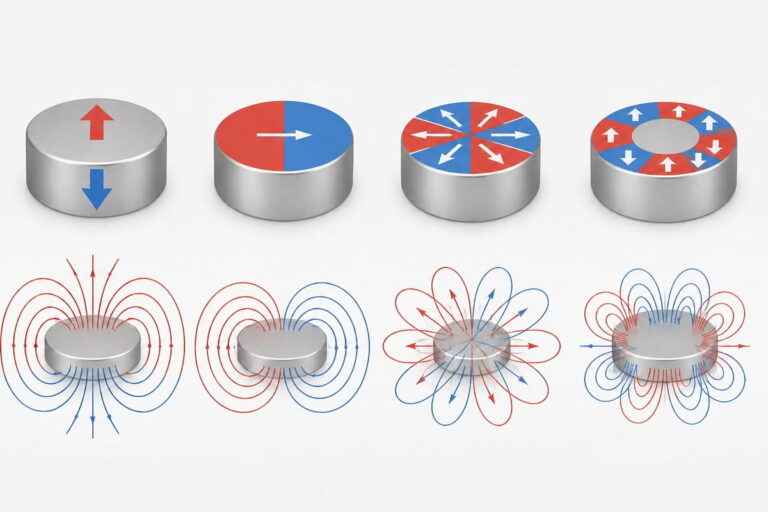
Magnetization Direction Guide
Learn about axial, radial, and multipole magnetization methods.
Frequently Asked Questions
Depending on grade selection, operating temperatures range from 80°C to 220°C.
Excessive heat may cause partial or irreversible demagnetization.
No. The Curie temperature is much higher and represents complete loss of ferromagnetic properties.
Many EV systems use SH, UH, or EH grades due to elevated operating temperatures.
Not necessarily. High magnetic strength and thermal stability are separate characteristics.
Coatings mainly improve corrosion resistance rather than thermal performance.
Custom High-Temperature Neodymium Magnets
Osenc Magnets provides custom NdFeB magnets with high-temperature grades, engineering consultation, and thermal optimization support for demanding applications.