
Neodymium Magnet Pull Force Guide
Learn how pull force is measured, what factors affect magnetic holding strength, and how to select the appropriate neodymium magnet for industrial and engineering applications.
Osenc Magnets provides technical pull force data and engineering guidance for NdFeB magnets used in motors, holding systems, automation equipment, magnetic separators, and industrial assemblies.
What Is Magnet Pull Force?
Pull force refers to the maximum force required to separate a magnet from a flat ferromagnetic surface under ideal testing conditions.
Pull force is commonly measured in:
- Kilograms (kg)
- Pounds (lbs)
- Newtons (N)
The actual holding force in real-world applications may vary depending on environmental and installation conditions.

How Pull Force Is Measured
Standard pull force testing typically involves:
- A flat steel test plate
- Full surface contact
- Controlled separation speed
- Direct vertical pulling force
The measured value represents the maximum holding force under ideal laboratory conditions.
Pull Force Formula
Magnetic holding force is influenced by magnetic flux density and contact area.

Variables
- F = Pull Force
- B = Magnetic Flux Density
- A = Contact Area
- μ₀ = Magnetic Permeability of Free Space
Higher magnetic flux density and larger contact area generally increase holding force.
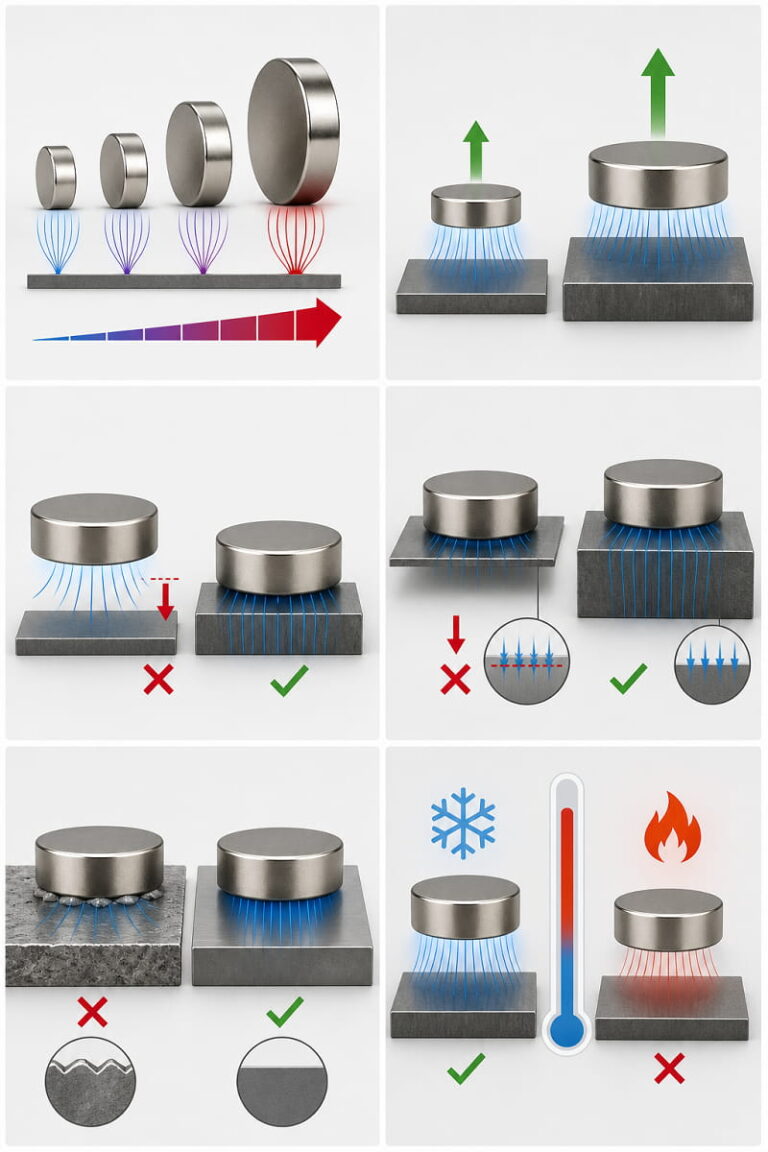
Factors Affecting Pull Force
Magnet Grade
Higher magnet grades typically generate stronger magnetic fields.
Example: N52 magnets generally produce higher pull force than N35 magnets of the same size.
Magnet Size
Larger magnets usually provide higher pull force due to increased magnetic surface area and magnetic volume.
Important Dimensions: Diameter, thickness, contact area.
Air Gap
Even a small air gap significantly reduces magnetic holding force.
Common Causes of Air Gaps: Paint, coatings, surface roughness, dust or debris.
Steel Surface Thickness
Thin steel surfaces may saturate magnetically and reduce holding force performance.
Thicker ferromagnetic materials generally improve magnetic attraction.
Surface Finish
Flat and smooth contact surfaces improve magnetic contact efficiency.
Uneven or rough surfaces reduce pull force.
Temperature
Elevated temperatures may reduce magnetic performance and increase the risk of demagnetization.
Pull Force by Magnet Grade
Relative Pull Force Comparison
| Grade | Relative Magnetic Strength |
|---|---|
| N35 | Standard |
| N42 | Medium-High |
| N48 | High |
| N52 | Very High |
Higher BHmax grades generally increase magnetic holding performance.
Disc Magnet Pull Force Chart
Example Pull Force Data
| Diameter | Thickness | Grade | Approx. Pull Force |
|---|---|---|---|
| 10mm | 2mm | N42 | 1.2kg |
| 15mm | 3mm | N42 | 3.5kg |
| 20mm | 5mm | N52 | 8.5kg |
| 25mm | 5mm | N52 | 12kg |
| 30mm | 10mm | N52 | 28kg |
Values are approximate and may vary depending on testing conditions and material configuration.
Block Magnet Pull Force Chart
| Length × Width × Thickness | Grade | Approx. Pull Force |
|---|---|---|
| 20×10×5mm | N42 | 4kg |
| 40×20×10mm | N52 | 25kg |
| 60×20×10mm | N52 | 42kg |
Ring Magnet Pull Force Chart
| Outer Diameter | Inner Diameter | Thickness | Approx. Pull Force |
|---|---|---|---|
| 20mm | 10mm | 5mm | 5kg |
| 30mm | 15mm | 5mm | 10kg |
| 50mm | 25mm | 10mm | 28kg |
Pull Force vs Shear Force
Pull Force
Force applied perpendicular to the contact surface.
Shear Force
Force applied parallel to the contact surface.
Shear force capacity is often lower due to reduced friction and sliding effects.
Pull Force vs Magnetic Flux Density
Pull force and magnetic flux density are related but not identical measurements.
Magnetic Flux Density
Measured in:
- Gauss
- Tesla
Pull Force
Measures actual holding capability in mechanical applications.
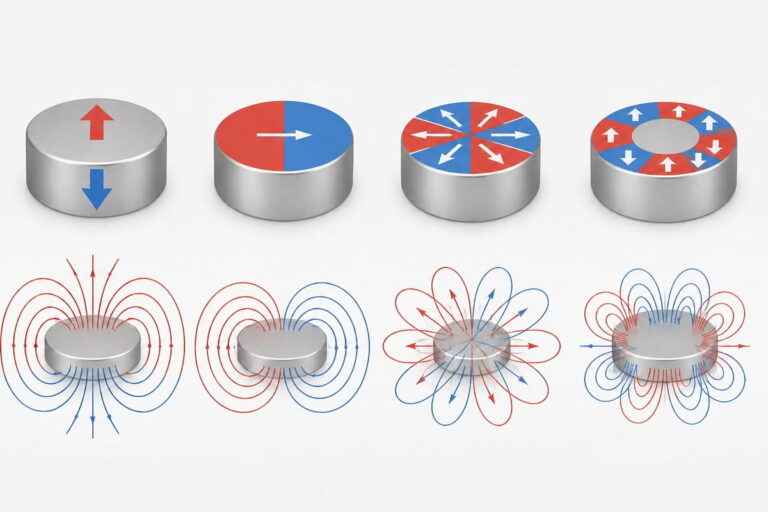
Pull Force and Magnetization Direction
Magnetization direction influences how magnetic force is distributed.
Axial Magnetization
Often used for direct holding applications.
Diametrical Magnetization
Commonly used in rotational systems and sensors.
Multipole Magnetization
Used in motors, encoders, and precision rotational equipment.

Pull Force in Real-World Applications
Industrial Holding Systems
Magnets are used for positioning, clamping, and fixture applications.
Magnetic Separators
High pull force magnets capture ferrous contaminants in material processing systems.
Robotics & Automation
Compact high-strength magnets support robotic assemblies and automation equipment.
EV Motors
High-performance NdFeB magnets generate strong magnetic fields within compact motor structures.

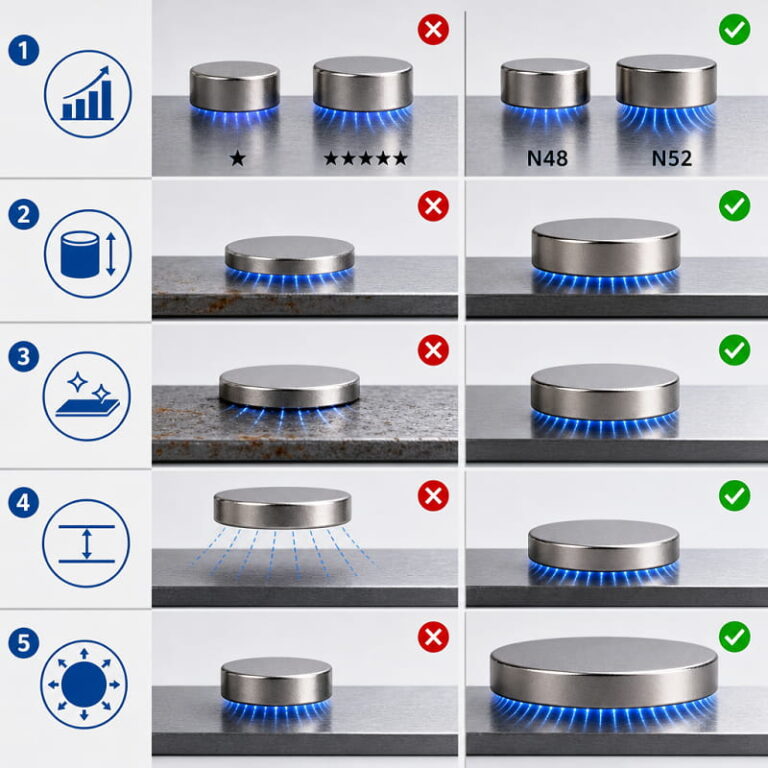
How to Increase Pull Force
Use Higher Magnet Grades
N48 and N52 magnets generally provide stronger magnetic fields.
Increase Magnet Thickness
Thicker magnets often improve magnetic flux and holding performance.
Improve Contact Surface
Smooth steel surfaces maximize magnetic contact.
Reduce Air Gaps
Minimizing distance between the magnet and steel surface significantly improves force.
Use Larger Contact Area
Larger magnets generally provide greater pull force.
Temperature Effects on Pull Force
Elevated operating temperatures may reduce magnetic strength.
Temperature Grade Examples
| Grade Type | Max Operating Temp |
|---|---|
| Standard | 80°C |
| H | 120°C |
| SH | 150°C |
| UH | 180°C |
High-temperature grades are recommended for elevated thermal environments.
Related Technical Resources

Magnet Grades Guide
Learn how magnet grades influence magnetic performance.
Magnetization Direction Guide
Understand axial, radial, and multipole magnetization methods.
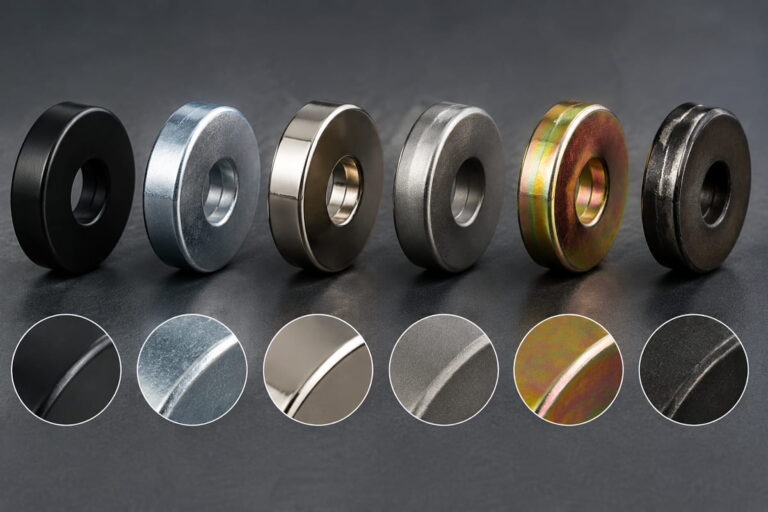
Magnet Coating Guide
Compare corrosion resistance and environmental protection options.

Temperature Resistance
Select the appropriate magnet grade for elevated operating temperatures.
Frequently Asked Questions
Magnet grade, size, air gap, contact area, and steel surface conditions significantly affect pull force.
Yes. Thicker ferromagnetic surfaces generally improve magnetic attraction and reduce saturation effects.
Real-world conditions such as coatings, surface roughness, air gaps, and installation geometry reduce effective holding force.
Pull force is typically measured using calibrated vertical separation testing against a flat steel surface.
Yes. Elevated temperatures may reduce magnetic strength and increase demagnetization risk.
Custom Magnets with Optimized Pull Force Performance
Osenc Magnets provides engineering support, custom manufacturing, and technical guidance for industrial magnetic applications.