
Neodymium Magnet Grades Guide
Understand neodymium magnet grades, magnetic properties, operating temperatures, and material performance for industrial and engineering applications.
Osenc Magnets provides technical guidance for selecting the appropriate NdFeB magnet grade based on magnetic strength, coercivity, temperature resistance, and application requirements.
What Are Neodymium Magnet Grades?
Neodymium magnet grades indicate the magnetic performance and energy density of sintered NdFeB permanent magnets. Magnet grades are typically represented by values such as N35, N42, N52, or high-temperature grades including H, SH, UH, and EH.
Higher grades generally provide stronger magnetic fields and higher maximum energy products (BHmax), allowing more compact magnet designs for industrial applications.

Understanding Magnet Grade Naming
Standard Grade Format
Example: N52
Meaning:
- N = Neodymium magnet material
- 52 = Maximum energy product (BHmax) in MGOe
Higher numbers generally indicate stronger magnetic performance.
Standard Neodymium Magnet Grade Chart
| Grade | Remanence (Br) | Coercivity (Hcb) | Intrinsic Coercivity (Hcj) | BHmax | Max Operating Temp |
|---|---|---|---|---|---|
| N35 | 1.17–1.21T | ≥868 kA/m | ≥955 kA/m | 33–36 MGOe | 80°C |
| N38 | 1.22–1.26T | ≥899 kA/m | ≥955 kA/m | 36–39 MGOe | 80°C |
| N42 | 1.29–1.32T | ≥923 kA/m | ≥955 kA/m | 40–43 MGOe | 80°C |
| N48 | 1.37–1.40T | ≥899 kA/m | ≥955 kA/m | 46–49 MGOe | 80°C |
| N52 | 1.42–1.45T | ≥876 kA/m | ≥955 kA/m | 50–53 MGOe | 80°C |
High Temperature Magnet Grades
High-temperature neodymium magnets are designed to maintain magnetic performance in elevated operating environments.
Temperature Grade Chart
| Grade Type | Maximum Operating Temperature |
|---|---|
| Standard | 80°C |
| M | 100°C |
| H | 120°C |
| SH | 150°C |
| UH | 180°C |
| EH | 200°C |
| AH | 220°C |
Example Grade Designation
N42SH
Meaning:
- N42 = Magnetic strength level
- SH = High-temperature resistance up to 150°C
Key Magnetic Properties Explained
Remanence (Br)
Remanence represents the residual magnetic flux density remaining after magnetization.
Higher Br values generally indicate stronger magnetic field output.
Coercivity (Hcb)
Coercivity measures resistance to magnetic demagnetization.
Higher coercivity improves stability in demanding magnetic environments.
Intrinsic Coercivity (Hcj)
Intrinsic coercivity reflects resistance to irreversible demagnetization under elevated temperature or opposing magnetic fields.
Maximum Energy Product (BHmax)
BHmax measures the maximum magnetic energy density available within the magnet material.
Higher BHmax values allow smaller magnets to generate stronger magnetic fields.

N35 vs N42 vs N52 Magnet Grades
N35 Magnets
- Lower magnetic strength
- Lower cost
- Suitable for standard industrial applications
Typical Uses
- Magnetic holders
- Sensors
- Consumer products

N42 Magnets
- Balanced magnetic performance
- Common industrial grade
- Widely used in automation systems
Typical Uses
- Motors
- Industrial equipment
- Robotics

N52 Magnets
- Very high magnetic energy density
- Compact high-force applications
- Stronger magnetic field output
Typical Uses
- EV motors
- High-performance assemblies
- Aerospace systems

Choosing the Right Magnet Grade
Consider Magnetic Strength
Higher grades provide stronger magnetic force and higher flux density.
Consider Operating Temperature
High-temperature applications require grades such as H, SH, UH, or EH.
Consider Cost vs Performance
Higher grades generally increase material cost and machining difficulty.
Consider Application Environment
Environmental conditions such as heat, vibration, and demagnetization risk influence grade selection.

Magnet Grade Selection by Application
| Application | Recommended Grades |
|---|---|
| Sensors | N35–N42 |
| Holding Systems | N35–N52 |
| EV Motors | N42SH–N52UH |
| Wind Turbines | N42SH–N48UH |
| Robotics | N42–N52 |
| Medical Devices | N42–N52 |
| Magnetic Separators | N42–N52 |
High Temperature Neodymium Magnets
Why High Temperature Grades Matter
Standard neodymium magnets may experience irreversible demagnetization at elevated temperatures.
High-temperature grades improve thermal stability and magnetic reliability.
Common High-Temperature Applications
EV Traction Motors
Electric vehicle motors often require SH, UH, or EH grades.
Industrial Automation
Automation equipment may operate continuously under elevated thermal conditions.
Renewable Energy Systems
Wind turbine generators may experience temperature fluctuations and thermal stress.

Magnet Grade vs Pull Force
Higher grades generally increase pull force performance.
Example Pull Force Comparison
| Grade | Relative Pull Force |
|---|---|
| N35 | Standard |
| N42 | Medium-High |
| N52 | Very High |
Magnet Grade vs Temperature Resistance
Higher magnetic strength does not always mean better temperature stability.
For example:
- N52 may provide stronger magnetic force
- N42SH may provide better thermal stability
Related Technical Resources

Pull Force Guide
Learn how magnet grade affects magnetic holding force.
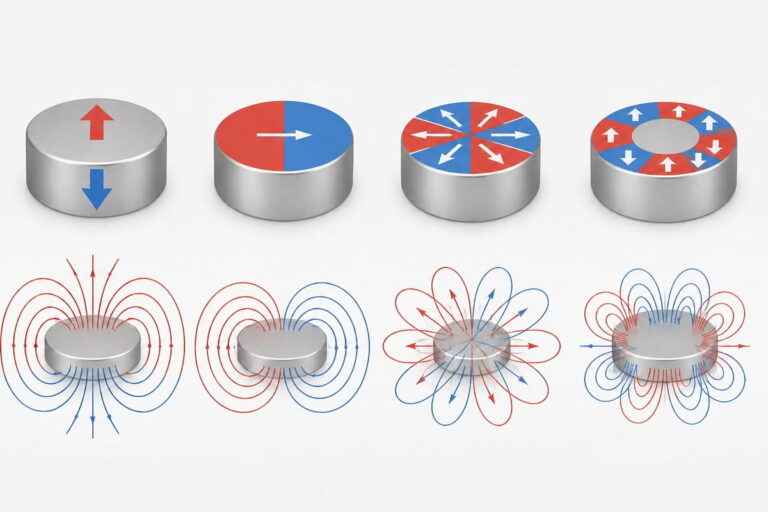
Magnetization Direction Guide
Understand axial, radial, and multipole magnetization.
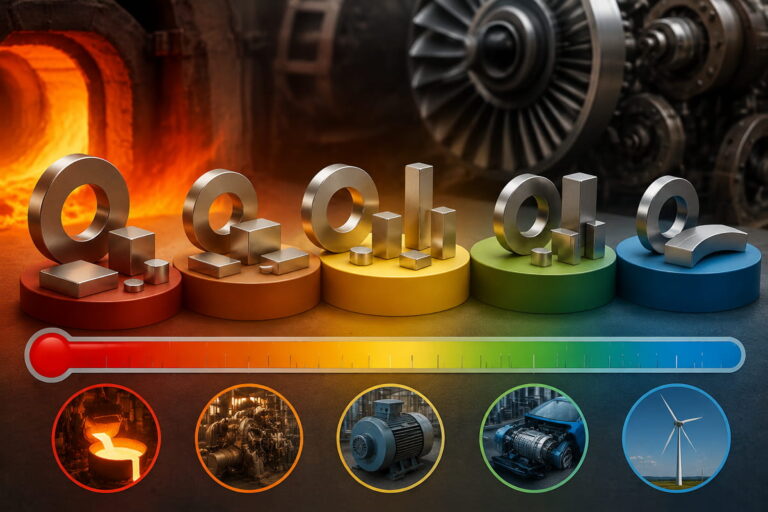
Temperature Resistance
Compare thermal stability across NdFeB grades.
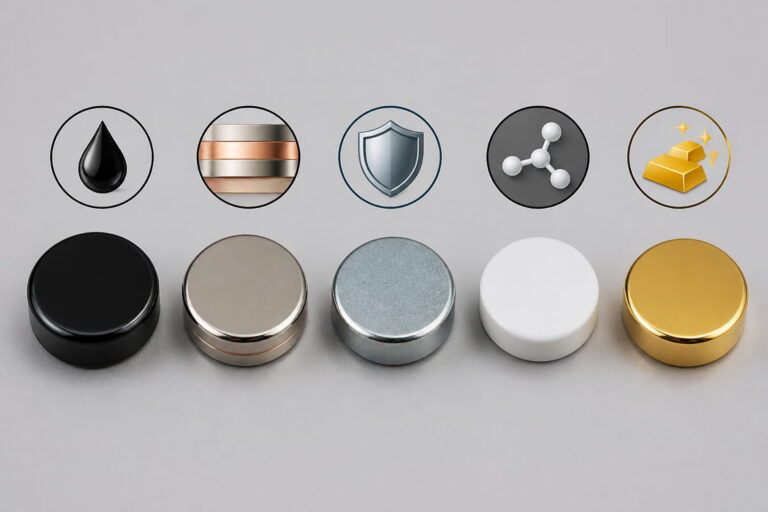
Magnet Coating Guide
Select the correct coating for industrial environments.
Frequently Asked Questions
N52 is among the strongest commercially available standard neodymium magnet grades.
Not necessarily. N52 provides higher magnetic strength, but N42SH may perform better in high-temperature environments.
SH indicates a high-temperature grade with maximum operating temperatures up to 150°C.
Excessive heat may cause partial or irreversible demagnetization.
Many EV motor systems use SH, UH, or EH grades due to elevated operating temperatures.
Yes. Higher-grade NdFeB materials generally require more advanced material composition and manufacturing processes.
Custom Magnet Grades and Temperature Classes
Osenc Magnets provides custom NdFeB magnet manufacturing with standard and high-temperature grades for industrial applications worldwide.