
Magnetization Direction Guide for Neodymium Magnets
Learn about magnetization directions, magnetic pole orientation, and how magnetization configuration affects neodymium magnet performance in industrial and engineering applications.
Osenc Magnets provides custom magnetization solutions for motors, sensors, magnetic couplings, automation systems, renewable energy equipment, and precision industrial applications.
What Is Magnetization Direction?
Magnetization direction refers to the orientation of the magnetic poles within a permanent magnet.
The magnetization direction determines:
- Magnetic field distribution
- Pole location
- Pull force characteristics
- Rotational magnetic behavior
- Application performance
Selecting the correct magnetization configuration is critical for optimizing magnetic circuit performance.
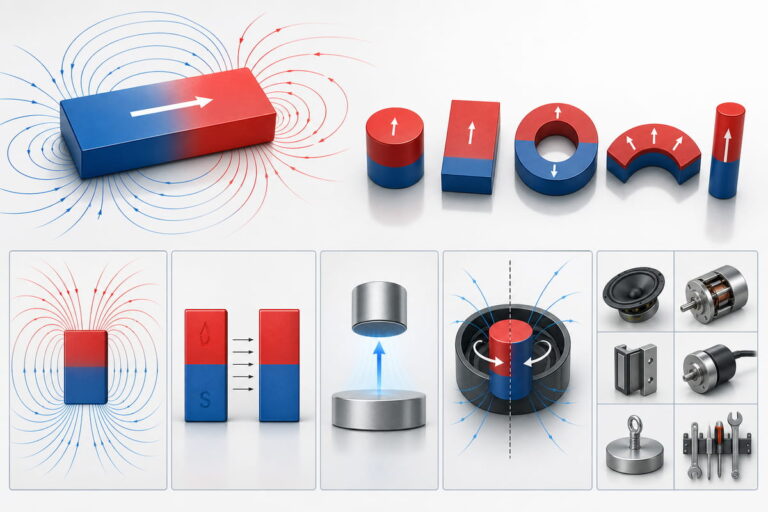
Understanding Magnetic Poles
Every permanent magnet contains:
- North Pole (N)
- South Pole (S)
Magnetic field lines flow between these poles and determine the external magnetic field distribution.
Common Magnetization Directions
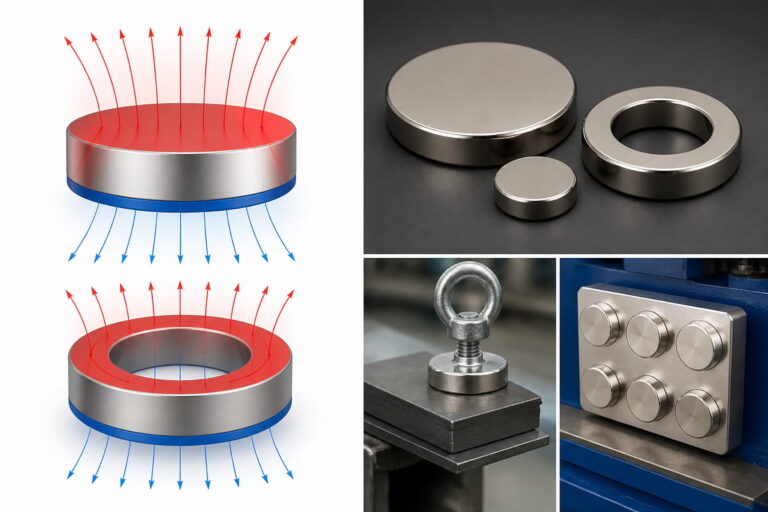
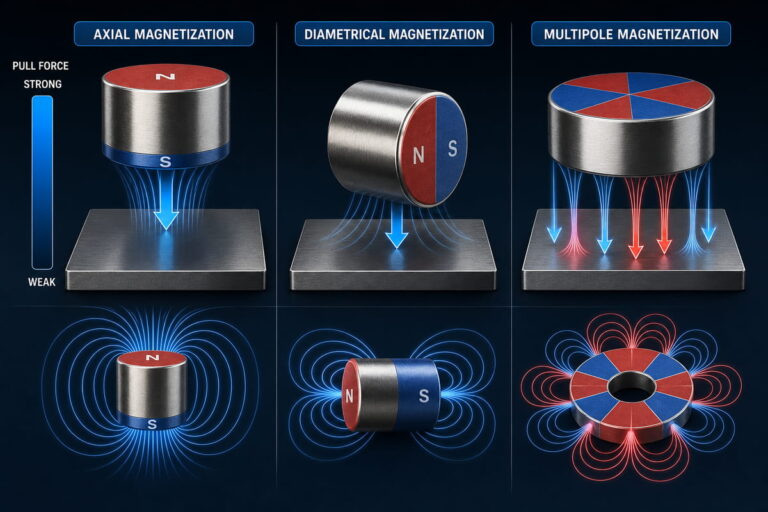
Axial Magnetization
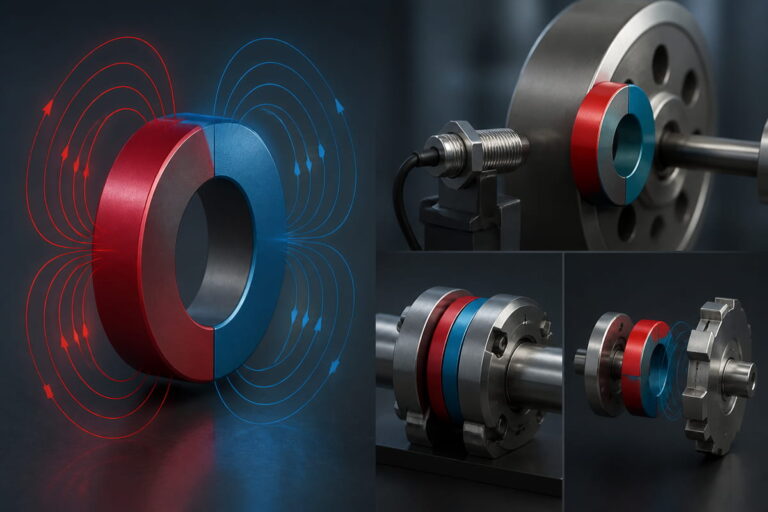
Diametrical Magnetization
Radial Magnetization
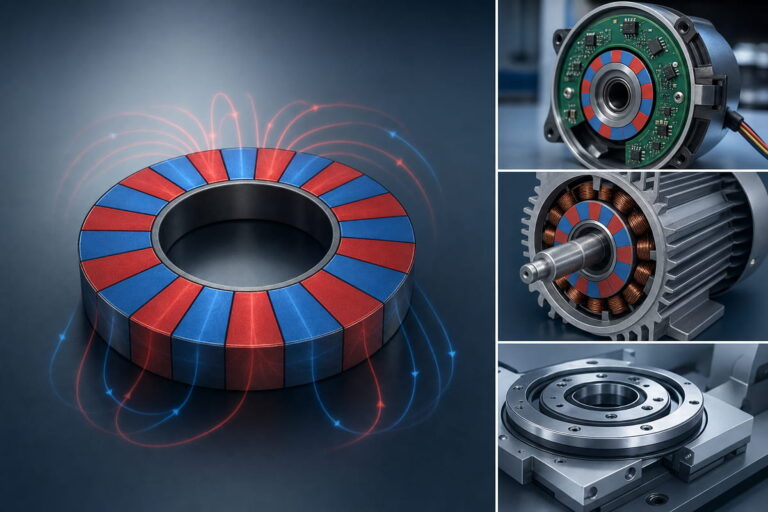
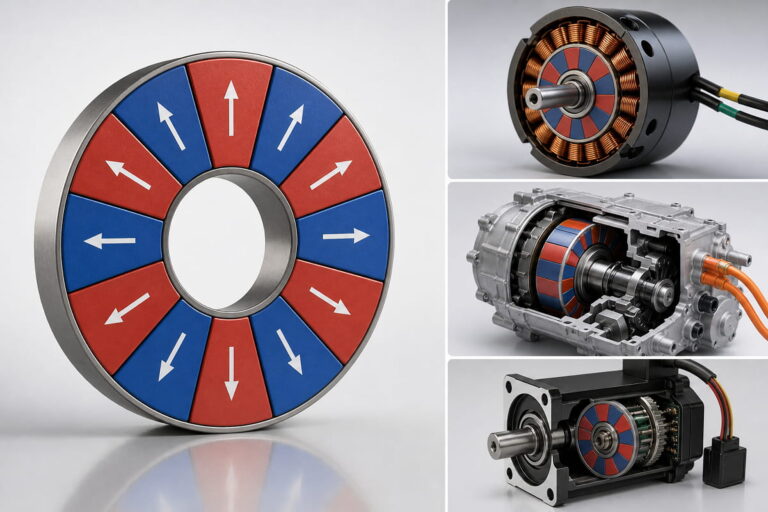
Multipole Magnetization
Each configuration is designed for different engineering and industrial applications.
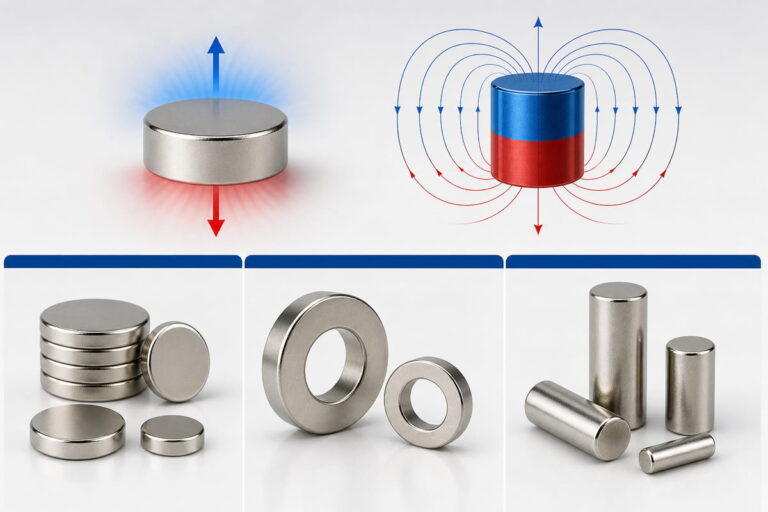
Axial Magnetization
What Is Axial Magnetization?
Axial magnetization means the magnetic poles are located on the flat surfaces of the magnet.
For disc magnets:
- One flat side = North pole
- Opposite flat side = South pole
Axially Magnetized Disc Magnet
N
│
●
│
S
Common Magnet Shapes
- Disc Magnets
- Ring Magnets
- Cylindrical Magnets
Advantages
- Strong direct pull force
- Simple magnetic field orientation
- Common industrial configuration
- Efficient for holding applications
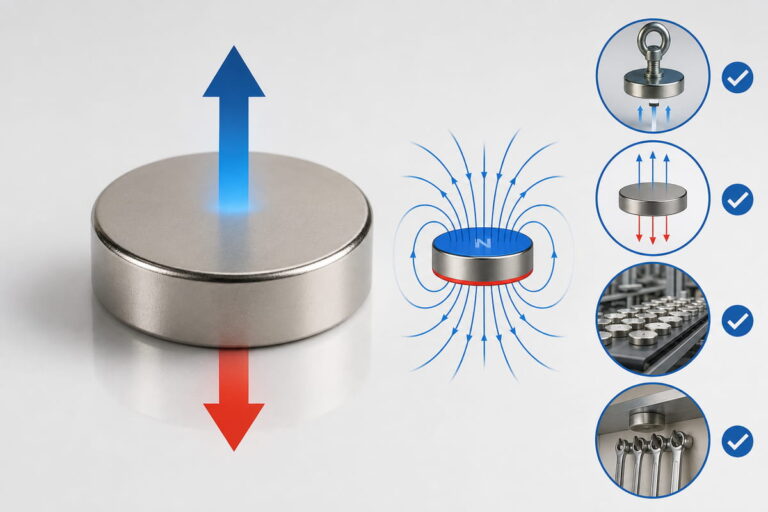
Typical Applications
- Magnetic Holding Systems
- Mounting Magnets
- Magnetic Fixtures
- Sensors
- Closures
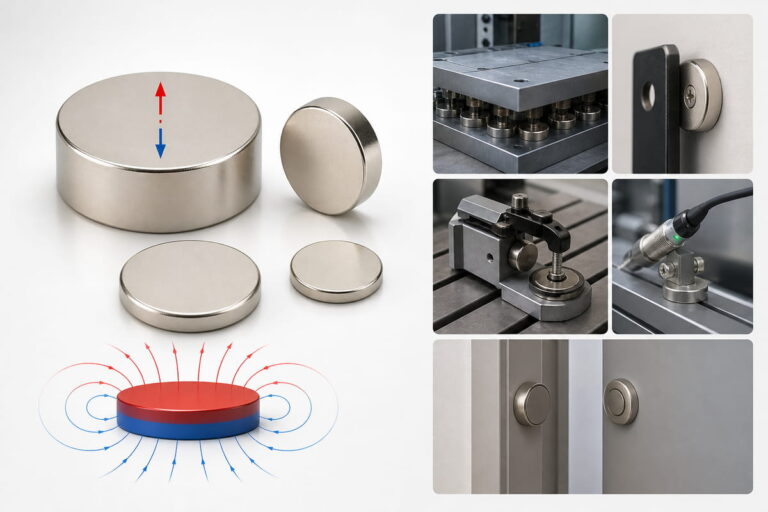
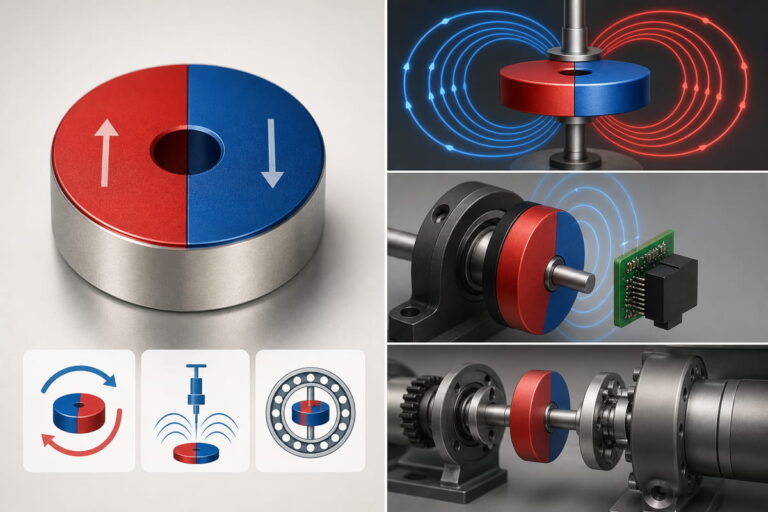
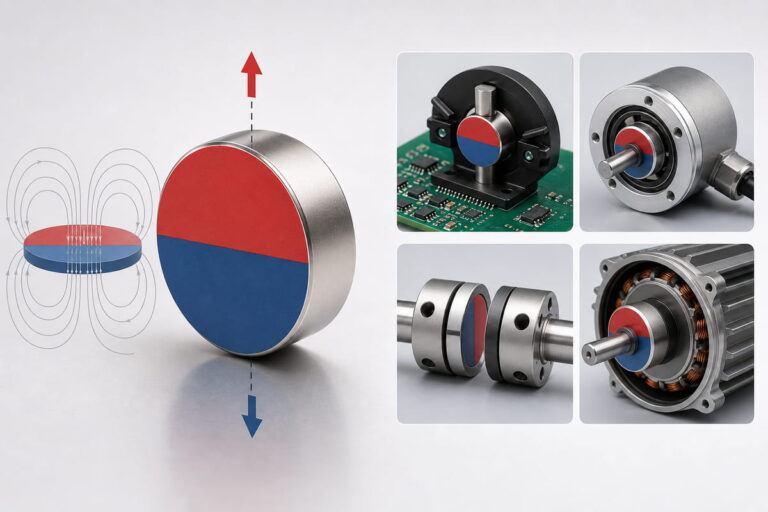
Diametrical Magnetization
What Is Diametrical Magnetization?
Diametrical magnetization positions magnetic poles on opposite curved sides of the magnet rather than the flat surfaces.
Diametrically Magnetized Cylinder
N │ S
Advantages
- Rotational magnetic field generation
- Suitable for sensing systems
- Useful in rotational assemblies
Typical Applications
- Rotary Sensors
- Encoders
- Couplings
- Motor Systems
Radial Magnetization
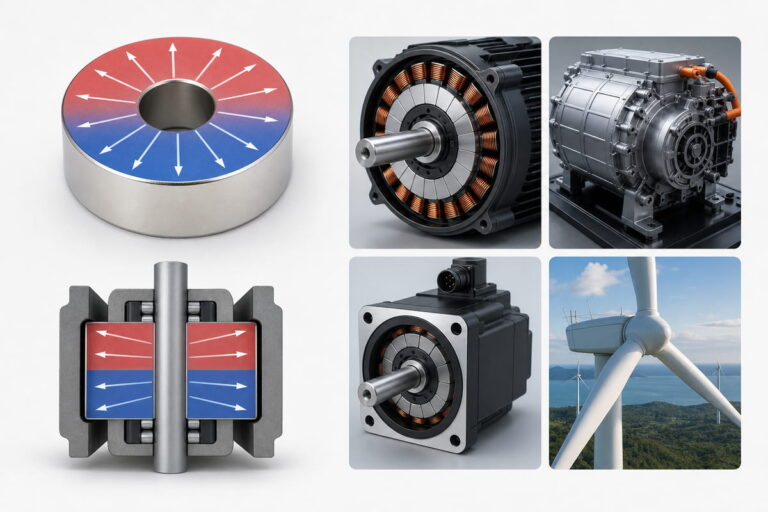
What Is Radial Magnetization?
Radial magnetization distributes magnetic poles radially around the magnet geometry.
Radial magnetization is commonly used in:
- Arc magnets
- Segment magnets
- Ring assemblies
Radially Magnetized Arc Magnet
N → ← S
Advantages
- Efficient rotating magnetic fields
- High motor efficiency
- Improved flux distribution
Typical Applications
- Brushless DC Motors
- EV Motors
- Servo Motors
- Wind Turbine Generators
Multipole Magnetization
What Is Multipole Magnetization?
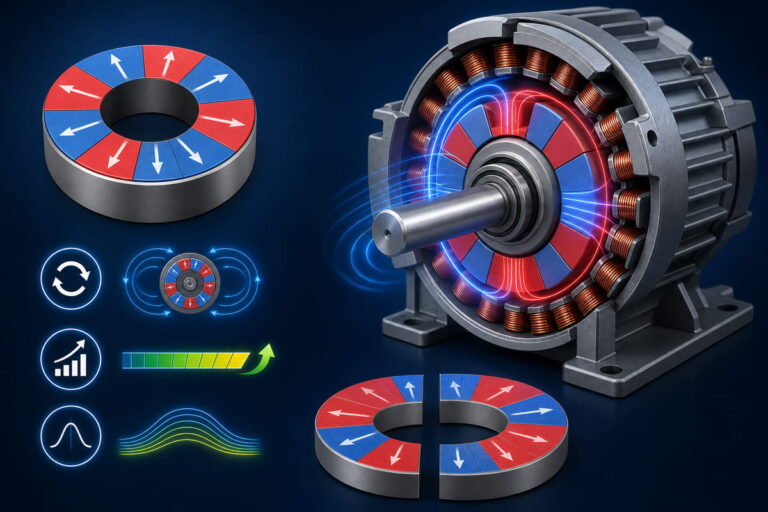
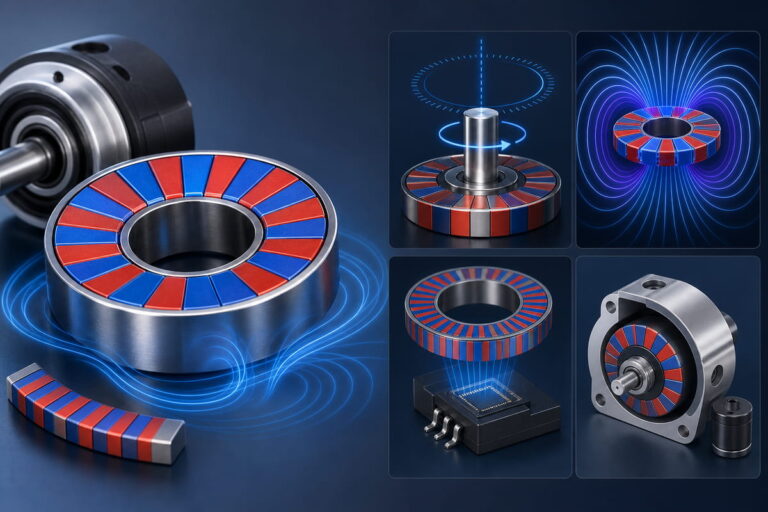
Multipole magnetization creates multiple alternating north and south poles around the magnet surface.
Example Pole Distribution
N S N S N S
Advantages
- Precise rotational control
- Complex magnetic field generation
- Improved encoder resolution
- Compact magnetic systems
Typical Applications
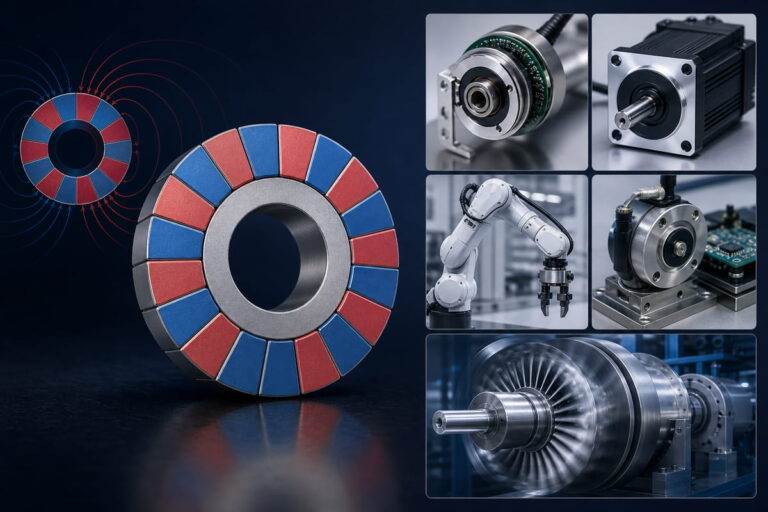
- Encoders
- Precision Motors
- Robotics
- Sensor Systems
- High-Speed Rotational Equipment
Magnetization Direction by Magnet Shape
| Magnet Shape | Common Magnetization |
|---|---|
| Disc Magnet | Axial |
| Ring Magnet | Axial / Radial |
| Cylinder Magnet | Axial / Diametrical |
| Arc Magnet | Radial |
| Block Magnet | Through Thickness |
| Segment Magnet | Radial / Multipole |
Magnetization Direction and Pull Force
Magnetization direction significantly affects magnetic holding force.
Axial Magnetization
Often provides stronger direct pull force for flat contact surfaces.
Diametrical Magnetization
Typically optimized for rotational or sensing applications rather than holding force.
Multipole Magnetization
Distributes magnetic field across multiple poles for controlled rotational performance.
Magnetization Direction and Magnetic Flux
Magnetic flux distribution changes based on pole orientation.
Simplified Flux Relationship
Φ=B⋅A
Variables
- Φ = Magnetic Flux
- B = Magnetic Flux Density
- A = Area
Magnetization direction affects how magnetic flux is distributed through the magnetic circuit.
Choosing the Right Magnetization Direction
Consider Application Type
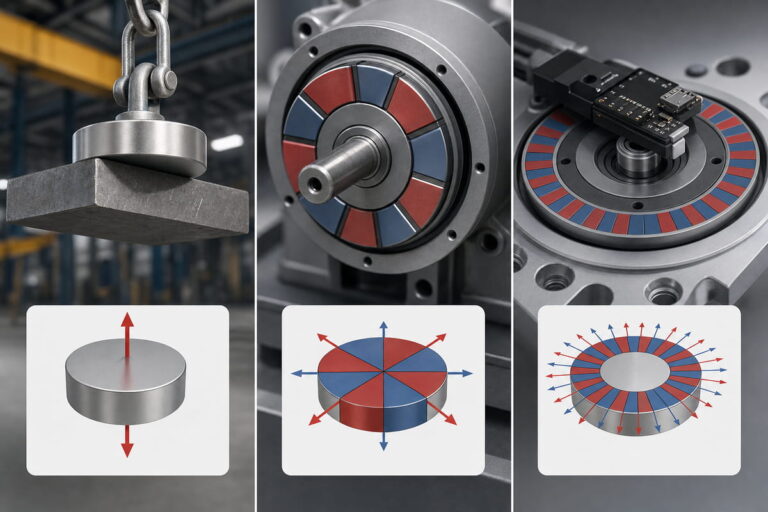
Holding Applications
Axial magnetization is commonly preferred.
Rotational Systems
Diametrical or radial magnetization may be more effective.
Precision Motion Systems
Multipole magnetization improves rotational accuracy and encoder performance.
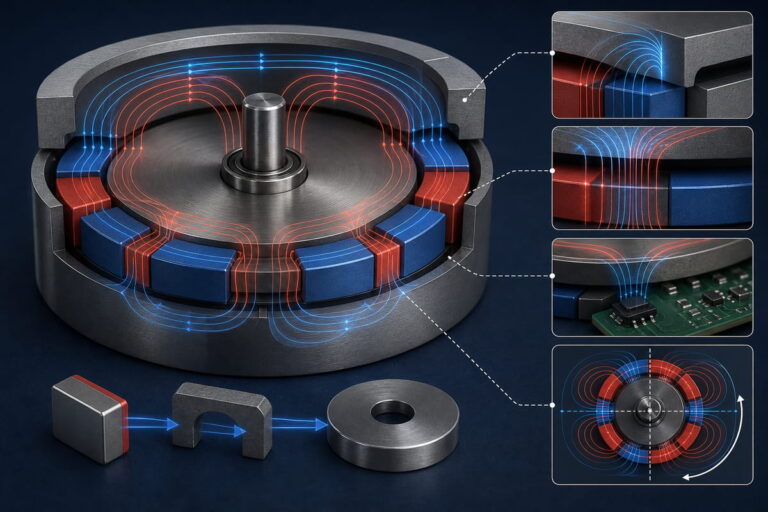
Consider Magnetic Circuit Design
Magnetic field orientation should align with:
- Steel components
- Air gaps
- Sensor locations
- Rotational geometry
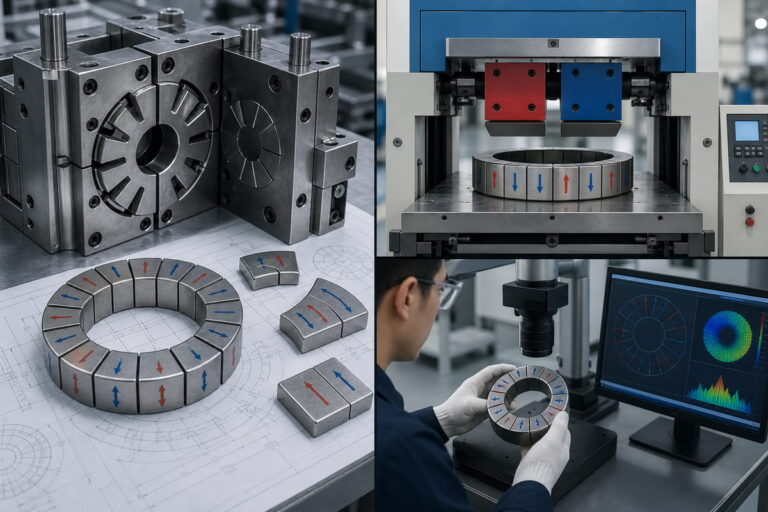
Consider Manufacturing Complexity
Complex magnetization patterns may require:
- Specialized tooling
- Precision magnetization equipment
- Advanced quality inspection
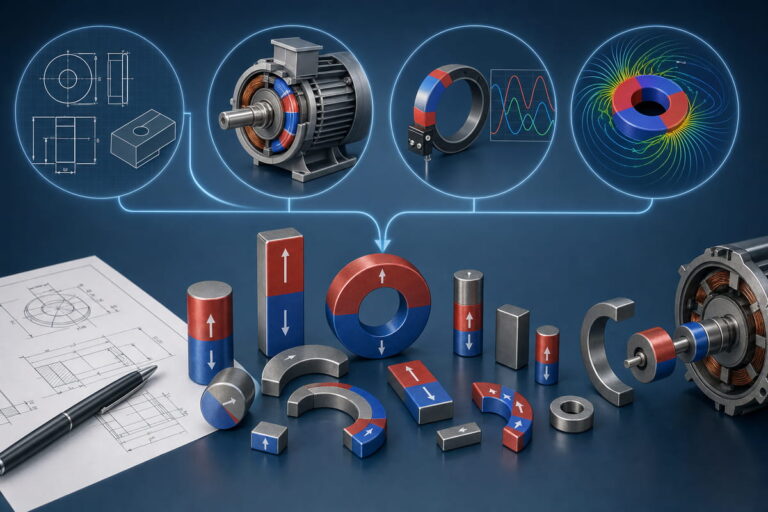
Custom Magnetization Solutions
Osenc Magnets supports custom magnetization configurations based on:
- Engineering drawings
- Motor design
- Sensor requirements
- Magnetic circuit optimization
Related Technical Resources

Magnet Grades Guide
Compare magnetic strength and temperature resistance across NdFeB grades.

Pull Force Guide
Understand how coatings affect magnetic holding force.
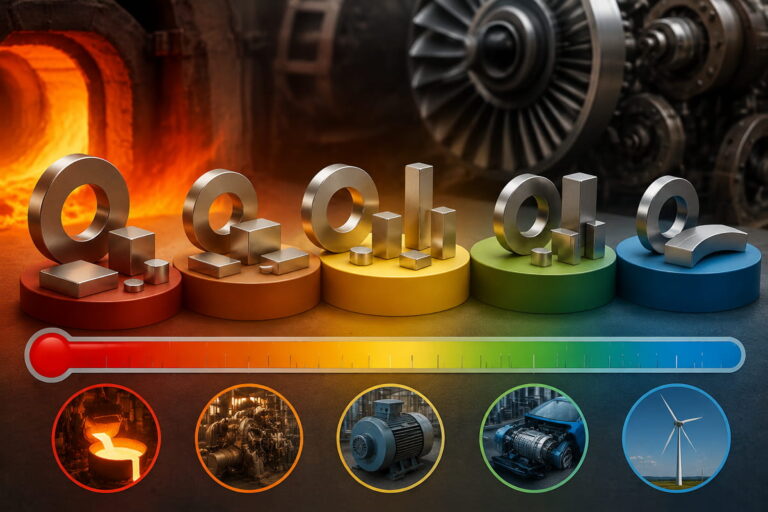
Temperature Resistance
Select the appropriate magnet grade for elevated temperatures.
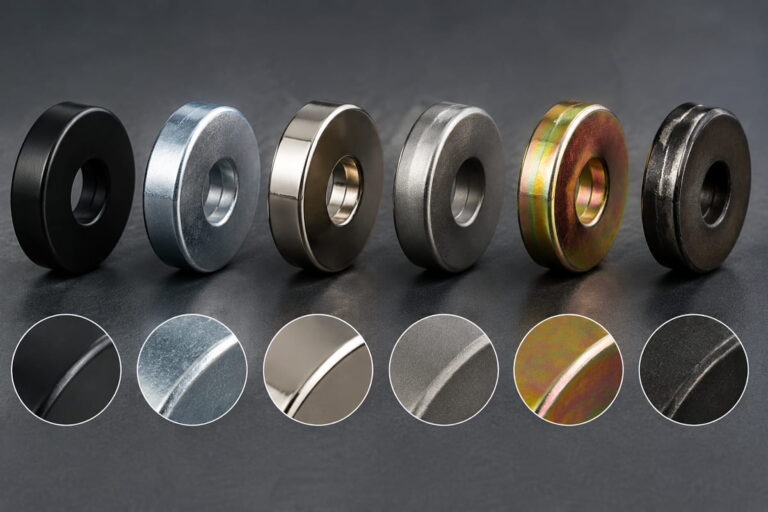
Magnet Coating Guide
Compare corrosion protection options for industrial environments.
Frequently Asked Questions
Axial magnetization places magnetic poles on the flat surfaces of the magnet.
Diametrical magnetization positions poles on opposite curved sides of the magnet.
Radial and multipole magnetization are commonly used in motor applications.
Multipole magnetization creates multiple alternating north and south poles around the magnet surface.
Yes. Pole orientation significantly affects magnetic field distribution and holding force performance.
Yes. Osenc Magnets supports custom magnetization solutions for industrial applications.
Custom Magnetization Solutions for Your Applications
Osenc Magnets provides custom neodymium magnet manufacturing with axial, diametrical, radial, and multipole magnetization configurations for demanding engineering applications.