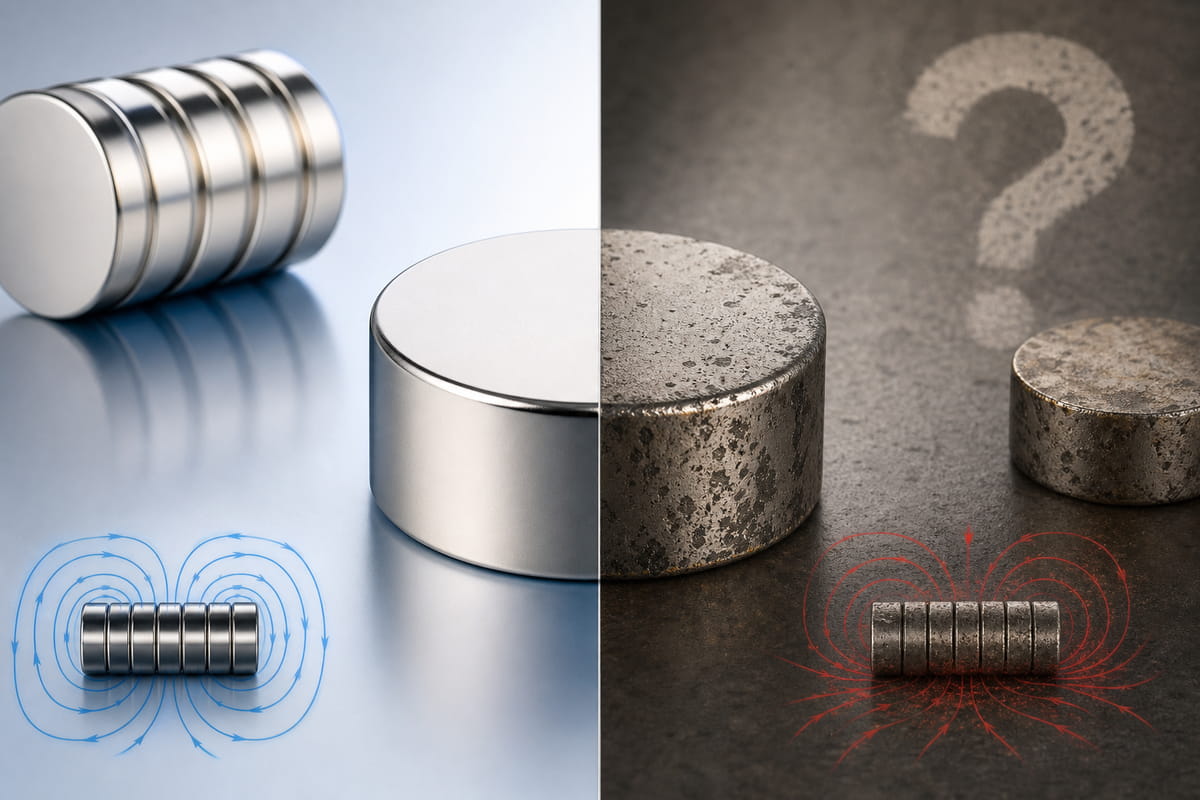
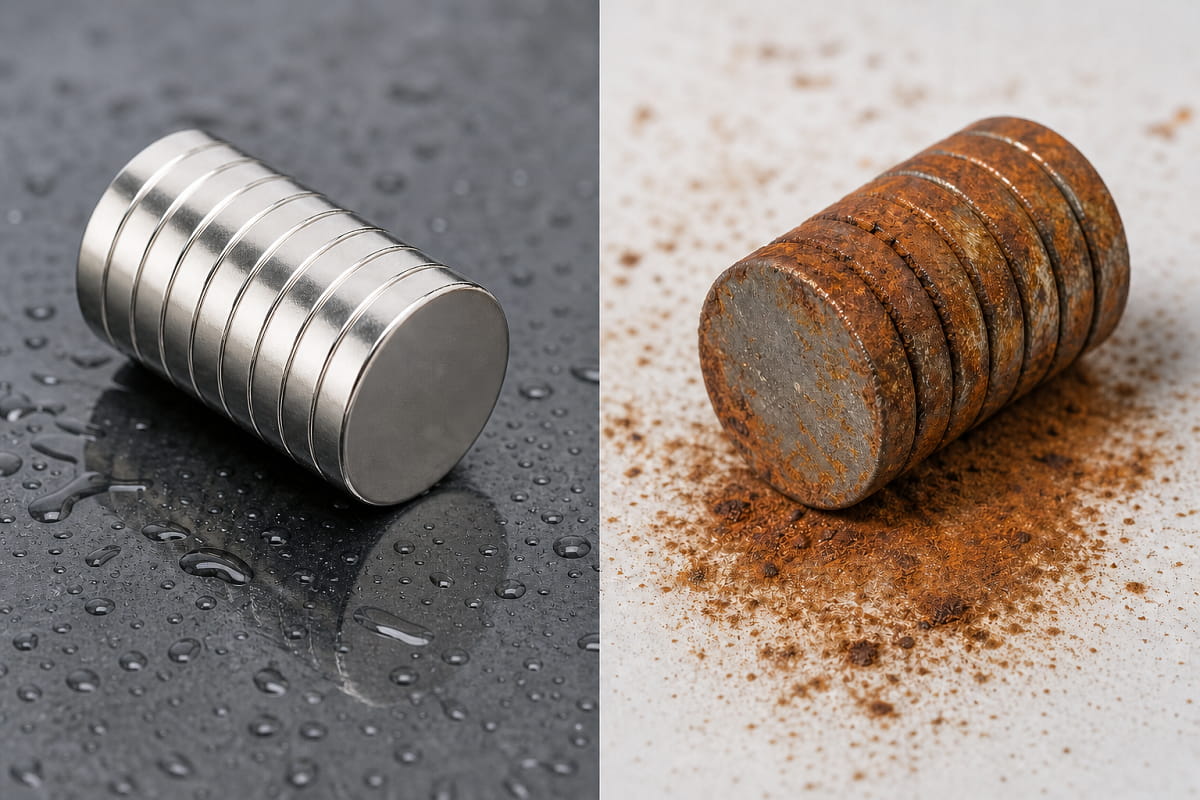
Yes, neodymium magnets contain about 66% iron, so they rust quickly in moisture. Standard nickel plating fails in saltwater – rust can appear in just one week and weaken magnets by up to 11%. For outdoor or underwater use, choose plastic‑coated, thermoplastic‑rubber‑coated, or stainless steel magnets. Keep them dry, avoid scratching the coating, and inspect regularly to stop rust before it spreads.
In this guide, as a professional custom neodymium magnets manufacturer, I’m going to show you exactly why these magnets rust, how to prevent it, and which coatings actually work.
Sound good? Let’s dive in.
What Are Neodymium Magnets Made Of?
Before we talk about rust, you need to understand what’s inside these magnets.
The chemical formula is NdFeB (or Nd2Fe14B if you want to get technical). But here’s the breakdown that actually matters:
- Iron – roughly 66% by mass
- Neodymium – about 33%
- Boron – a tiny fraction
Iron rusts in the presence of moisture. That’s just basic chemistry.
So a raw, unplated neodymium magnet isn’t all that different from a piece of raw iron sitting in your garage. Leave it out in the rain? It’s going to oxidize. Fast.
Pro Tip: The neodymium itself is also highly reactive. Even without the iron, this material doesn’t play nice with moisture. So you’re dealing with a double-whammy here.
Why Most Neodymium Magnets Don’t “Look” Rusty
You’ve probably used neodymium magnets before. And they probably looked shiny and silver. Not rusty at all.
That’s because manufacturers almost always apply a protective coating before these magnets leave the factory.
The most common is a triple-layer Nickel-Copper-Nickel (Ni-Cu-Ni) plating. Here’s how it works:
- Top nickel layer – corrodes first, acting sacrificially
- Copper middle layer – provides ductility and levels the rough surface
- Bottom nickel layer – different grain structure, additional protection
This combination has been the industry standard for years. And it performs better than zinc or most other alternatives.
But here’s the catch…
That coating isn’t bulletproof.
Scratch it. Chip it. Or leave it in saltwater long enough? Moisture will seep in. And once that happens, the rusting process starts from the inside out.
I’ve seen nickel-plated magnets that looked perfectly fine on the outside… but were completely powdery and destroyed on the inside. Not a pretty sight.
How Fast Do Neodymium Magnets Rust?
In a controlled salt spray test (ASTM B117), uncoated neodymium magnets fail almost immediately. We’re talking hours, not days.
But here’s where it gets interesting…
A magnet supplier ran an informal corrosion test with salt water submersion. They tested:
- Nickel-plated magnets
- Gold-plated magnets
- Epoxy-coated magnets
Some were scratched. Some were left unscratched.
Here’s what happened:
- The first magnet showed rust bubbles after just 1 week
- The last magnet didn’t show problems until after a month
- Only ONE epoxy-coated magnet survived 6-7 weeks of submersion
- Strength loss ranged from 0% to 11%
The gold-plated magnet with the most rust was the weakest. Makes sense, right? Less magnet material = less magnetic field.
The bottom line? Corrosion is coming. It’s just hard to predict when.
Common Protective Coatings (And How They Perform)
Not all coatings are created equal. Let me break down the most common options.
Nickel-Copper-Nickel (Ni-Cu-Ni)
This is the standard. It works well for indoor applications and moderate humidity. But saltwater? Long-term outdoor exposure? I wouldn’t bet on it.
Epoxy Coating
Epoxy provides excellent moisture resistance. But in the saltwater test I mentioned earlier, even the epoxy-coated magnets eventually failed. And the scratched epoxy magnet started rusting at the edge – not even where the scratch was.
Zinc Plating
Zinc is sacrificial – it corrodes before the magnet does. But it offers less protection overall. Fine for mild environments. Not great for marine use.
Rubber or Plastic Coating
Now we’re talking.
These form a waterproof shell around the magnet. I’ve seen plastic-coated magnets survive outdoors for 3+ years with zero rust inside. The plastic might fade from UV exposure. But the magnet stays dry.
Pro Tip: Thermoplastic rubber coatings hold up better than natural rubber. Natural rubber cracks from UV exposure. Thermoplastic is much more durable.
Stainless Steel Mounting Magnets
These are a different beast entirely. The magnet is encased in stainless steel. I’ve seen stainless steel mounting magnets stay outside since late 2013 with no signs of rust. That’s over 12 years. Pretty impressive.
How to Prevent Neodymium Magnets from Rusting
Alright, let’s get practical. Here’s exactly what you need to do.
1. Avoid Scratching the Coating
This is the #1 rule.
If your magnet’s protective plating gets scratched, chipped, or cracked, moisture can seep in. Once that happens, it’s only a matter of time.
Inspect your magnets before putting them in harsh environments. Look for defects in the coating. Catching rust early can save the magnet.
2. Keep Them Dry
This sounds obvious. But you’d be surprised how many people ignore it.
Never submerge standard neodymium magnets in water. Don’t leave them in highly humid areas. And definitely don’t use them for aquarium magnets unless they’re specifically plastic-coated.
3. Use a Sealant for Damaged Magnets
Got a scratched magnet that you still need to use in a damp environment?
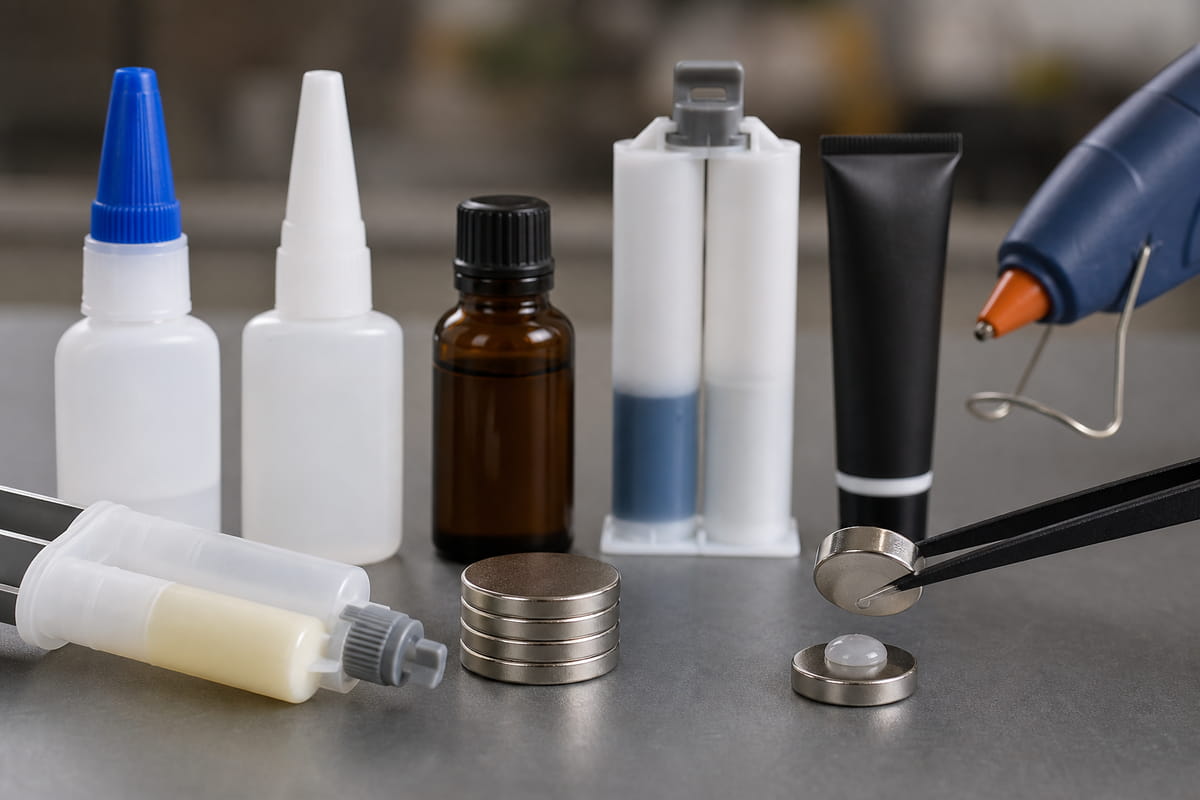
Coat it with varnish, clear nail polish, or a sealant. It’s not a permanent fix. But it’ll buy you time.
4. Clean and Protect After Exposure
If your magnet gets exposed to salt water or harsh conditions:
- Rinse it with fresh water
- Dry it thoroughly (and I mean bone-dry)
- Apply a protective oil like WD-40
This won’t reverse existing rust. But it’ll slow down future corrosion.
5. Choose the Right Magnet for the Job
This is the most important tip.
If you need a magnet for saltwater, outdoor, or high-humidity applications, don’t use standard nickel-plated magnets. Use:
- Plastic-coated magnets
- Rubber-coated magnets (thermoplastic, not natural rubber)
- Stainless steel mounting magnets
- Ferrite magnets (naturally corrosion-resistant, though weaker)
I’ve tested plastic-coated magnets in saltwater, bleach, and vinegar solutions for 5 months. The only corrosion was from the vinegar solution. Everything else passed with flying colors.
Can Rust Weaken a Magnet?
Short answer: Yes.
Here’s why.
When a magnet rusts, it forms iron oxide. And iron oxide isn’t magnetic. So you’re literally losing magnetic material.
On top of that, rust buildup creates a larger gap between the magnet and whatever it’s attracting. And pull force drops exponentially with distance. Even a tiny gap can slash holding strength by 50% or more.
In the saltwater test I mentioned earlier, magnets showed up to 11% strength loss from visible rust.
That’s huge.
So if you care about performance, you need to care about rust prevention.
What About Samarium Cobalt and Ferrite Magnets?
I’ve focused on neodymium so far. But let me quickly address the alternatives.
Samarium Cobalt (SmCo) magnets are naturally more resistant to oxidation and corrosion. They’re excellent for aerospace, marine, and high-temperature applications. But they’re also more expensive and not as strong as neodymium.
Ferrite magnets (ceramic magnets) are naturally corrosion-resistant. They don’t need protective coatings. The tradeoff? They’re significantly weaker than neodymium. Like, 5-10x weaker depending on the grade.
So if you need maximum strength and corrosion resistance, your best bet is a coated neodymium magnet or a stainless steel assembly.
Real-World Examples: What Works and What Doesn’t
I love hands-on testing. So let me share a few real examples from long-term outdoor exposure.
Stainless Steel Mounting Magnets
These have been outside since late 2013. Still no rust. Over a decade of rain, sun, snow, and humidity. Zero corrosion. Expectations exceeded.
Natural Rubber Coated Ring Magnet
This one didn’t fare well. Cracks in the rubber allowed extensive corrosion. The magnet still sticks, but it’s no longer a complete ring. The culprit? UV exposure, not moisture. Natural rubber degrades in sunlight.
Thermoplastic Rubber Coated Block Magnet
This has held up well so far (outdoors since late 2018). Time will tell. But thermoplastic is definitely better than natural rubber.
Plastic Coated Cylinder Magnets
These have been outdoors since late 2016 – about 10 years as of 2026. The magnet inside? Completely rust-free. The plastic faded and feels more brittle from UV exposure. But the waterproof seal held.
Can You Use Froglube, ATF, or Ballistol?
I get this question a lot.
Someone asked me recently: “Can I use Froglube on my neodymium magnet for saltwater magnet fishing?”
Here’s my take…
Any coating that’s water and salt-impervious will help. Froglube, ATF, and Ballistol can provide a temporary protective layer. But they’re not permanent solutions.
If you’re serious about magnet fishing in saltwater, don’t rely on oils and lubricants. Get a plastic-coated or rubber-coated magnet. The coating forms a physical barrier that won’t wash off.
And remember – even the best coating can crack from impacts. Neodymium magnets are ceramic-like. They can fracture if you drop them or bang them against rocks. Treat them with care.
The Bottom Line
Do neodymium magnets rust? Yes – and they rust quickly if unprotected. They’re mostly iron by mass, and iron + moisture = rust.
You can absolutely prevent rust by using the right coating for your application. Nickel plating works fine for indoor use. But for saltwater, outdoor exposure, or high humidity? Go with plastic coating, thermoplastic rubber, or stainless steel assemblies.
And if you already have magnets you need to protect? Keep them dry, avoid scratching the coating, and inspect them regularly.
I’ve seen plastic-coated magnets survive 10+ years outdoors with zero rust. I’ve also seen nickel-plated magnets fail in one week of saltwater exposure.
The difference? Choosing the right magnet for the job.
So before you buy your next neodymium magnet, ask yourself: Where am I using this? What’s it going to be exposed to?
Answer those questions first. Then pick your coating accordingly.
That’s the difference between a magnet that lasts for years… and a pile of rusty dust in a few months.
Pro Tip: If you’re designing a product that needs to be sterilized (like medical or dental equipment), encase your magnets in thin stainless steel. Autoclaves and exposed neodymium don’t mix.