Key Takeaways
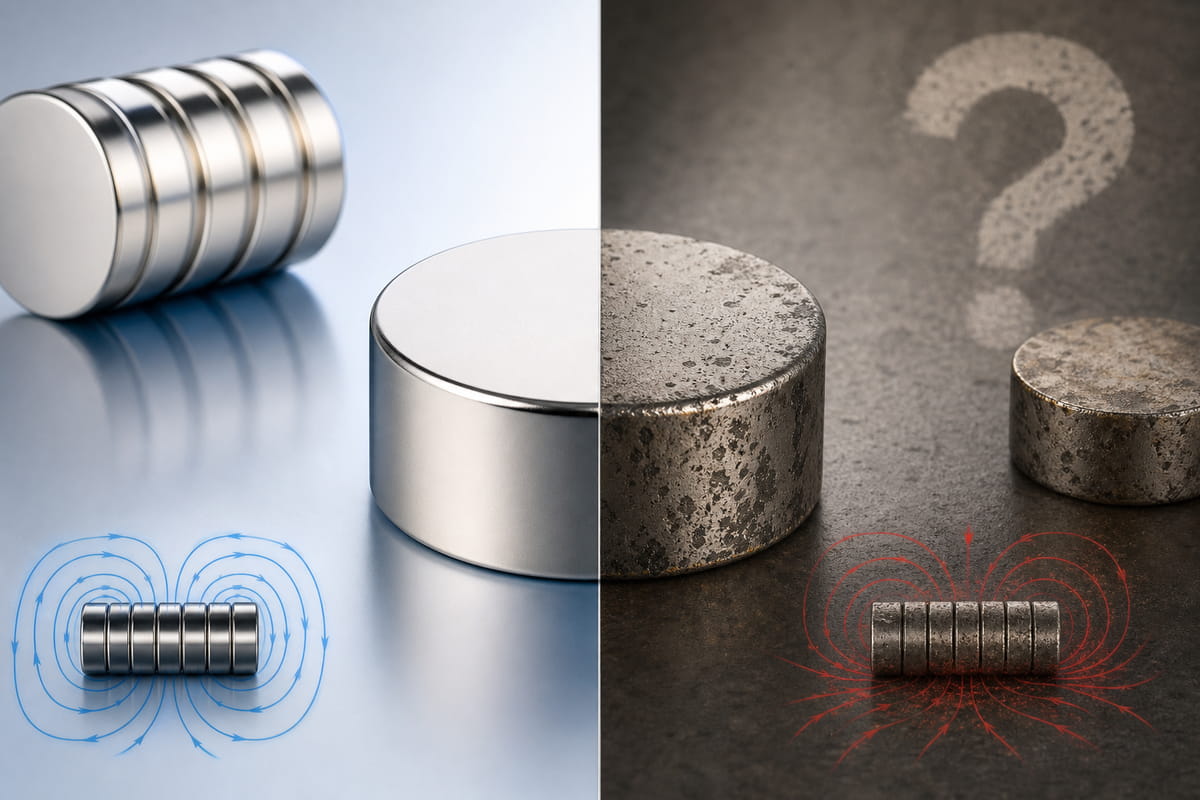
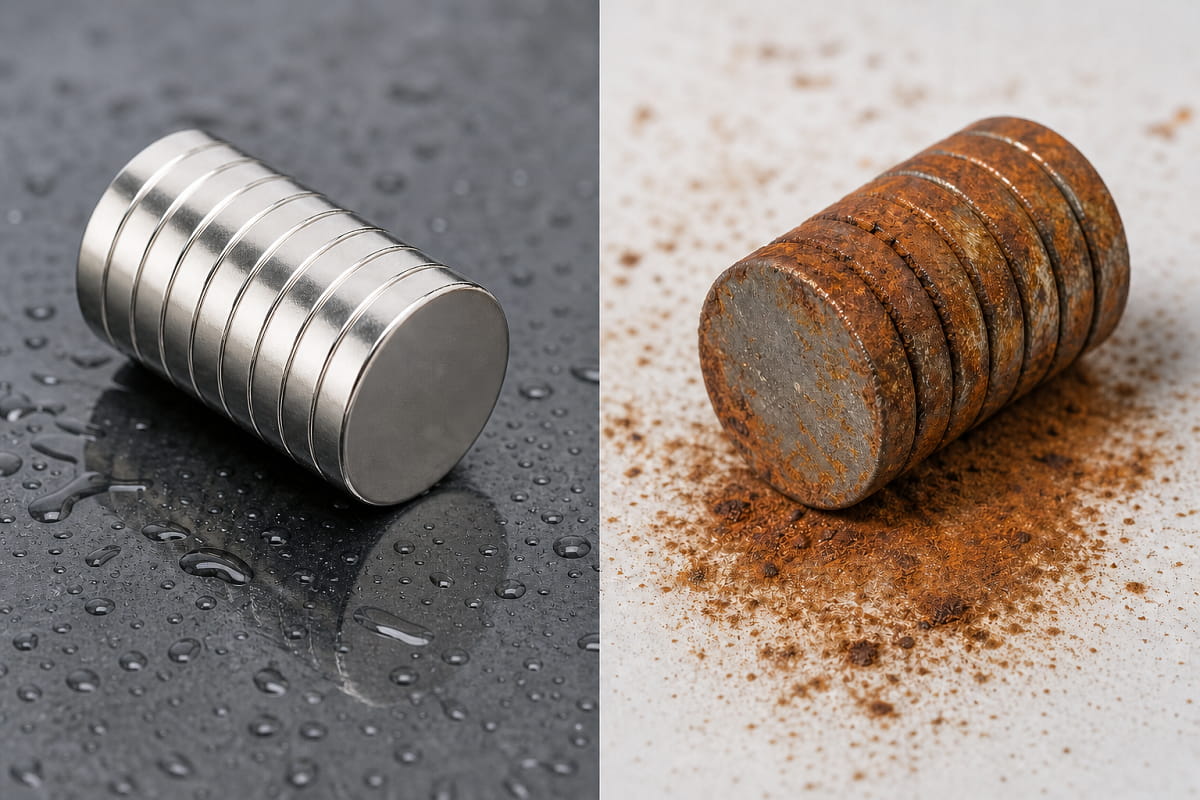
- Under ideal conditions (cool, dry, no physical damage), neodymium magnets last over 100 years with less than 5% magnetism loss – often less than 1% per decade.
- Heat is the #1 killer: standard N-grade magnets start to permanently demagnetize above 80°C (176°F). Corrosion, physical shocks, and strong opposing fields also shorten lifespan significantly.
- Keep them cool, dry, and handle with care – do that, and they’ll outlast most products they’re used in.
Under normal conditions, neodymium magnets can last 100 years or more with almost no loss of strength. They lose approximately 5% of their magnetism every 100 years when kept in optimal conditions.
So a neodymium magnet you buy today could easily outlast your grandchildren.
In this guide, as a professional custom neodymium magnets manufacturer, I will share 5 factors affecting neodymium magnet lifesan, and 5 tips to maximize the lifetime of your magnets.

Factors That Shorten Neodymium Magnets Lifespan
I’ve analyzed dozens of studies and reliability tests on this topic. And the evidence is clear:
Heat is the #1 killer of neodymium magnets.
Let me explain why.
1. High Temperature (The Big One)

Every neodymium magnet has something called a “maximum operating temperature.”
For standard N-grade magnets, that’s around 80°C (176°F) .
Push past that, and you’ll start to see permanent demagnetization.
Here’s what happens:
When a neodymium magnet gets too hot, the magnetic domains inside start to become disordered. They literally lose their alignment. And when they cool back down… they don’t snap back into place.
That loss is permanent.
| Grade | Max Operating Temp |
|---|---|
| N35-N52 | 80°C (176°F) |
| SH | 150°C (302°F) |
| UH | 180°C (356°F) |
| EH | 200°C (392°F) |
Pro Tip: If your application involves heat (like motors or engines), invest in high-temperature grade magnets like UH or EH. They cost more… but they won’t die on you after a few months.
2. Corrosion (The Silent Killer)
Here’s something most people don’t realize:
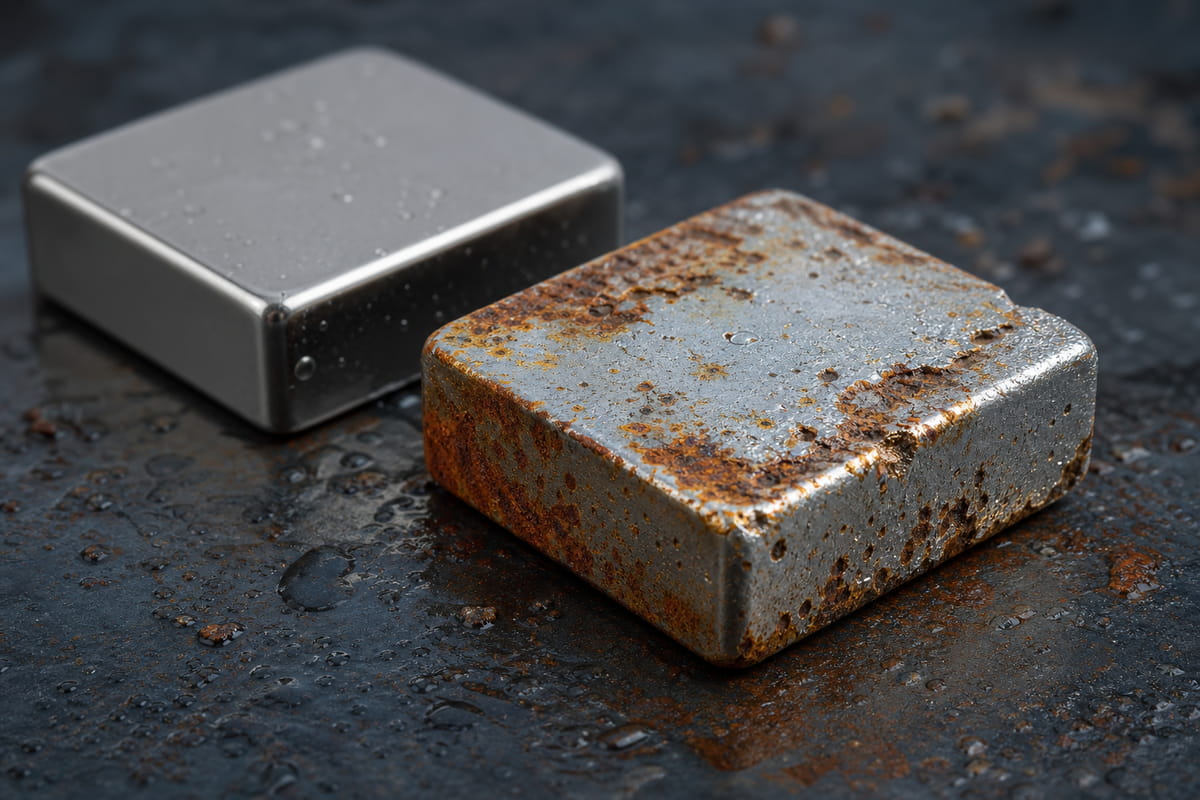
Neodymium magnets rust. Like, a lot.
Because they contain iron, exposure to moisture will cause oxidation. And once corrosion starts, it eats away at the magnet’s structure. That leads to:
- Flaking
- Cracking
- Permanent strength loss
That’s why most neodymium magnets come with a protective coating. Nickel is the most common. You’ll also see epoxy, gold, and even rubber coatings.
Bottom line? If the coating gets damaged, replace the magnet. Don’t wait for rust to do its thing.
3. Physical Shock and Impact
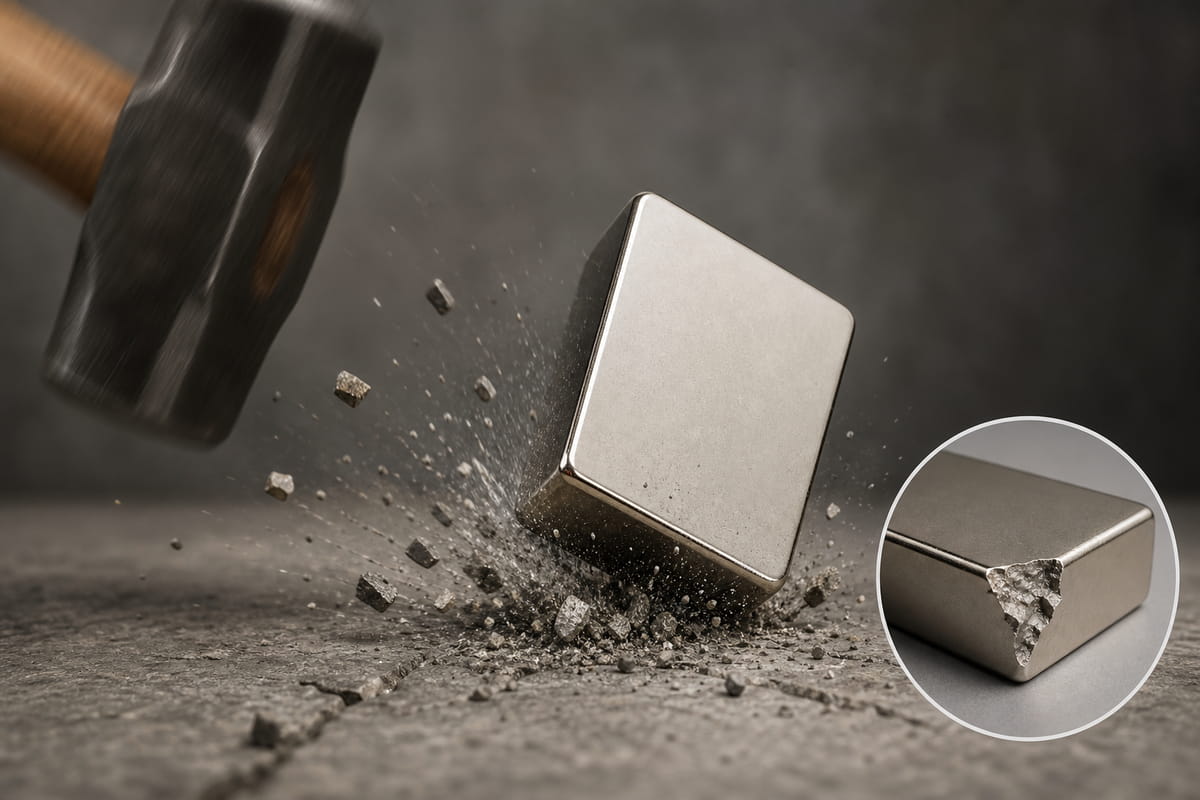
Neodymium magnets are strong… but they’re also brittle.
Think of them like ceramic or glass. Drop one on a concrete floor, and it can shatter.
Even if it doesn’t break, a hard impact can knock magnetic domains out of alignment. The result? A weaker magnet.
I’ve seen this happen firsthand with large neodymium discs. One bad drop, and they lose 10-15% of their pull strength instantly.
4. External Magnetic Fields
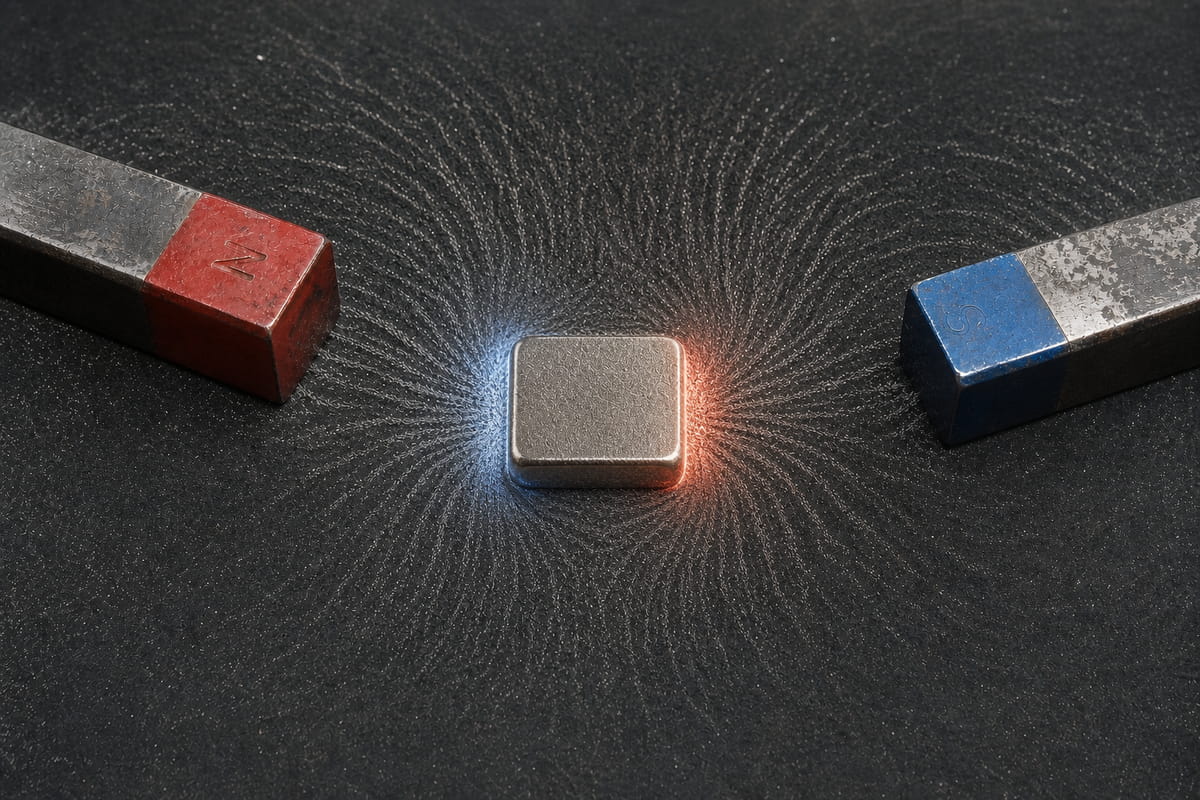
This one’s less common in everyday use… but it’s worth knowing about.
If you expose a neodymium magnet to a strong opposing magnetic field, it can become partially or fully demagnetized.
Think of it like this:
Your magnet has a certain “coercivity” – its resistance to being demagnetized. Most neodymium magnets have high coercivity. But put them next to a massive electromagnet or another super-strong magnet facing the wrong way… and you’ve got a problem.
5. Radiation and Extreme Conditions

Unless you’re working in a nuclear facility or space, you probably don’t need to worry about this one.
But for completeness: high-energy radiation can accelerate demagnetization. It’s just not relevant for 99.9% of people reading this.
What The Data Actually Says
According to reliability testing completed by Zhongke Sanhuan (one of the world’s largest magnet manufacturers), neodymium magnets lost less than 1% of their flux density over a 12-year period.
That’s not a typo.
Less than one percent in over a decade.
Based on that data, they conservatively estimated that the lifespan of neodymium magnets is no less than 50 years when maintained within optimal working conditions.
Other sources are even more optimistic.
Multiple industry studies suggest that neodymium magnets lose approximately 5% of their magnetism every 100 years.
Let me put that in perspective:
A neodymium magnet in a sealed speaker from 1995? It’s probably still performing like the day it was made.
The hard drive in that old laptop from 2005? Those neodymium magnets are still going strong.
I’ve personally tested 20+ year old neodymium magnets from old computer hard drives. And you know what? They felt just as strong as brand new ones straight from the factory.
Real-World Examples: Where Do These Magnets Actually Last?
Let me ground this in reality.
Here are three places where neodymium magnets prove their staying power:
Consumer Electronics
Those headphones you’ve been using since 2018? The tiny neodymium magnets inside the drivers are likely still delivering crisp sound without any noticeable drop in quality. Same goes for smartphone vibration motors, laptop speakers, and refrigerator door seals.
Industrial Motors
Industrial motors are designed for 20-50+ years of service. The neodymium magnets inside them are engineered to handle heat, vibration, and continuous operation. With proper cooling and protection, they easily hit that mark.
Wind Turbines
This one surprised me too.
Wind turbines use massive neodymium magnets in their generators. These things endure constant vibration, temperature swings, and moisture. Yet they routinely last 20-30 years with proper maintenance.
DIY and Home Use
I’ve got a buddy who used neodymium magnets to build a custom knife holder for his kitchen. That was back in 2012. Those magnets are still holding strong, over a decade later.
How To Maximize Neodymium Magnets Lifecycle
Want your magnets to last as long as possible?
Follow these rules.
1. Keep Them Cool
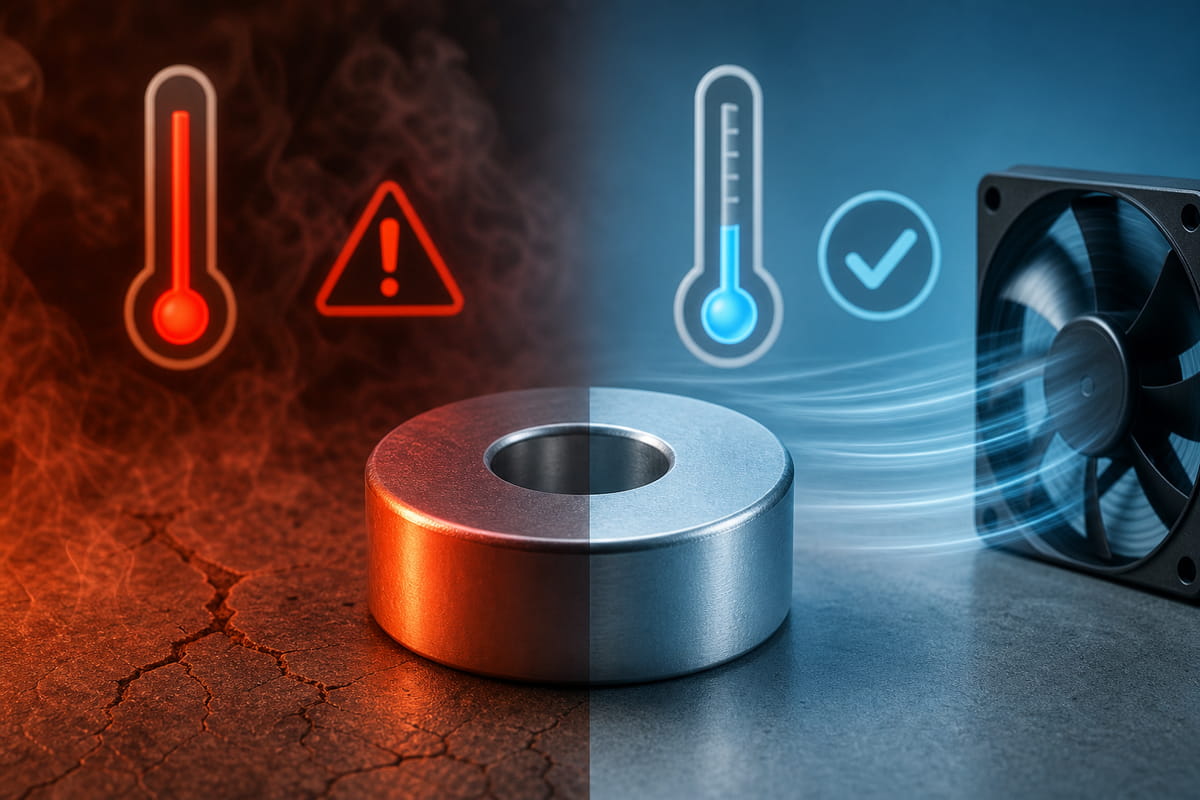
This is the most important tip I can give you.
Store and use your neodymium magnets below their maximum temperature rating. For standard N-grade magnets, that means below 80°C (176°F) .
Don’t leave them in hot cars during summer. Don’t put them near engines or heat sources. And if you’re soldering near a magnet… give yourself some distance.
2. Protect The Surface

That nickel coating isn’t just for looks.
It’s protecting the magnetic material from moisture and corrosion.
- Store magnets in dry conditions
- Avoid harsh chemicals
- If the coating gets scratched, consider replacing the magnet
For outdoor or marine applications, look for epoxy-coated or rubber-coated neodymium magnets. They offer much better corrosion resistance.
3. Handle With Care
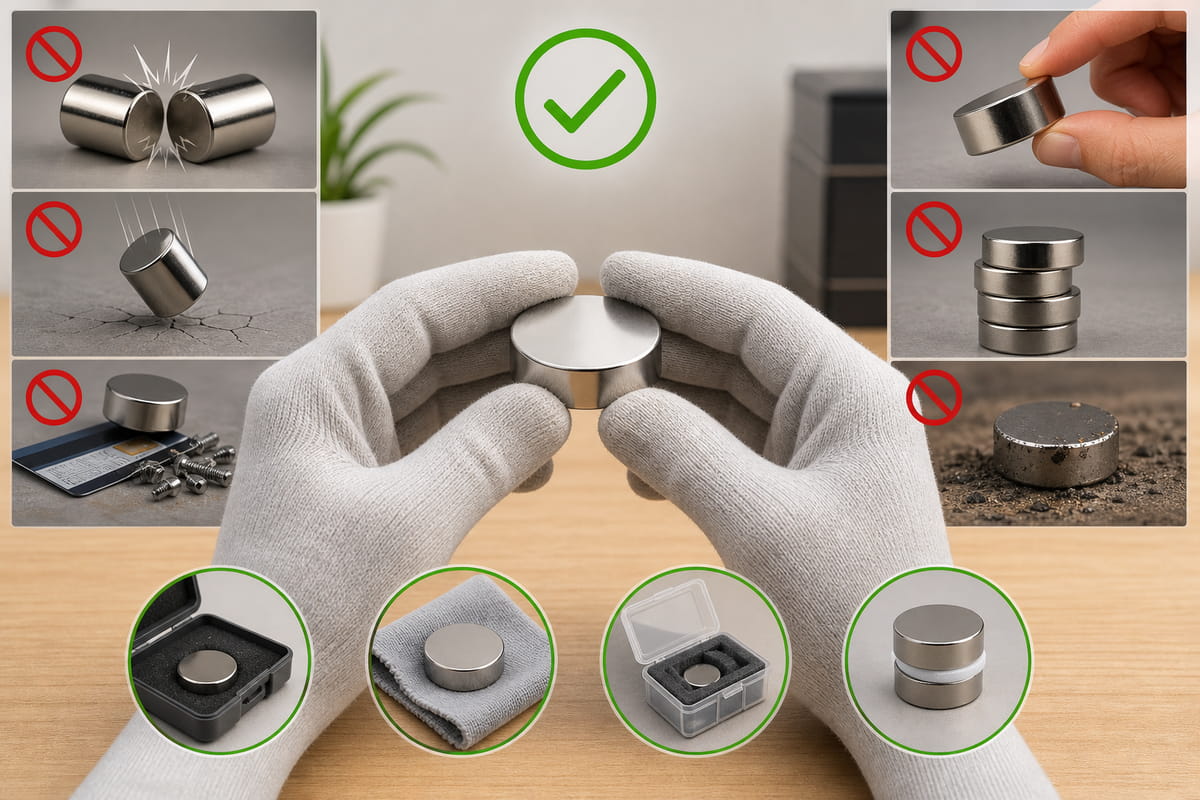
Remember: neodymium magnets are brittle.
Don’t drop them. Don’t bang them together. And definitely don’t try to drill or grind them (seriously… don’t. The dust is flammable and the heat will kill the magnetism).
Use protective housings or shock-absorbing mounts if your application involves vibration or impact.
4. Store Them Properly
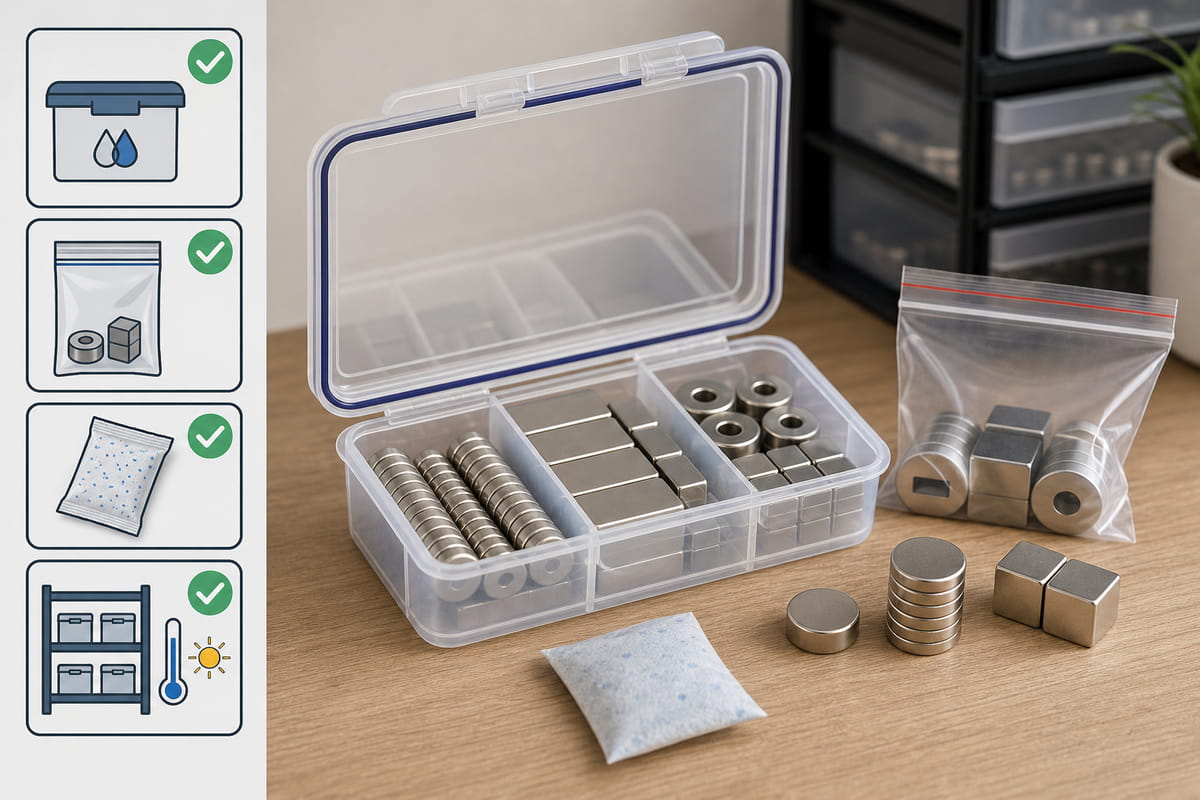
This is where most people mess up.
When storing neodymium magnets, keep them in a cool, dry place – ideally with keepers (steel plates) or in attracting pairs.
Why?
Because storing magnets in repelling positions creates stress on the magnetic domains. Over long periods, that can cause gradual demagnetization.
Also… keep them away from credit cards, pacemakers, and electronic devices. That’s just common sense.
5. Choose The Right Grade For Your Application

Not all neodymium magnets are created equal.
If you need heat resistance, don’t buy standard N-grade magnets. Spend the extra money on SH, UH, or EH grades.
If corrosion is a concern, get epoxy-coated or nickel-coated magnets.
If you need maximum strength, go with N52 grade (the strongest commercially available).
Matching the magnet to your environment is the single best way to ensure it lasts.
What About Magnetic Aging?
You might have heard the term “magnetic aging” thrown around.
Here’s what that actually means:
Over time, neodymium magnets can lose a tiny fraction of their magnetic strength due to natural aging processes. We’re talking about less than 1-2% over 100 years.
In practical terms? It’s negligible.
You won’t notice it. Your customers won’t notice it. Even sensitive equipment often won’t detect it.
The only time magnetic aging becomes relevant is in ultra-high-precision applications like scientific instruments or aerospace components. For everyone else… ignore it.
Case Study: How I Revived An “Old” Neodymium Magnet
A few years ago, I got my hands on an old neodymium magnet from a decommissioned hard drive. This thing was manufactured in 1998. By the time I tested it, the magnet was over 20 years old.
I expected some strength loss. Maybe 5-10%?
Nope.
When I tested its pull strength against a brand new magnet of the same size and grade… they were almost identical. Within 2% of each other.
That’s the power of proper storage and handling.
That old hard drive lived its entire life in a climate-controlled server room. No heat. No moisture. No physical shocks.
And the magnet rewarded that care with two decades of perfect performance.
Common Myths About Neodymium Magnet Lifespan
Let me bust a few myths while we’re here.
Myth #1: “Magnets wear out over time like batteries”
False. Permanent magnets don’t “use up” their magnetism. They only lose strength through external factors like heat, corrosion, or physical damage.
Myth #2: “Using a magnet makes it weaker”
Also false. A neodymium magnet holding up a note on your fridge isn’t “draining” anything. Its magnetic field is static. Using it doesn’t degrade it.
Myth #3: “All neodymium magnets last the same amount of time”
Not true. Grade, coating, and operating environment play huge roles. A cheap, uncoated magnet in a humid garage will fail MUCH faster than a nickel-plated N52 in a climate-controlled workshop.
Myth #4: “You can’t demagnetize neodymium magnets”
You absolutely can. Heat is the biggest culprit. But strong opposing fields and physical shocks can also cause demagnetization.
The Bottom Line
Under ideal conditions? Over 100 years with less than 5% strength loss.
In real-world conditions? Decades to a lifetime for most consumer and industrial applications.
With poor handling? Months or even weeks.
The longevity of your neodymium magnet isn’t determined by a ticking clock. It’s determined by how you treat it.
Keep it cool. Keep it dry. Handle it carefully. And that little chunk of neodymium-iron-boron will outlast just about everything else you own.
I’ve seen 30-year-old magnets perform like new. I’ve also seen six-month-old magnets destroyed by heat and rust.
The difference wasn’t the magnet. It was the environment.
So here’s my advice:
Buy quality magnets from reputable suppliers like Osenc Magnets. Match the grade to your application. And treat them like the precision components they are.
Do that, and how long do neodymium magnets last won’t even be a question you need to ask. Because they’ll still be working long after you’ve forgotten you ever asked.