Quick Summary
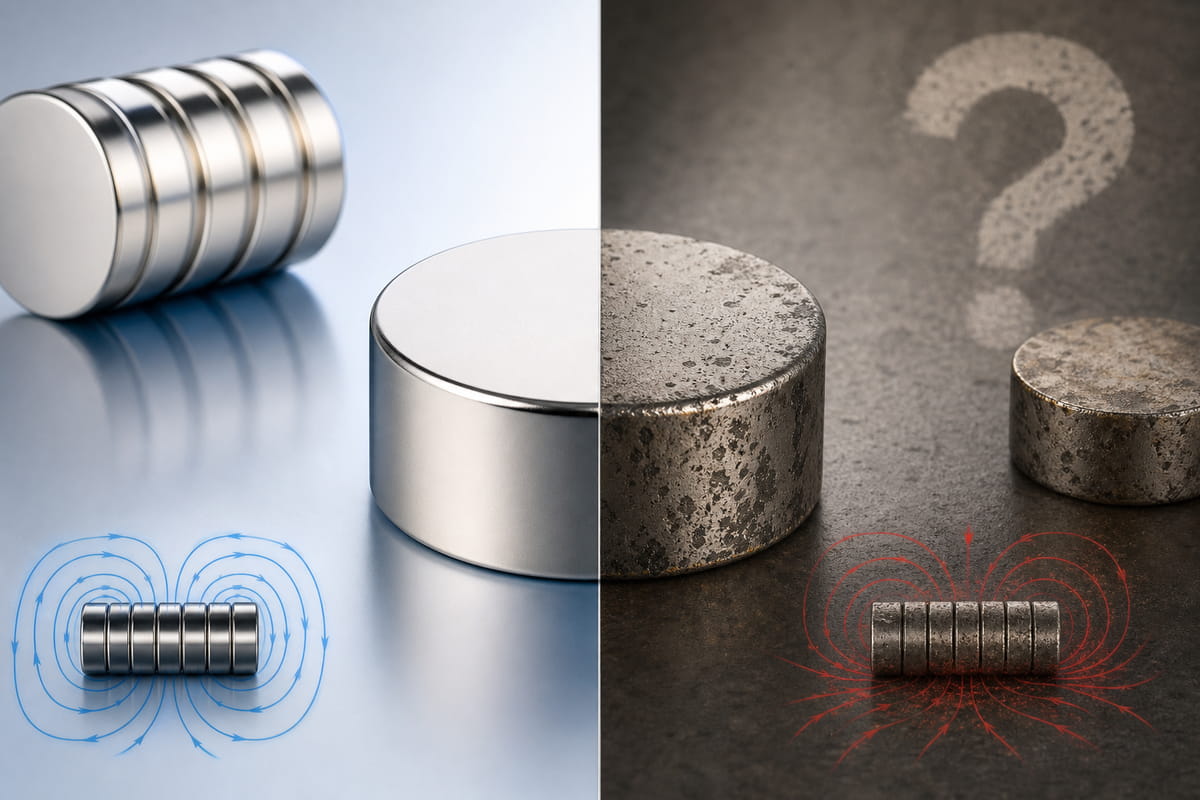
Neodymium magnets do conduct electricity, mostly through their conductive nickel coating, but they’re poor conductors with high contact resistance compared to copper. They work fine for low-power prototyping (like connecting batteries in series), yet running current through them generates heat that can demagnetize them.
Because they’re both conductive and magnetic, watch out for accidental short circuits across exposed terminals. For reliable connections, use magnetic connectors or spring-loaded pogo pins and let the magnets handle the holding.
Short answer: Do neodymium magnets conduct electricity? Yes — but not very well.
Neodymium magnets can carry an electrical current. But they’re nowhere near as good at it as copper, gold, or even plain old aluminum.
In this guide, as a professional neodymium magnets manufacturer, I’m going to break down exactly how (and why) these powerful little magnets conduct electricity… what’s actually happening inside them… and what this means if you’re trying to use them in a real-world project.
Let’s dive right in.
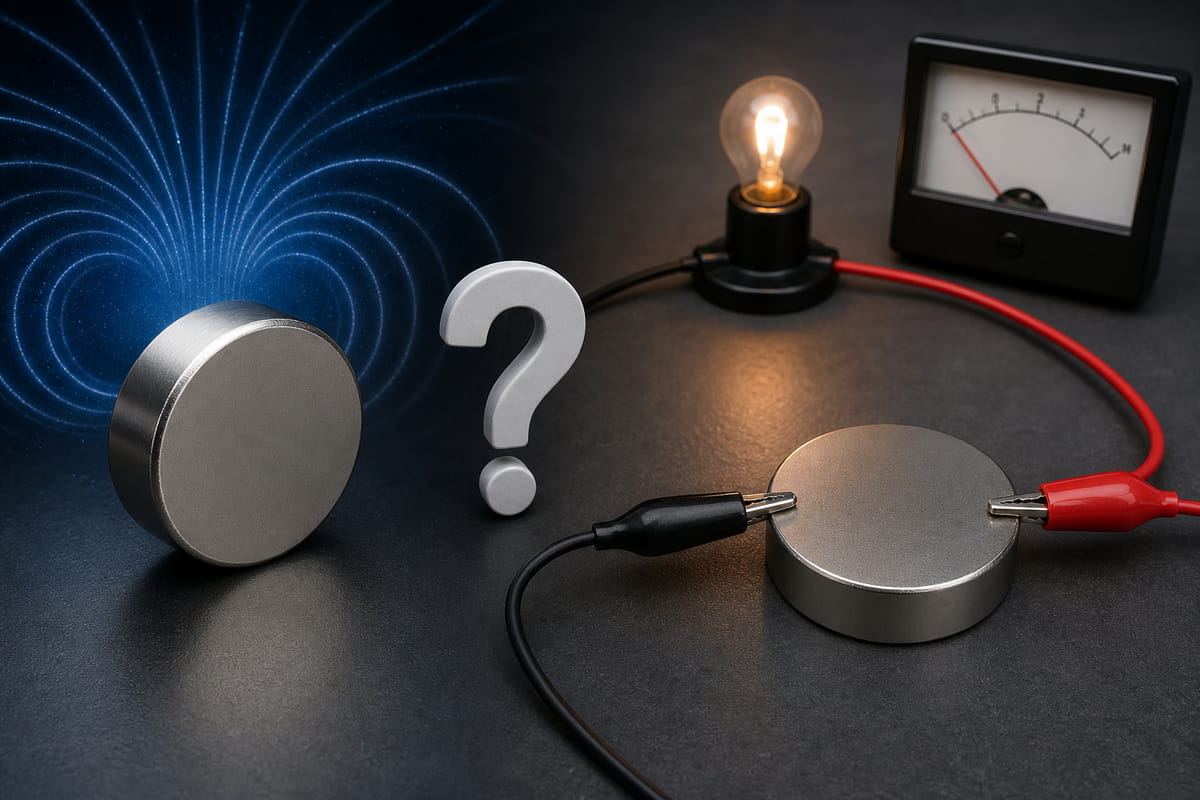
What Conductivity Actually Means (The Quick Version)
Before we talk about magnets, let’s get on the same page.
Electrical conductivity is just a measure of how easily a material lets electric current flow through it.
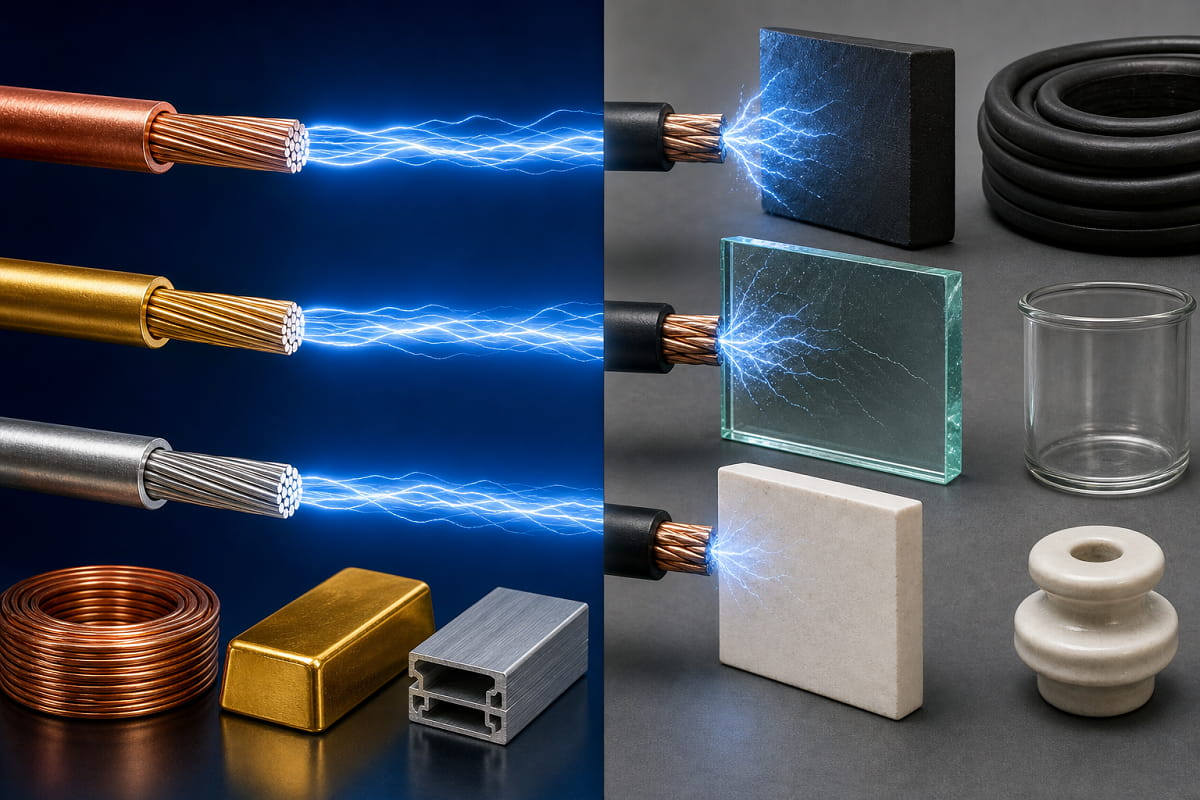
Some materials are amazing at this:
- Copper – the gold standard for wiring
- Gold – pricey, but a fantastic conductor
- Aluminum – lightweight and conductive
And some materials are terrible at it:
- Rubber
- Glass
- Ceramic
The difference comes down to one thing: free electrons.
Materials with lots of loose, mobile electrons (like metals) conduct electricity well. Materials where the electrons are locked in place (like glass) don’t.
So where do neodymium magnets fall on this spectrum?
Somewhere in the middle. And that’s what makes them interesting.
So… Do Neodymium Magnets Conduct Electricity?
Yes. They do.
Neodymium magnets — also called NdFeB magnets — are made from an alloy of neodymium, iron, and boron (the technical formula is Nd₂Fe₁₄B).
And because they contain a TON of iron (which is a conductive metal), current can flow through them.
But the overall conductivity is relatively low. The electrical conductivity of a neodymium magnet sits around 0.6 × 10⁶ Siemens per meter.
To put that in perspective, copper clocks in at roughly 59 × 10⁶ Siemens per meter.
That’s almost 100x better than a neo magnet.
So while the answer to “do neodymium magnets conduct electricity” is technically yes, the more accurate answer is:
Yes, but they’re poor conductors compared to real conductive metals.
Why Aren’t They Better Conductors?
The reason comes down to structure.
Neodymium magnets have a microcrystalline lattice — basically, the neodymium, iron, and boron atoms are locked together in a rigid magnetic structure. And that structure gets in the way of electrons moving freely.
In other words:
The iron wants to conduct. But the overall alloy slows the electrons down.
The bottom line? The composition gives the magnet incredible magnetic strength… but it sacrifices electrical performance in the process.
The Nickel Coating Changes the Game
Here’s something most people miss.
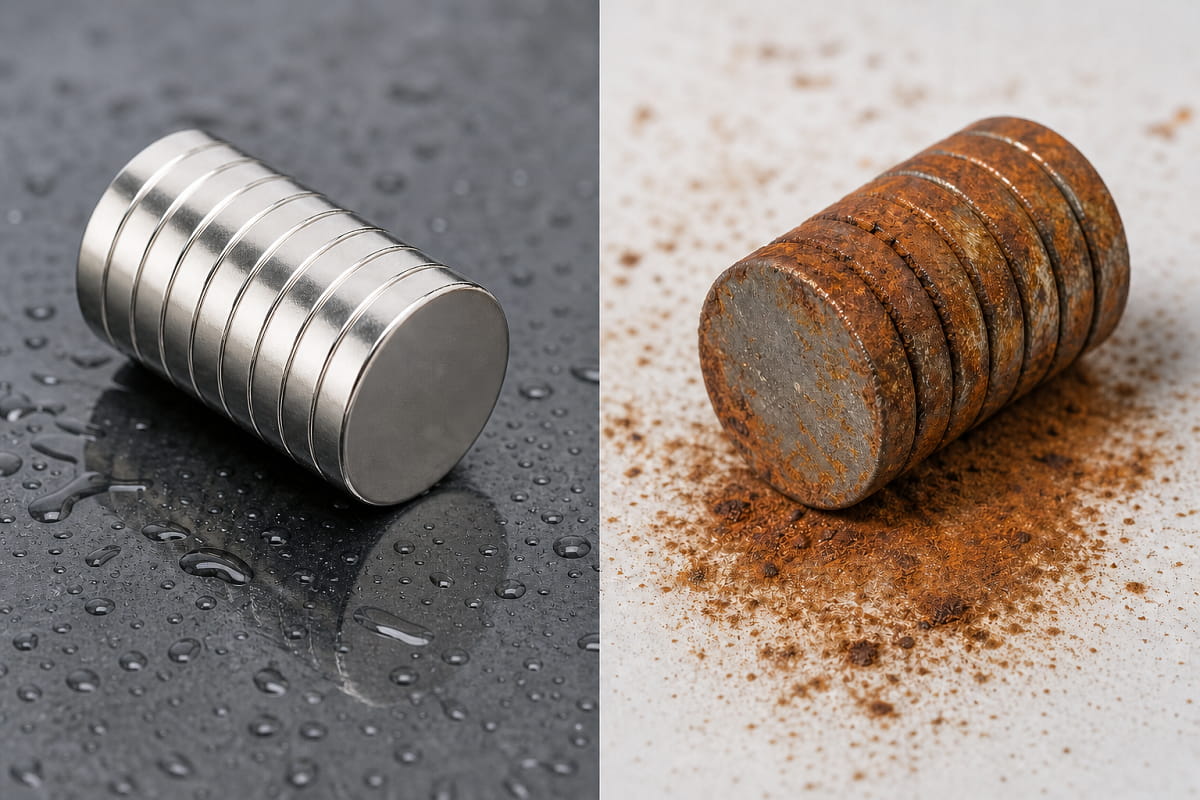
Raw neodymium is highly corrosive. Leave it exposed to air and moisture, and it’ll rust and crumble pretty quickly.
That’s why nearly every neodymium magnet you’ll ever touch is coated — usually with:
- Nickel (the most common, and the shiny silver finish you’re used to)
- Zinc
- Occasionally other protective metals
And here’s the cool part:
Nickel is a good conductor.
So when you measure the conductivity of a typical neo magnet, a lot of what you’re actually measuring is that outer nickel plating doing the heavy lifting.
This is exactly why people use neodymium magnets as quick electrical contacts in low-power projects (more on that in a second).
Contact Resistance: The Hidden Catch
Even with that conductive nickel coating, there’s a catch you need to know about.
Contact resistance.
Because of the surface plating and the nature of the alloy, neodymium magnets have a much higher contact resistance than a clean copper wire would.
When current passes from a wire, into a magnet, and out the other side, it loses a bit of efficiency at each junction.
For a tiny LED project? No big deal.
For anything that needs reliable, high-current power transfer? That resistance starts to matter.
A Real-World Test You Can Do at Home
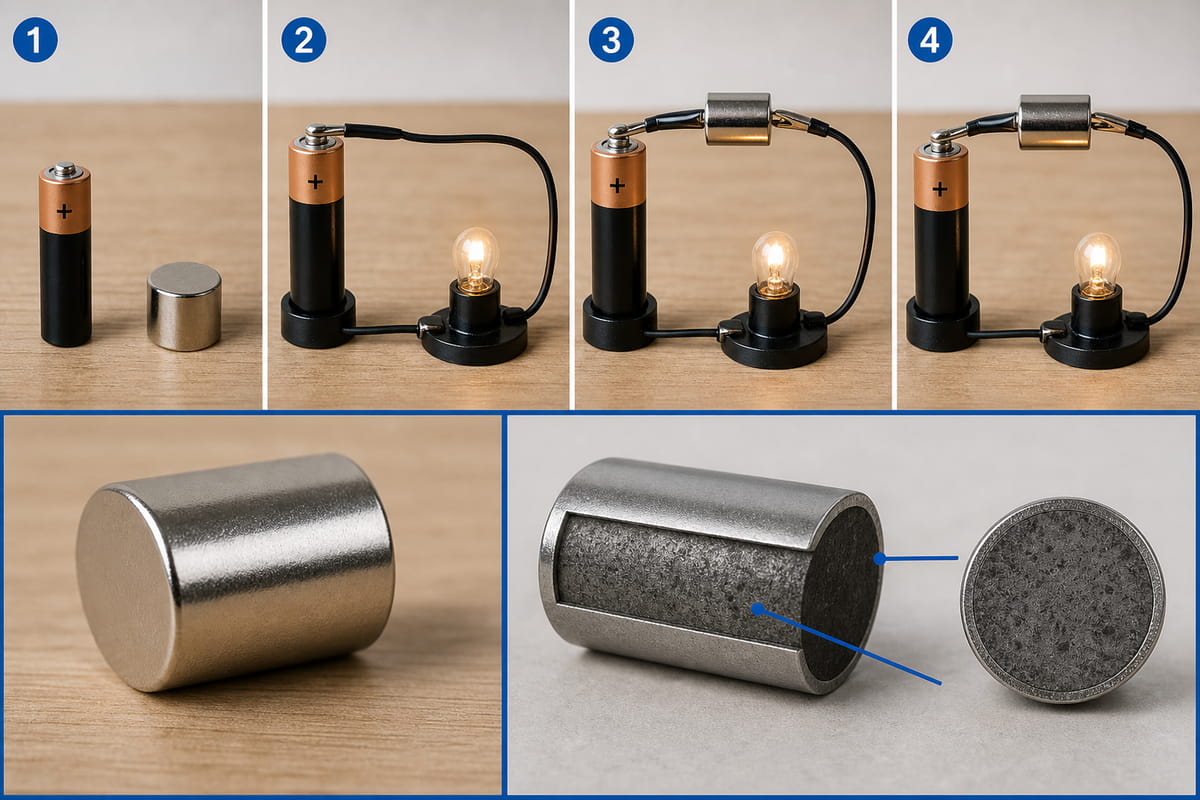
Want to know if a neodymium magnet conducts well enough for your project? Don’t guess — test it.
Here’s a dead-simple experiment I recommend:
- Grab one AA battery and one neodymium magnet.
- First, hook up the battery alone to a small bulb or motor. Note how it performs.
- Now put the magnet in series with the battery (battery → magnet → wire → bulb).
- Watch for any difference in brightness or speed.
You should see very little change.
That’s because the outside of a fresh neodymium magnet is coated in nickel (a solid conductor), and the inside is mostly iron.
Pro Tip: If you own a multimeter (and honestly, you should if you’re building circuits), just switch it to the resistance setting and measure across the magnet. You’ll get a real number instead of a guess.
Common Use Case: Connecting Batteries in Series
One of the most popular questions I see on forums like Reddit is:
“Can I use neodymium magnets to connect AA batteries in series for prototyping?”
The answer is yes — and it works surprisingly well.
The nickel coating conducts well enough to act as a temporary contact between battery terminals. It’s a clever, solder-free way to throw together a quick battery pack.
But keep this in mind:
This is great for prototyping and low-power projects. It’s not something I’d rely on for a permanent, high-reliability build.
What About Routing Power AND Data Through Magnets?
This one comes up a lot — especially from the Arduino and maker crowd.
Think about you’re building a clock with WS2812B NeoPixel LEDs, an Arduino Nano, and a DS3231 RTC. You want to use magnets to snap modular pieces together — and route V+, GND, and the data signal through those same magnets.
Will the magnetism mess up your data signal or cause voltage drop?
Here’s the good news: No.
The magnetic field itself won’t interfere with your data signals or cause meaningful voltage drop in a project like that.
But here’s the real problem:
Geometry.
Getting 6 separate magnets to line up perfectly flat — so all of them make solid contact at the same time — is genuinely tough. If even one magnet sits a hair too high, your connection fails.
My recommendation? Use the magnets purely for holding the pieces together. Then add a dedicated magnetic connector (with spring-loaded pogo pins) for the electrical connection. Those springs automatically solve the alignment problem and give you a rock-solid contact every time.
It’s the best of both worlds.
A Word on Short Circuits
Since neodymium magnets are both conductive AND magnetic, you’ve got to be careful.
A loose magnet can easily snap across two exposed terminals or wires… and create a short circuit you didn’t plan for.
So when you’re working around batteries and exposed contacts, treat your magnets like any other piece of bare metal. Keep them away from anything they could accidentally bridge.
How Neodymium Magnets Stack Up Against Other Magnets
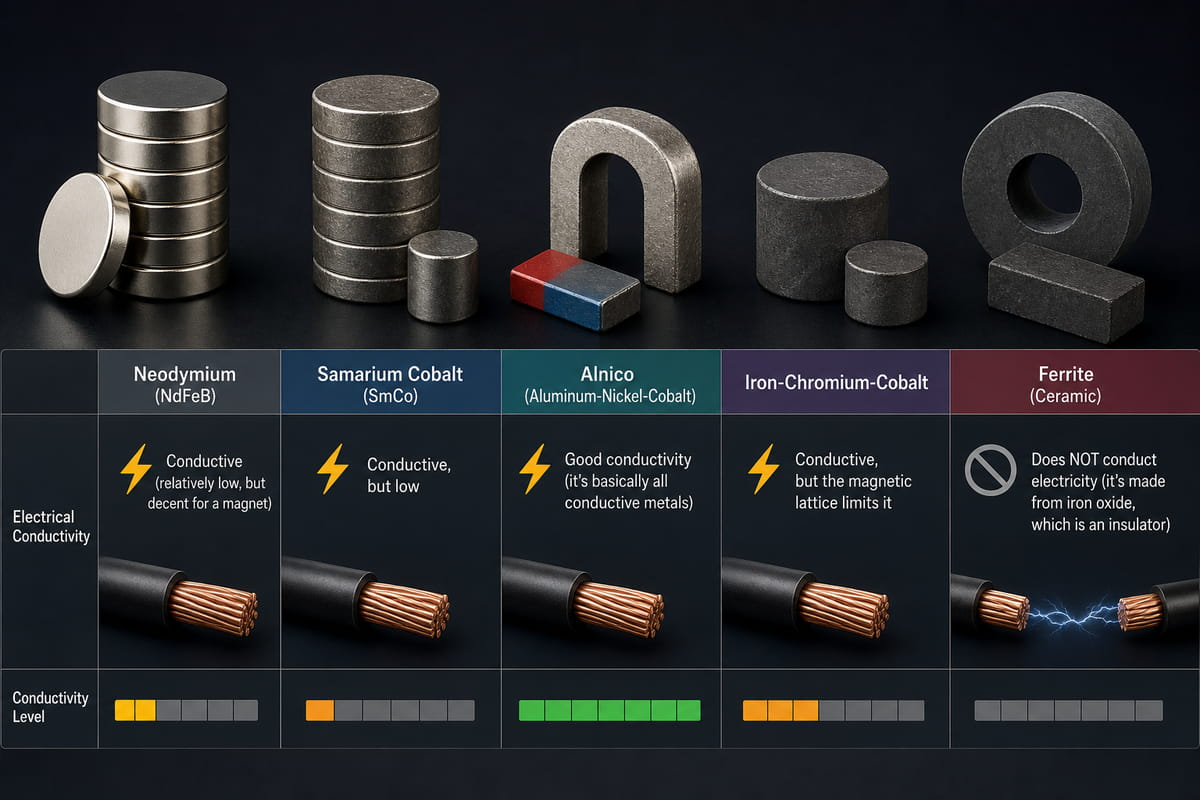
Not all magnets behave the same way when it comes to electricity. Here’s a quick rundown:
- Neodymium (NdFeB) – Conductive (relatively low, but decent for a magnet)
- Samarium Cobalt (SmCo) – Conductive, but low
- Alnico (Aluminum-Nickel-Cobalt) – Good conductivity (it’s basically all conductive metals)
- Iron-Chromium-Cobalt – Conductive, but the magnetic lattice limits it
- Ferrite (Ceramic) – Does NOT conduct electricity (it’s made from iron oxide, which is an insulator)
That last one surprises people. Ferrite magnets are magnetic… but because they’re ceramic-based, they act as insulators. Which is actually useful in electronics where you want magnetic properties without unwanted current flow.
What Happens When Run Current Through a Neo Magnet?
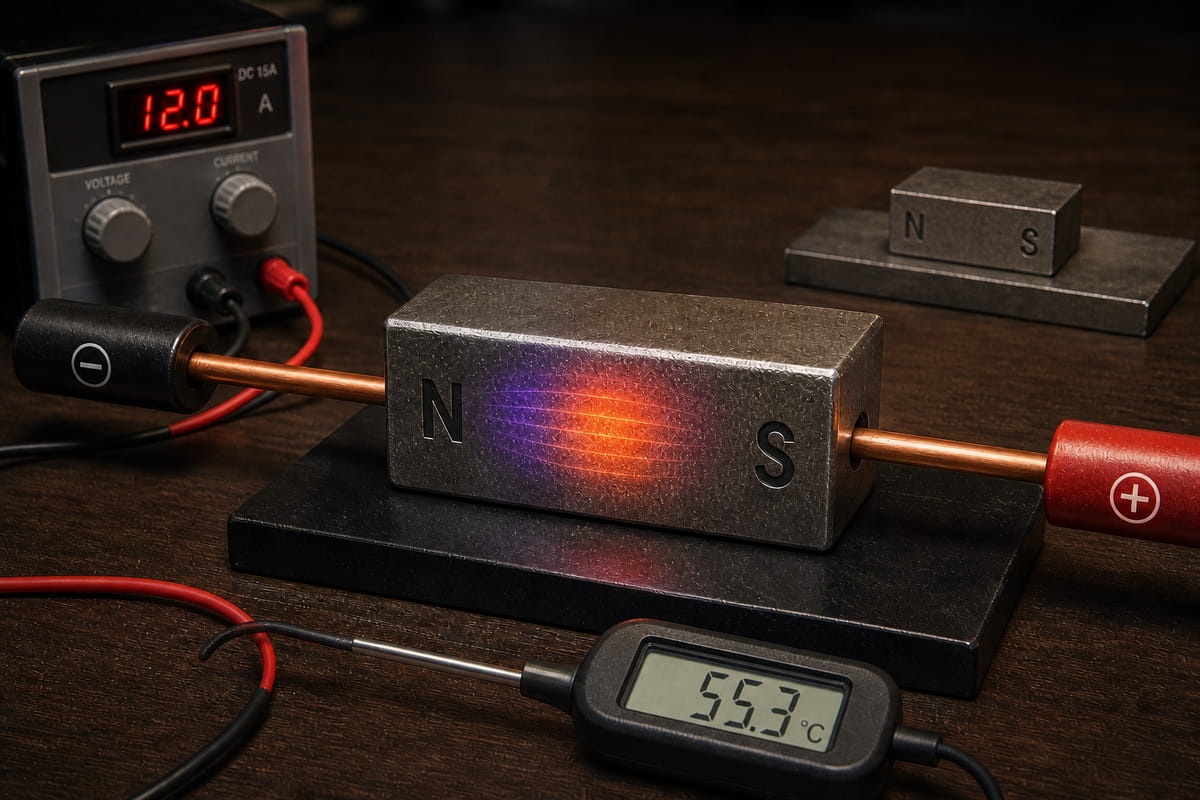
This is where it gets fun.
When you push current through a neodymium magnet, a couple of things happen:
1. You create an additional magnetic field. With a small DC current, this effect is tiny — usually about 3 orders of magnitude weaker than the magnet’s own field. So in most cases, it barely registers.
2. You generate heat. Thanks to resistance, current flowing through the magnet creates heat (Joule heating). And heat is the enemy of neodymium magnets.
Why? Because neodymium magnets are sensitive to temperature. Push them too hot and they start to demagnetize. Hit the Curie temperature, and they lose their magnetism entirely.
This is exactly why in NdFeB synchronous motors, engineers worry about eddy current losses when alternating current induces swirling currents inside the magnet. Those eddy currents heat things up — and can quietly degrade motor performance over time.
Where This Conductivity Actually Matters

So why does any of this matter in the real world? Because neodymium magnets show up everywhere:
- Electronics – Hard drives and speakers rely on their strong fields for data storage and crisp audio.
- Electric motors – EVs, power tools, and appliances use them for high torque in a compact package.
- Medical devices – MRI machines depend on their powerful, stable magnetic fields.
- Wind turbines – Their strength enables smaller, lighter, more efficient generators.
- Magnetic separators – Recycling plants use them to pull ferrous metals out of waste streams.
In a lot of these applications, engineers actually want low electrical conductivity. It helps reduce electromagnetic interference (EMI) and minimizes energy loss — which is critical in everything from aerospace tech to sensitive electronics.
One More Thing: Corrosion Risk
The low conductivity of neo magnets has a sneaky side effect.
When you place a neodymium magnet in direct contact with a more conductive metal (in a humid environment), you can trigger galvanic corrosion.
That’s why protective coatings — and smart design — matter so much. If you’re building something that needs to last, make sure your magnet’s plating is intact and it’s not sitting against dissimilar metals in damp conditions.
The Bottom Line
So, do neodymium magnets conduct electricity?
Yes — they do. Thanks to their iron content and conductive nickel coating, current flows through them well enough for low-power tasks like linking batteries in series or acting as temporary contacts.
But they’re not good conductors. Their conductivity is roughly 100x worse than copper, they have notable contact resistance, and pushing current through them generates heat that can threaten their magnetism.
My advice? Use neodymium magnets for what they’re brilliant at — holding things together with serious magnetic force. And when you need reliable electrical connections, pair them with proper magnetic connectors or pogo pins.
Do that, and you’ll get the best of both worlds: strong attachment and a solid, dependable circuit.