Quick Summary
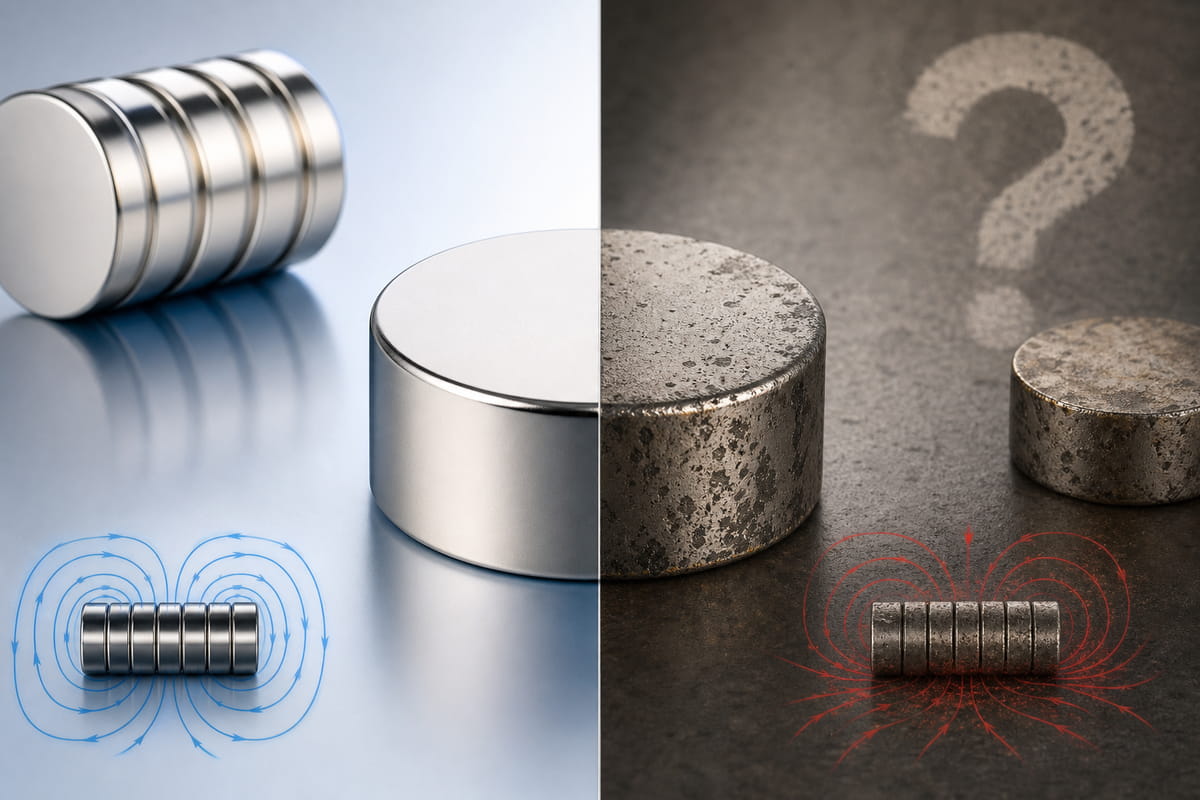
Neodymium magnets are rated by two things: a number showing magnetic strength (in MGOe) and an optional letter showing heat resistance. Standard grades run N35 to N52, with higher numbers meaning stronger magnets — though N52 costs roughly twice as much as N42 for only about 20% more power. Standard magnets lose strength above 80°C, so letter suffixes (M, H, SH, UH, EH, AH) indicate higher heat tolerance up to 230°C.
For most uses, N42 hits the best balance of cost and performance — match the grade to your strength, temperature, size, and budget needs.
Have you ever picked up a tiny magnet… and been shocked at how strong it was?
That little powerhouse was almost certainly a neodymium magnet. And if you’ve ever wondered how neodymium magnets are rated, you’re in the right place.
Here’s the deal: neodymium magnet ratings can look like a confusing jumble of letters and numbers (N42, N52SH, N35UH…). But once you understand the system, it’s actually pretty simple.
In this guide, as a professional custom neodymium magnets manufacturer, I’m going to break down exactly what those grades mean. I’ll show you how magnetic strength is measured, what those mysterious letter suffixes stand for, and how to pick the right grade for your project.
Sound good? Let’s dive in.
What Does Neodymium Magnet “Rating” Actually Mean?
When people ask how neodymium magnets are rated, they’re really asking about two separate things:
- How strong the magnet is (the number)
- How much heat it can handle (the letter)
Every neodymium magnet grade starts with the letter “N”.
That “N” simply stands for neodymium — the rare earth element these magnets are made from.
After the “N”, you’ll see a number. And sometimes, you’ll see one or two extra letters tacked onto the end.
Here’s a quick example to make it concrete:
N42SH = a magnet with a strength rating of 42 MGOe that can handle temperatures up to 150°C.
That’s the whole system in a nutshell. Now let me explain each piece.
How Are Neodymium Magnets Rated?
The Strength Number: Understanding “Maximum Energy Product”
The number after the “N” is the most important part.
It represents the magnet’s Maximum Energy Product, measured in a unit called Mega-Gauss Oersteds (MGOe).
I know, I know — that sounds super technical.
But here’s the simple version: the higher the number, the stronger the magnet.
An N52 magnet generates a bigger, more powerful magnetic field than an N35 magnet of the exact same size.
The Standard Grades You’ll Actually See
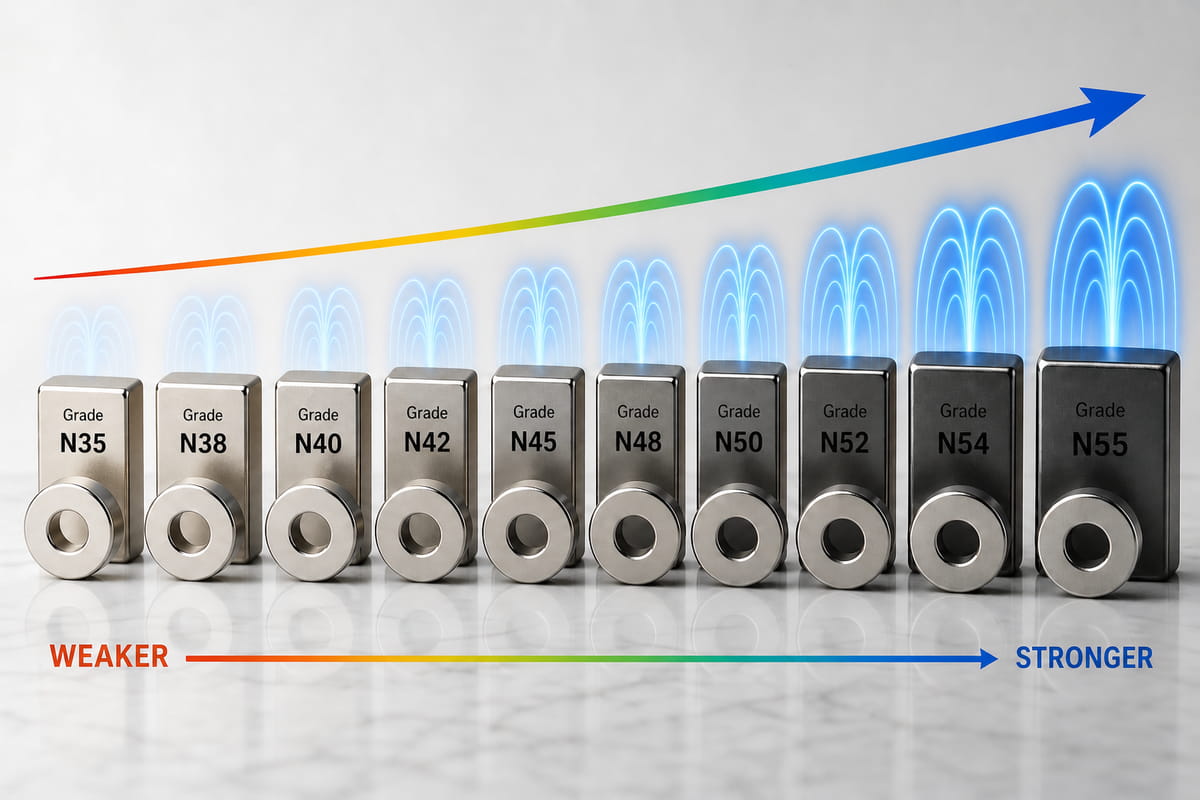
In 2026, these are the standard neodymium grades available on the market:
- N35
- N38
- N40
- N42
- N45
- N48
- N50
- N52
A few things worth pointing out:
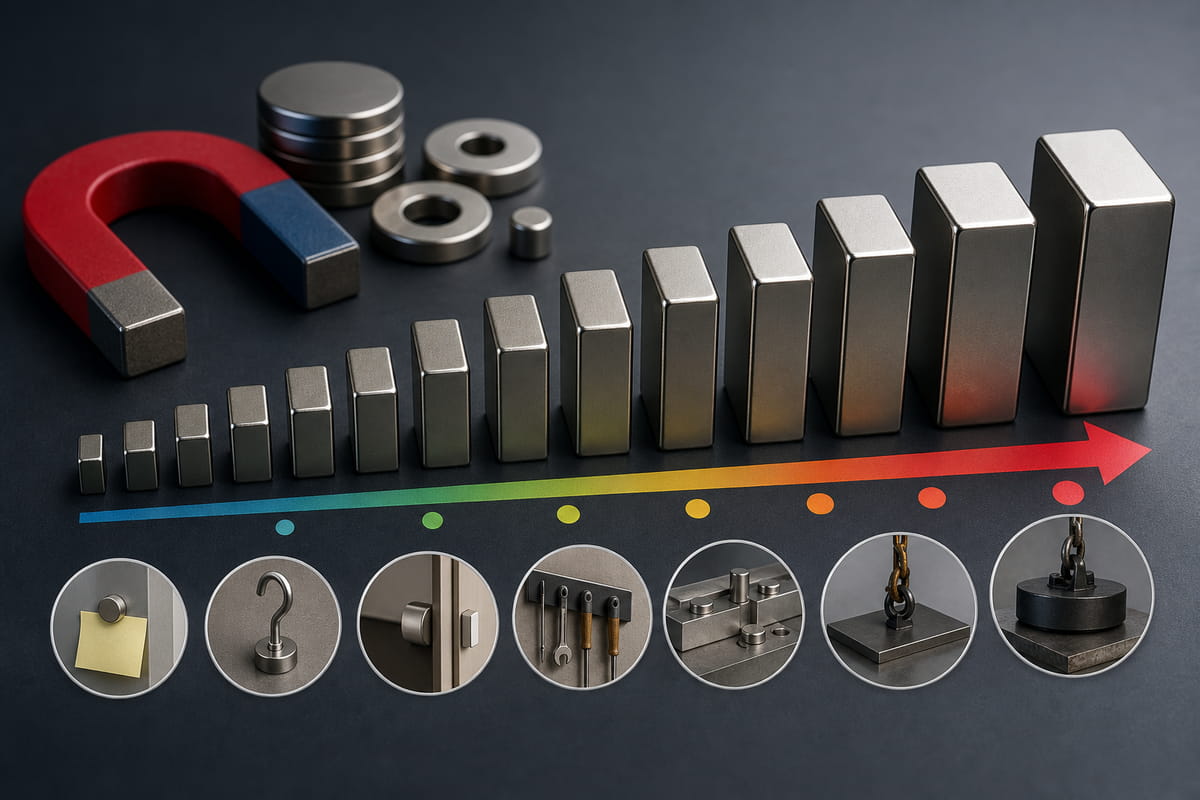
- N35 to N42 are the industry workhorses. They’re used in the majority of everyday applications.
- N52 is the strongest standard grade you can reliably buy.
- Lower grades like N30 are mostly phased out and no longer commonly produced.
Pro Tip: You might also hear about cutting-edge grades like N54, N55, and even N58. These exist, but they’re rare, expensive, and reserved for highly specialized applications. For 99% of projects, you’ll never need them.
How Much Stronger Is a Higher Grade?
Here’s something most people get wrong.
They assume that jumping from N42 to N52 gives you a massive leap in power.
In reality? An N52 magnet is only about 20% stronger than an N42 magnet of the same size.
But here’s the catch: that N52 magnet can cost roughly twice as much.
So the price increase is NOT proportional to the performance gain.
This is why N42 is my go-to recommendation for most people. It hits a sweet spot between cost and performance that’s hard to beat.
In fact, here’s a useful rule of thumb: if you have the space, using two N42 magnets is often more practical (and more affordable) than using one N52 magnet.
The Temperature Letters: What SH, UH, and EH Mean
Now let’s talk about those mysterious letters.
This is where a lot of beginners get tripped up.
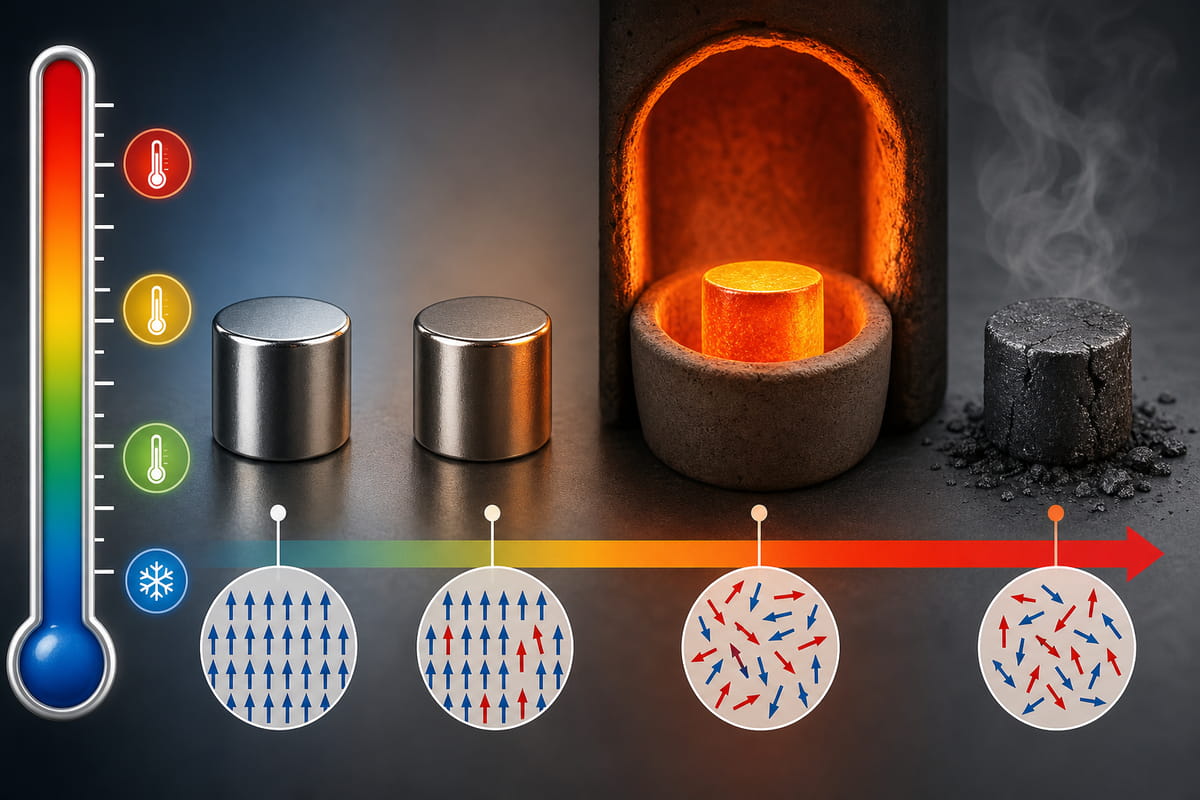
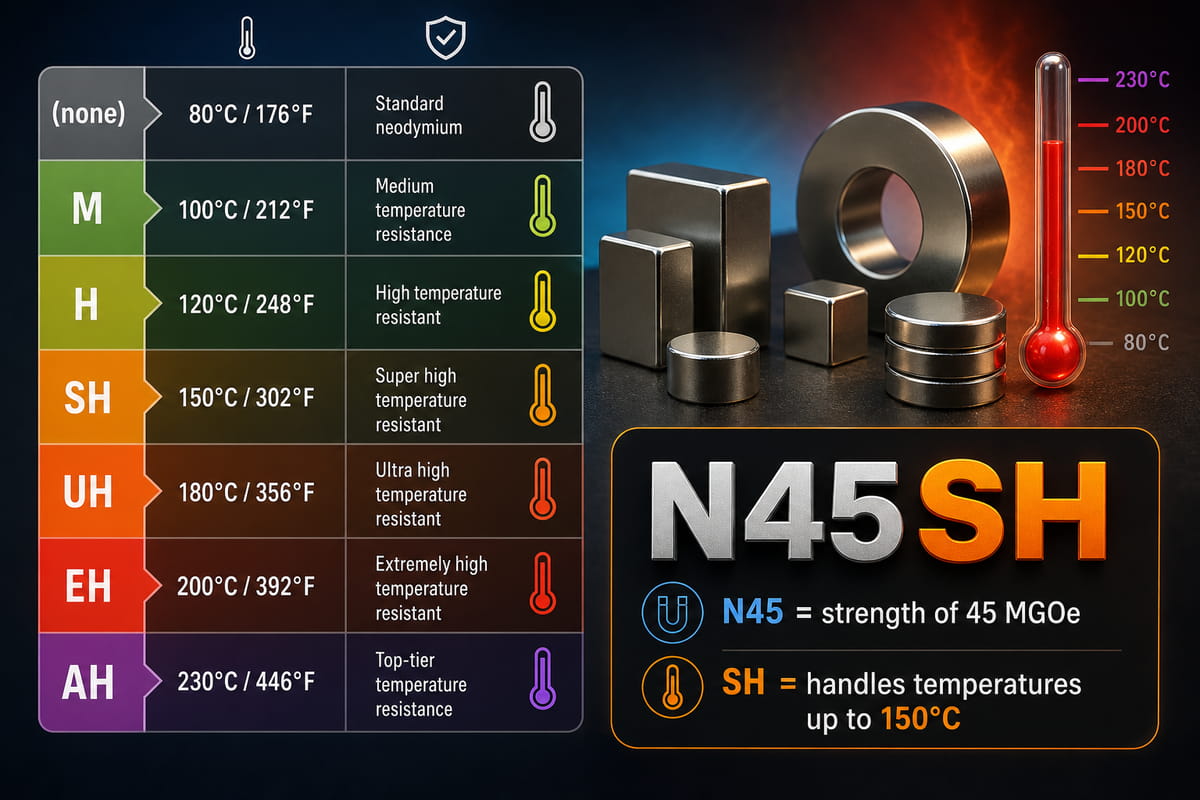
Here’s the thing: a standard neodymium magnet (with no letter) starts to permanently lose its magnetism when it gets too hot — specifically, above 80°C (176°F).
For most household uses, that’s totally fine. But what if your magnet is going inside an electric motor? Or a generator? Or some industrial machine that runs hot?
That’s where the temperature suffixes come in.
These letters tell you the maximum operating temperature the magnet can handle before it starts to demagnetize.
Here’s the full breakdown:
| Suffix | Max Operating Temperature | Description |
|---|---|---|
| (none) | 80°C / 176°F | Standard neodymium |
| M | 100°C / 212°F | Medium temperature resistance |
| H | 120°C / 248°F | High temperature resistant |
| SH | 150°C / 302°F | Super high temperature resistant |
| UH | 180°C / 356°F | Ultra high temperature resistant |
| EH | 200°C / 392°F | Extremely high temperature resistant |
| AH | 230°C / 446°F | Top-tier temperature resistance |
So when you see a grade like N45SH, you now know exactly what it means:
- N45 = strength of 45 MGOe
- SH = handles temperatures up to 150°C
Pretty simple once you know the code, right?
The Technical Properties Behind the Rating
Want to go a level deeper? Let me show you the actual measurements that determine a magnet’s grade.
There are four key properties that magnet manufacturers measure:
Remanence (Br): This measures the magnet’s ability to retain magnetism. It’s usually expressed in Kilogauss (kG) or Tesla (T). A higher Br means a stronger magnetic field at the surface.
Coercive Force (Hc): This measures how resistant the material is to being demagnetized. Think of it as the magnet’s “stubbornness.”
Intrinsic Coercivity (Hci): This measures the material’s resistance to internal demagnetization. This number becomes really important when heat or external magnetic fields enter the picture.
Maximum Energy Product (BHmax): This is the big one — the number that actually determines the grade. It’s measured in MGOe.
Here’s a simplified comparison table for the standard 80°C grades:
| Grade | Br (kG) | Hci (kOe) | BHmax (MGOe) | Max Temp |
|---|---|---|---|---|
| N35 | 11.8–12.3 | ≥12 | 35–39 | 80°C |
| N42 | 13.3–13.7 | ≥12 | 43–46 | 80°C |
| N45 | 13.7–14.1 | ≥12 | 45–49 | 80°C |
| N52 | 14.5–15.2 | ≥11 | 52–56 | 80°C |
Notice the pattern? As BHmax climbs, so does Br (the surface strength). That’s the whole point of the grading system.
A Quick Word on Heat
I want to spend a minute here, because temperature is the #1 thing people overlook.
When a neodymium magnet heats up, the atoms inside start moving around more. This disrupts the alignment that gives the magnet its power.
There are actually three types of losses that can happen:
- Reversible loss: The magnet weakens as it heats up, but bounces back to full strength once it cools down. No harm done.
- Irreversible (but recoverable) loss: The magnet stays weaker even after cooling — but you could re-magnetize it to fix it.
- Irreversible (and permanent) loss: The magnet gets so hot that its internal structure is permanently damaged. Game over. Re-magnetizing won’t help.
The bottom line? If your application involves heat, don’t just grab the strongest magnet on the shelf. Grab the one with the right temperature suffix.
A high-coercivity grade like SH or UH will hold its strength in hot conditions far better than a standard N52.
What Affects Real-World Strength (Beyond the Grade)
Here’s a myth I want to bust right now:
The grade number does NOT tell you the actual strength of the magnet in your specific application.
I’ll explain.
The grade tells you the potential of the material. But the real-world performance depends on several other factors:
- Size: A bigger magnet of a lower grade can easily out-pull a tiny magnet of a higher grade.
- Shape: The geometry of the magnet affects how the field is distributed.
- Surface area: More contact area often means more holding power.
- The metal it’s sticking to: A thick steel plate gives much better results than a thin, low-quality surface.
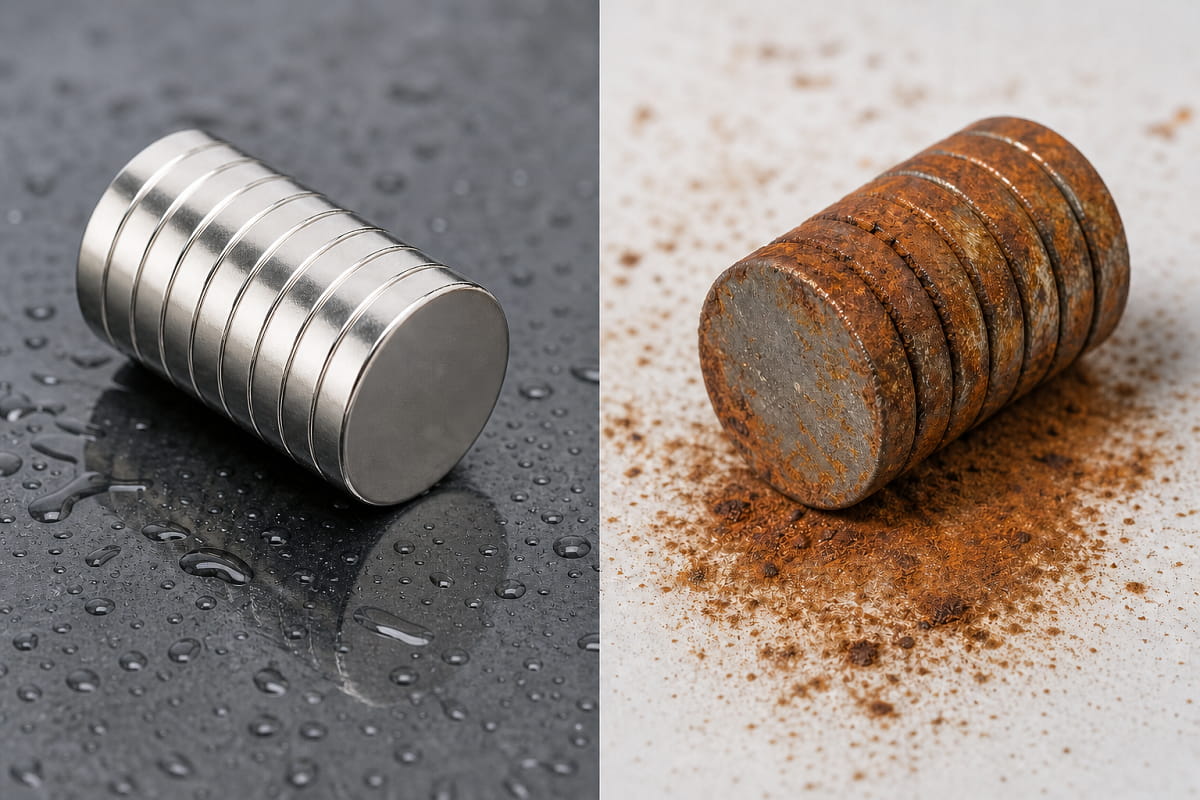
- Coating: Most neodymium magnets are coated in nickel, copper, or epoxy to prevent corrosion. This protects the magnet but doesn’t change its grade.
So when you’re comparing magnets, look at pull force (measured in pounds or kilograms) alongside the grade. Pull force tells you how much weight a magnet can actually hold — which is usually what you care about in the real world.
How to Choose the Right Grade for Your Project
Alright, let’s put this all together with some practical advice.
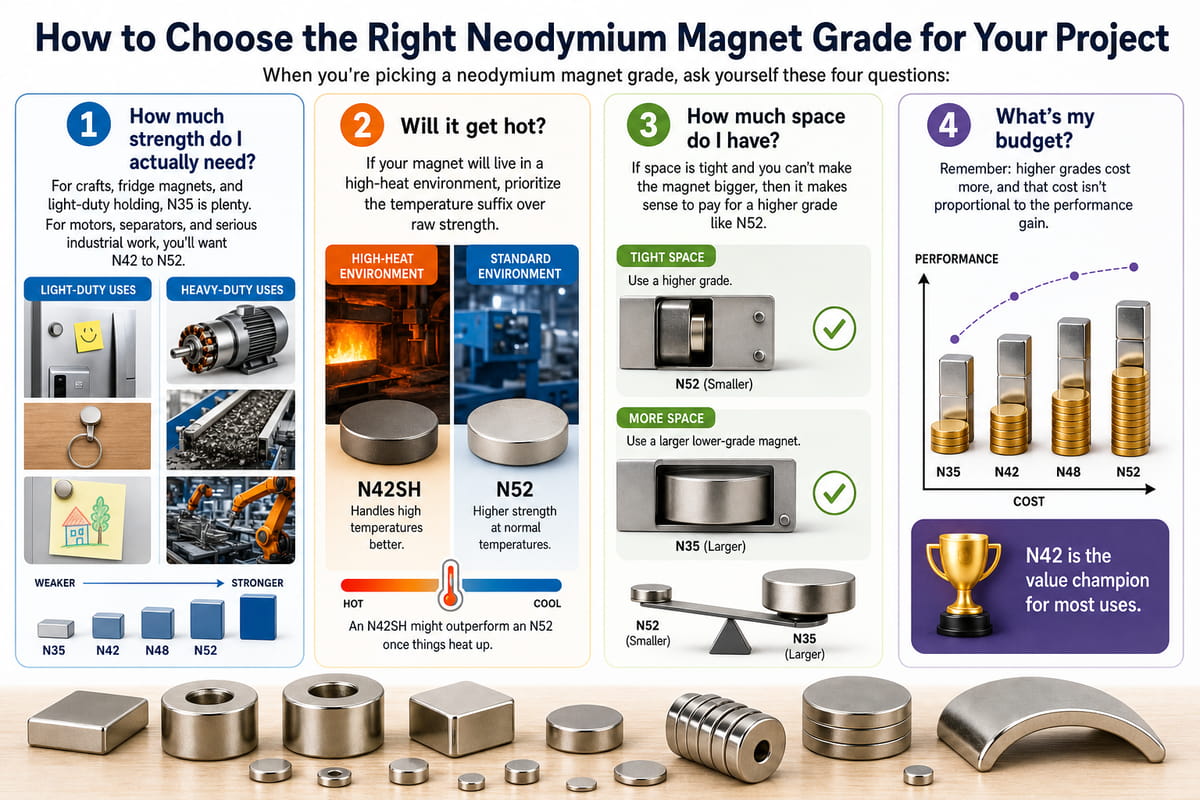
When you’re picking a neodymium magnet grade, ask yourself these four questions:
1. How much strength do I actually need?
For crafts, fridge magnets, and light-duty holding, N35 is plenty. For motors, separators, and serious industrial work, you’ll want N42 to N52.
2. Will it get hot?
If your magnet will live in a high-heat environment, prioritize the temperature suffix over raw strength. An N42SH might outperform an N52 once things heat up.
3. How much space do I have?
If space is tight and you can’t make the magnet bigger, then it makes sense to pay for a higher grade like N52. If you have room, use a larger lower-grade magnet instead.
4. What’s my budget?
Remember: higher grades cost more, and that cost isn’t proportional to the performance gain. N42 is the value champion for most uses.
A Quick Note on Safety
I can’t write a guide about strong magnets without mentioning this.
Neodymium magnets are powerful — and that power can be dangerous if you’re careless.
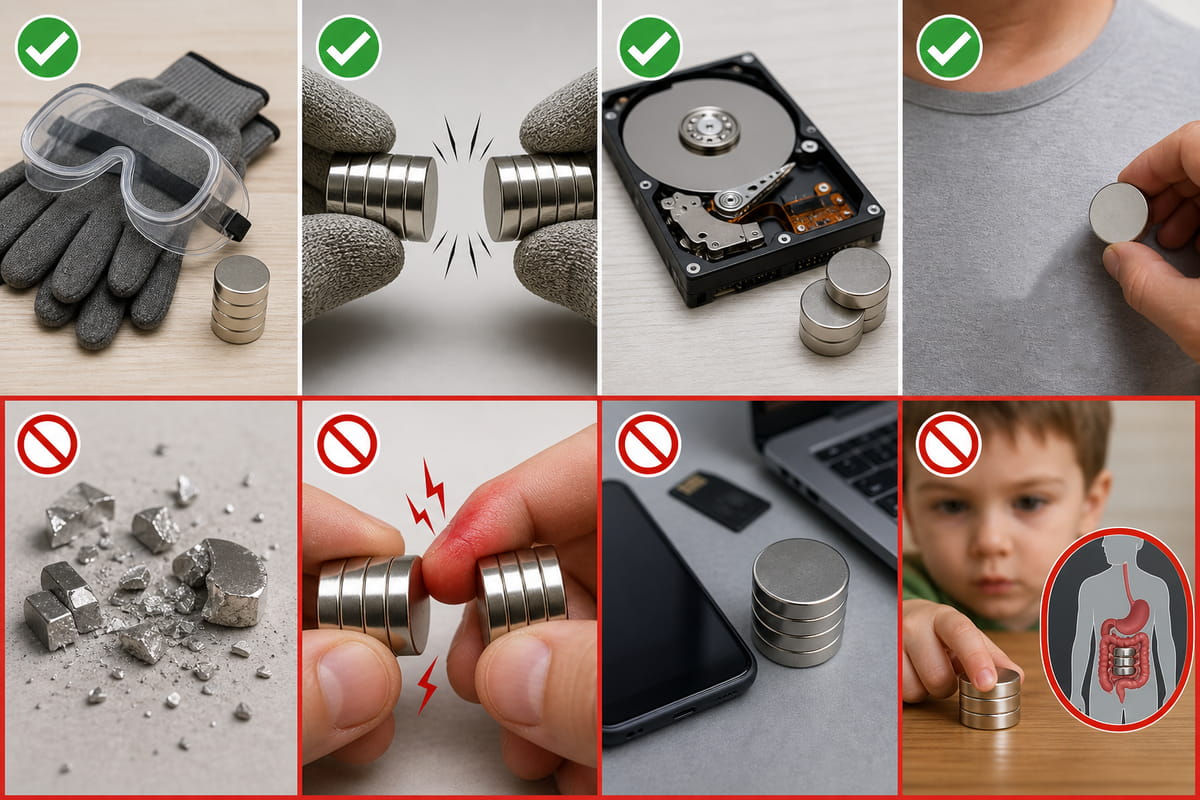
Here are my top safety reminders:
- Wear gloves and eye protection. These magnets are brittle and can shatter, sending sharp fragments flying.
- Keep your fingers clear. Two strong magnets snapping together can pinch hard enough to break skin (or bone).
- Keep them away from electronics. They can wipe hard drives and interfere with pacemakers.
- Keep them away from children. Swallowed magnets cause serious, life-threatening injuries. This is non-negotiable.
The Bottom Line
So, how are neodymium magnets rated?
It comes down to two simple things: a number that tells you the magnetic strength (in MGOe), and an optional letter that tells you the maximum operating temperature.
Once you understand that the “N” stands for neodymium, the number reflects the Maximum Energy Product, and letters like SH or UH indicate heat resistance, the whole system stops being confusing and starts being genuinely useful.
My advice? Don’t automatically reach for the highest grade. Match the grade to your actual needs — strength, temperature, size, and budget. For most people, an N42 magnet hits the perfect balance.
And now that you know exactly how neodymium magnets are rated, you can shop with total confidence — and pick the right magnet for the job every single time.