Quick Summary:
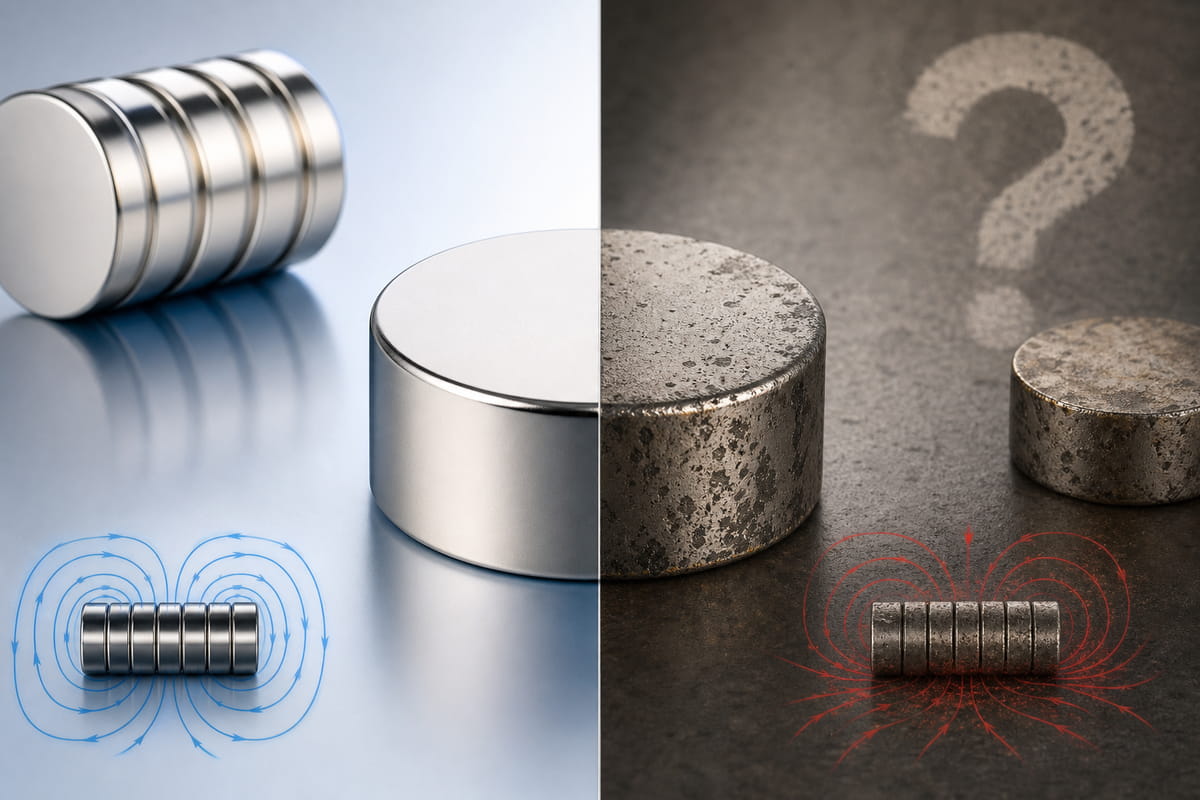
N45 is a strong neodymium magnet grade, with a maximum energy product of 45 MGOe and around 13,200–13,800 Gauss remanence. Stronger than N42 and N35. Weaker than N52 though.
Standard N45 magnets handle up to 80°C. The N45SH goes up to 200°C. But grade alone is not enough to determine. Size, shape, surface coating, air gaps, they all affect the real pull force.
Have you ever heard about N45 magnets? Maybe you’re looking to buy a magnet, or maybe you’re wondering why one magnet costs more than another. Do you want to know what it is and how it compares to other magnets?
In this article, as a professional custom N45 magnets manufacturer, I will share everything about these magnets that you should know.
What is an N45 Magnet?
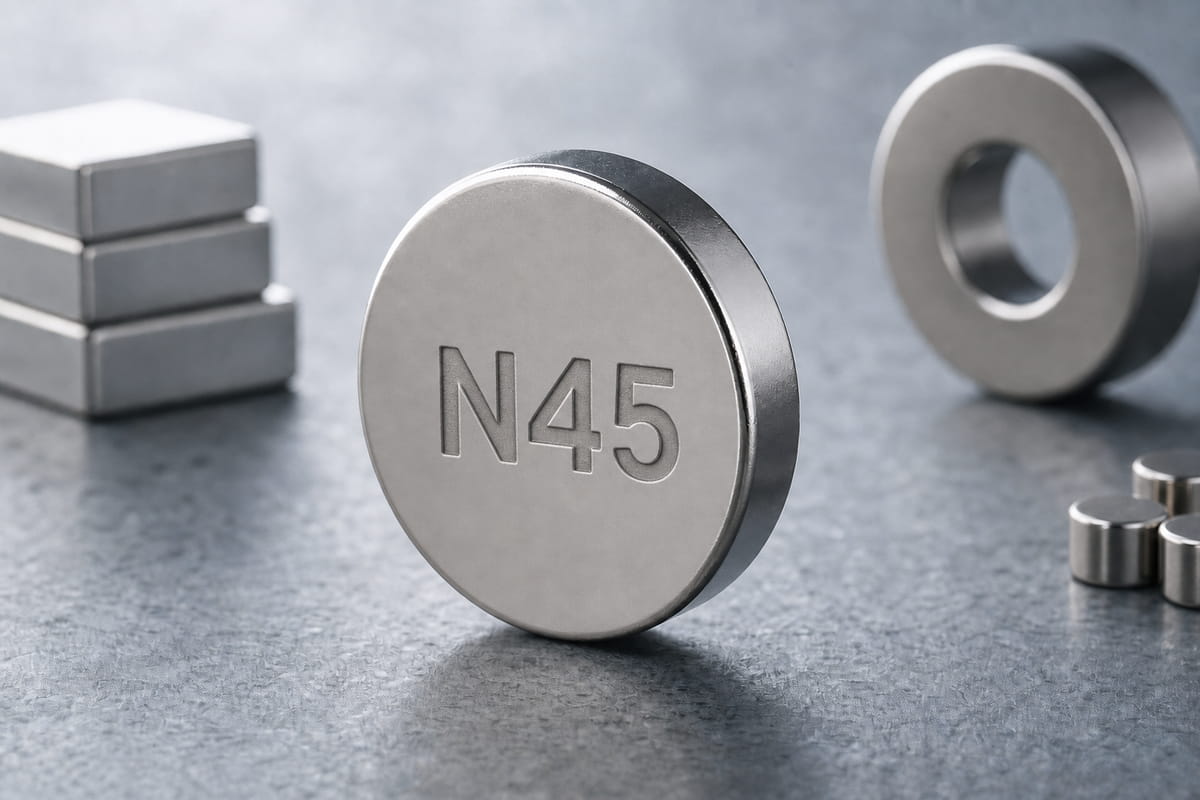
It’s a high-performance neodymium (NdFeB) rare-earth magnet. The “N” stands for Neodymium. The “45” represents its maximum energy product—around 45 MGOe. That’s a fancy way of saying it’s really strong for its size.
In fact, N45 magnets deliver between 13,200 and 13,800 Gauss. For context, that’s about 10x stronger than your average fridge magnet.
How N45 Magnets Work
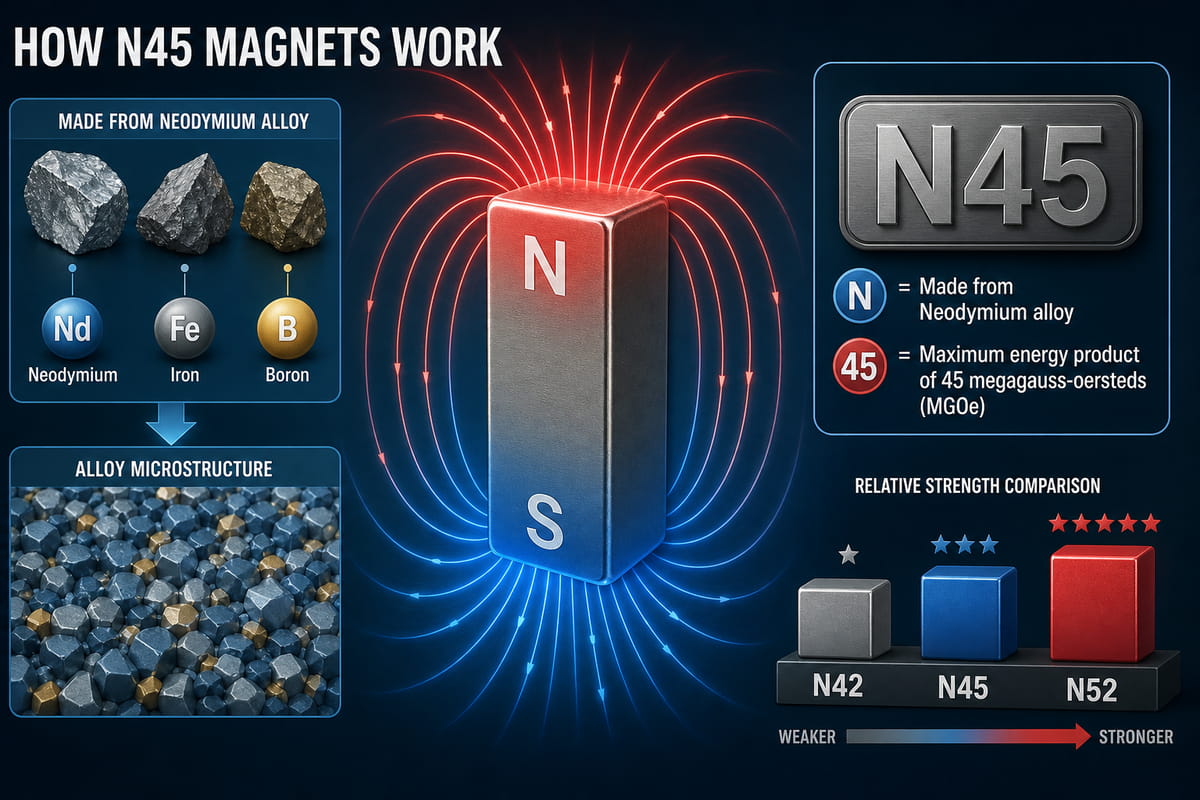
Neodymium magnets are made from an alloy of neodymium, iron, and boron. Manufacturers manipulate this alloy to create different grades. And each grade has unique magnetic properties.
The “N45” label tells you two things:
- N = Made from Neodymium alloy
- 45 = Maximum energy product of 45 megagauss-oersteds (MGOe)
The higher that number, the stronger the magnet. So an N45 is more powerful than an N42. But it’s slightly less powerful than an N52.
Pro Tip: When comparing magnets, don’t just look at the grade number. Size matters too. A big N42 can easily outperform a small N45. More on that in a minute.
Why Are N45 Magnets So Strong?
Let me explain what makes these things so powerful:
1. High Coercivity

N45 magnets resist demagnetization really well. Their magnetism stays strong for years—decades even. No weakening over time.
2. High Remanence
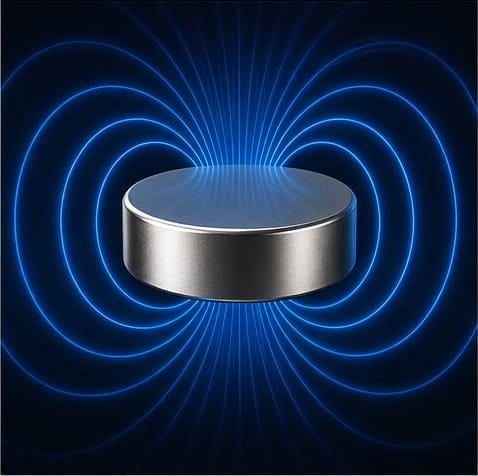
After the magnetizing force disappears, N45 magnets keep a powerful magnetic field. We’re talking 13,200 to 13,800 Gauss of residual flux density.
3. High Energy Density

These magnets pack a massive magnetic force into a tiny space. That’s why you can lift 50+ pounds with a magnet the size of a hockey puck.
4. Decent Temperature Resistance
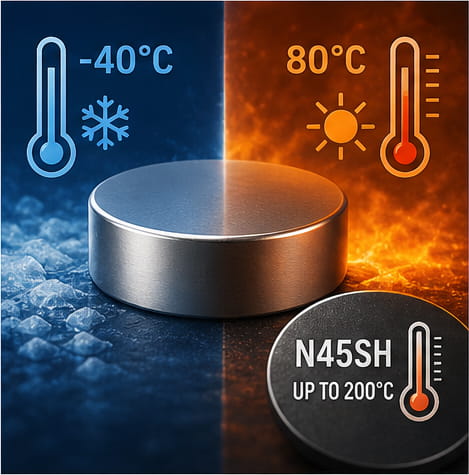
Standard N45 magnets work up to about 80°C (176°F). Need higher temps? Look for N45SH grade (Super High Temperature). Those can handle up to 200°C.
5. Corrosion Resistance
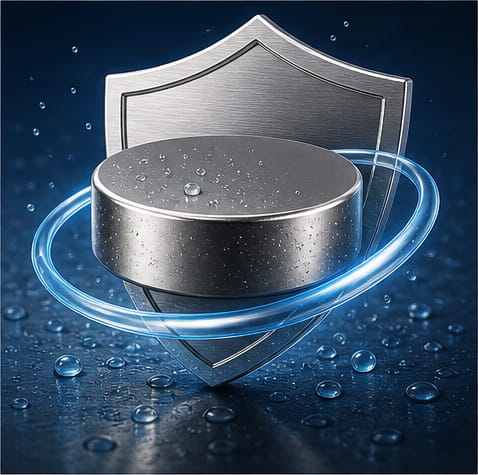
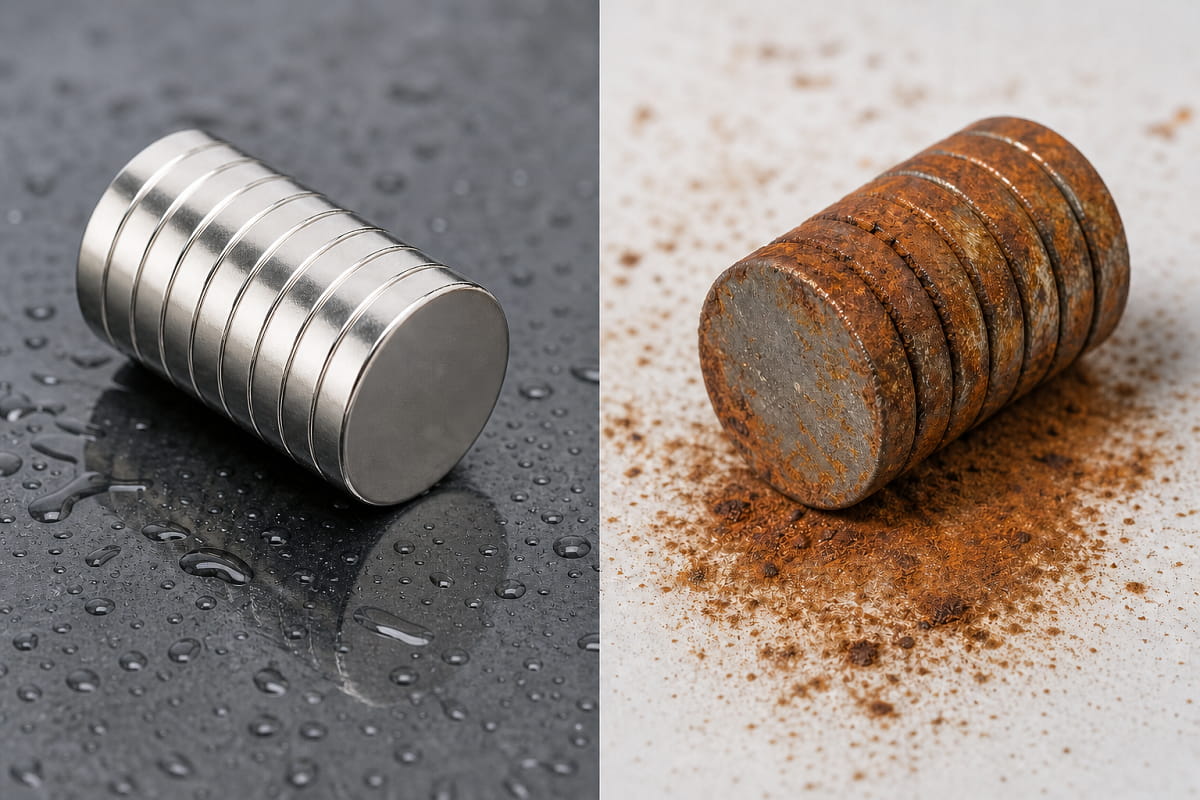
Most N45 magnets come with a nickel-copper-nickel coating. This protects against rust and wear. Good for long-term reliability.
N45 Magnet Strength: The Numbers
Here’s what you need to know about raw magnetic output:
| Property | N45 Value |
|---|---|
| Maximum Energy Product | 45 MGOe |
| Remanence (Br) | 13,200 – 13,800 Gauss |
| Coercivity (Hc) | 11,000 – 12,100 Oe |
| Max Operating Temp | 80°C (176°F) |
One Tesla equals 10,000 Gauss. So N45 magnets produce around 1.32 to 1.38 Tesla. That’s seriously strong.
N45 vs Other Magnet Grades
N45 vs N42 Magnet
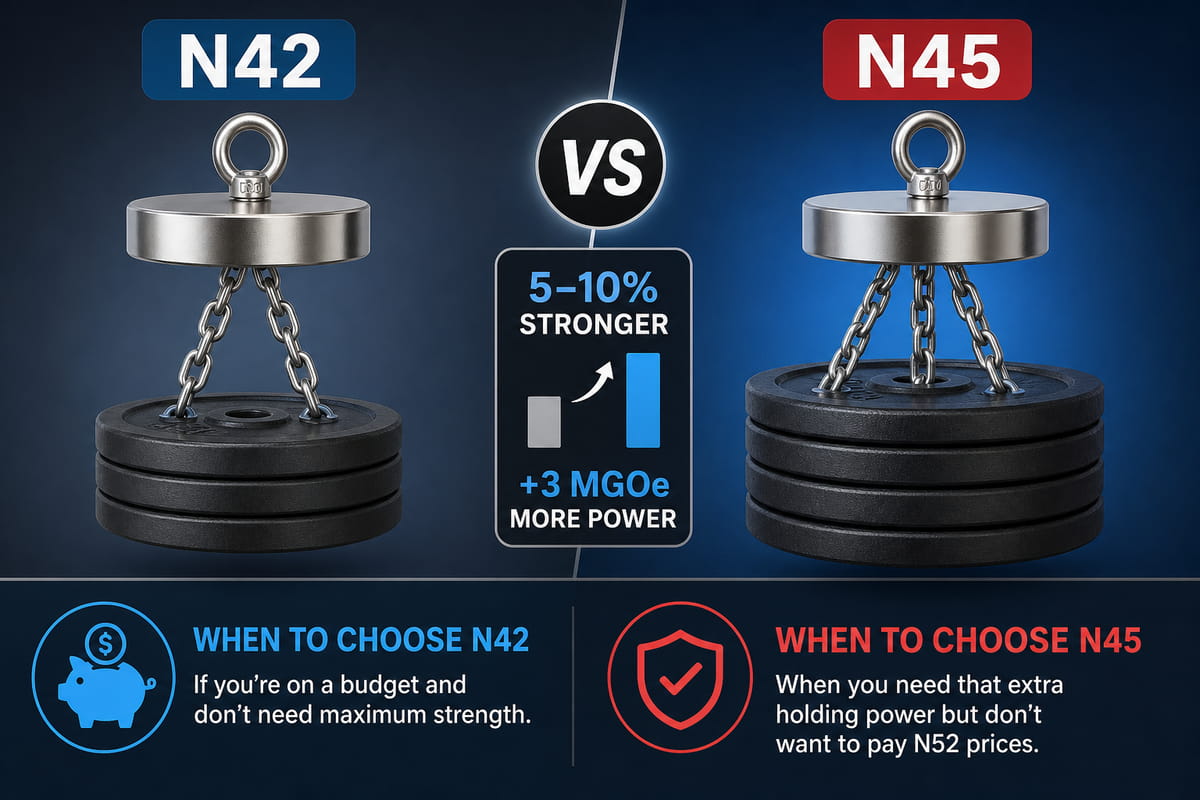
N45 is about 5-10% stronger than N42. The difference? 3 MGOe. That might not sound like much. But in practice, it means N45 can hold more weight in the same size package.
When to choose N42: If you’re on a budget and don’t need maximum strength.
When to choose N45: When you need that extra holding power but don’t want to pay N52 prices.
N45 vs N52 Magnet
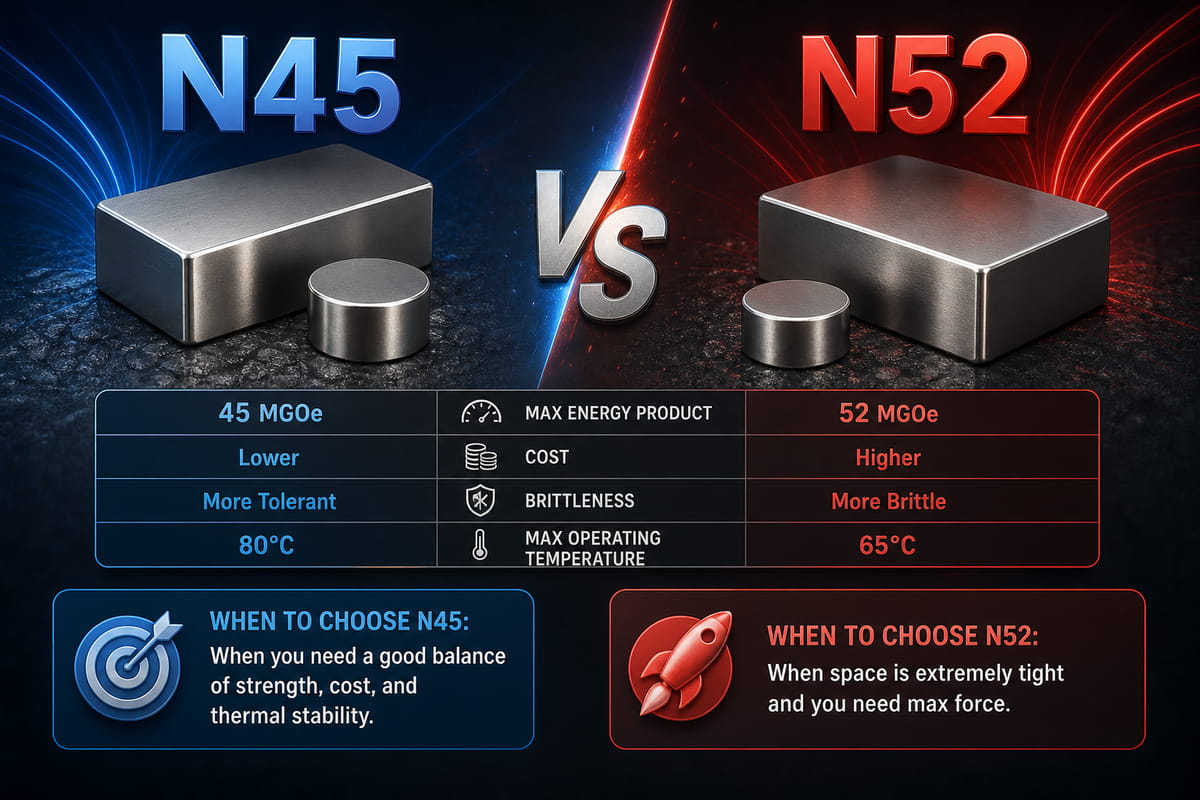
N52 is the top dog. It delivers around 52 MGOe. That’s significantly more than N45’s 45 MGOe.
But here’s the thing:
N52 magnets cost more. And they’re more brittle. Plus, their max operating temperature is lower—around 65°C vs N45’s 80°C.
When to choose N52: When space is extremely tight and you need max force.
When to choose N45: When you need a good balance of strength, cost, and thermal stability.
N45 vs N35 Magnet
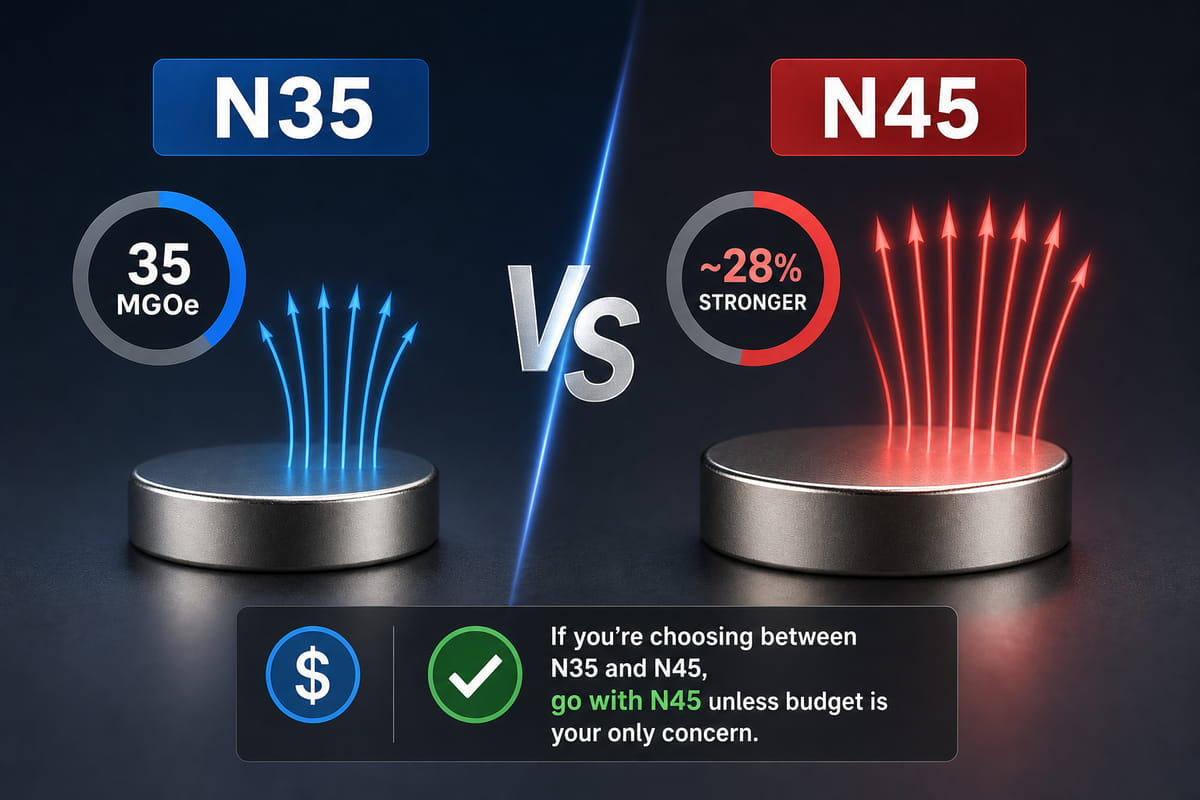
N35 is the bottom rung of neodymium magnets. It delivers about 35 MGOe. N45 is roughly 28% stronger.
Bottom line? If you’re choosing between N35 and N45, go with N45 unless budget is your only concern.
Common Applications for N45 Magnets
Because of their high holding power, N45 magnets show up everywhere:
Industrial Manufacturing
- Electric motors and generators
- Magnetic couplings
- Sensors and automation equipment
- Robotics
Electronics
- High-end speakers and headphones
- Hard drives
- Magnetic resonance angiography (MRA) machines
DIY and Crafts
- Heavy-duty home organization
- Custom closures and latches
- Kinetic sculptures
- Magnetic knife holders
Research Equipment
- Physics experiments
- Chemistry lab equipment
- Magnetic separation systems
N45 Magnet Shapes and Sizes
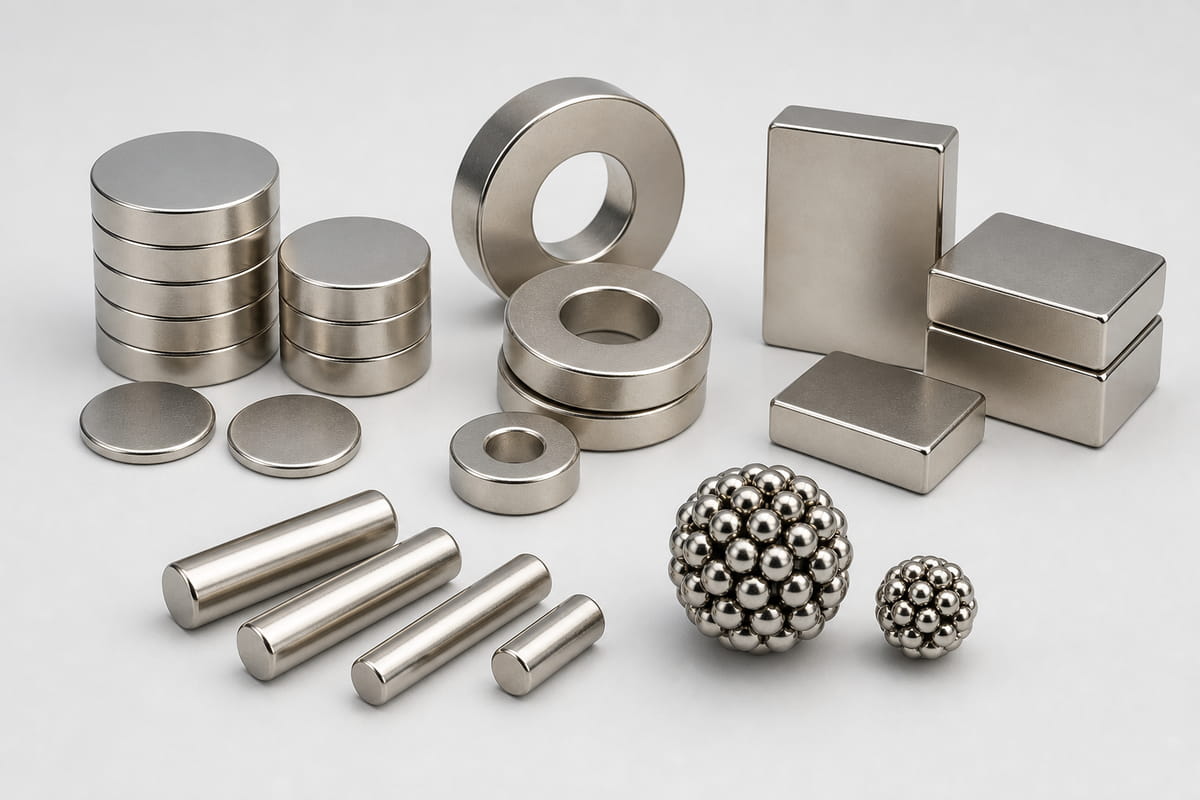
You can get N45 magnets in practically any shape:
Disc Magnets: Flat and circular. Great for general-purpose holding.
Ring Magnets: Like discs but with a hole in the middle. Perfect for fitting around shafts.
Block Magnets: Rectangular. Versatile and easy to mount.
Cylinder Magnets: Rod-shaped. Often used in sensors and motors.
Sphere Magnets: Ball-shaped. Usually have multiple poles. Fun for experiments.
How Many Gauss is an N45 Magnet?
N45 magnets have a remanence of 13,200 to 13,800 Gauss. That’s the magnetic field strength at the surface.
Here’s how it compares to other grades:
- N35: 11,700 – 12,100 Gauss
- N38: 12,200 – 12,600 Gauss
- N42: 12,900 – 13,200 Gauss
- N45: 13,200 – 13,700 Gauss
- N48: 13,700 – 14,200 Gauss
- N50: 14,000 – 14,600 Gauss
So N45 sits right in the middle of the pack. Strong enough for most industrial applications. Not quite as powerful as N50 or N52.
Pull Force: What Can N45 Magnets Actually Hold?
Pull force depends on size and shape. But here are some real-world examples:
- Disc magnet (1” diameter x 1” thick): ~105 lbs pull force
- Disc magnet (0.94” diameter x 0.75” thick): ~40-50 lbs
- Block magnet (small): A few pounds to several kilograms
Important: Pull force varies based on the surface material. Steel works best. Thicker materials = stronger hold. Air gaps kill performance.
Temperature Limitations
Standard N45 magnets have a max operating temperature of 80°C (176°F).
Exceed that? You’ll start losing magnetic strength. Permanently.
Need higher temps? Look for N45SH grade. The “SH” stands for Super High Temperature. These can handle up to 200°C.
Cost: N45 vs Ferrite
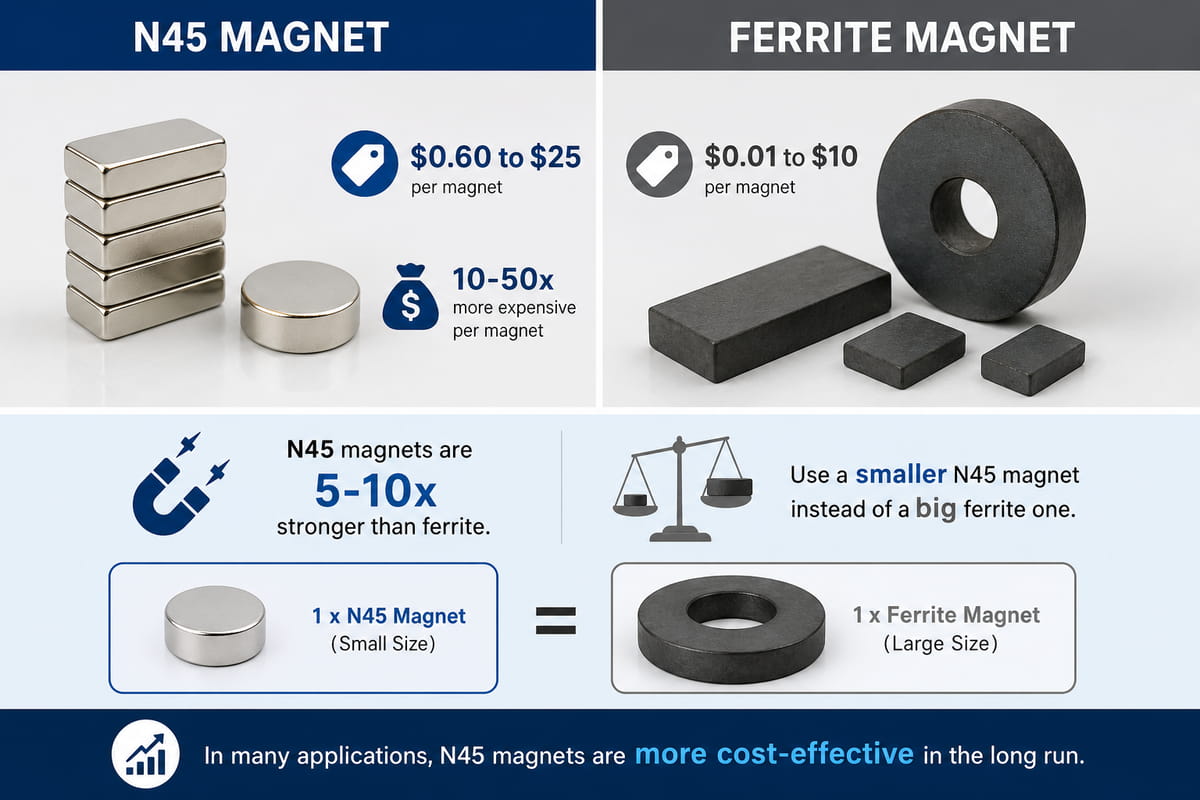
N45 magnets cost more than ferrite magnets. Here’s the typical price range:
- N45 neodymium: $0.60 to $25 per magnet
- Ferrite: $0.01 to $10 per magnet
That’s 10-50x more expensive per magnet.
But here’s the kicker:
N45 magnets are 5-10x stronger than ferrite. So in many applications, you can use a smaller N45 magnet instead of a big ferrite one. That often makes N45 more cost-effective in the long run.
Machining N45 Magnets
Warning: Neodymium magnets are brittle. They chip and crack easily.
If you need to machine them:
- Use diamond-tipped tools
- Keep RPMs low
- Apply light pressure
- Avoid overheating
- Go slowly
Better option: Buy magnets in the exact size and shape you need. Machining is risky.
How to Choose the Right N45 Magnet
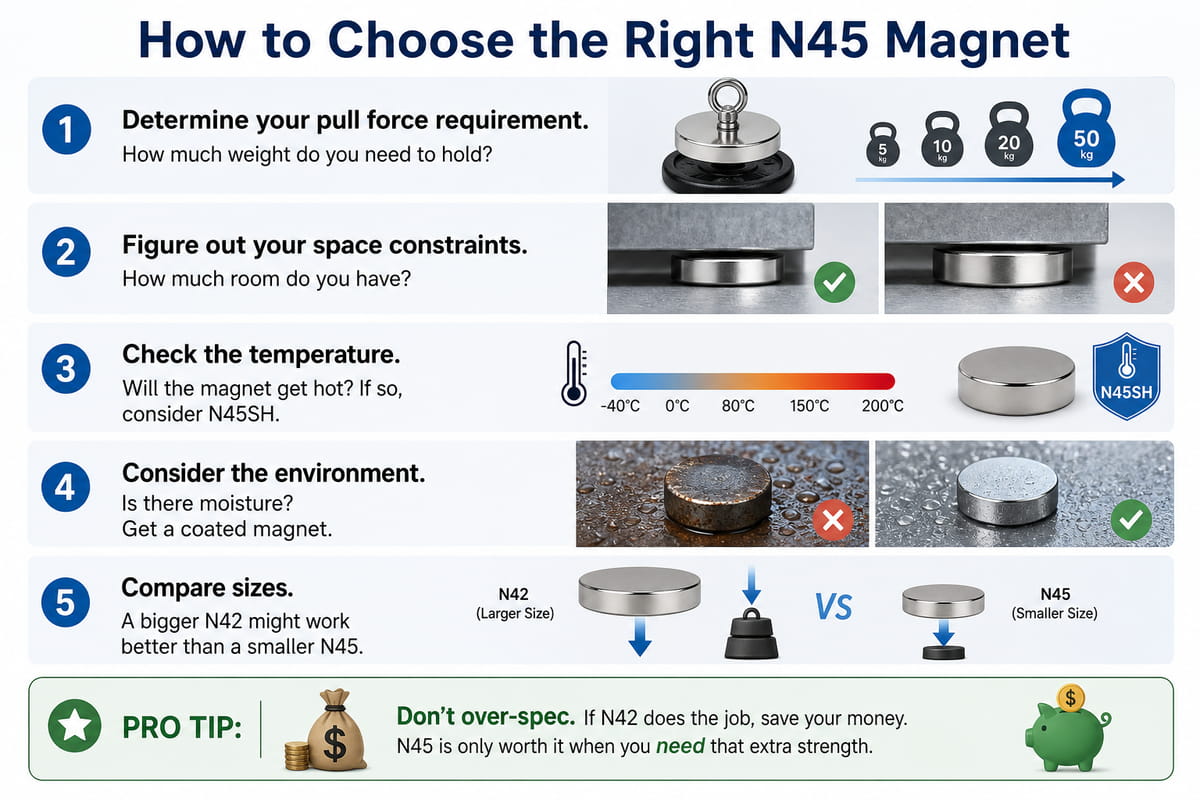
Here’s my simple framework:
1. Determine your pull force requirement. How much weight do you need to hold?
2. Figure out your space constraints. How much room do you have?
3. Check the temperature. Will the magnet get hot? If so, consider N45SH.
4. Consider the environment. Is there moisture? Get a coated magnet.
5. Compare sizes. A bigger N42 might work better than a smaller N45.
Pro Tip: Don’t over-spec. If N42 does the job, save your money. N45 is only worth it when you need that extra strength.
The Bottom Line
What is an N45 magnet? It’s a versatile, high-performance neodymium magnet that balances strength, cost, and thermal stability. Not as powerful as N52. Stronger than N35, N38, and N42. Perfect for most industrial, commercial, and DIY applications.
If you need strong holding power in a compact size—without breaking the bank—N45 is your sweet spot.
Just remember: size matters more than grade. And always account for temperature and environmental factors.
Choose wisely. Your project will thank you.