Quick Summary
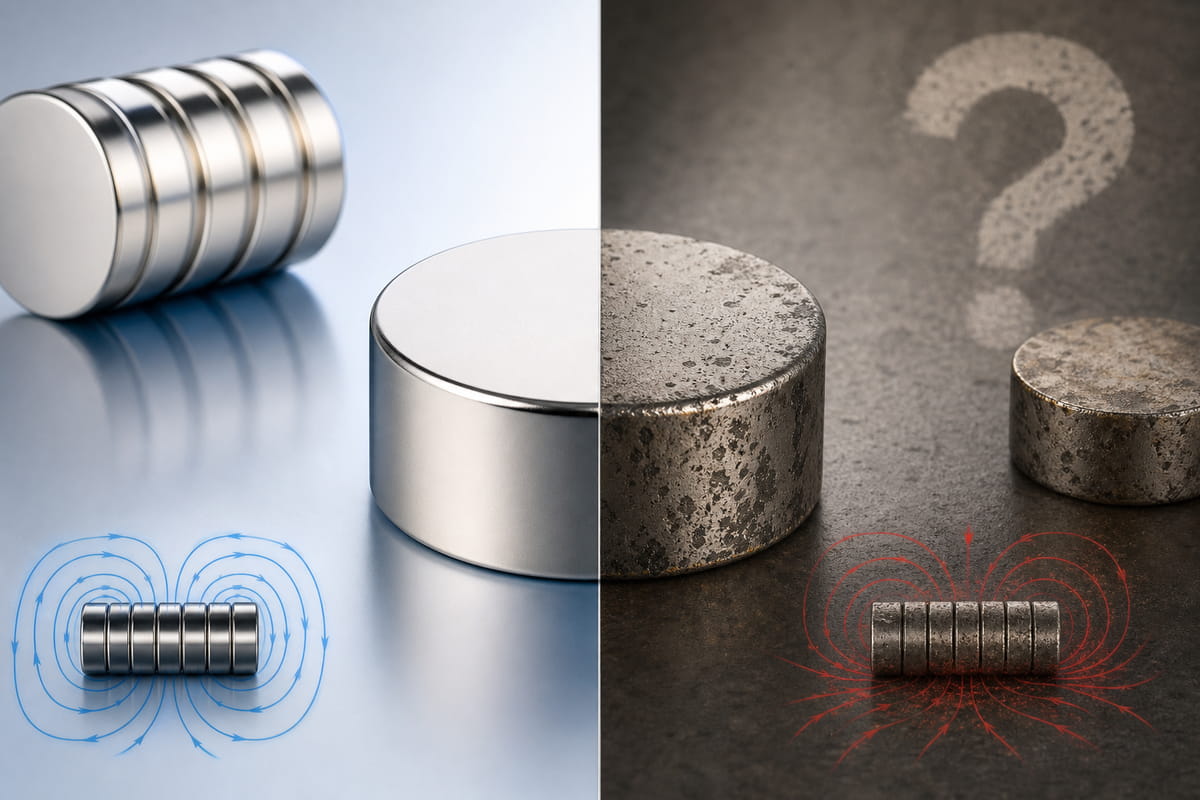
Neodymium magnets are the strongest permanent magnets because their Nd₂Fe₁₄B alloy creates high magnetocrystalline anisotropy and coercivity, locking magnetic forces in one direction. They are up to 10 times stronger than ceramic magnets of the same size.
However, they are extremely dangerous: large magnets can break bones, shatter, and erase credit cards or pacemakers from a distance. Handle with extreme care and keep away from children.
When you hold a neodymium magnet that’s smaller than a quarter, and it can hold a big metal with such force that it actually scares you. Meanwhile, that fridge magnet you bought at the supermarket? It can barely hold a single piece of iron sheet.
The high strength of neodymium magnetscomes down to some seriously clever atomic-level engineering. And once you understand the science, it all clicks.
In this article, as a professional neodymium magnets manufacturer, let me break down why neodymium magnets are so strong.
The Simple Answer
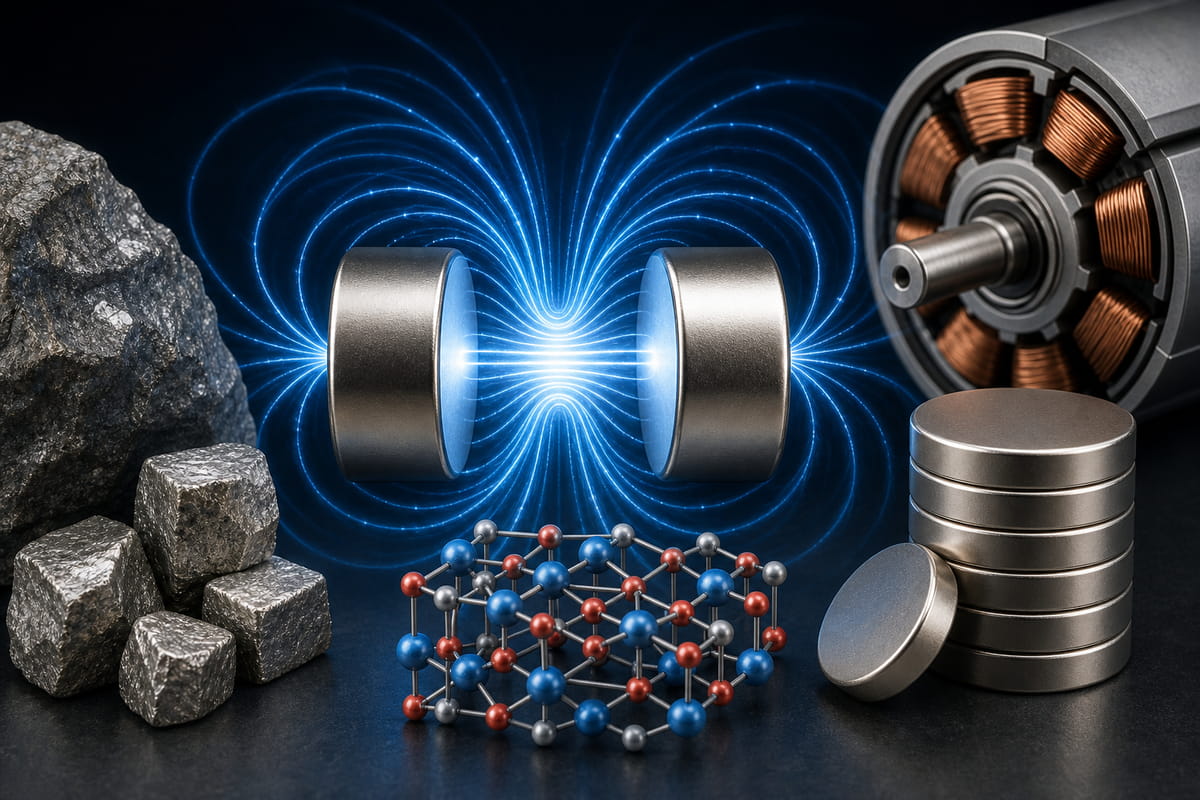
Neodymium magnets are the strongest permanent magnets on the planet because their internal structure is built to generate and lock in massive magnetic energy.
Most magnets lose their power over time. Or they just don’t have enough “oomph” to begin with. But neodymium magnets? They pack a punch that’s up to 10 times stronger than ceramic (ferrite) magnets of the same size.
The reason? Three things:
- 1. The right ingredients
- 2. An insane crystal structure
- 3. Resistance to losing their strength
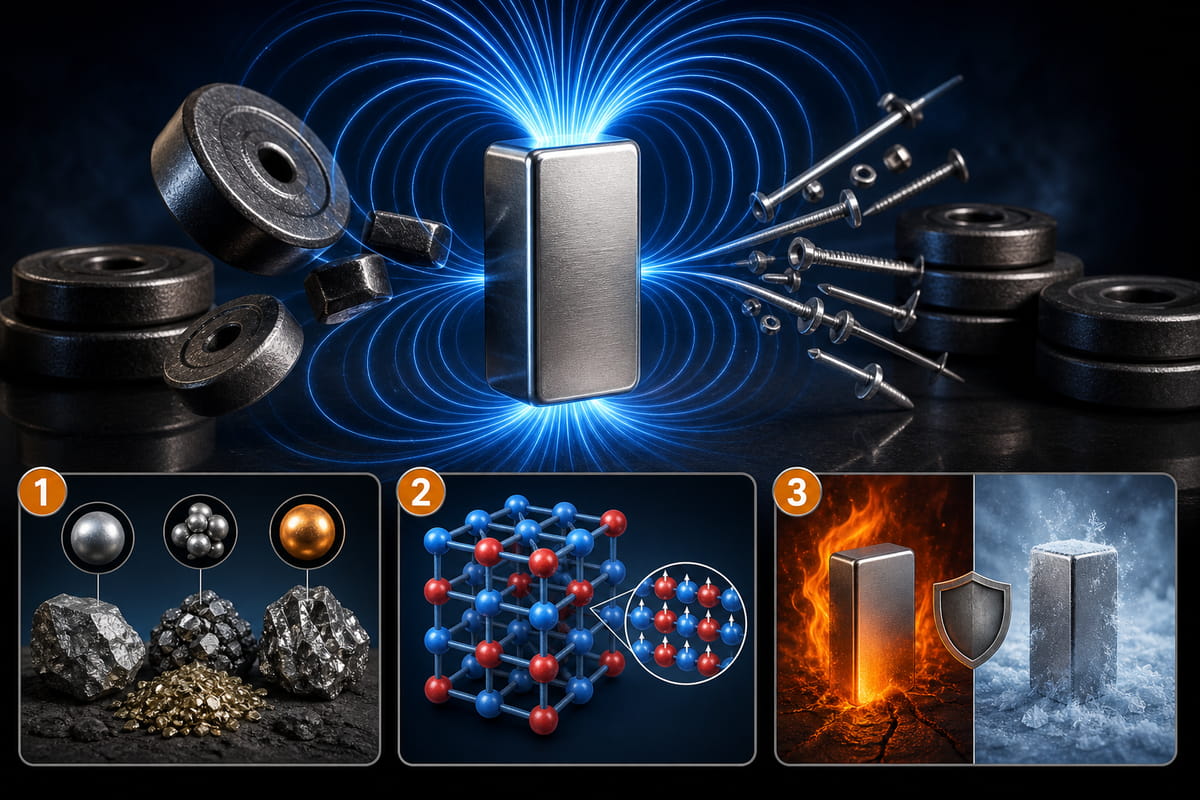
Let’s dig into each one.
What Are Neodymium Magnets Made Of?
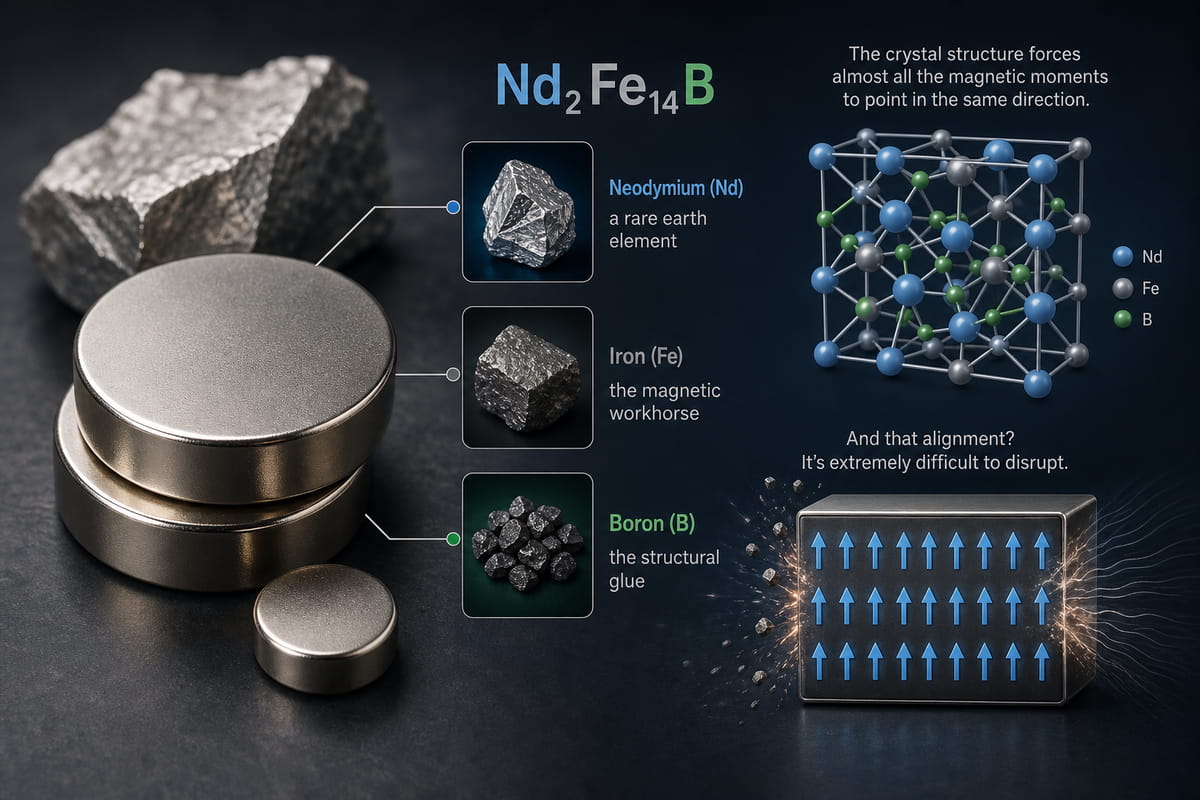
Neodymium magnets aren’t just neodymium. They’re made from a specific alloy called Nd₂Fe₁₄B.
That’s:
- Neodymium (Nd) – a rare earth element
- Iron (Fe) – the magnetic workhorse
- Boron (B) – the structural glue
When you mix these three elements in the right proportions, something magical happens. The atoms arrange themselves into a very specific shape called a tetragonal crystalline lattice.
Think of it like this:
Imagine you have a bunch of people in a room. If everyone’s facing a different direction, it’s chaos.
But if you line them all up perfectly, facing the same way? Now you’ve got a powerful, unified force.
That’s exactly what happens inside a neodymium magnet. The crystal structure forces almost all the magnetic moments to point in the same direction.
And that alignment? It’s extremely difficult to disrupt.
Why Neodymium Magnets Are So Strong: The Three Pillars
Let me give you the three specific properties that make these magnets absolute beasts.
1. Unpaired Electrons
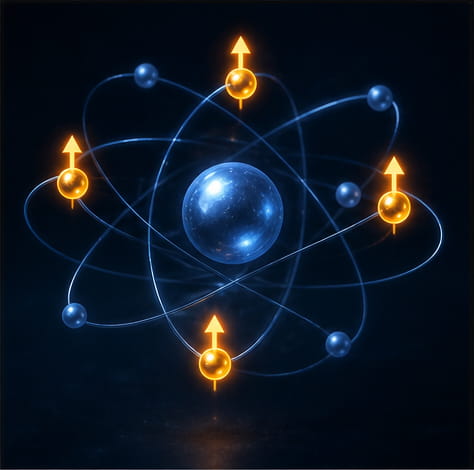
Every atom has electrons. Most electrons pair up and cancel each other out magnetically.
But neodymium atoms? They have four unpaired electrons. For comparison, iron only has three.
More unpaired electrons = bigger magnetic field.
And when those electrons all spin in the same direction? You get a seriously powerful magnetic moment.
Bottom line: Neodymium atoms are naturally built to generate strong magnetic fields at the quantum level.
2. High Magnetocrystalline Anisotropy
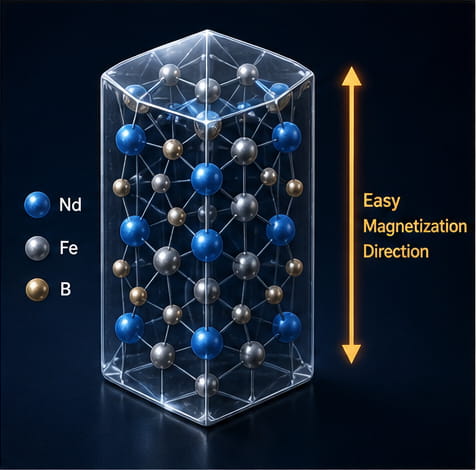
Here’s where things get interesting.
The crystal structure of Nd₂Fe₁₄B is asymmetrical. It’s not a perfect cube. It’s stretched in one direction.
This creates something called magnetocrystalline anisotropy.
Translation: The magnetic forces are “locked” into a single direction. They can’t easily rotate or realign.
Think of it like a one-way street vs. a roundabout.
In a roundabout, cars can go anywhere. But on a one-way street? Everything moves in the same direction.
This directional locking is what gives neodymium magnets their massive coercivity (resistance to demagnetization).
3. High Coercivity
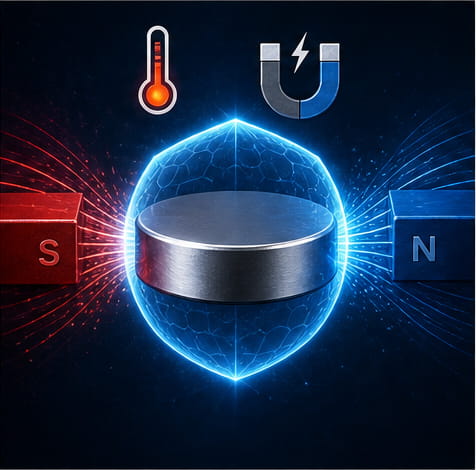
Coercivity measures how hard it is to demagnetize a magnet.
Neodymium magnets have sky-high coercivity.
This means they don’t weaken easily. Even when exposed to opposite magnetic fields or moderate heat, they hold their charge.
In contrast, other magnets lose their strength over time. A ceramic magnet might slowly lose its pull force after a few years. A neodymium magnet? It stays strong for decades.
How Strong Are We Talking? (Real Numbers)
Let’s put this into perspective with some hard data.
- A 10mm x 5mm neodymium magnet can hold over 2 kg (4.4 lbs).
- A 50mm x 50mm x 25mm N52 grade magnet can generate over 100 kg (220 lbs) of pull force.
- Industrial neodymium magnets can hold over 500 kg (1,100 lbs) .
And here’s the kicker:
The maximum energy product of a neodymium magnet ranges from 200 to 400 kJ/m³. A ceramic (ferrite) magnet? Only 10 to 88 kJ/m³.
That’s a 5x to 20x difference.
Pro Tip: The grade number tells you the strength. N35 is good. N42 is better. N52 is the strongest commonly available grade. The higher the number, the more magnetic energy per volume.
Sintered vs. Bonded: Two Ways to Make Neodymium Magnets
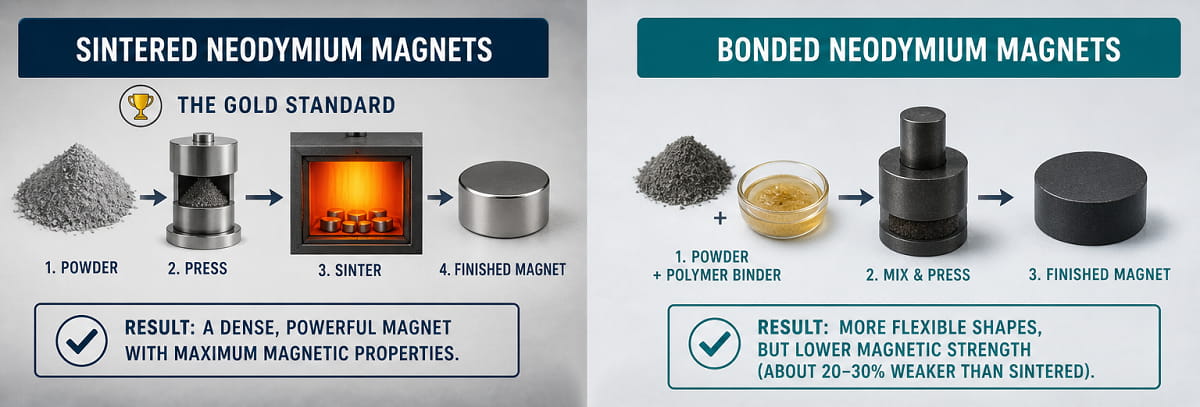
Not all neodymium magnets are created equal. There are two main manufacturing processes, and they produce different results.
Sintered Neodymium Magnets
This is the gold standard.
The alloy is ground into a fine powder, pressed into a mold, and then sintered (heated until the particles bond together without melting).
Result: A dense, powerful magnet with maximum magnetic properties.
Bonded Neodymium Magnets
Here, the neodymium powder is mixed with a polymer binder and pressed into shape.
Result: More flexible shapes, but lower magnetic strength (about 20–30% weaker than sintered).
My recommendation: If you want the absolute strongest magnet for your money, go with sintered.
The Danger Side (Handle with Care)
Let me be straight with you:
These magnets are dangerous.
I’m not exaggerating.
- Two large neodymium magnets snapping together can break bones.
- If they shatter, flying chips can cause eye injuries.
- Swallowing multiple magnets can pinch internal organs (this has killed children).
- They can erase credit cards, pacemakers, and hard drives from a distance.
Safety rules I personally follow:
- 1. Keep them away from children. Period.
- 2. Wear safety glasses when handling large magnets.
- 3. Never bring them near electronic devices or medical implants.
- 4. Store them with spacers (like plastic or wood) between each magnet.
Neodymium vs. Other Magnets: A Quick Comparison
| Magnet Type | Energy Product (MGOe) | Strength vs. Ferrite |
|---|---|---|
| Ceramic (Ferrite) | 3.5 | 1x (baseline) |
| Alnico | 5–10 | ~2x |
| Samarium Cobalt | 20–30 | ~6x |
| Neodymium (N35) | 33–35 | ~10x |
| Neodymium (N52) | 49.5–52 | ~15x |
See the difference?
That’s why why neodymium magnets are so strong is not just a scientific curiosity. It’s the reason they’ve become the default choice for high-performance applications.
Common Questions About Neodymium Magnet Strength
Why do neodymium magnets lose strength over time?
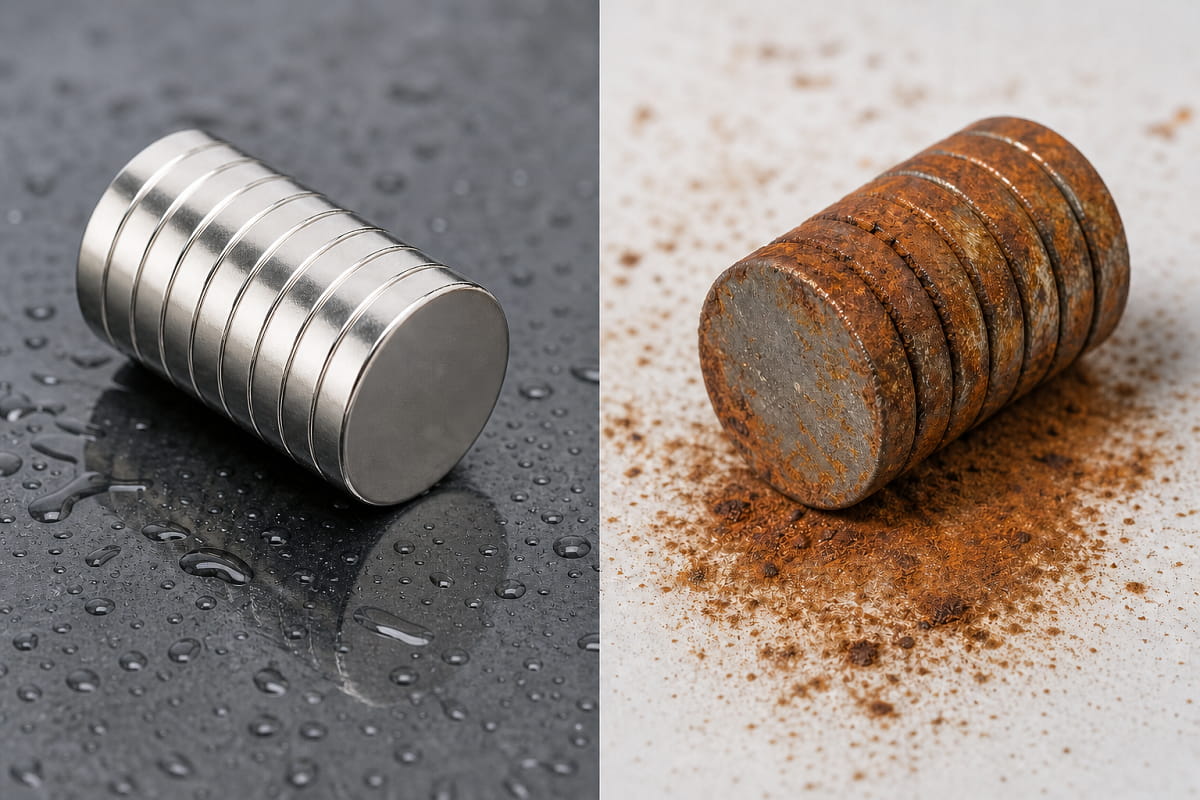
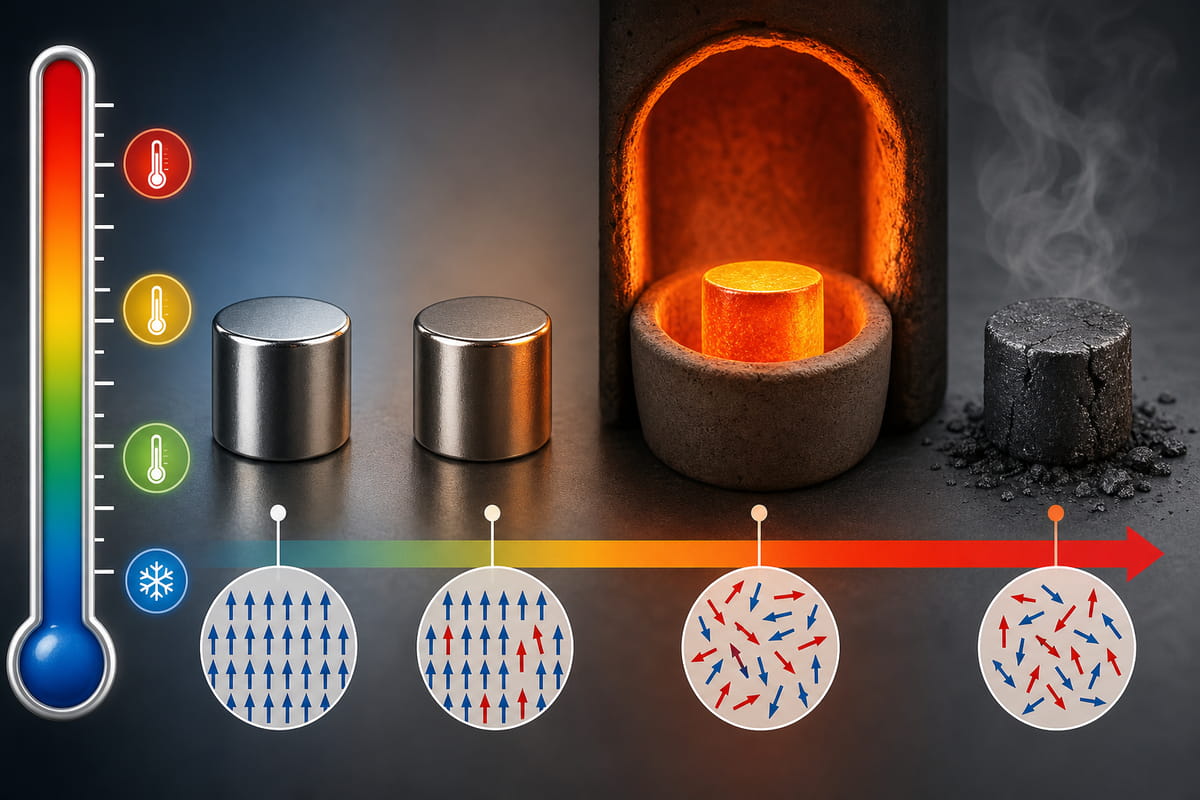
They actually don’t lose much. Unlike other magnets, neodymium magnets maintain their strength for decades if kept below their maximum operating temperature (usually 80°C for standard grades).
Can I make a neodymium magnet stronger?
No. The magnetic field is fixed by the material and manufacturing process. But you can increase the pull force by stacking magnets together (in the same orientation).
Why are they called “rare earth” magnets?
Neodymium is part of the “rare earth” group of elements. Despite the name, neodymium is actually relatively abundant. But extracting and refining it is complex and expensive.
The Bottom Line
Why neodymium magnets are so strong boils down to atomic alignment, a specialized crystal structure, and extreme resistance to demagnetization.
These three factors combine to create a magnet that’s 10–15 times more powerful than traditional alternatives.
Whether you’re building a motor, designing a speaker, or just trying to hold something in place, neodymium magnets deliver unmatched performance in a compact package.
Just be careful.
These little things don’t mess around.