Quick Summary
Magnets stick to ferromagnetic materials—primarily iron, steel, nickel, and cobalt—plus rare-earth elements like neodymium. They won’t stick to aluminum, copper, gold, silver, brass, wood, plastic, or glass.
Stainless steel is the big exception: ferritic grades (409, 430) are magnetic, while high-nickel austenitic grades (304, 316) usually aren’t. Because precious metals are non-magnetic, you can use a magnet as a quick, non-destructive authenticity test.
Ever slapped a magnet on your fridge and watched it stick like glue? Then tried the same thing on your aluminum soda can… and watched it fall flat?
Understanding what sticks to magnets comes down to one simple rule that most people get completely wrong. They assume all metals are magnetic.
They’re not.
In this guide, as a professional neodymium magnets manufacturer, I’m going to break down exactly which materials grab onto magnets, which ones don’t, and why. I’ll cover everyday household items, the confusing world of stainless steel, and even how to use a magnet to test if your gold is real.
Let’s dive in.
The Simple Rule Behind Magnetism
Before we get into specific materials, you need to understand one core concept.
It’s this: all magnetic materials are metal, but not all metals are magnetic.
Read that again. It’s the single most important takeaway from this entire guide.
So why do some metals stick while others don’t?
It comes down to electrons. Every material is made up of atoms, and those atoms contain electrons that spin around the nucleus. This motion creates a tiny electric charge.
- In most materials, electrons spin in opposite directions and cancel each other out. No magnetism.
- But in a special group of metals, most of the electrons spin in the same direction. When you bring a magnet close, their atoms line up… and you get that satisfying “click” of magnetic attraction. These special metals are called ferromagnetic materials.
What Sticks to Magnets: The Short List
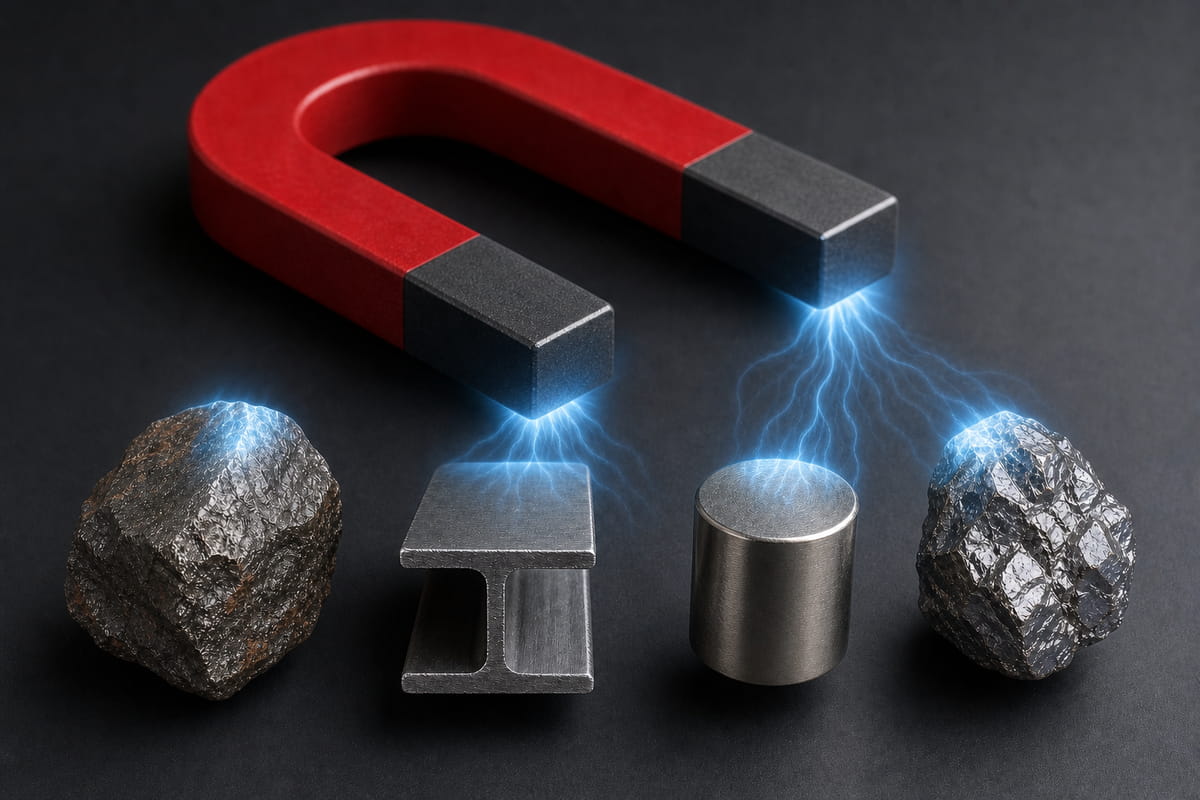
If you want the quick answer, here it is.
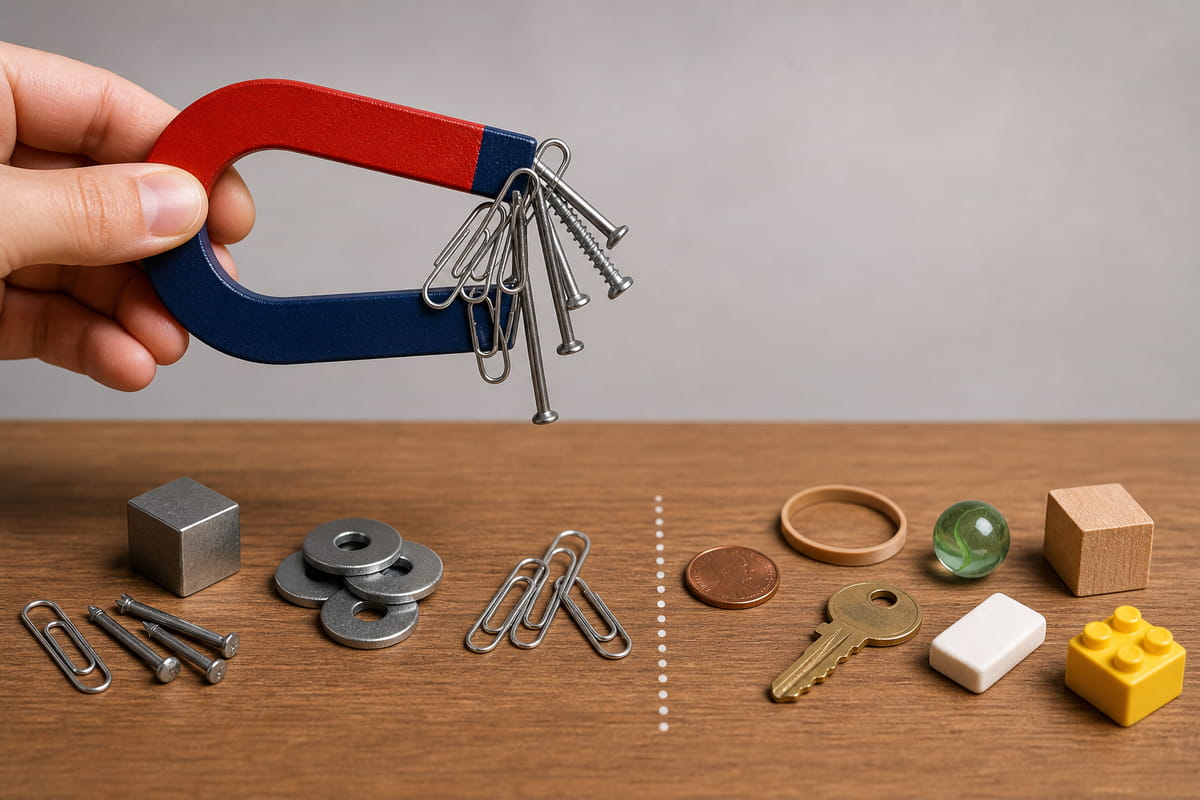
Magnets stick strongly to these four materials:
- Iron – The most common magnetic metal on the planet.
- Steel – An alloy made mostly of iron, so it’ll basically always stick.
- Nickel – Found in batteries, coins, and metal plating.
- Cobalt – A hard metal used in aerospace alloys and high-performance magnets.
There’s also a group of rare-earth elements like neodymium and samarium that are intensely magnetic. (More on those later.)
That’s pretty much it.
If a material isn’t on this list (or isn’t an alloy containing one of these metals), a magnet probably won’t stick to it.
Everyday Items That Stick to Magnets

Now let’s get practical.
You don’t think about ferromagnetism when you’re organizing your kitchen. But you interact with magnetic materials every single day.
Here are the common household items magnets love:
- Refrigerators and stoves (they have steel casings)
- Whiteboards with a steel backing
- Metal tools like hammers and screwdrivers
- Nuts, bolts, and nails
- Steel cookware and knife racks
Pro Tip: A chrome-plated screw might look shiny and “different,” but it’ll still grab a magnet. That’s because the shiny coating sits on top of a steel core. The core is what matters.
What DOESN’T Stick to Magnets
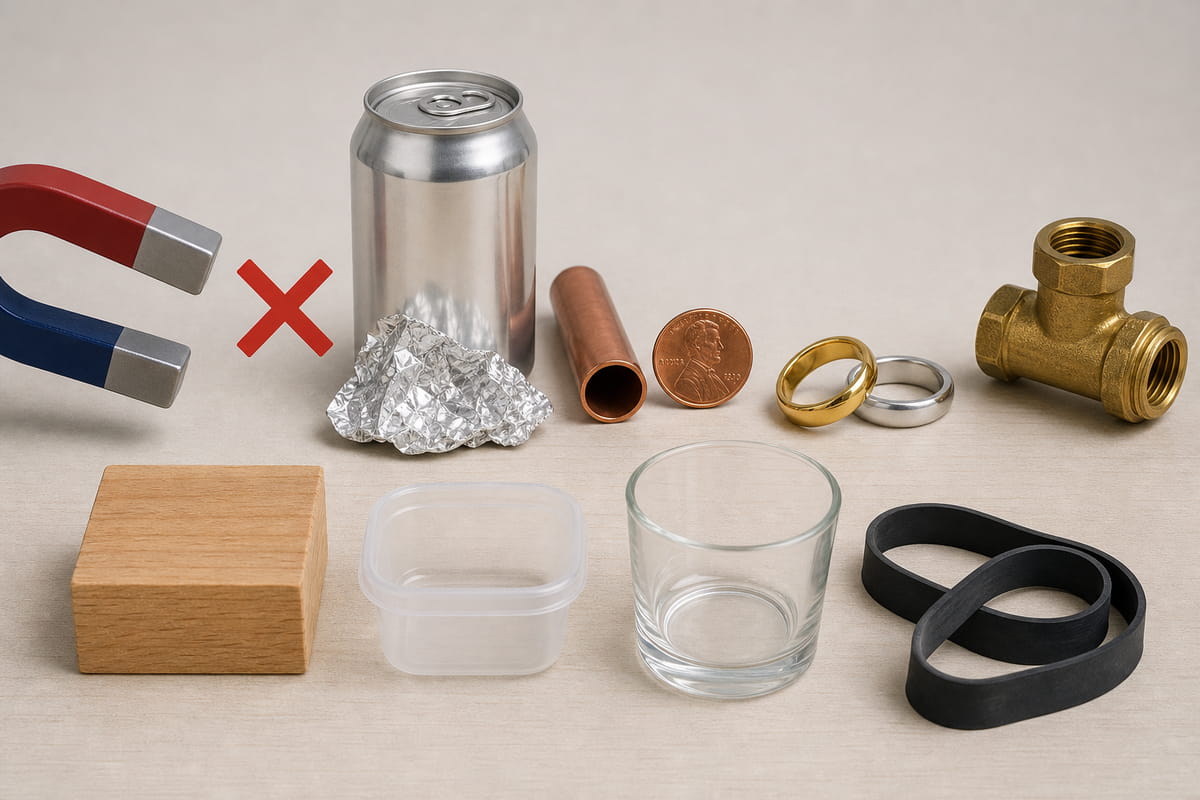
Plenty of metals look like they should be magnetic… but they’re not even close.
Magnets will NOT stick to these materials:
- Aluminum (think foil and soda cans)
- Copper (pipes and pennies)
- Gold & Silver
- Brass
- Wood, plastic, glass, and rubber
Why?
These materials have what scientists call low magnetic permeability. In simple: magnetic field lines just can’t pass through them effectively. So there’s nothing for the magnet to grab onto.
Some of these metals (like aluminum and copper) are technically paramagnetic. This means they can be very weakly magnetized when a strong field is nearby, but they lose it the instant the magnet is removed. For everyday purposes, treat them as non-magnetic.
The Stainless Steel Confusion
Okay, this is the big one.
If there’s a single material that causes more confusion than any other, it’s stainless steel.
Why?
Because sometimes a magnet sticks to it… and sometimes it doesn’t.
You might find that your fridge grabs a magnet easily, but your oven door barely holds one. Same “stainless steel,” totally different result.
Here’s what’s going on.
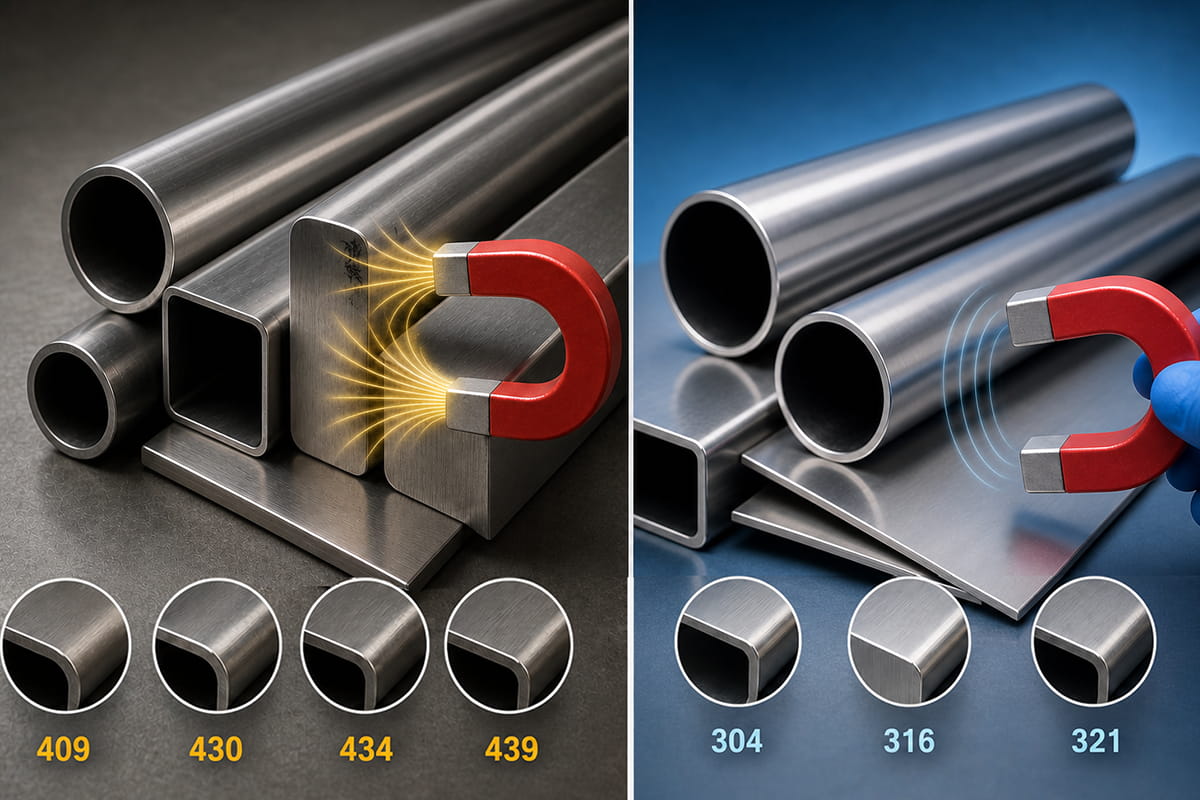
Stainless steel isn’t one single thing. It’s a whole family of iron-based alloys with different metal compositions. And the magnetic behavior depends entirely on which type you’ve got:
- Ferritic stainless steels (grades like 409, 430, 434, and 439) are rich in iron and have a structure that makes them magnetic. Magnets stick to these.
- Austenitic stainless steels (grades like 304, 316, and 321) are high in nickel. Even though nickel itself is ferromagnetic, these alloys contain something called austenite — a non-magnetic form of iron. So they’re usually NOT magnetic.
The bottom line? The higher the nickel content, the less magnetic the steel. This is why those fancy “premium” kitchen sinks and high-end cookware often don’t hold magnets at all.
The Different Types of Permanent Magnets
So far we’ve talked about what magnets stick to.
But not all magnets are created equal either.
Here are the five common types of permanent magnets, ranked from strongest to weakest:
1. Neodymium Magnets
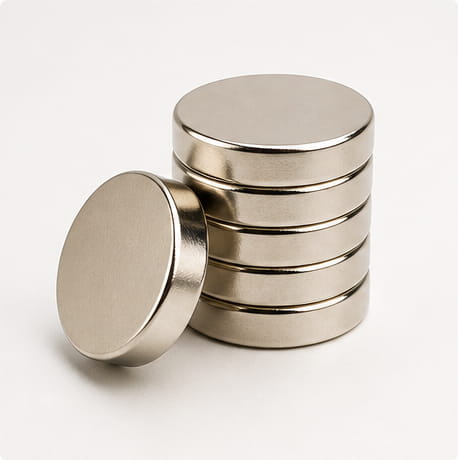
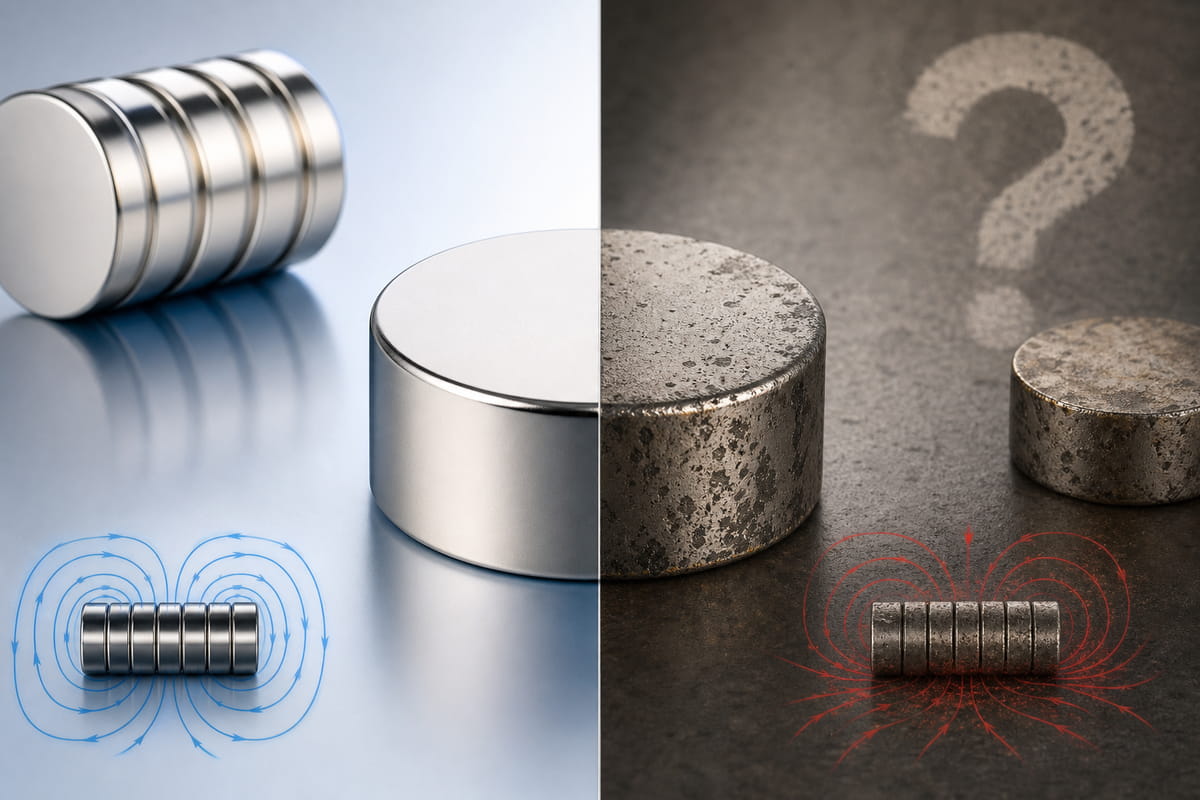
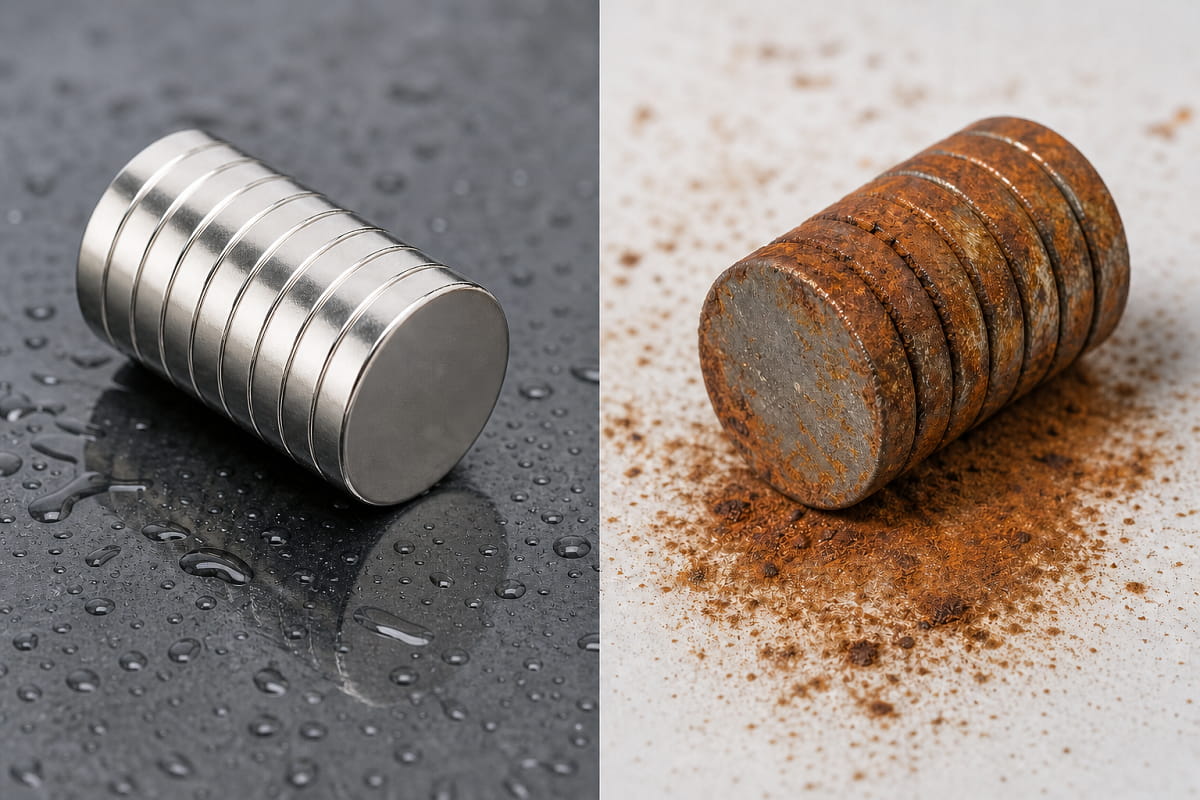
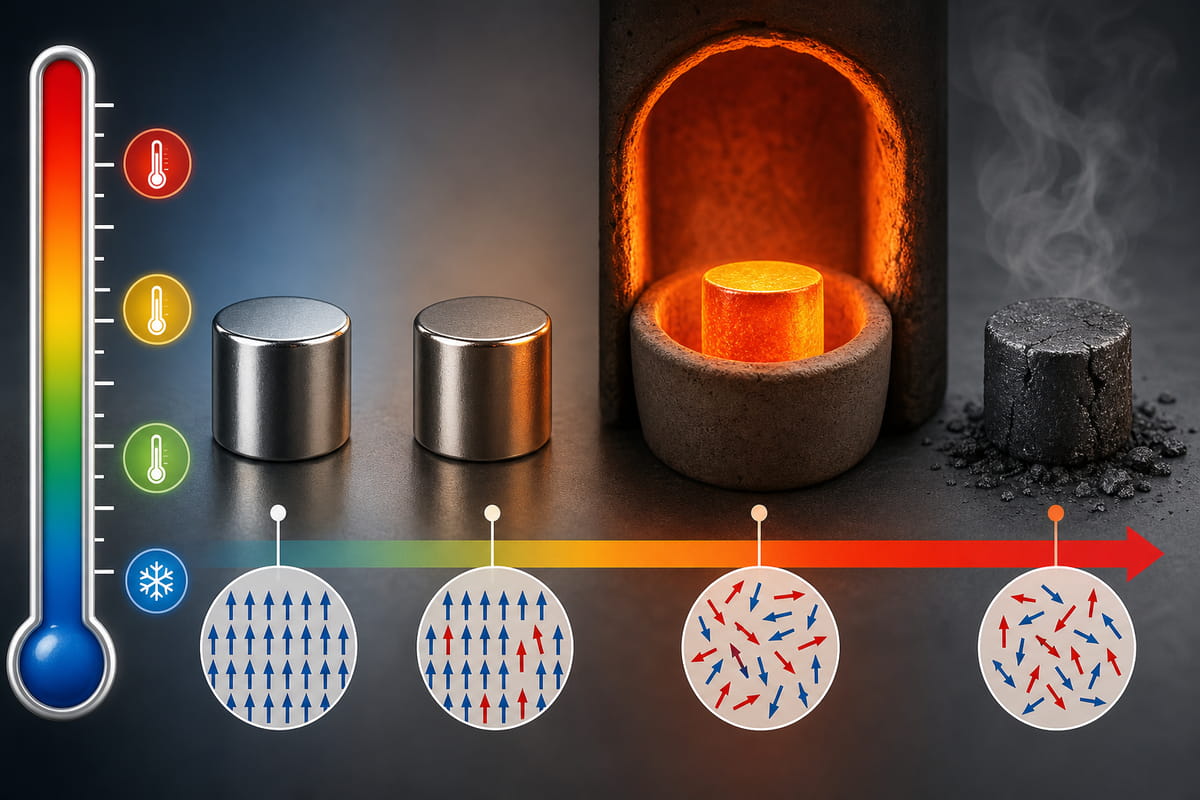
The world’s strongest magnetic material. Made from an alloy of iron, boron, and neodymium (Nd₂Fe₁₄B), these can hold up to 1,000 times their own weight. They’re used in electric vehicle motors and industrial equipment. The catch? They don’t handle heat well and need a corrosion-resistant coating in moist environments.
2. Samarium Cobalt Magnets
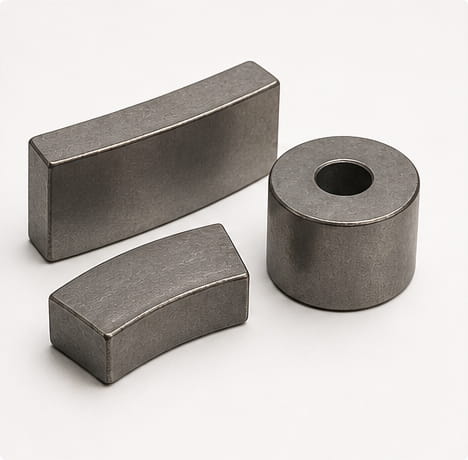
Another rare-earth magnet. Not as strong as neodymium, but it performs much better in high temperatures and resists corrosion beautifully.
3. Alnico Magnets
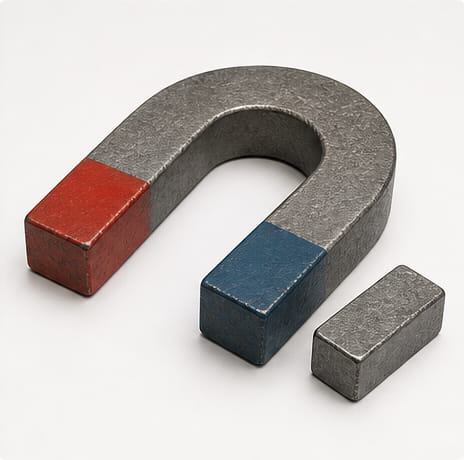
Made from aluminum, nickel, and cobalt. These offer fantastic stability at high temperatures but can lose their magnetism (demagnetize) fairly easily.
4. Ferrite Magnets
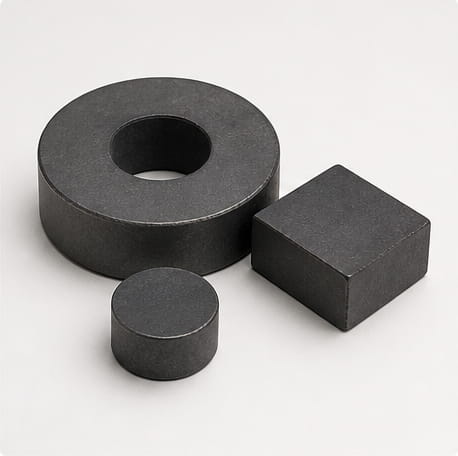
Made primarily of iron, sometimes with barium or strontium. They’re not super strong, but they’re cheap and corrosion-resistant, making them perfect for mass production.
5. Flexible Rubber Magnets
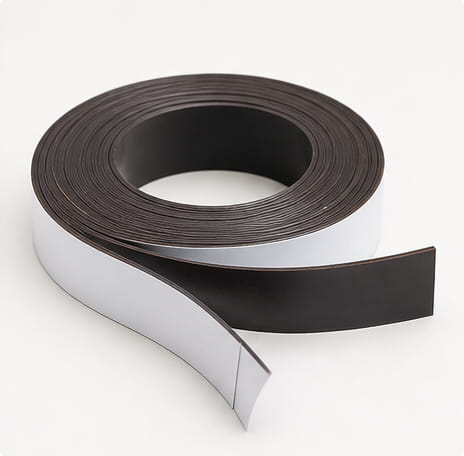
Magnetic particles mixed with a polymer binder. Think fridge magnets and magnetic tape. Low strength, but you can roll and cut them however you want.
Using a Magnet to Test Precious Metals
Here’s a trick I find genuinely useful.
Because gold, silver, and platinum are non-magnetic, you can use a magnet as a quick (and totally non-destructive) authenticity test.
Let me explain how this works for each metal.
Testing Gold
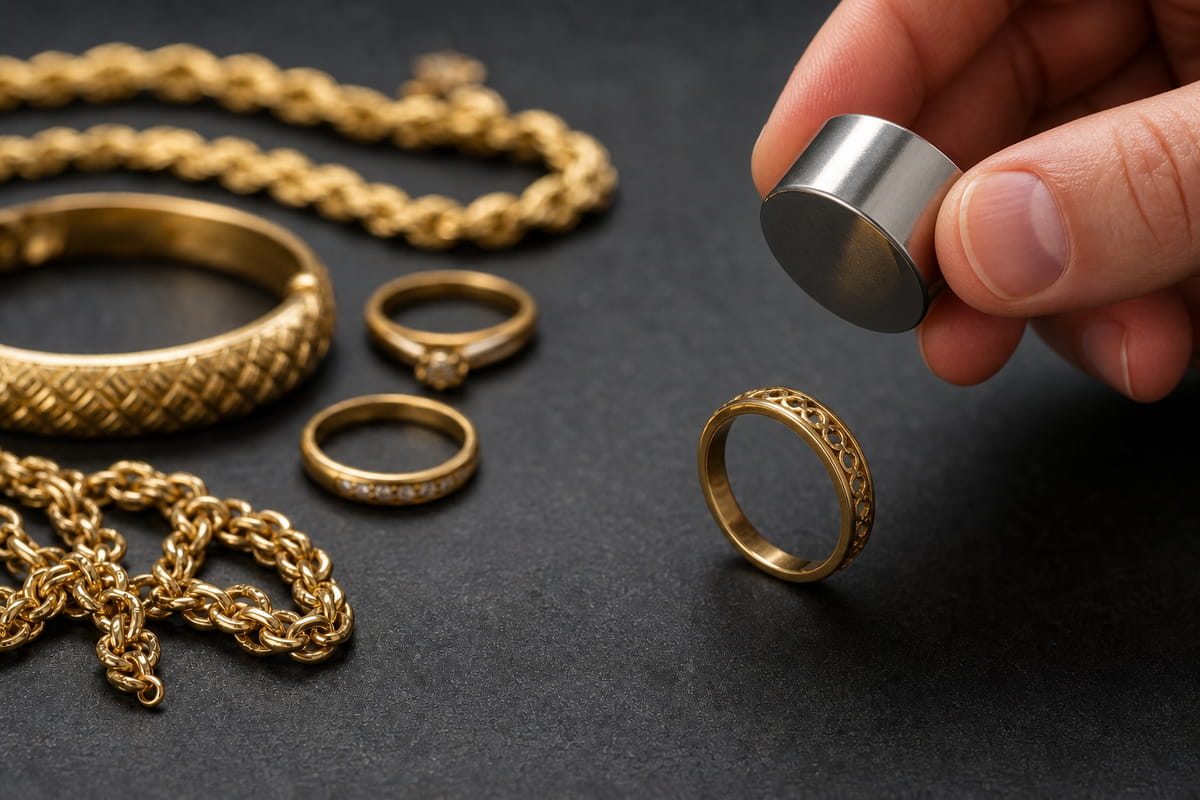
Pure gold (24K bullion) is not magnetic. Period.
But here’s the thing: jewelry is rarely pure gold. It’s an alloy mixed with other metals for strength and color.
So if your “14K gold” ring tugs slightly toward a magnet, don’t panic. It probably just contains small amounts of nickel, iron, or cobalt mixed in for durability.
A light magnetic pull on 14K gold is common. A strong pull, though? That’s a red flag worth investigating further.
Testing Silver
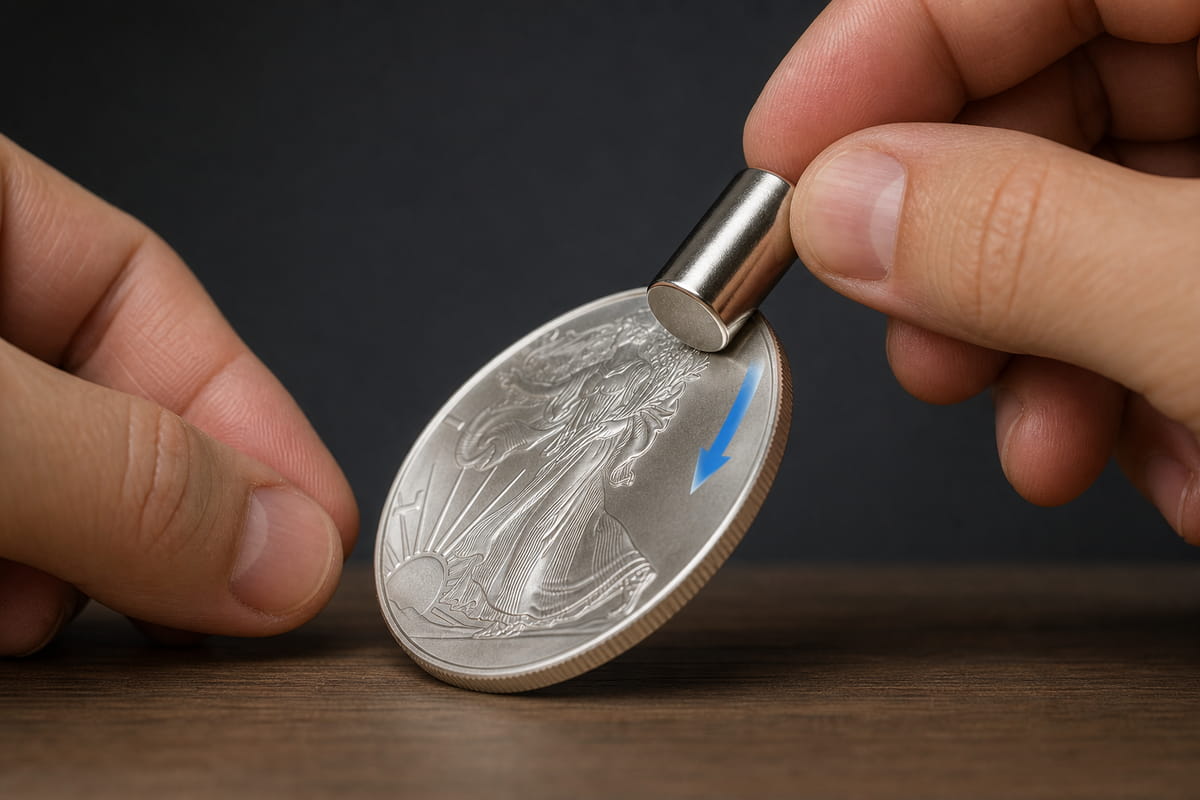
Silver is also non-magnetic — but it has a cool quirk.
Silver is diamagnetic. Here’s a neat trick: take a silver coin, hold it at a 45-degree angle, and let a strong neodymium magnet slide down it. If it’s real silver, the magnet will slide slowly, almost like there’s invisible friction holding it back.
That’s because the moving magnet creates a tiny electrical field that resists its own fall.
Try the same thing with a regular coin, and the magnet just falls right off.
Quick warning: copper is also diamagnetic (though weaker than silver). So this test isn’t 100% definitive — but it’s a great starting point. And remember, if a magnet actually sticks to your “silver” item, it definitely isn’t pure silver.
What About Coins?
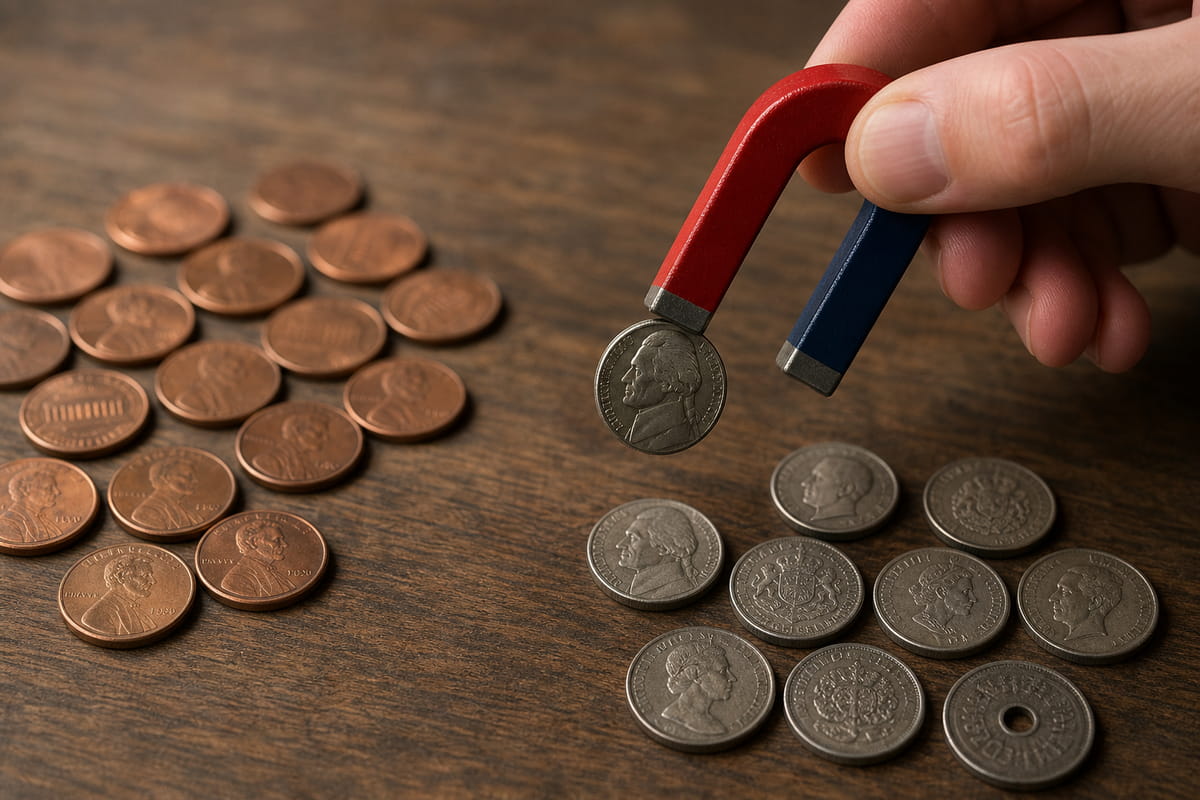
When a magnet sticks to a coin, it tells you something about what’s inside.
Most U.S. coins are copper-based, so they won’t respond. But many older or foreign coins contain nickel, which makes them slightly magnetic.
It’s a fast way to sort through a collection or spot a fake.
What Sticks to Magnets and What Doesn’t: Quick Reference Table
Here’s everything laid out in one place:
| Material | Magnetic? | Notes |
|---|---|---|
| Iron | Yes | Strongly magnetic; the classic example |
| Steel | Yes | Contains iron; almost always sticks |
| Nickel | Yes | Ferromagnetic; common in alloys |
| Cobalt | Yes | Naturally magnetic |
| Stainless steel | Sometimes | Ferritic = yes, Austenitic (304/316) = no |
| Aluminum | No | Electrons don’t align |
| Brass | No | Copper + zinc, neither is magnetic |
| Gold | No | Pure gold won’t stick |
| Silver | No | Diamagnetic, not magnetic |
Can Nonmetals Ever Be Magnetic?
Short answer: not in any way you’ll notice at home.
Materials like wood, plastic, cloth, paper, and glass have no free-moving electrons that can align with a magnetic field. So they’re completely unaffected.
There ARE some fascinating exceptions in advanced science — certain forms of carbon like graphene can show weak magnetic properties under very specific lab conditions. But that’s the world of nanotechnology, not your kitchen.
For everyday life, the rule holds: if it’s not metal, it won’t stick.
A Note on Electronics

One more thing worth mentioning.
You’ve probably been told to keep magnets away from your devices. There’s real science behind that warning.
Many computers and hard drives use magnets to store data on spinning magnetic disks. A powerful magnet (especially an electromagnet) can mess with the electrons in those components and corrupt your data.
So I’d keep strong magnets away from:
- Credit cards and magnetic ID cards
- Cell phones and tablets
- Computer monitors and hard drives
- Old videotapes and cassettes
Better safe than sorry.
Wrapping It Up
So, what have we learned?
Let me boil it all down to the one rule you should remember: what sticks to magnets comes down to ferromagnetic materials — primarily iron, steel, nickel, and cobalt.
Everything else (aluminum, copper, gold, silver, brass, wood, plastic) gets ignored by your magnet. And stainless steel? It’s a coin toss that depends entirely on whether it’s the ferritic or austenitic type.
The next time you reach for a magnet — whether you’re organizing your garage, testing a piece of jewelry, or just satisfying your curiosity — you’ll know exactly what’s going to stick and what’s going to slide right off.
And that’s a pretty handy thing to understand.