Quick Summary
- Magnets do not stick to aluminum because it is paramagnetic, not ferromagnetic.
- Aluminum can interact with moving magnets through eddy currents, causing magnetic braking.
- Only ferromagnetic metals like iron, nickel, cobalt, and steel are attracted to magnets.
Have you ever grabbed a fridge magnet and tried sticking it to an aluminum can?
You’d think: “It’s metal, right? So it should work.”
But it doesn’t. Not under normal circumstances anyway.
And today, as a professional neodymium magnets manufacturer, I’m going to explain exactly why that is. Plus, I’ll show you something pretty wild about how aluminum actually does interact with magnets—just not in the way you’d expect.
Let’s dive in.

Why Doesn’t a Magnet Stick to Aluminium?
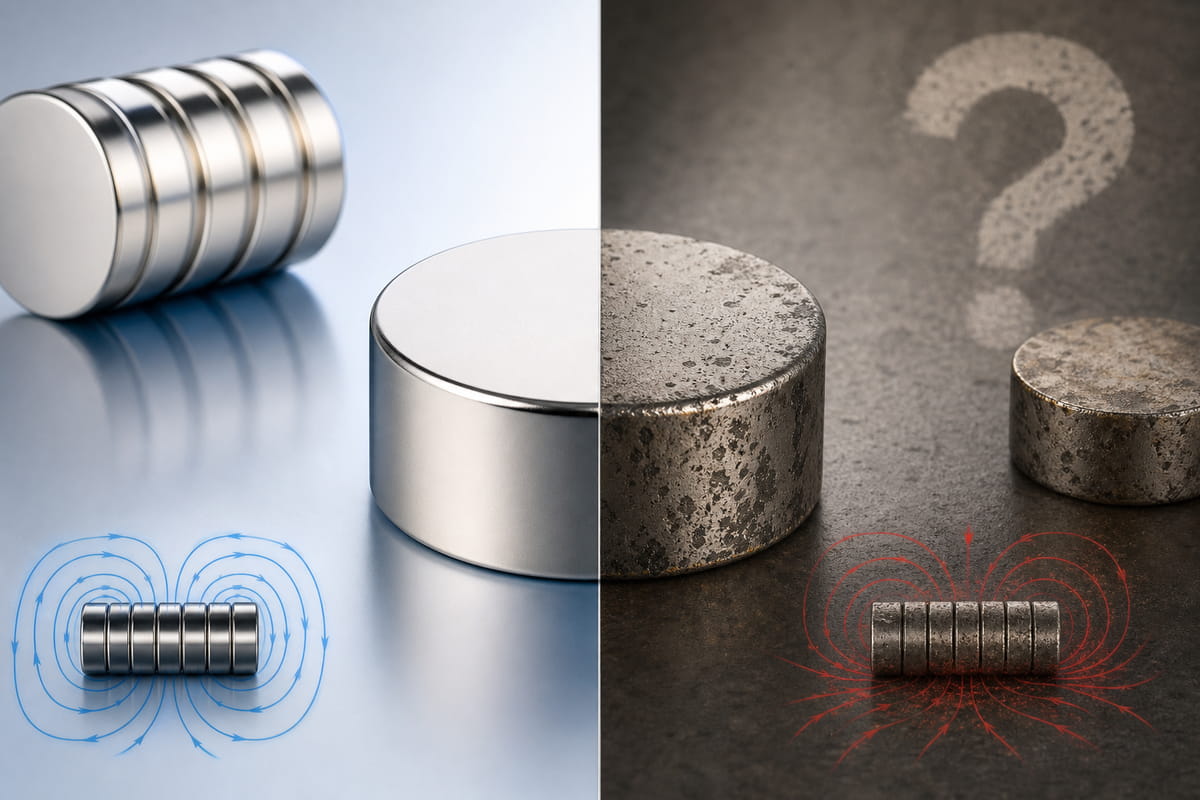
Not all metals are magnetic.
Some metals—like iron, nickel, and cobalt—are what scientists call ferromagnetic. Their atoms have unpaired electrons that love to line up when a magnetic field gets close. This alignment creates a strong attraction. That’s why a magnet sticks to your fridge like it’s been glued there.
But aluminum? Aluminum is paramagnetic.
That means its atoms can respond to a magnetic field—but only very, very weakly. Once the magnet is removed, any magnetic effect disappears instantly. Like… poof. Gone.
The short answer? Aluminum doesn’t have the right electron setup to create a lasting magnetic attraction.
In fact, you can bring the strongest neodymium magnet in the world right up to an aluminum can—and nothing happens.
They just sit there. Like two strangers on a bus.
Besides Aluminum, What About Other Non-Magnetic Metals?
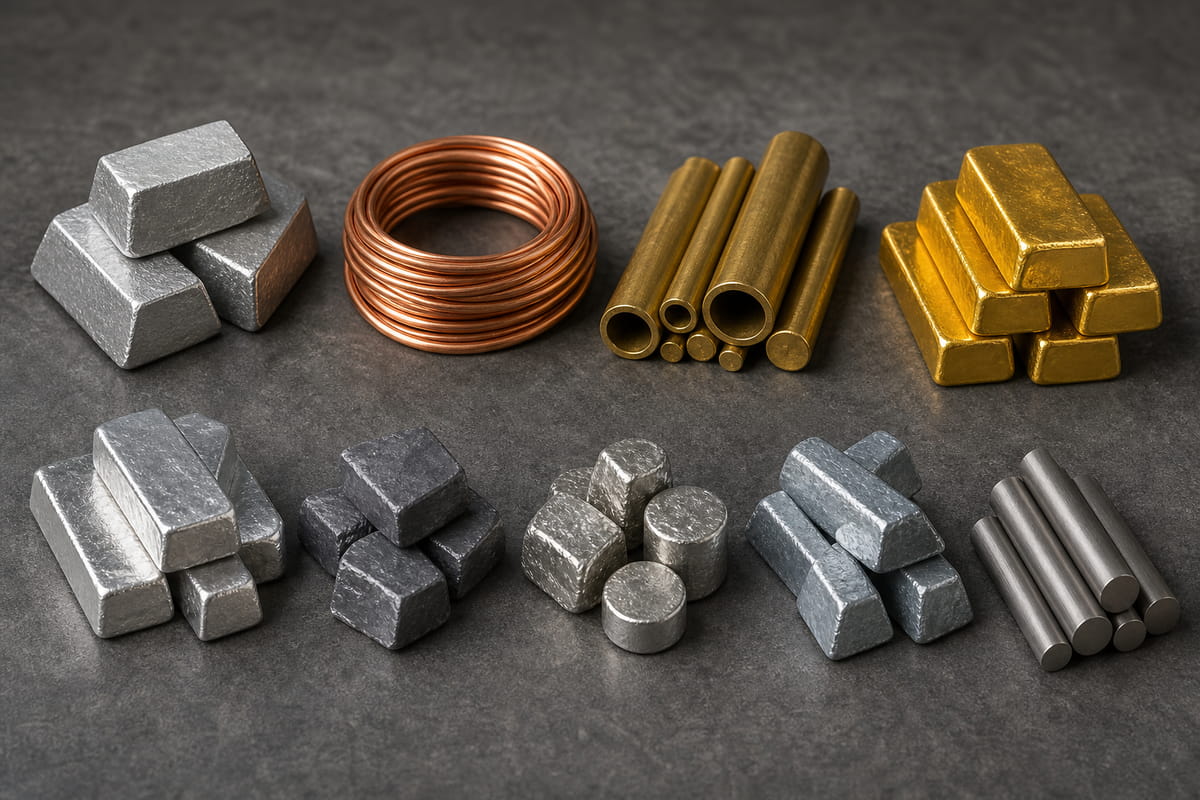
Aluminum isn’t alone here.
There’s a whole list of non-magnetic metals that won’t stick to a magnet:
- Copper
- Brass
- Gold
- Silver
- Lead
- Tin
- Zinc
- Titanium
So if you’re wondering whether magnets stick to any of these… nope. Not gonna happen.
But here’s something interesting:
All magnetic materials are metal. But not all metals are magnetic.
Pretty wild, right?
The Science Behind Magnetism in Metals
Every material is made up of atoms. And atoms have electrons spinning around them.
Think of electrons like tiny spinning tops.
- In ferromagnetic materials (like iron), most of those tops spin in the same direction. This creates a magnetic field.
- But in paramagnetic materials (like aluminum), the electrons spin in random directions. They cancel each other out.
So when you bring a magnet close to aluminum? Nothing lines up. No attraction. No sticky business.
Pro Tip: This is why your refrigerator is made of steel (which contains iron) and not aluminum. Otherwise, your kid’s alphabet magnets would be useless.
But Aluminum Does Do Something Cool
Here’s where things get interesting.
Even though does a magnet stick to aluminium is a hard “no” for normal situations, aluminum isn’t completely boring when it comes to magnetism.
In fact, it does something really, really cool.
Eddy currents.
Let me explain.
Eddy Currents: The Party Trick
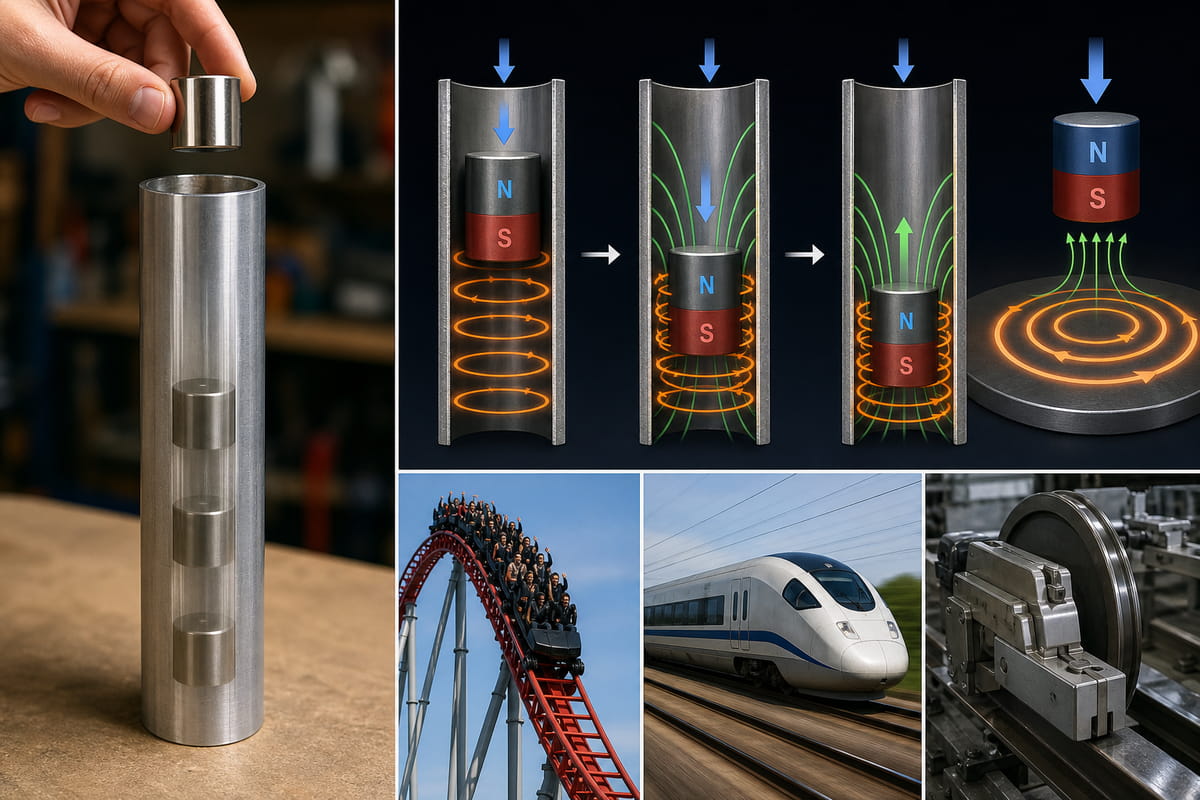
Grab a strong neodymium magnet.
Now drop it down a thick aluminum pipe.
What happens?
The magnet falls… slowly.
Like… really slowly. Almost like it’s floating.
I’ve seen this in person, and it looks like magic.
Here’s what’s happening:
When the magnet moves through the aluminum pipe, it creates small electrical currents in the metal. These are called eddy currents. And these currents generate their own magnetic field—one that pushes back against the falling magnet.
It’s called magnetic braking.
And it’s real. It’s used on roller coasters for frictionless brakes, in high-speed trains, and even in some industrial equipment.
So no, magnets don’t stick to aluminum.
But they interact with it in a very cool way.
Want to try it yourself? Here’s what you need:
- 1. A strong neodymium magnet (the stronger, the better)
- 2. A thick aluminum or copper pipe (at least a few feet long)
- 3. Optional: a friend to watch your jaw drop
Drop the magnet through the pipe. Watch it fall slowly. Then try it with a regular steel ball bearing.
You’ll see the difference immediately.
Can Aluminum Become Magnetic?
This is a question I get a lot.
And the answer is: sort of.
Under extremely strong magnetic fields—like the ones inside an MRI machine—aluminum can show a very, very weak magnetic response.
But here’s the thing:
As soon as the external magnetic field is removed, aluminum goes back to being completely non-magnetic.
It’s like a temporary visitor. Not a permanent resident.
Bottom line: Aluminum can’t become a permanent magnet. Ever.
What About Magnetic Metals? (Quick Reference)
Since we’re on the topic, let me give you a handy list.
| Metal | Magnetic? | Why |
|---|---|---|
| Iron | Yes | Electrons spin in same direction |
| Steel | Yes (usually) | Contains iron |
| Nickel | Yes | Ferromagnetic structure |
| Cobalt | Yes | Ferromagnetic structure |
| Aluminum | No | Paramagnetic |
| Copper | No | Diamagnetic |
| Brass | No | Alloy of non-magnetic metals |
| Gold | No | Paramagnetic (very weak) |
| Silver | No | Diamagnetic |
Pro Tip: If you’re ever unsure, grab a magnet and test it yourself. Takes 2 seconds.
Why Aluminium’s Magnetism Matters in Real Life

You might be thinking: “Okay, interesting science lesson. But who cares?”
Here’s why this matters:
- Recycling: Magnets are used to separate ferrous metals (like steel) from non-ferrous metals (like aluminum). This is how recycling facilities sort millions of tons of material every year.
- Electronics: Aluminum’s non-magnetic nature makes it perfect for electronic enclosures. It won’t interfere with sensitive components.
- Aerospace: Aircraft use aluminum extensively. And since it’s non-magnetic, it doesn’t mess with navigation or communication systems.
- Construction: Aluminum ladders, scaffolding, and tools are non-magnetic. That’s a huge safety win for electrical workers.
So yeah. Knowing that does a magnet stick to aluminium equals “no” has real-world implications.
Common Misconceptions About Magnets and Aluminum
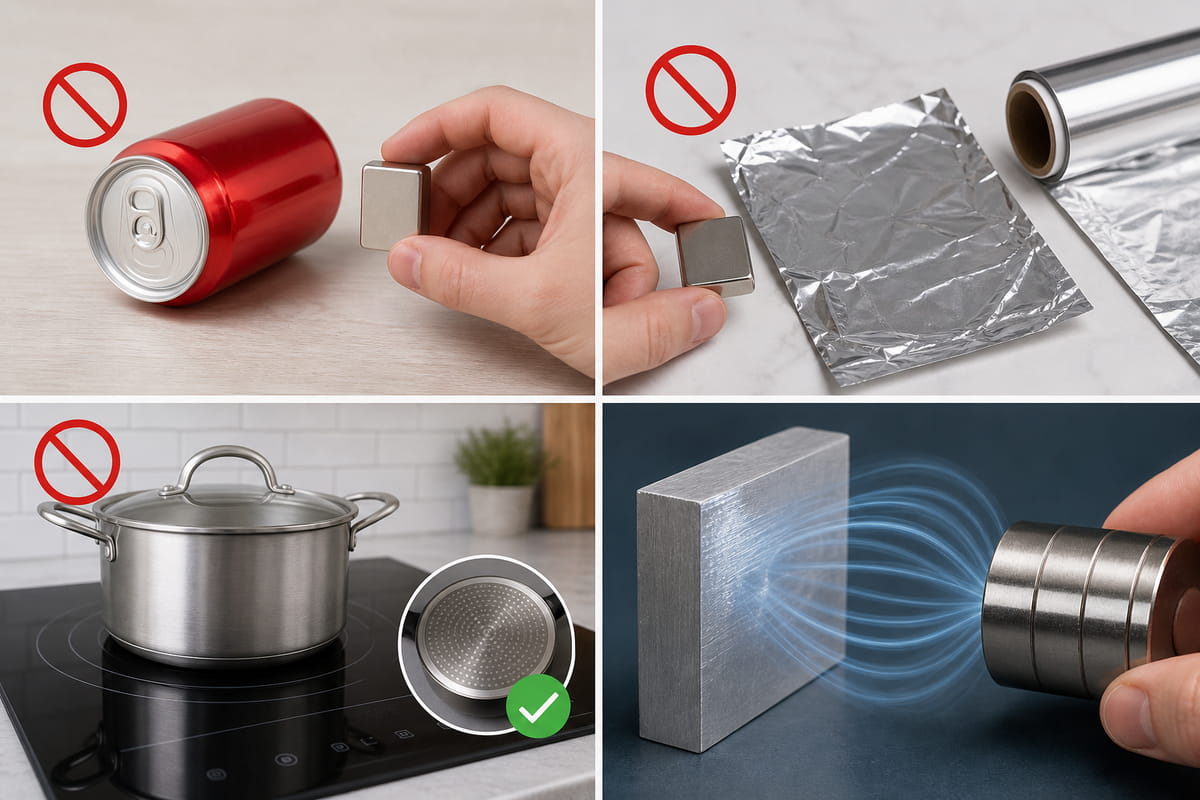
Let me clear up a few things I hear all the time.
“Magnets stick to aluminum soda cans.”
Nope. Try it. They don’t.
“Aluminum foil is magnetic.”
Also nope. Your kitchen foil is safe.
“Aluminum pots stick to magnetic cooktops.”
Actually, this is why you see “induction compatible” labels on cookware. If it’s pure aluminum, it won’t work on an induction stove. Manufacturers add a magnetic layer to the bottom.
“Strong magnets attract aluminum.”
Not really. Even the strongest neodymium magnets won’t make aluminum stick. But they will interact via eddy currents if you move them fast enough.
How to Test If a Metal Is Magnetic
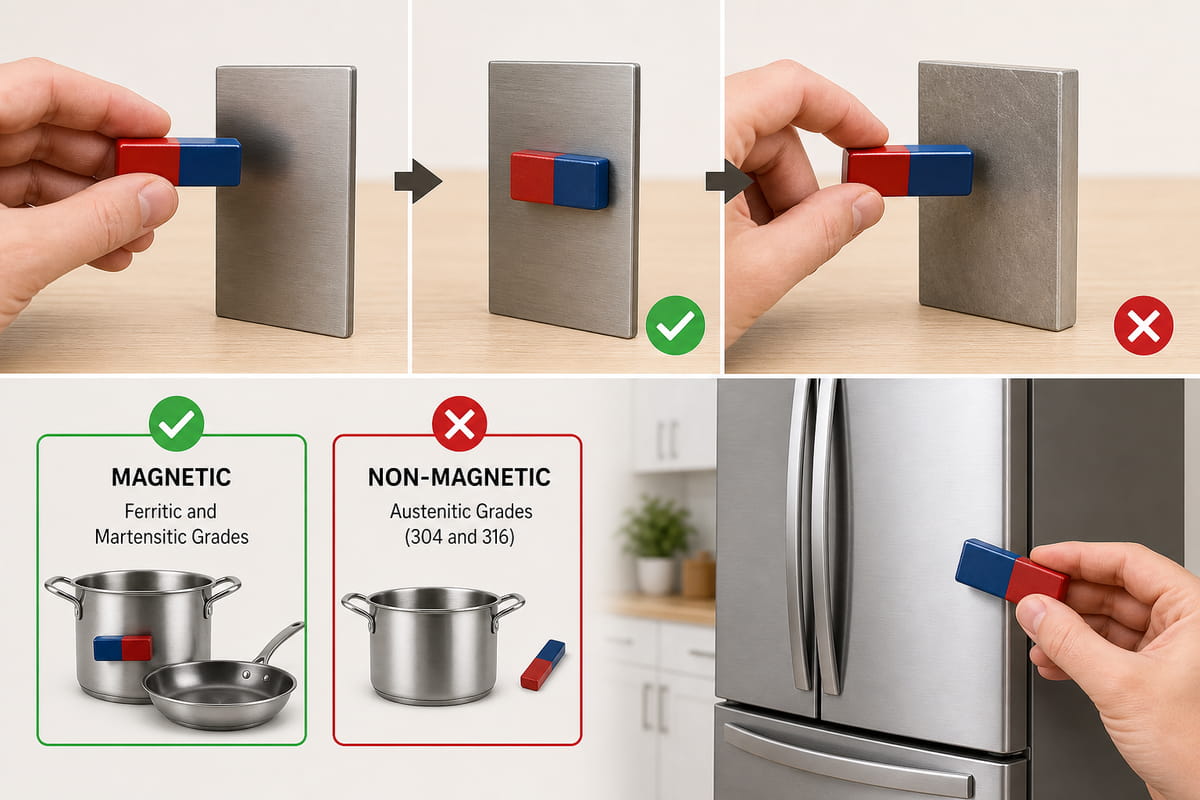
Super simple.
Grab a magnet. Hold it near the metal.
- If it sticks? Magnetic.
- If it doesn’t? Not magnetic.
That’s it.
But here’s one thing to watch out for:
Stainless steel.
Stainless steel can be tricky. Some types are magnetic (ferritic and martensitic grades). Others aren’t (austenitic grades like 304 and 316).
So if you test your stainless steel fridge and the magnet doesn’t stick, don’t panic. Your fridge isn’t defective. It’s just a different type of stainless steel.
The Bottom Line
Let me wrap this up.
Does a magnet stick to aluminium?
No.
Aluminum is a non-magnetic metal. It belongs to the paramagnetic family, which means it only shows a very weak response to magnetic fields—and only while the field is present.
But that doesn’t mean aluminum is boring.
Thanks to eddy currents, aluminum can interact with moving magnets in fascinating ways. From slow-falling magnets through pipes to frictionless brakes on roller coasters, aluminum and magnets have a unique relationship.
So next time someone asks you does a magnet stick to aluminium, you can say:
“No. But it can do something cooler.”
And then drop a magnet down a pipe.
Trust me. It never gets old.