Quick Summary
- Never pull neodymium magnets directly apart. Always slide them sideways to separate safely.
- Wear safety goggles and heavy-duty gloves to protect against shattering fragments and pinching injuries.
- Keep magnets away from children, pacemakers, credit cards, hard drives, and other electronic or medical devices.
- Store magnets in a cool, dry place using non‑metallic spacers, and never drill or machine them—the dust is flammable.
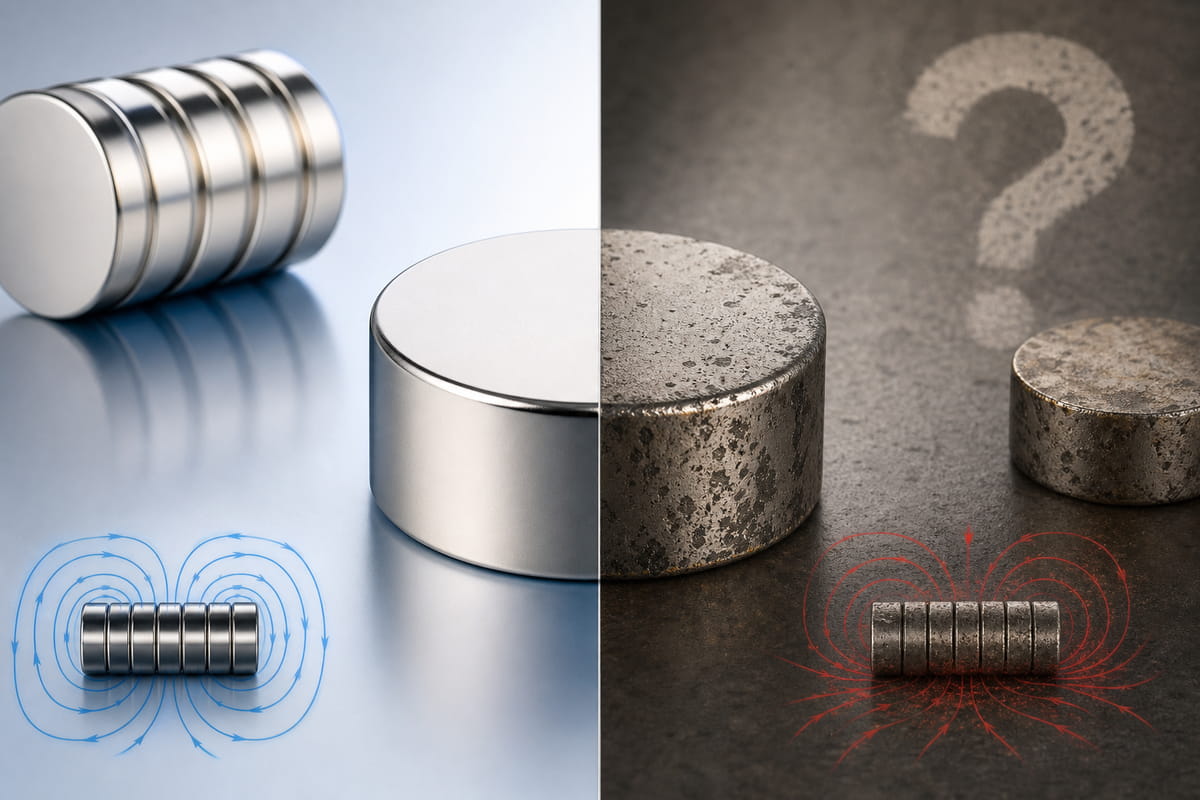
Handling neodymium magnets isn’t like handling regular fridge magnets. These are the strongest permanent magnets on the planet. They’re used in everything from MRI machines to your smartphone’s vibration motor.
But most people don’t realize: they’re also brittle, dangerous, and can cause serious injury if you don’t know what you’re doing.
As a professional custom neodymium magnets manufacturer, I’ve been working with these magnets for years. And I’ve made mistakes. Let me help you avoid them.
Let’s dive in.
Why Neodymium Magnets Are Different
Neodymium magnets (also called NdFeB magnets) are made from neodymium, iron, and boron. They’re sintered—ground into powder, heated, and pressed together. This process makes them incredibly powerful but also surprisingly fragile.
They look like metal. They feel like metal. But they can shatter.
According to the US Consumer Product Safety Commission, magnet-related emergency room visits skyrocketed 8.5-fold between 2002 and 2011. And that’s just the reported cases.
These aren’t toys. They’re industrial-grade tools that demand respect.
How to Handle Neodymium Magnets
The #1 Rule: Slide, Don’t Pull
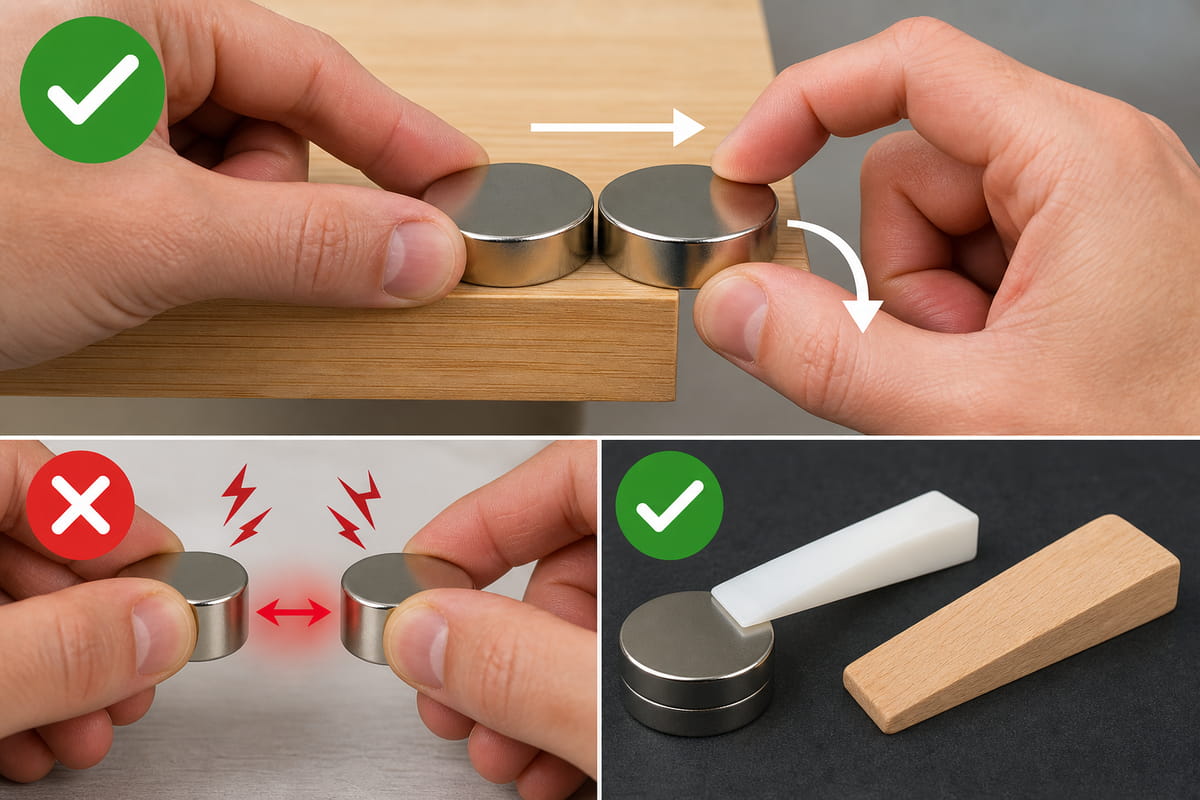
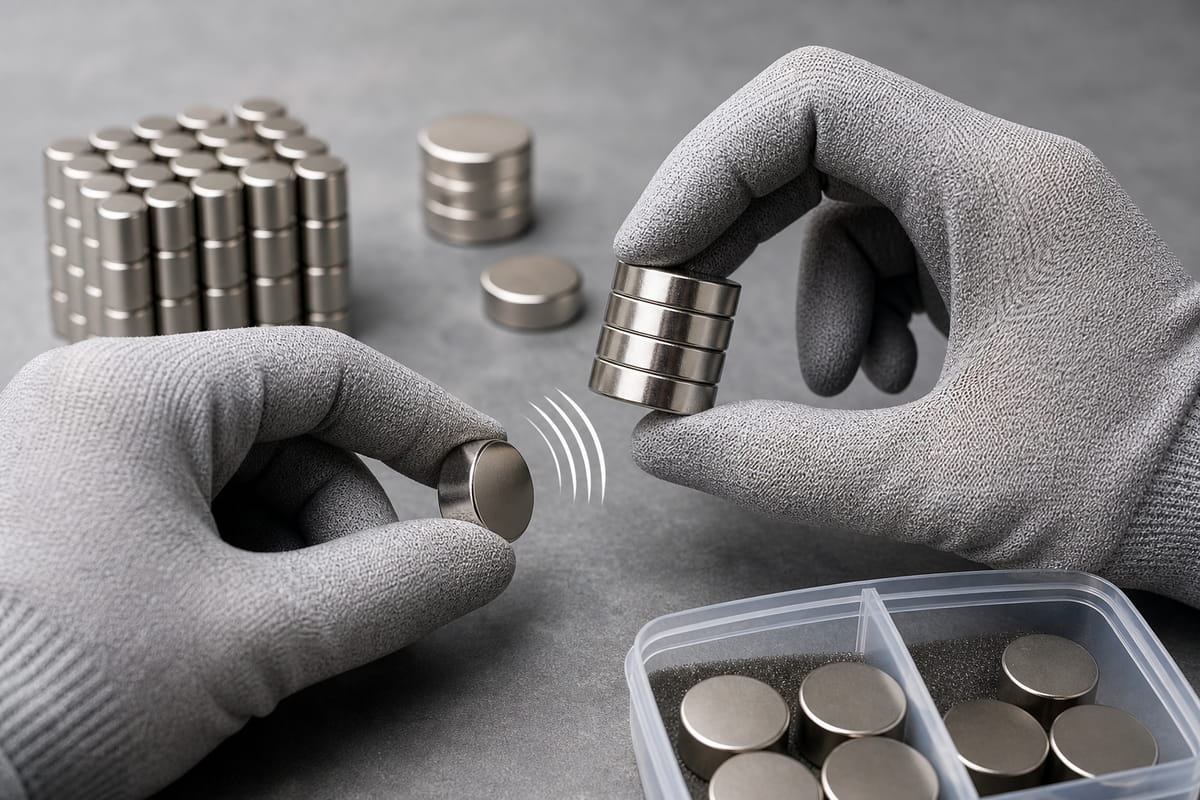
Never pull neodymium magnets directly apart. These magnets have pull forces ranging from a few pounds to over 100 pounds. Trying to pull them straight apart puts serious strain on your fingers, wrists, and the magnets themselves.
Instead, use a sliding motion. Place the magnets at the edge of a non-metallic surface (wood or plastic works great). Hold one magnet firmly. Slide the other magnet sideways and downward.
Boom. They separate cleanly.
Pro Tip: If you’re working with large magnets, use a plastic wedge or wooden spacer to create separation. Don’t use metal tools—they’ll get yanked right out of your hands.
What to Wear (Yes, You Need Gear)
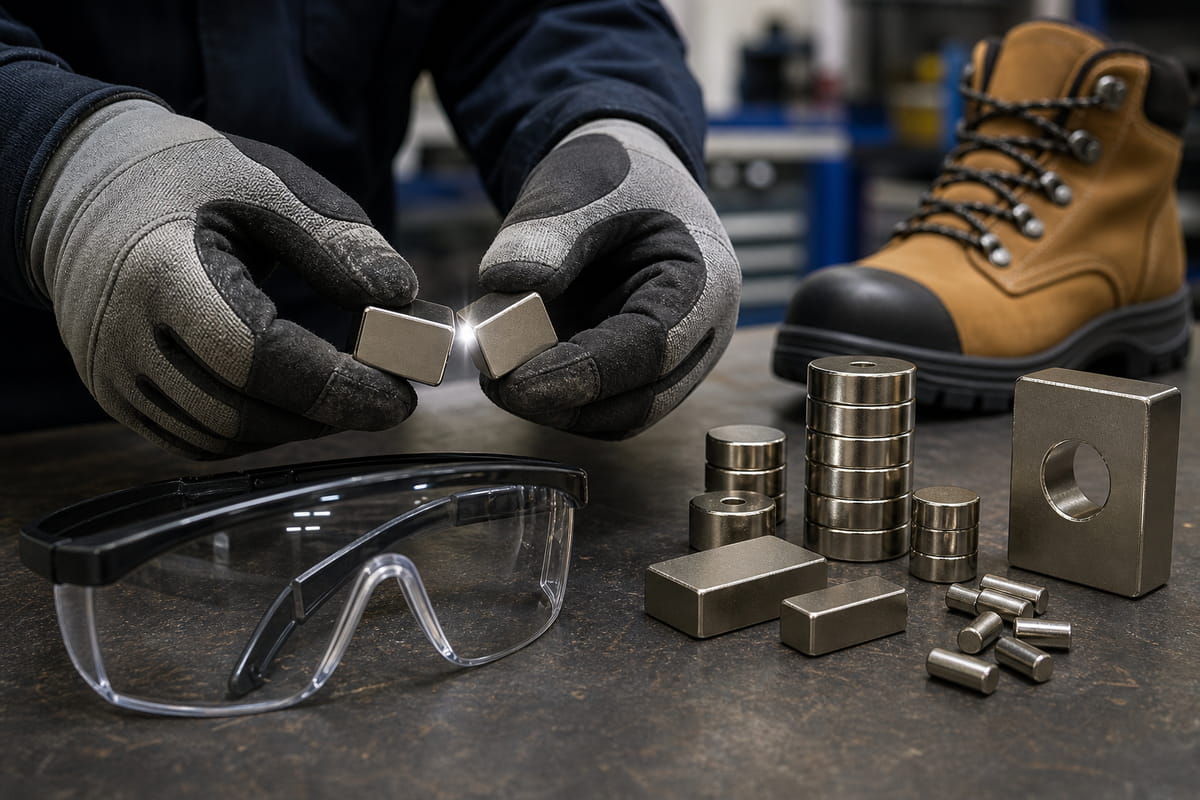
I know. Wearing protective gear sounds over the top. But trust me on this one.
Always wear safety goggles. Neodymium magnets shatter on impact. When they do, sharp fragments fly at high speed. I’ve seen it happen. It’s not pretty.
Wear heavy-duty gloves. These protect against pinching and sharp edges. Even if the magnets don’t break, the force of them snapping together can cause blood blisters, deep bruising, and worse.
Steel-toed boots? Only if you’re handling large industrial magnets. But honestly, if you’re working with anything over a few inches, I recommend them.
One more thing: if you have a nickel allergy, be careful. Most neodymium magnets have a nickel-copper-nickel coating. That coating can cause skin reactions in sensitive individuals.
How to Separate Stuck Neodymium Magnets
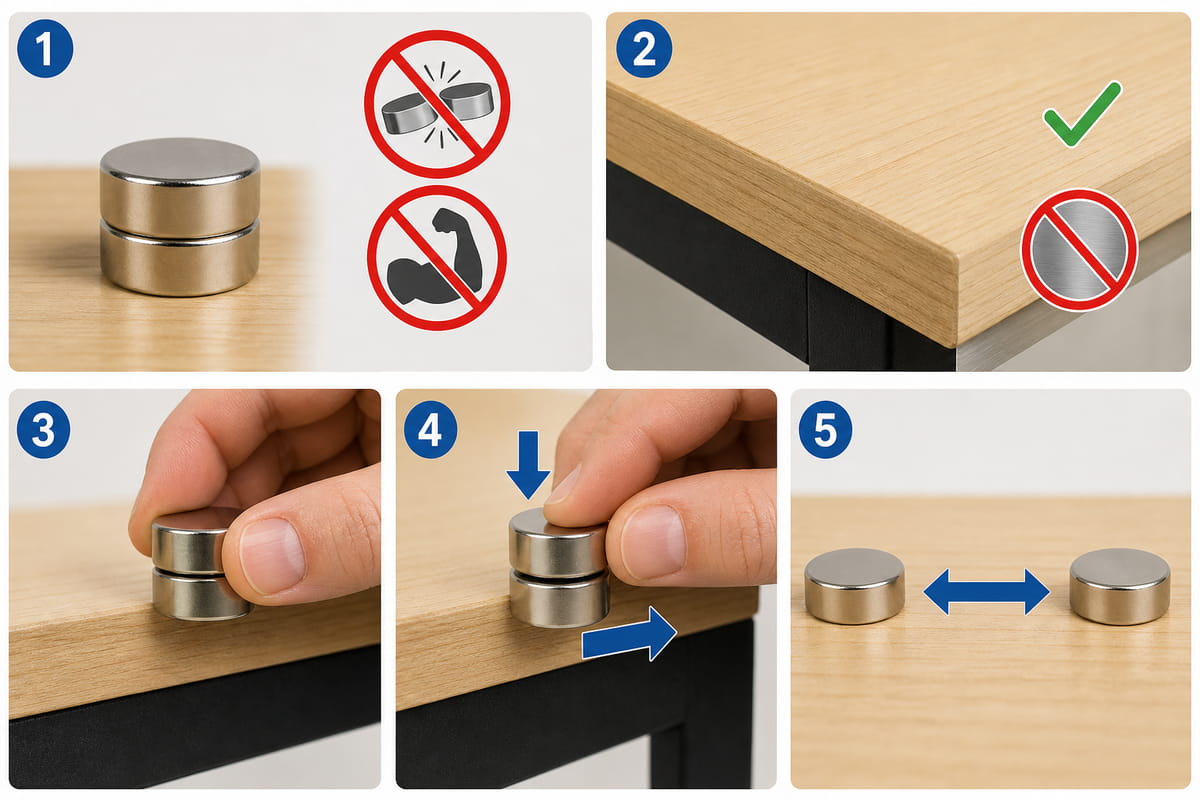
So you’ve got two magnets that snapped together. They’re stuck. What now?
Step 1: Don’t panic. And don’t use force.
Step 2: Take them to the edge of a sturdy table or workbench. Wood or plastic surface only—steel will just make things worse.
Step 3: Let one magnet hang off the edge. Grip the other magnet firmly.
Step 4: Push down on the overhanging magnet. Slide it sideways. The shearing force breaks the magnetic bond.
Step 5: Once separated, move the magnets far apart immediately. They’ll try to snap back together.
This technique works for magnets of any size. But I’ll be honest: for very large magnets (100+ pounds of pull force), you might need two people. Or specialized tools.
Storage: Where to Keep Your Magnets
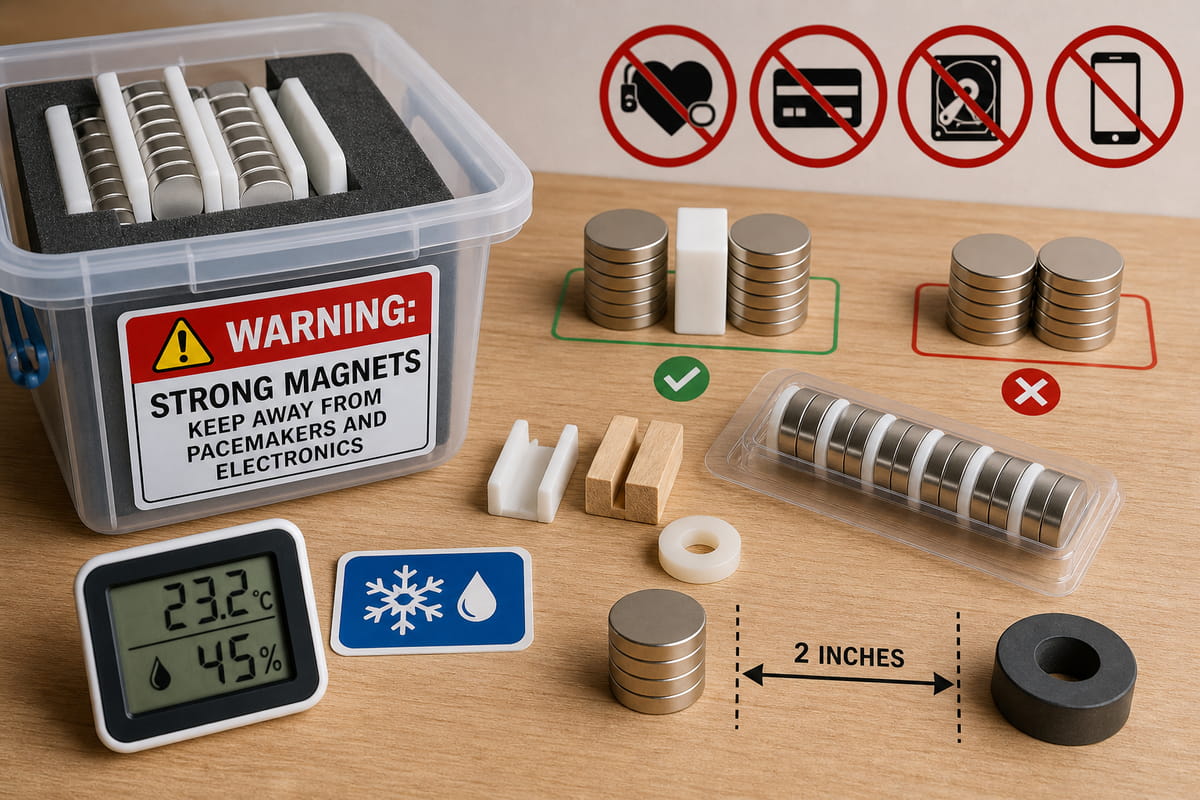
Improper storage causes more accidents than actual use. Here’s my system:
Keep them in their original packaging. The spacers between magnets are there for a reason. Use them.
Use plastic or wood spacers if you need to store multiple magnets together. Never let them touch directly.
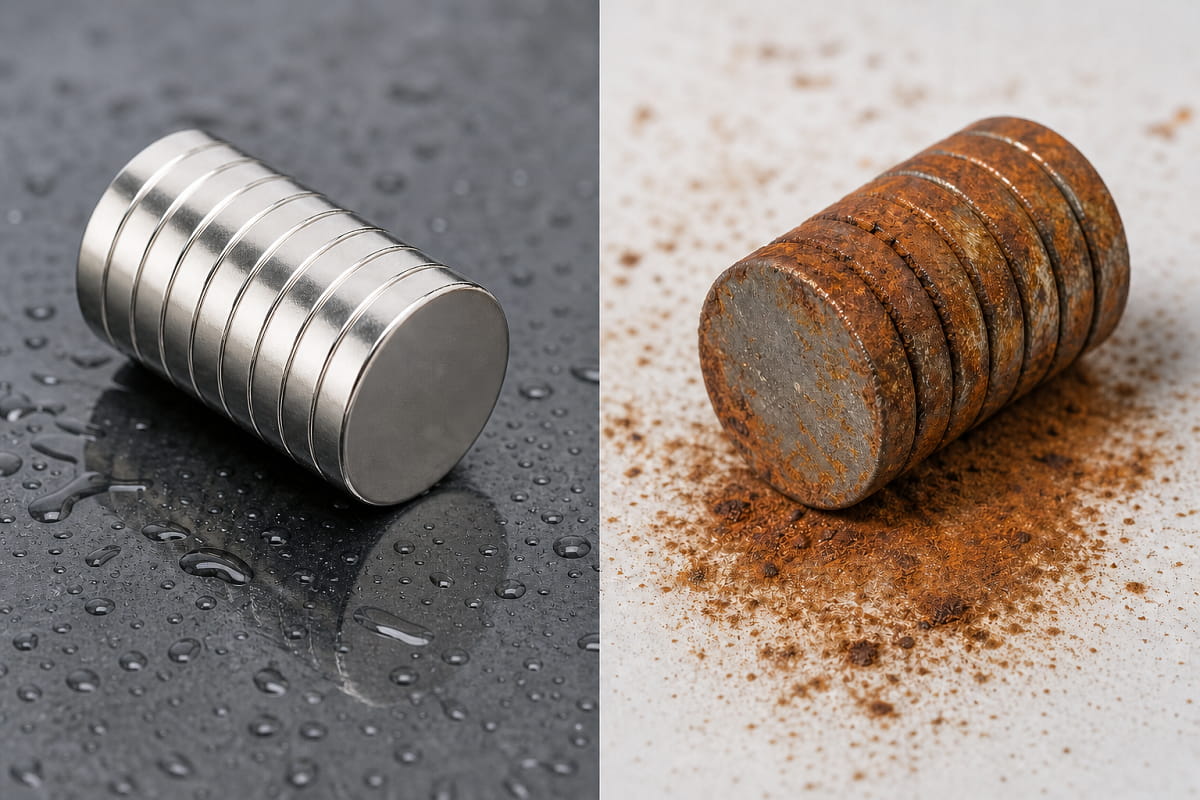
Store in a cool, dry place. Neodymium magnets corrode in humid environments. They’ll rust. And rust reduces magnetic strength.
Keep away from electronics. This means hard drives, credit cards, pacemakers, smartphones, and anything with magnetic storage. The magnetic field can wipe data permanently.
Maintain distance from ceramic magnets. If you store neodymium and ceramic magnets near each other, the neodymium can demagnetize the ceramic. Keep at least 2 inches of space.
Pro Tip: Label your storage container clearly. Something like “WARNING: Strong Magnets. Keep away from pacemakers and electronics.” It sounds dramatic. But it could save someone’s life.
Where NOT to Use Neodymium Magnets
Let me save you some trouble:
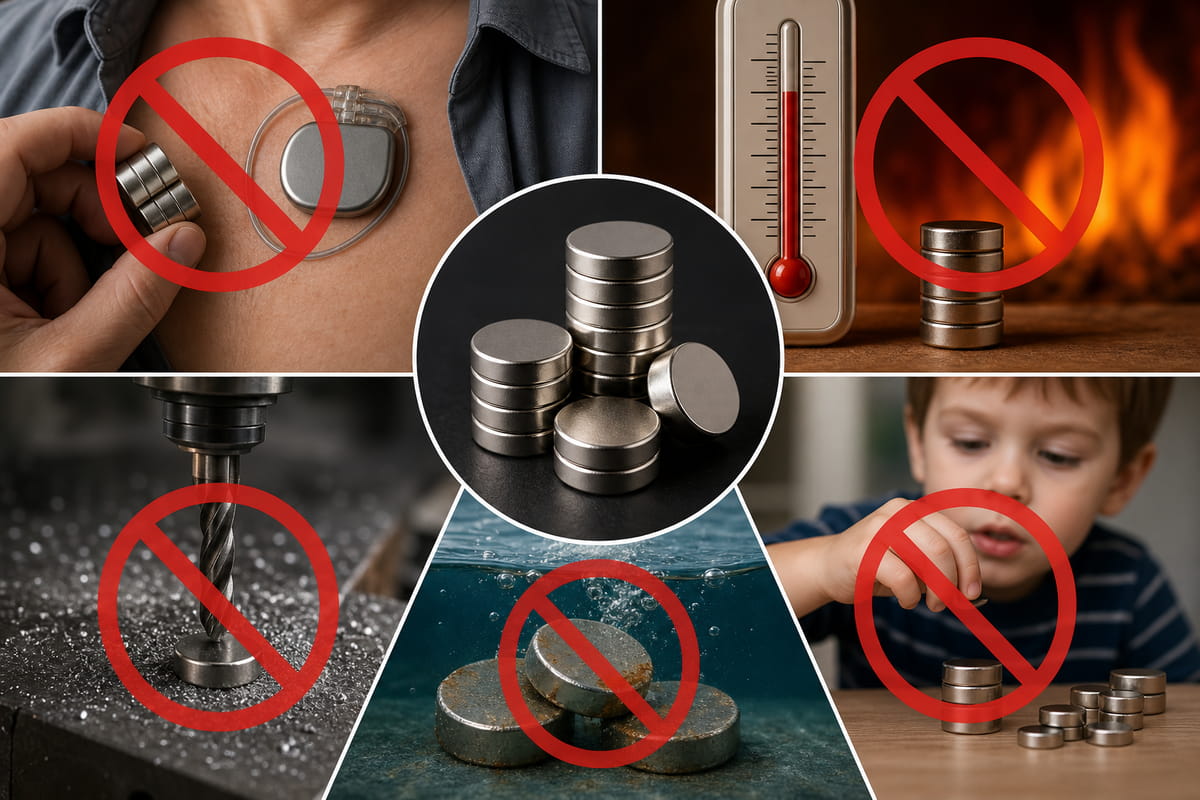
Don’t use them near medical devices. Pacemakers, ICDs, insulin pumps—strong magnetic fields can deactivate or interfere with these devices. That’s not a maybe. It’s a known risk.
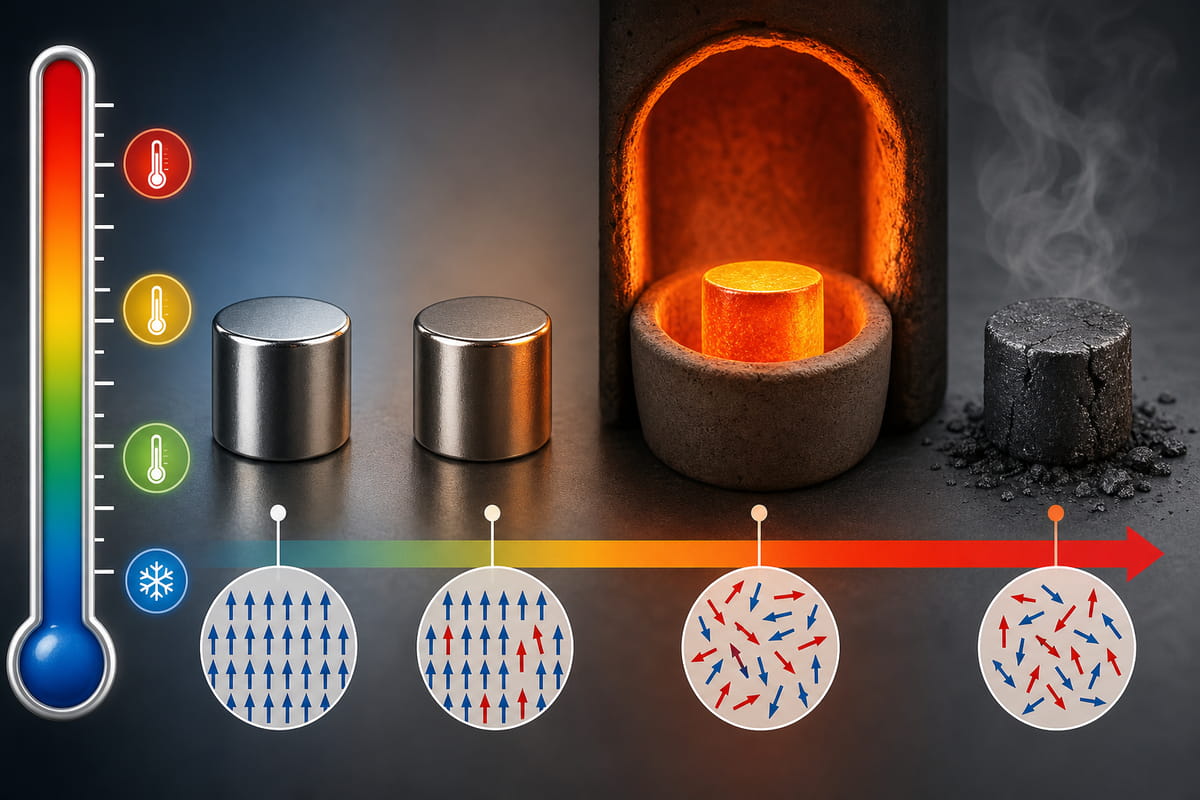
Don’t use them in high temperatures. Standard neodymium magnets start losing strength above 176°F (80°C). There are high-temperature grades, but most hobbyist magnets aren’t rated for heat.
Don’t drill or machine them. The dust is highly flammable. Seriously. Neodymium powder can combust in poorly ventilated areas. If you need custom shapes, buy pre-formed magnets.
Don’t use them underwater. Unless they’re specially coated, neodymium magnets corrode in moisture. The standard nickel coating isn’t waterproof.
Don’t give them to children. This should be obvious. But I’ll say it anyway: neodymium magnets are not toys. Swallowing multiple magnets can cause life-threatening internal injuries as they attract through intestinal walls.
Mounting and Gluing (The Right Way)
So you want to attach a magnet to something. Great. Here’s how to do it without destroying your project.
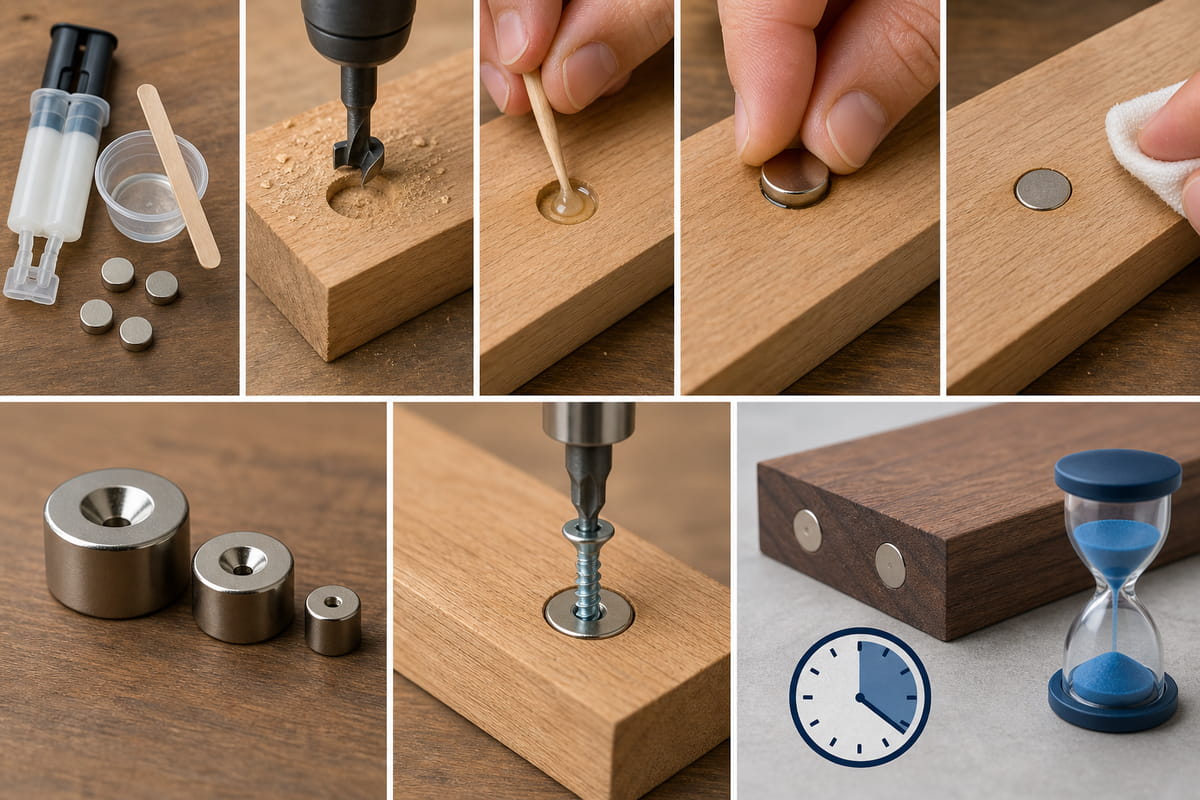
Use epoxy. Standard superglue often fails with neodymium magnets. The magnetic force pulls them apart. Two-part epoxy creates a stronger bond.
Embed in wood. Drill a shallow hole. Apply a drop of epoxy. Insert the magnet so it sits flush. Wipe away excess glue. Let it cure fully before adding any load.
Use countersunk magnets. If you need to screw a magnet down, buy pre-drilled countersunk neodymium magnets. Trying to drill holes yourself? That’s how you shatter them.
Let the glue cure completely. I know you’re impatient. But epoxy needs time. Give it at least 24 hours before testing the bond.
Common Mistakes (That I’ve Made)
I’ll be honest: I’ve learned some of these lessons the hard way.
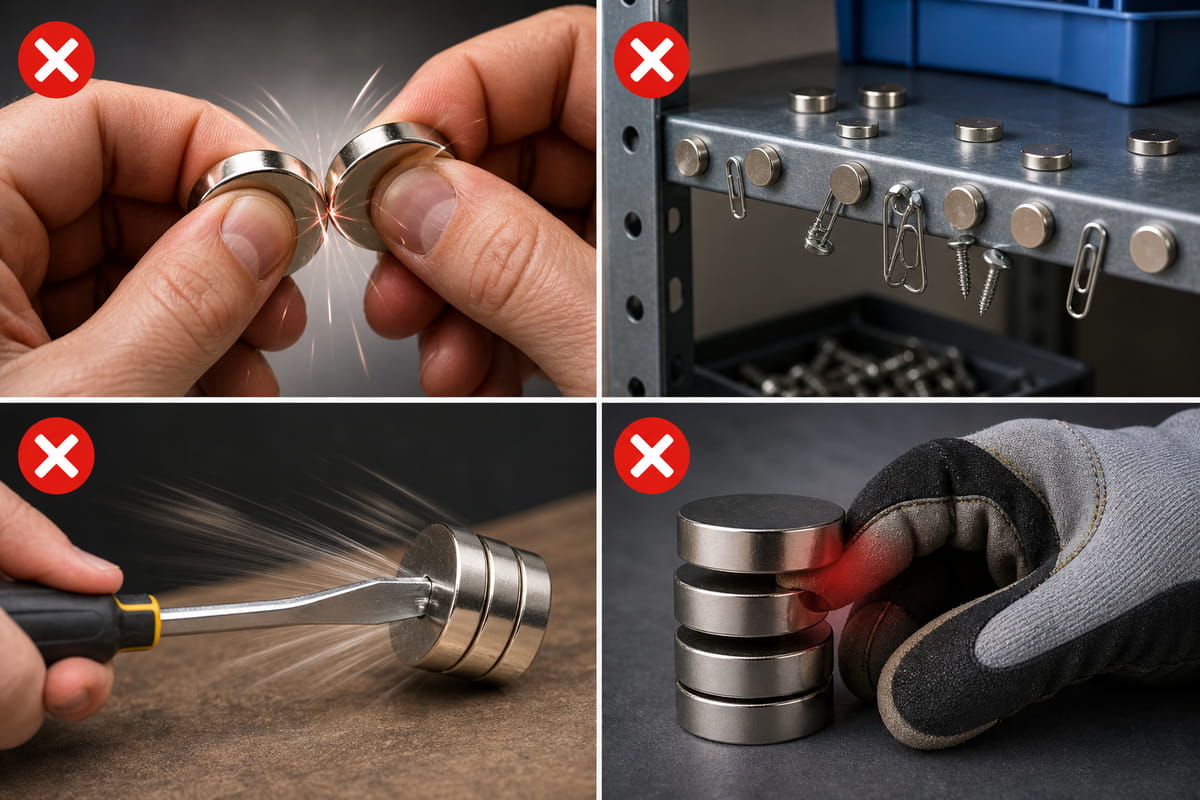
Mistake #1: Letting magnets fly together. Even from a few inches apart, they slam together with serious force. They can chip, crack, or shatter. And your fingers? They’re trapped in between.
Mistake #2: Storing magnets on a steel shelf. The shelf becomes magnetized. Now everything sticks to it. And your magnets are harder to remove.
Mistake #3: Using metal tools to separate magnets. The tool gets yanked out of your hand. And now you’ve got a metal object flying toward a powerful magnet. Not a good look.
Mistake #4: Trusting gloves completely. Heavy gloves help. But they won’t stop a 50-pound pull force. Your fingers can still get crushed. Always use proper technique.
First Aid: What to Do If Something Goes Wrong
Accidents happen. Here’s what to do:
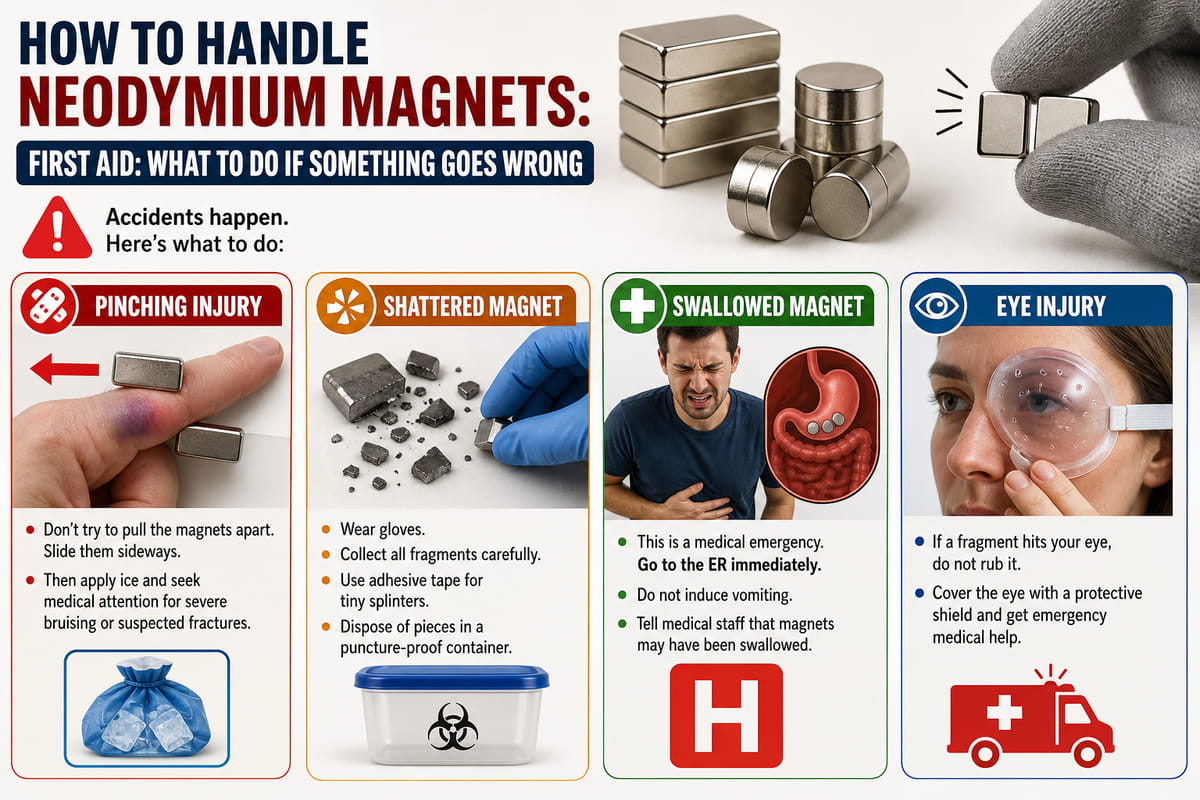
Pinching injury: Don’t try to pull the magnets apart. Slide them sideways. Then apply ice and seek medical attention for severe bruising or suspected fractures.
Shattered magnet: Wear gloves. Collect all fragments carefully. Use adhesive tape for tiny splinters. Dispose of pieces in a puncture-proof container.
Swallowed magnet: This is a medical emergency. Go to the ER immediately. Do not induce vomiting. Tell medical staff that magnets may have been swallowed.
Eye injury: If a fragment hits your eye, do not rub it. Cover the eye with a protective shield and get emergency medical help.
The Bottom Line
Look, I’m not trying to scare you. Neodymium magnets are incredible tools. They can upgrade your workshop, create clever storage solutions, and power all kinds of creative projects.
But they deserve respect.
The simple rules? Slide don’t pull. Wear protection. Store safely. Keep away from kids and medical devices.
Follow those guidelines, and you’ll get years of reliable use from your magnets. Ignore them, and you’re asking for trouble.
I’ve been working with neodymium magnets for over a decade. And every time I handle them, I remind myself: these things are more powerful than they look.
Handle them that way.