Quick Summary:
Real, solid brass is non-magnetic because it’s made of copper and zinc, neither of which is magnetic. If a magnet sticks firmly to your “brass” item, it’s almost certainly brass-plated steel (the steel core is what’s magnetic), or it contains an iron/nickel core or magnetic impurities.
To check, use the magnet test, then a scratch test — if you see silvery-gray metal under the gold, it’s steel, not solid brass.
So you grabbed a magnet, pressed it against a shiny gold-colored object, and… nothing happened.
And now you’re wondering: does a magnet stick to brass?
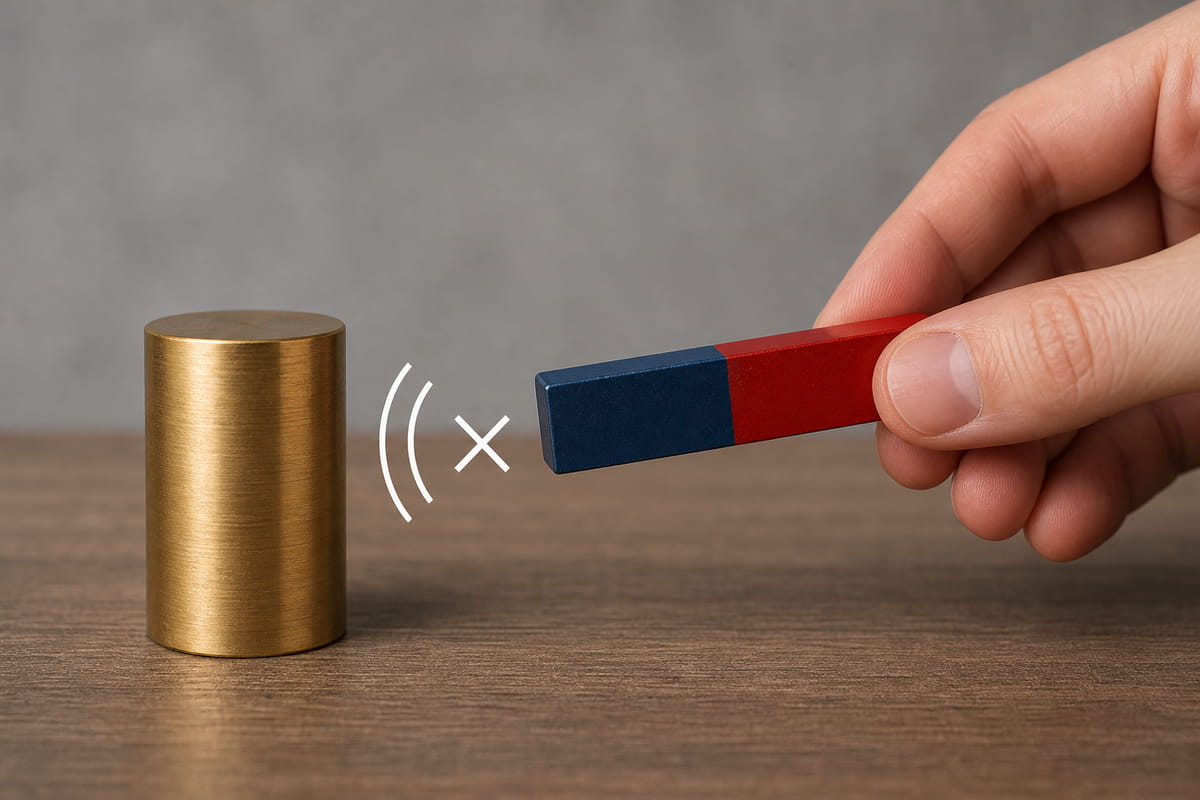
Here’s the short answer: No. A magnet will NOT stick to real, solid brass. That’s because brass is made of copper and zinc — two metals that have zero magnetic pull.
But (and this is a big “but”) there’s more to the story.
Because sometimes a magnet DOES grab onto something that looks like brass. And when that happens, it usually means you’re not holding real brass at all.
In this article, as a professional neodymium magnets manufacturer, let me explain exactly what’s going on… and how you can test it yourself in about 10 seconds.
Does a Magnet Stick to Brass: The Quick Answer
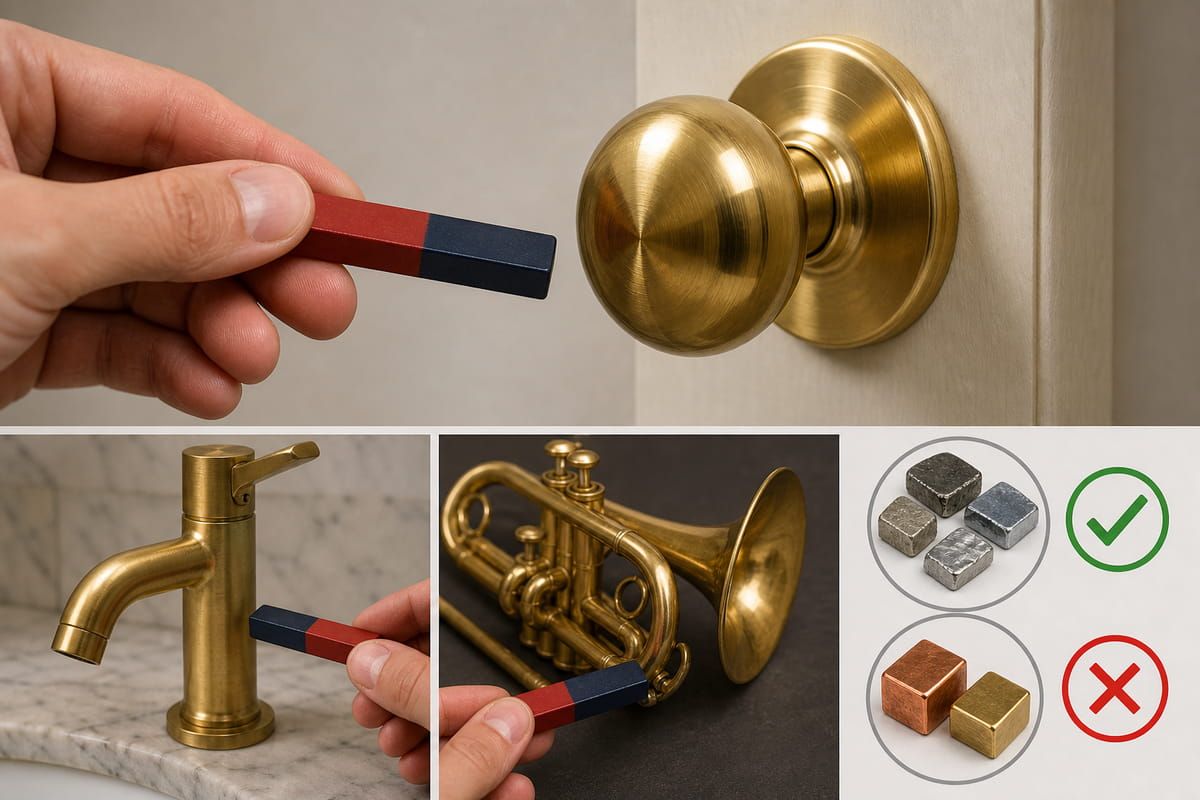
Real brass is non-magnetic.
If you hold a magnet up to a solid brass doorknob, faucet, or musical instrument, the magnet will just slide right off. There’s no pull. No “click.” Nothing.
Here’s why:
Magnets only stick to ferromagnetic metals — that’s the technical term for metals that get attracted to a magnetic field. The big three are:
- Iron
- Nickel
- Cobalt
And here’s the thing: brass doesn’t contain ANY of those (at least not in its standard form).
Instead, brass is an alloy — a fancy word for “a mix of metals” — made up mostly of copper and zinc. Neither of those is magnetic. So when you combine them, you get… you guessed it, a non-magnetic metal.
Sound good? Let’s dig deeper.
What Is Brass, Exactly?
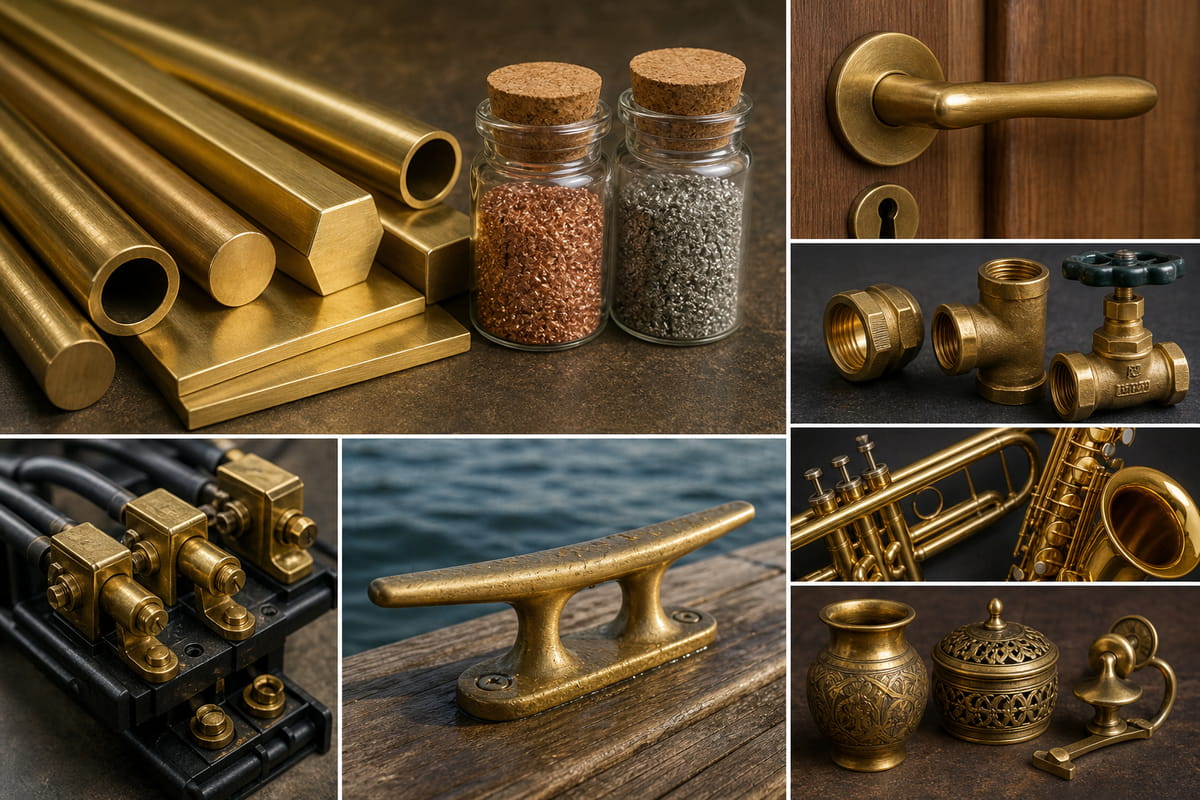
Before we go further, let’s quickly break down what brass actually is.
Brass is a copper-zinc alloy. Most brass contains somewhere between 60-70% copper and 30-40% zinc, though the exact ratio changes depending on the type.
That copper content is what gives brass its warm, golden color (and why people sometimes confuse it with gold).
Brass shows up everywhere:
- Door handles and locks
- Plumbing fittings and valves
- Musical instruments (trumpets, trombones, saxophones)
- Decorative items and hardware
- Electrical connectors
And one of the reasons brass is SO popular is its corrosion resistance. It holds up great against rust and weathering, which is why you’ll find it in marine fittings and outdoor hardware.
But the property we care about today? Its magnetism. Or rather… its complete lack of it.
Why Brass Isn’t Magnetic
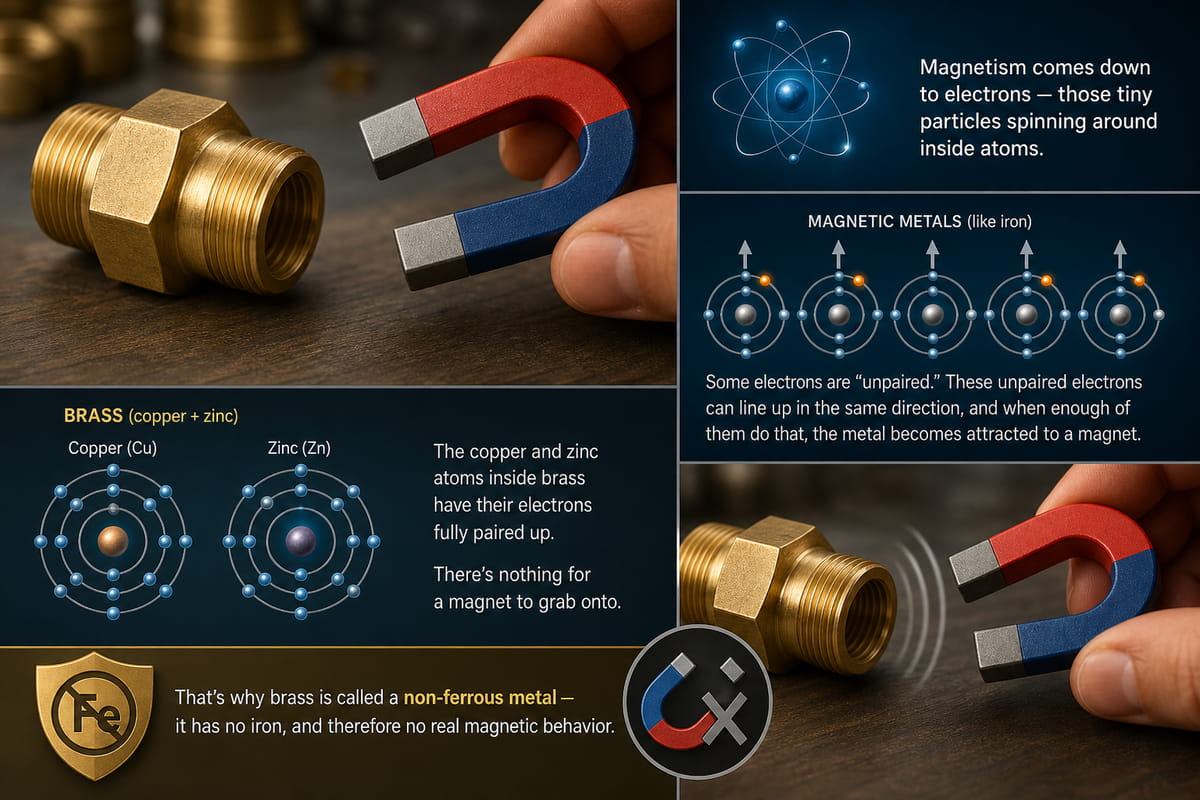
Magnetism comes down to electrons — those tiny particles spinning around inside atoms.
In magnetic metals like iron, some of those electrons are “unpaired.” These unpaired electrons can line up in the same direction, and when enough of them do that, the metal becomes attracted to a magnet.
Here’s the deal with brass:
The copper and zinc atoms inside brass have their electrons fully paired up. There’s nothing for a magnet to grab onto. So no matter how strong your magnet is, brass just won’t respond in any meaningful way.
That’s why brass is called a non-ferrous metal — it has no iron, and therefore no real magnetic behavior.
So Why Does a Magnet Sometimes Stick to “Brass”?
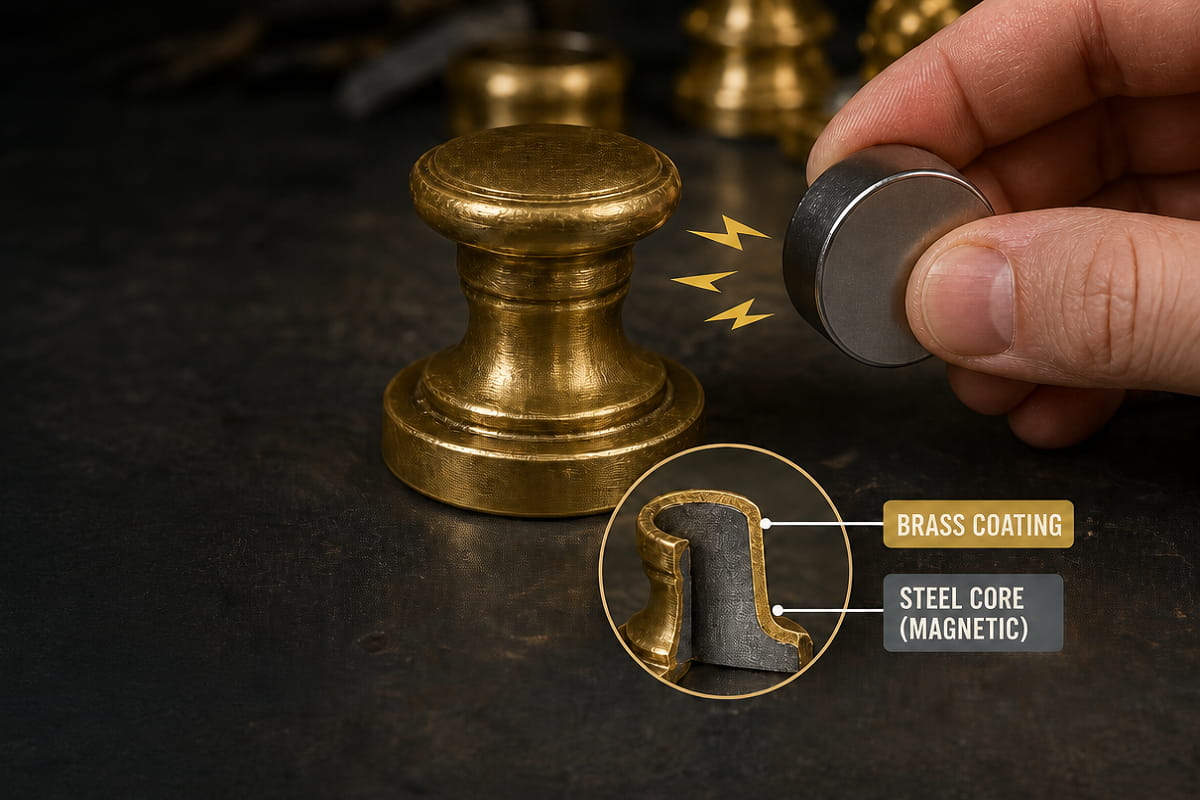
If a magnet sticks firmly to your “brass” item, it’s almost certainly brass-plated steel.
In other words, you’ve got a steel object with a thin brass coating on the outside. The steel core is magnetic — so the magnet grabs the steel right through that thin layer of brass.
This is SUPER common with cheap hardware, decorative pieces, and mass-produced items. Manufacturers use a steel base (because it’s cheap and strong) and then coat it in brass to make it look fancy.
Pro Tip: If a magnet sticks firmly to something that’s supposed to be brass, you’re probably dealing with brass-plated steel — not the real thing.
There are a couple of other (rarer) reasons a magnet might show a slight pull:
- The item has an iron or nickel core
- It contains magnetic impurities mixed into the alloy
- It’s plated with another magnetic metal underneath
But 9 times out of 10, it’s brass-plated steel.
The 10-Second Test to Check If It’s Real Brass
Want to know if your item is solid brass or just a fake?
Here’s the exact process I’d use:
Step 1: Grab a Strong Magnet
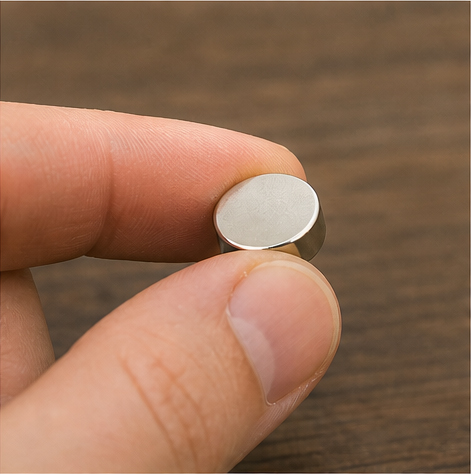
A regular fridge magnet works, but a small neodymium magnet works even better.
Step 2: Hold It Against the Item
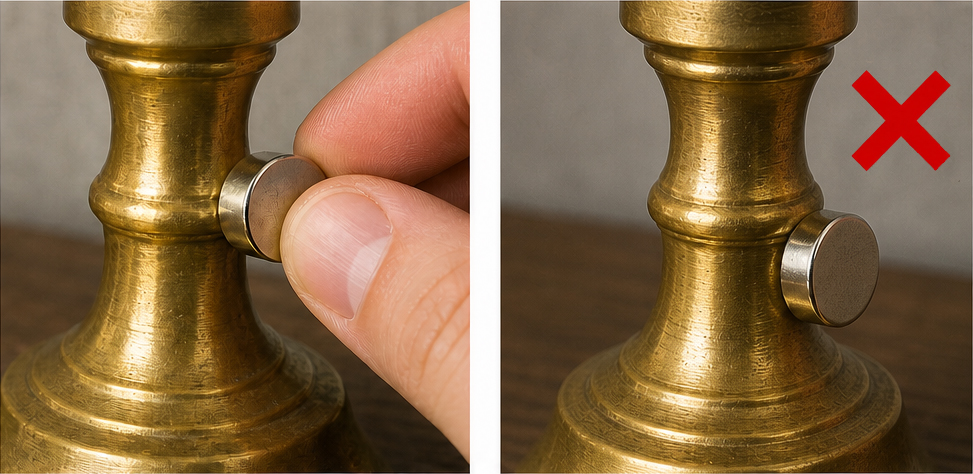
If the magnet sticks firmly, it’s NOT solid brass. There’s magnetic metal (probably steel) hiding underneath.
Step 3: Do a Scratch Test
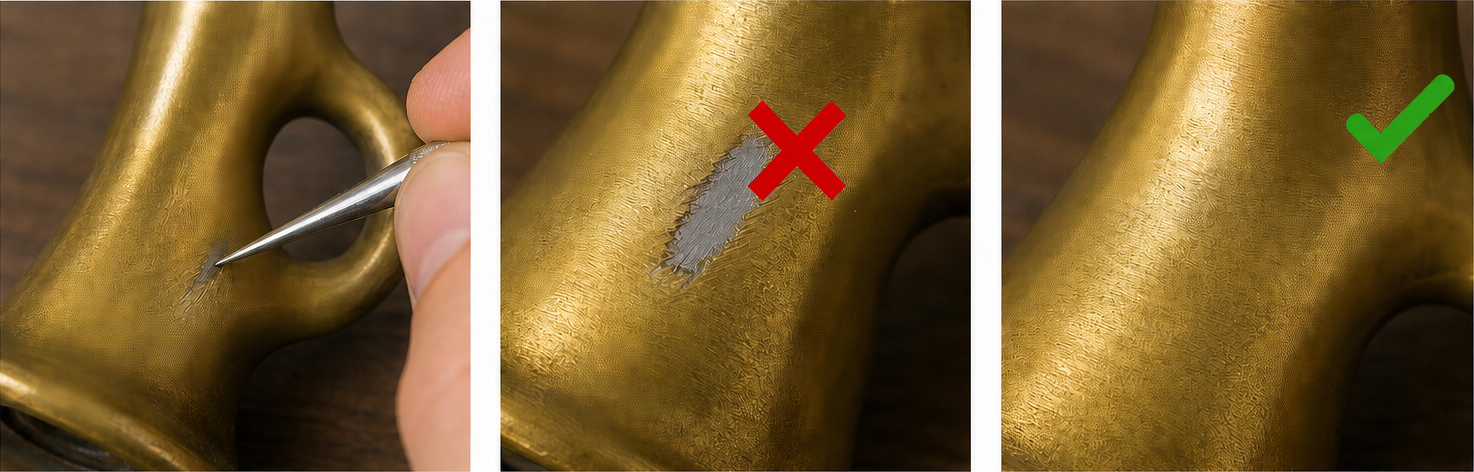
If you suspect brass plating, find a hidden spot and gently scratch the surface. If you see a silvery-gray metal underneath the gold color, that’s steel. Real brass is the same color all the way through.
That’s it. Two simple tests and you’ll know exactly what you’re working with.
One thing to keep in mind though: the magnet test alone isn’t perfect. Just because a magnet DOESN’T stick doesn’t automatically mean it’s brass. Plenty of other metals — like aluminum, copper, gold, and silver — aren’t magnetic either.
So use the magnet test to rule things OUT, not necessarily to confirm what something is.
Wait — Can You Magnetize Brass at All?
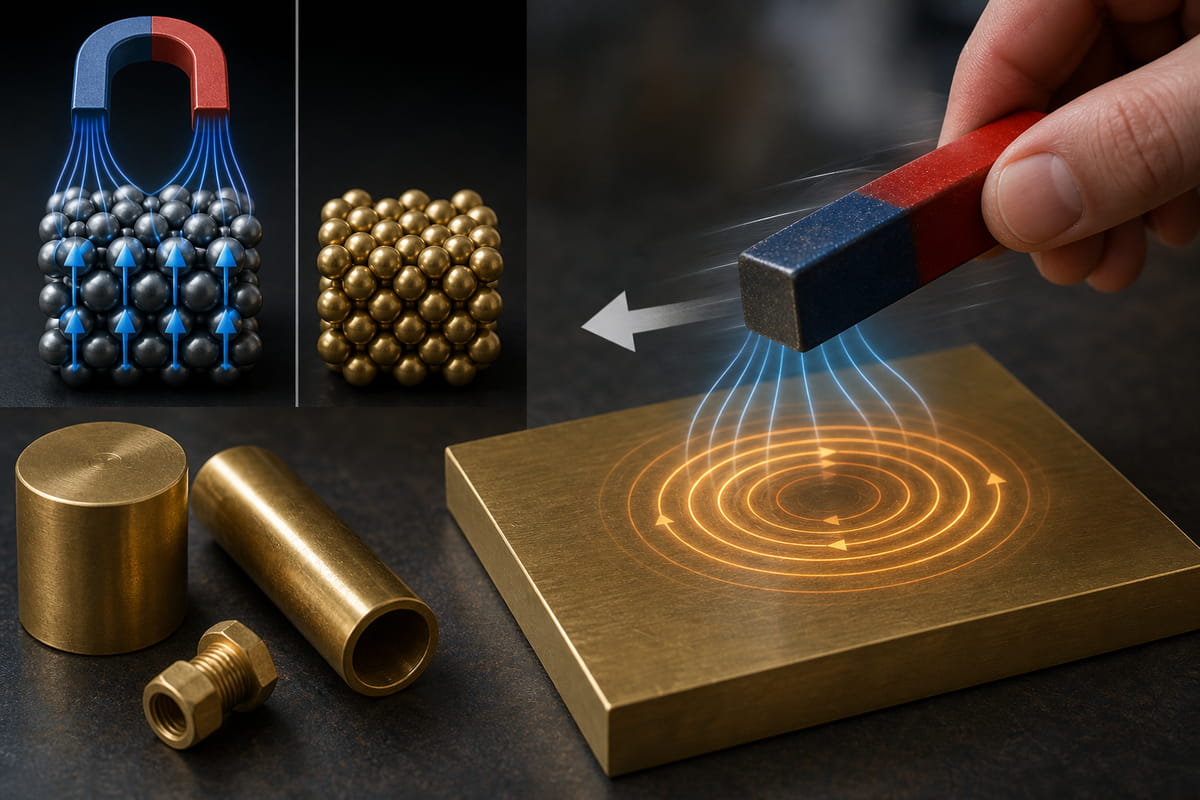
Great question. And the answer is… sort of, but not really.
You cannot permanently magnetize brass the way you can with iron or steel. The atomic structure just won’t allow it.
But here’s a fun twist:
Brass can interact with moving magnets in a really cool way. This is called the eddy currenteffect (or the Lenz effect).
Here’s how it works:
When you move a strong magnet quickly past a piece of brass, the moving magnet creates tiny electrical currents in the metal. Those currents — called eddy currents — generate their own little magnetic fields, which push back against the magnet.
Want to see it for yourself?
Try dropping a strong neodymium magnet down a brass (or copper) tube. Instead of falling fast, the magnet drifts down slowly, almost like it’s floating. It’s wild to watch.
But to be clear: this isn’t brass being “magnetic.” It’s just brass reacting to a magnet in motion. The moment everything stops moving, the effect disappears completely.
Brass also shows something called diamagnetism — an extremely weak repulsion from magnetic fields. But it’s so faint you’d never notice it without specialized equipment.
How Does Brass Compare to Other Metals?
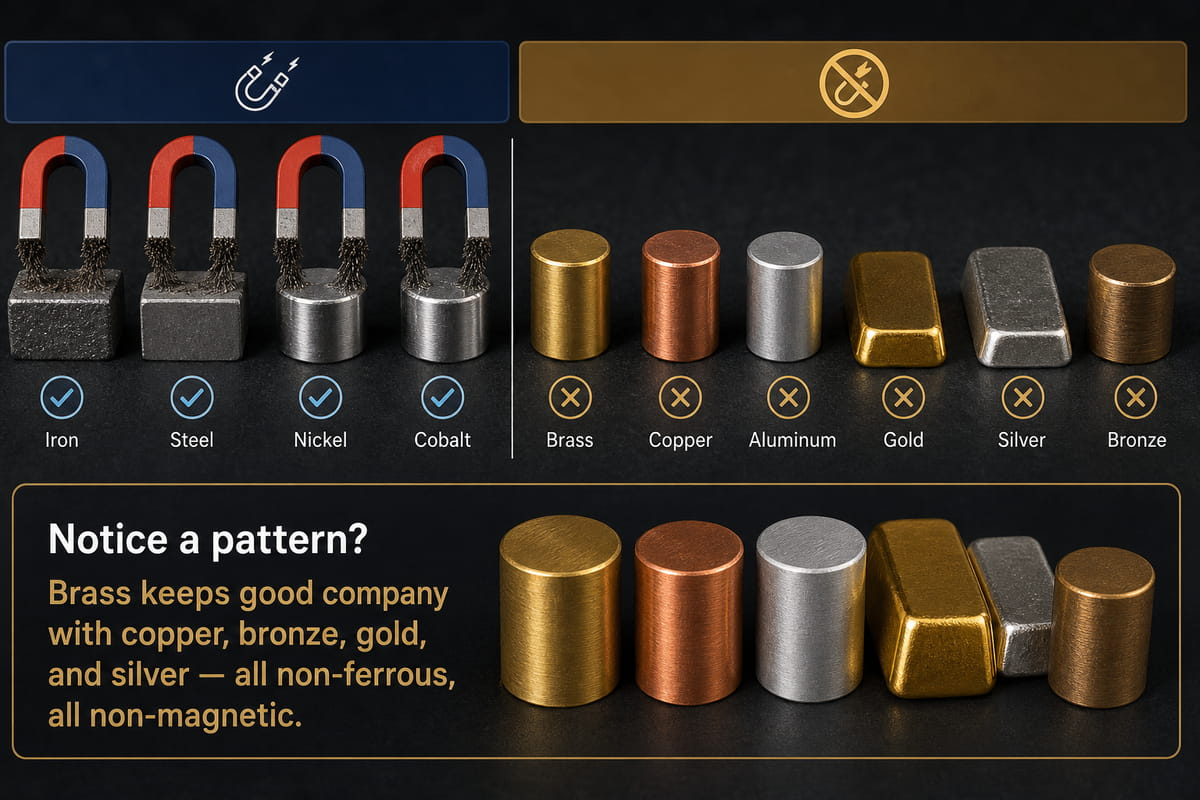
Let me put this in context with a quick rundown of common metals and whether magnets stick to them:
- Iron — Strongly magnetic. The classic example.
- Steel — Magnetic (it’s mostly iron).
- Nickel & Cobalt — Both magnetic.
- Brass — Non-magnetic.
- Copper — Non-magnetic.
- Aluminum — Non-magnetic.
- Gold & Silver — Non-magnetic.
- Bronze — Generally non-magnetic (it’s mostly copper and tin).
Notice a pattern? Brass keeps good company with copper, bronze, gold, and silver — all non-ferrous, all non-magnetic.
Quick note on stainless steel: This one trips people up. Some stainless steel is magnetic and some isn’t, depending on the grade. But that’s a whole different topic. Just know that stainless steel behaves very differently from brass.
Why Brass Being Non-Magnetic Actually Matters
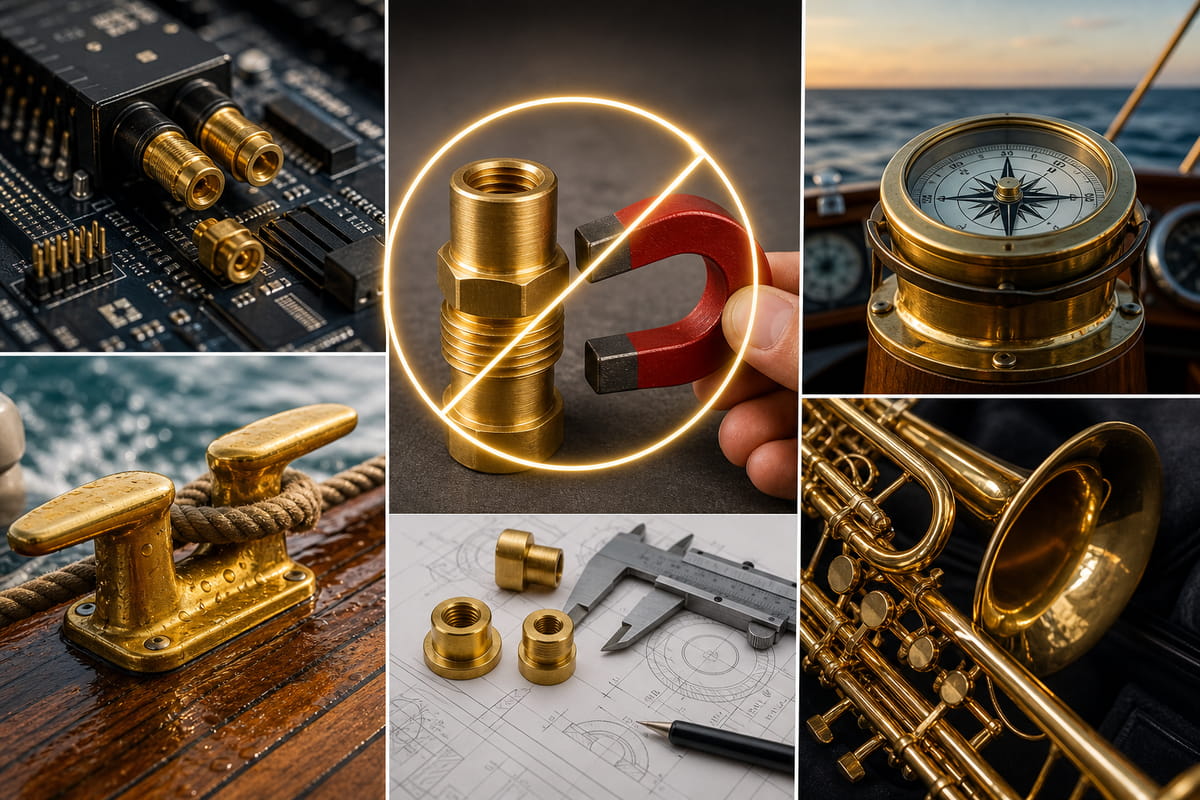
You might be thinking: “Cool, but who cares if brass is magnetic or not?”
Turns out, this property is a huge deal in a few industries.
Electronics: Brass is used in connectors and components specifically because it WON’T cause magnetic interference. That keeps electronic signals clean.
Navigation instruments: Compasses and precision tools often use brass because a magnetic metal would throw off the readings. Brass stays neutral and doesn’t mess with sensitive equipment.
Marine hardware: Brass resists saltwater corrosion AND doesn’t interfere with onboard navigation gear. Best of both worlds.
Musical instruments: That trumpet or saxophone is made of brass partly because of its durability and corrosion resistance — and its non-magnetic nature is a nice bonus.
So this isn’t just trivia. Engineers and manufacturers choose brass specifically because it doesn’t respond to magnets.
The Bottom Line
Let’s wrap this up.
Does a magnet stick to brass? No. Real, solid brass is non-magnetic because it’s made of copper and zinc — two metals with no magnetic pull whatsoever.
If a magnet DOES stick to your “brass” item, here’s what’s really happening:
- It’s most likely brass-plated steel (the steel underneath is what’s magnetic)
- Or it contains an iron/nickel core or magnetic impurities
The fastest way to know for sure? Use the magnet test, then back it up with a scratch test if you’re suspicious.
And remember: while brass won’t stick to a magnet, it can still interact with magnets in motion thanks to the eddy current effect — which is a genuinely fun experiment to try at home.
So the next time someone asks you whether a magnet sticks to brass, you’ll know the real answer (and you’ll be able to explain exactly why).