Quick Summary:
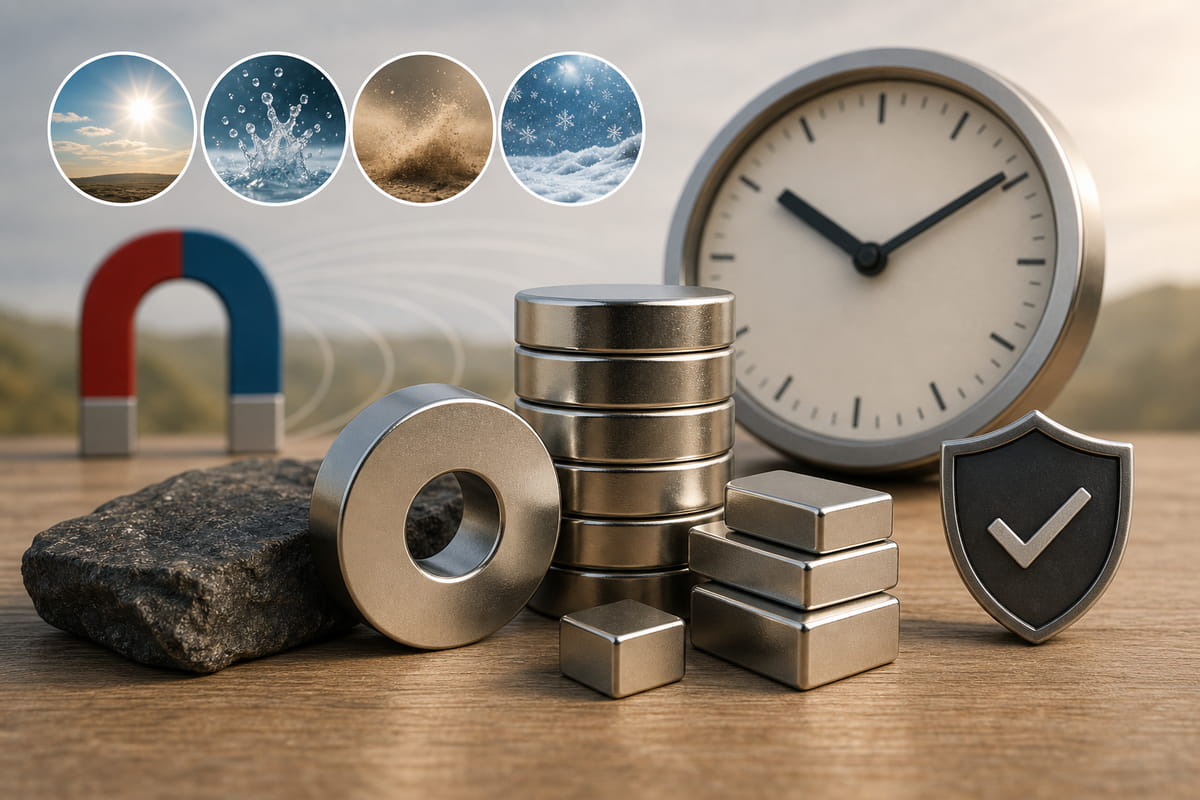
- N52 magnet is the strongest neodymium magnet grade you can buy on the market. The “N” means neodymium, and the “52” points to its Maximum Energy Product of 52 MGOe (Mega-Gauss Oersteds), which shows huge magnetic force for its size.
- Itis great choice when you need serious pull in a tiny room. But these magnets are brittle, they don’t like heat, and they’ll cost you more than the lower grades.
- Most standard N52 magnets top out around 80°C. Mishandle one and it’ll pinch your skin or fry nearby electronics. So reach for N52 only when your project actually demands it. Otherwise? A weaker grade probably does the job just fine.
When you look to purchase magnets, manufacturer’s quote include several different grades—such as N48, N50, and N52—each with a different price. Are you curious about the difference between N52 and other grades?
In this article, as a professional custom N52 magnets manufacturer, let me explain what an N52 magnet is, why it’s so incredibly strong, and—most importantly—whether you should actually use one for your project.

What is an N52 magnet
An N52 magnet is the highest commercially available grade of neodymium permanent magnet. The “N” stands for Neodymium. The “52” represents the material’s Maximum Energy Product: 52 MGOe (Mega-Gauss Oersteds).
That number means this magnet packs an insane amount of magnetic force into a tiny package.
Here’s the deal: neodymium magnets come in different grades. N35. N42. N48. N52. The higher the number, the stronger the magnet. And N52 sits at the top of the food chain.
(Well, technically N55 exists. But it’s rare and expensive. For all practical purposes, N52 is the strongest magnet you can actually buy.)
How strong is an N52 magnet?

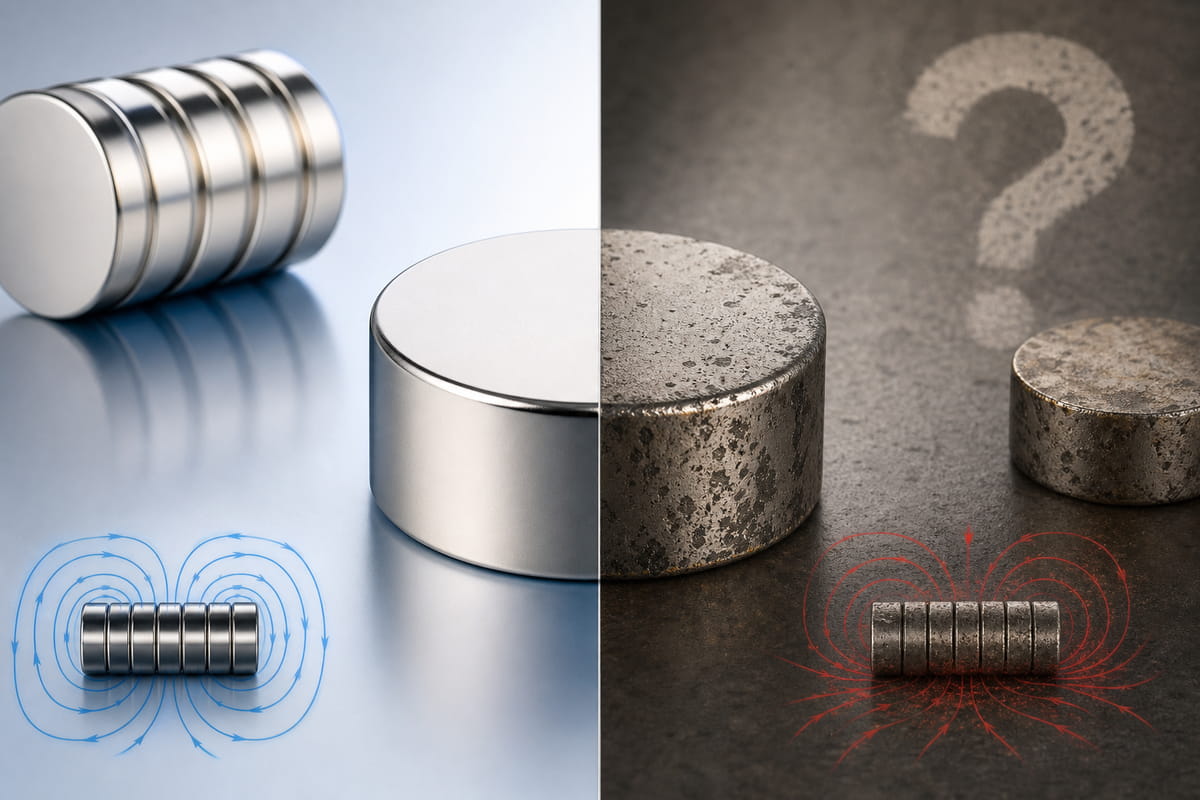
An N52 magnet can be 40-50% stronger than an N35 magnet of the exact same size.
Think about that for a second.
Same dimensions. Same shape. But the N52 version is nearly twice as powerful.
Pro Tip: If you’re comparing magnets, always compare the same size and shape. A big N35 magnet can outperform a tiny N52 magnet. Grade matters. But geometry matters too.
Here’s a quick comparison:
| Magnet Grade | Relative Strength (vs N35) |
|---|---|
| N35 | Baseline |
| N42 | ~20% stronger |
| N48 | ~35% stronger |
| N52 | ~50% stronger |
That’s a massive difference.
Why does N52 matter?
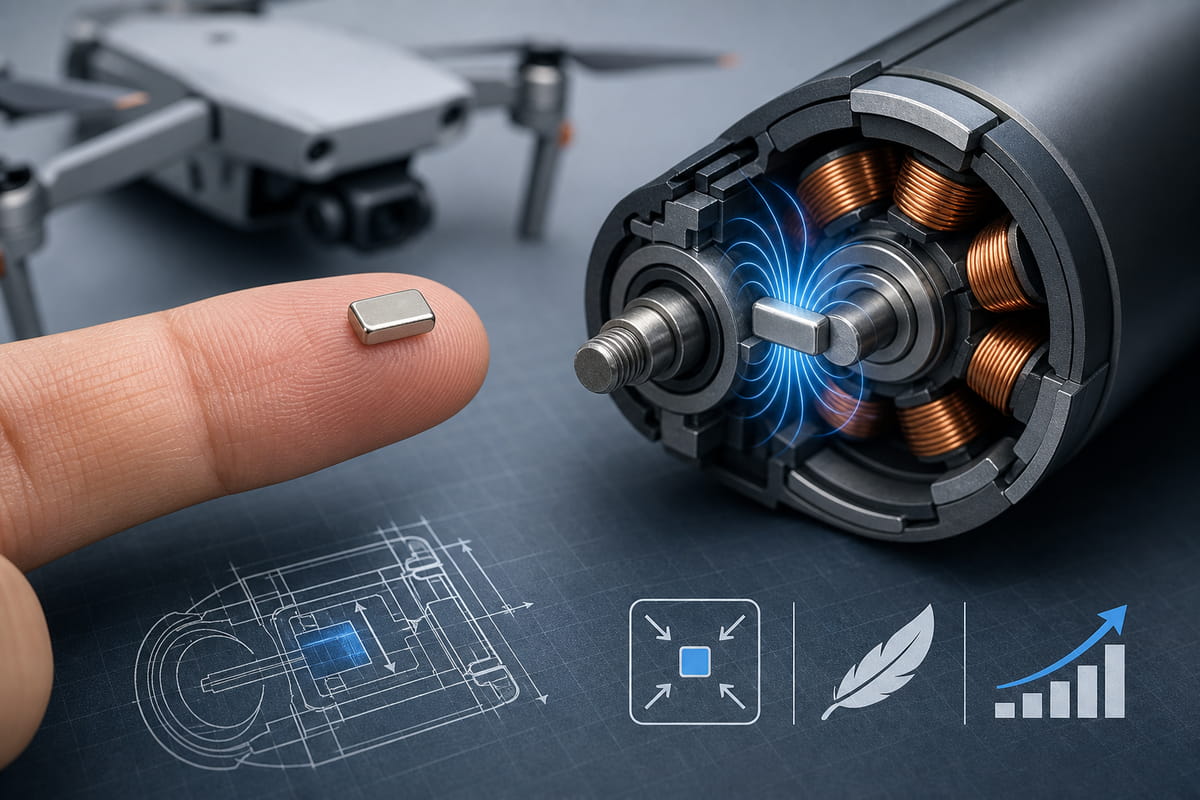
Here’s the thing: in engineering, space is always tight.
You’ve got a gadget that needs a strong magnetic field. But you can only fit a magnet the size of your pinky nail.
That’s where N52 shines.
Its high strength-to-size ratio means you can use a smaller magnet and still get the performance you need. Less weight. Less material. More efficiency.
In my experience, this is why engineers love N52 magnets for aerospace components, high-end sensors, and compact electronic devices.
Key characteristics of N52 magnets
Let’s break this down.
1. Extreme power

I already covered this. But let me emphasize: these things are no joke.
A small N52 disc magnet—like 12mm diameter, 6mm thick—can hold over 4 pounds of weight.
That’s impressive.
2. Brittle material

Neodymium magnets are made from an alloy of neodymium, iron, and boron (NdFeB).
Strong? Yes.
Tough? Not really.
They’re brittle. Drop one on a tile floor? It can shatter.
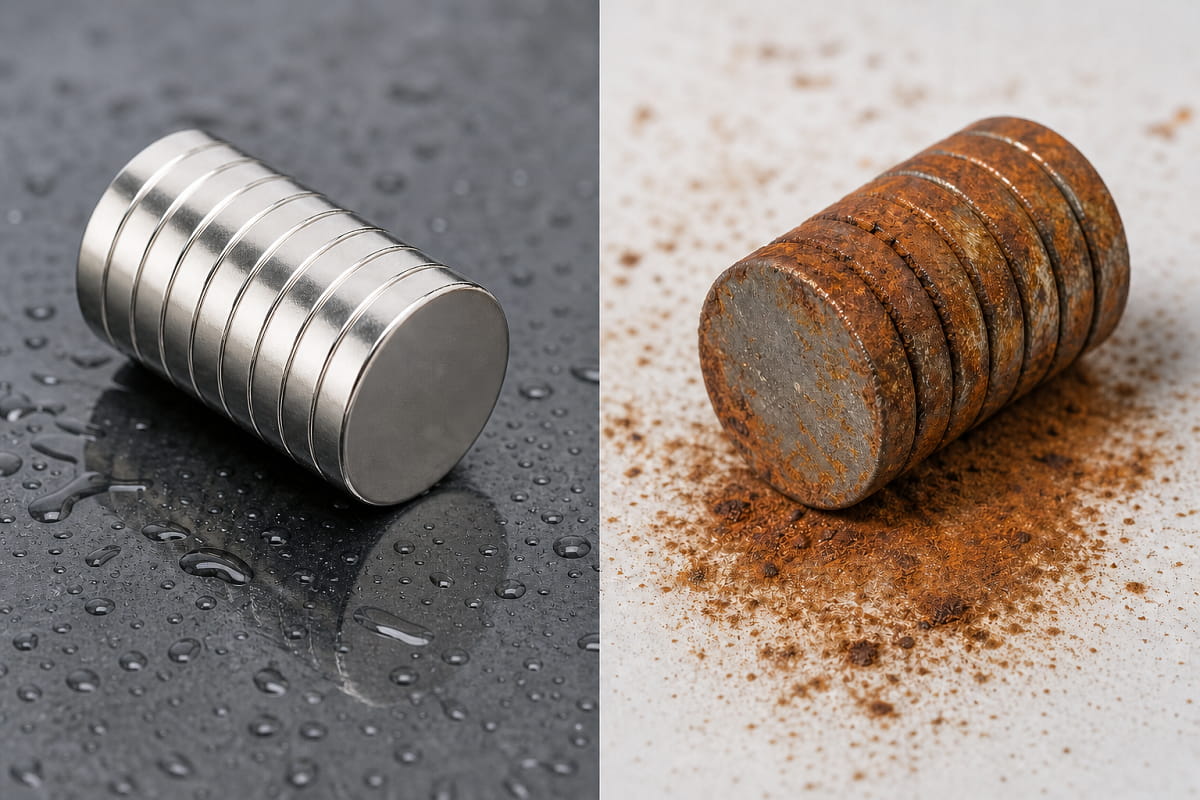
That’s why they come coated in layers—usually nickel-copper-nickel. That coating protects against corrosion and chipping.
Pro Tip: Never use N52 magnets in applications where they might slam together. The impact can cause them to crack or chip.
3. Temperature sensitivity
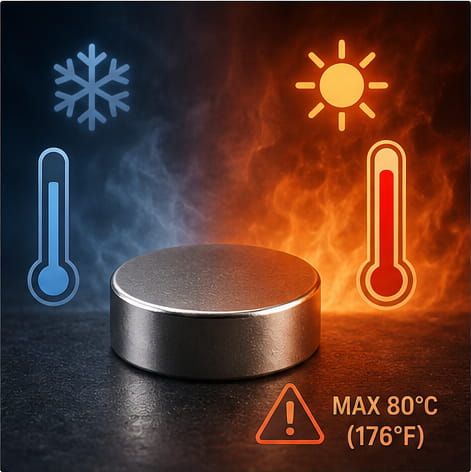
Here’s something most people don’t know:
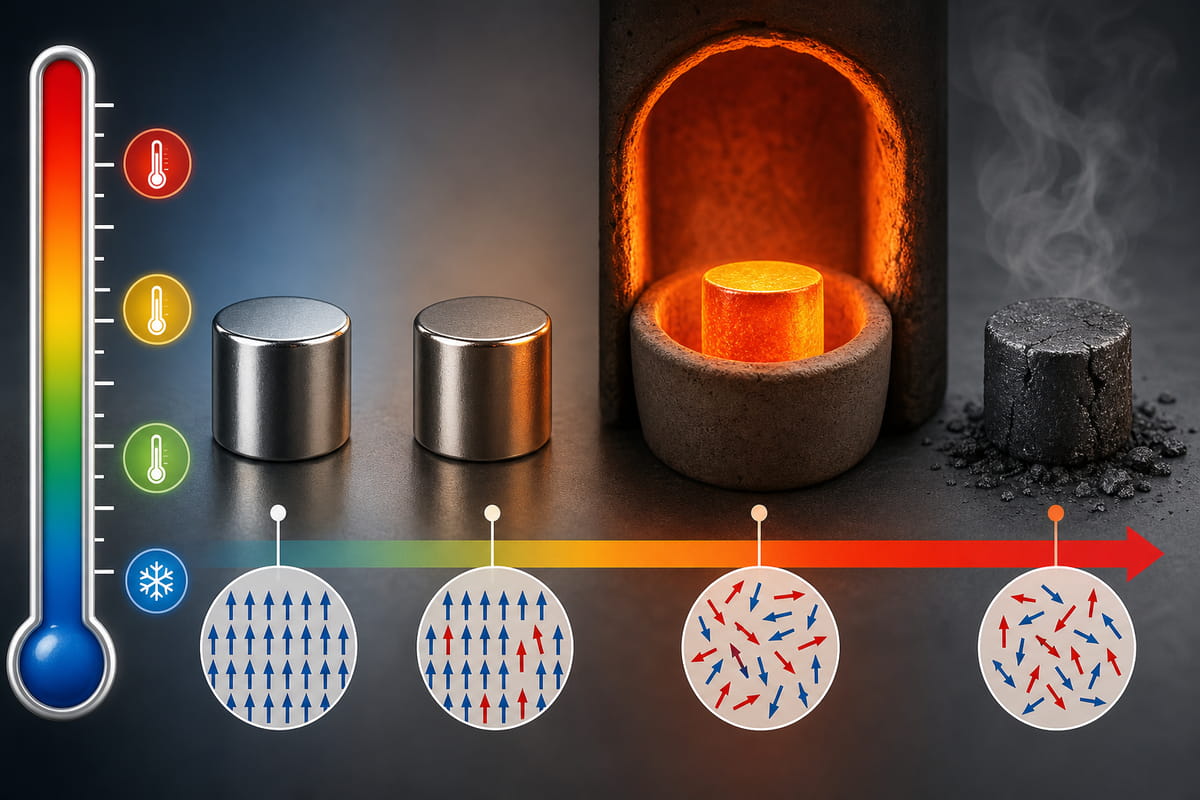
Standard N52 magnets have a maximum operating temperature of 80°C (176°F).
Exceed that? The magnet starts to lose its strength permanently.
So if you’re working with high-heat environments—engine compartments, industrial machinery near heat sources, etc.—N52 might not be your best choice.
(There are high-temperature neodymium grades, like N52SH and N52UH. But they’re more expensive.)
4. Demagnetization resistance
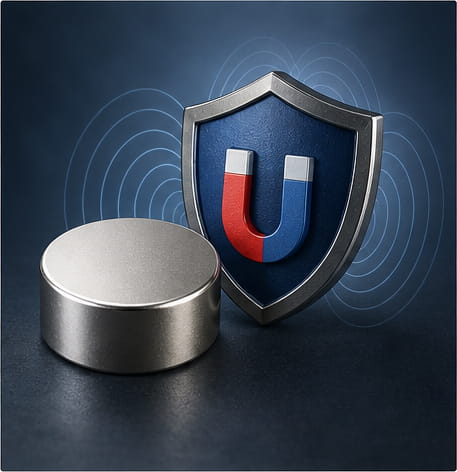
The good news? N52 magnets are resistant to demagnetization under normal conditions.
Their magnetic strength decreases by about 1% every 10 years.
That means you won’t notice any difference in your lifetime. Or your kids’ lifetime.
Where are N52 magnets used?
Because they’re so strong for their size, N52 magnets show up everywhere.
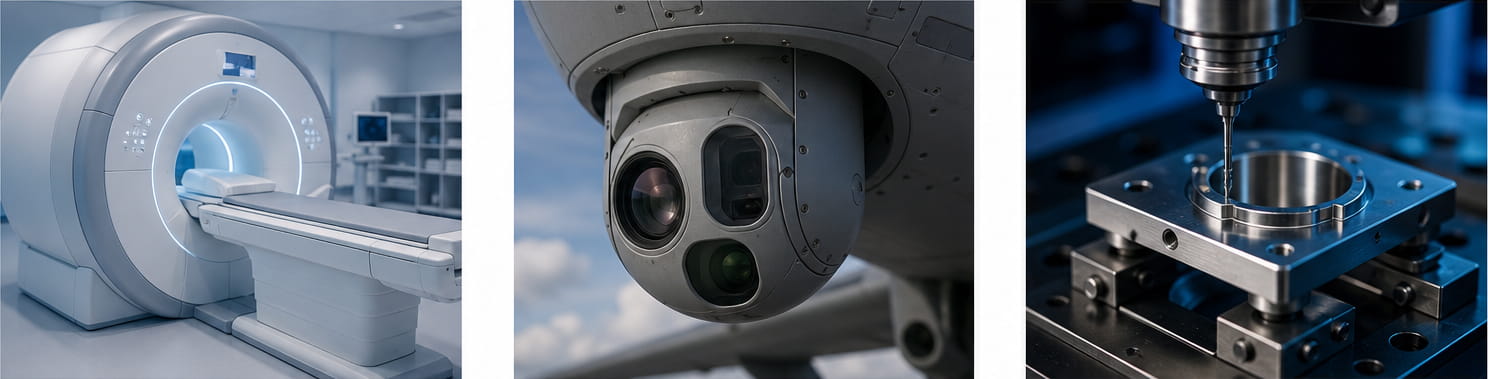
Advanced engineering
- MRI machines
- Aerospace sensors
- Precision industrial equipment

Consumer electronics
- Premium headphones
- High-performance micro-speakers
- Smartphone vibration motors

DIY and maker projects
- Magnetic latches for 3D-printed enclosures
- Jewelry clasps that actually hold
- Magnetic mounting systems
- Holding fixtures for tools
In my experience, makers love N52 magnets for projects where “normal” magnets just don’t cut it.
Important safety considerations

N52 magnets are dangerous if mishandled.
Let me give you a real example.
If you have two N52 magnets—say, 20mm discs—and they snap together from a few inches apart? The force can pinch skin, cause blood blisters, or even break a finger.
I’m not exaggerating.
Here’s what you need to know:
- Keep them away from children. These are not toys.
- Avoid letting them slam together. Especially larger ones.
- Keep them away from electronics. Their magnetic field can erase credit cards, damage hard drives, and disrupt pacemakers.
- Handle with care. Wear gloves if possible. Use spacers when stacking.
N52 vs other magnet grades: which should you choose?

This is a question I get all the time.
“Should I just buy N52 for everything?”
Not necessarily.
Here’s why:
N52 magnets are more expensive than lower grades. And in many applications, you don’t actually need that extra strength.
For example:
- N35 or N42 works perfectly for fridge magnets, basic latches, and craft projects.
- N48 or N50 is great for most DIY and hobbyist applications.
- N52 is best when space is limited and you need maximum force.
The bottom line? Don’t overbuy. If a N42 magnet meets your requirements, stick with N42. Save your money.
Factors to consider before buying N52 magnets
Operating temperature
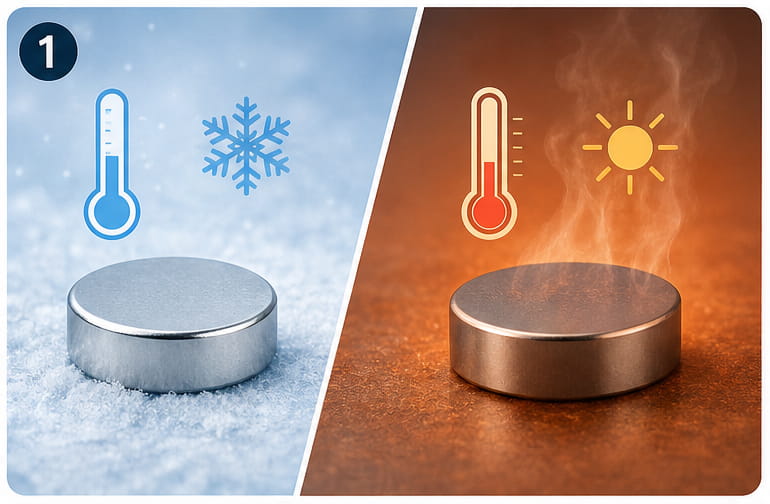
As I mentioned, 80°C max is the standard. If your application runs hot, look for high-temp grades.
Size and shape

N52 magnets come in discs, blocks, rings, and custom shapes.
The shape affects performance. A longer magnet (in the direction of magnetization) is usually stronger than a flat one of the same diameter.
Pull force requirements
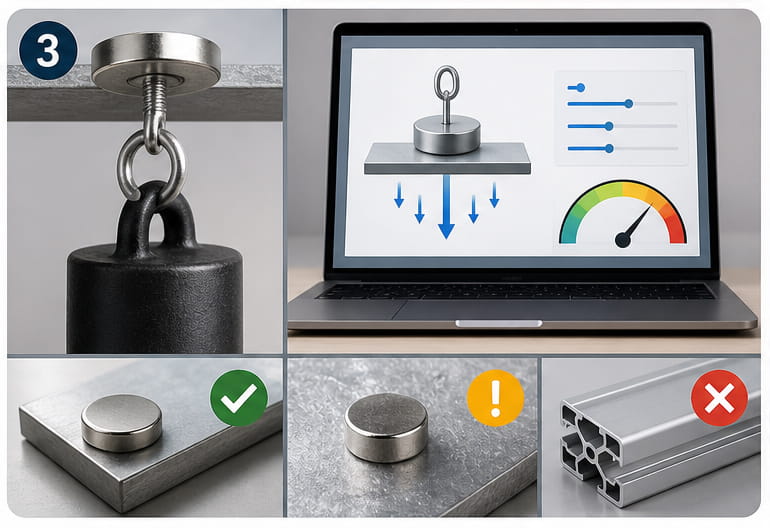
Don’t guess. Calculate.
Most magnet suppliers have pull force calculators. Use them.
Pro Tip: Actual pull force depends on the surface material. Steel works best. Aluminum? Not magnetic at all.
Cost

N52 is premium-priced.
If you can use a lower grade and still get the job done, do it.
Common misconceptions about N52 magnets
“N52 is the strongest magnet in the world.”
Not exactly. Neodymium is the strongest permanent magnet material. But electromagnets can be much stronger. And there are exotic magnets (like those made from samarium-cobalt) that handle heat better.
“All N52 magnets are the same.”
Nope. Quality varies by manufacturer. Cheap N52 magnets from unknown suppliers may not actually meet the 52 MGOe spec.
“I can just buy N52 and it’ll solve all my problems.”
Strength isn’t everything. Application matters. Temperature. Environment. Mechanical stress. All of these factor in.
How to handle N52 magnets safely
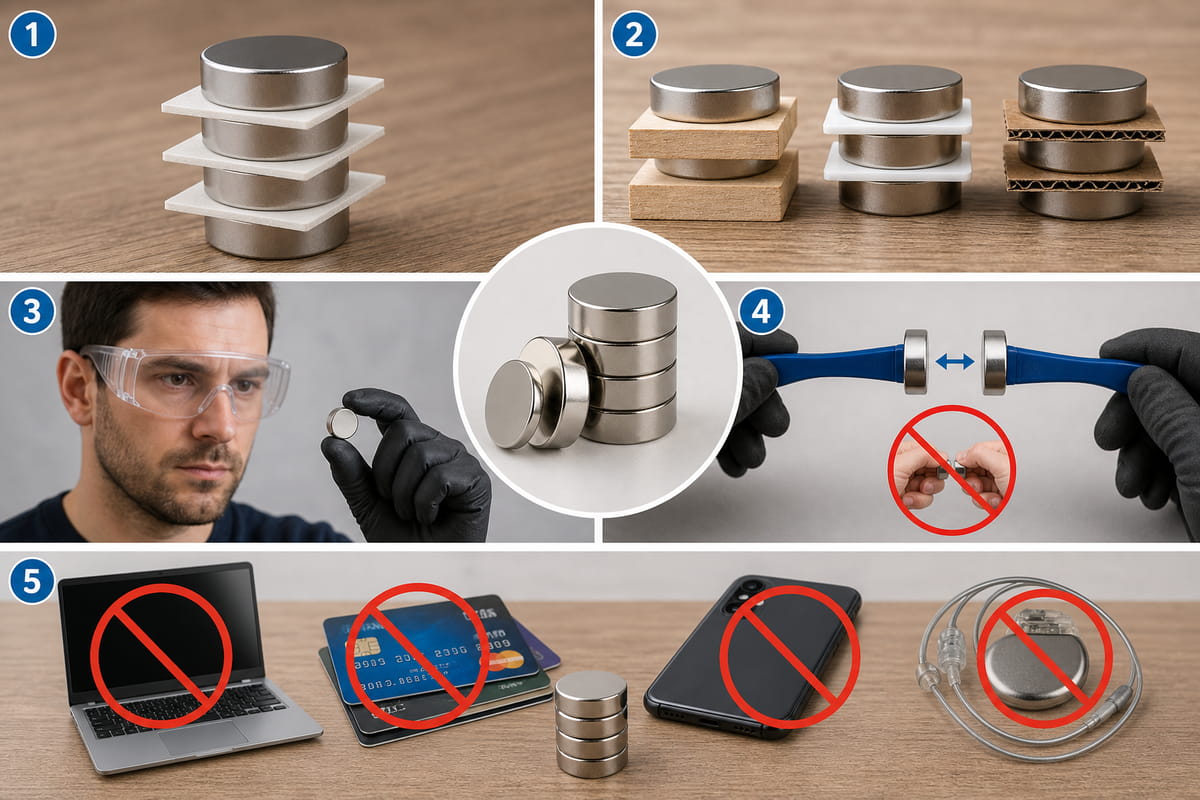
Let me give you a quick checklist:
- 1. Use spacers when storing multiple magnets.
- 2. Keep them separated by non-magnetic material (wood, plastic, cardboard).
- 3. Wear safety glasses when working with larger ones.
- 4. Use tools to separate them—never try to pull two strong magnets apart with your bare hands.
- 5. Store them away from electronics, credit cards, and medical devices.
In my experience, the most common injury from N52 magnets is pinched skin. It happens fast. Don’t let it happen to you.
Final thoughts
N52 magnets are incredible pieces of technology.
They pack more magnetic power into a smaller space than almost anything else you can buy. For engineers, makers, and DIY enthusiasts, they open up possibilities that weren’t practical before.
But they’re not magic.
They have limitations—temperature sensitivity, brittleness, safety risks. And they’re more expensive than lower grades.
So here’s my advice:
Use N52 when you need it. Don’t use it just because it’s “the best.”
Choose the right magnet for your specific application. And always, always handle these powerful magnets with respect.
Because once you’ve felt the pinch of two N52 magnets snapping together?
You’ll never underestimate them again.