Quick Summary:
- N45 magnet is 5–10% stronger than N42 of the same size, but more expensive. For most hobby and holding applications, N42 is sufficient.
- Size beats grade. A bigger N42 magnet often pulls harder than a smaller N45. Don’t obsess over grade if you can go larger.
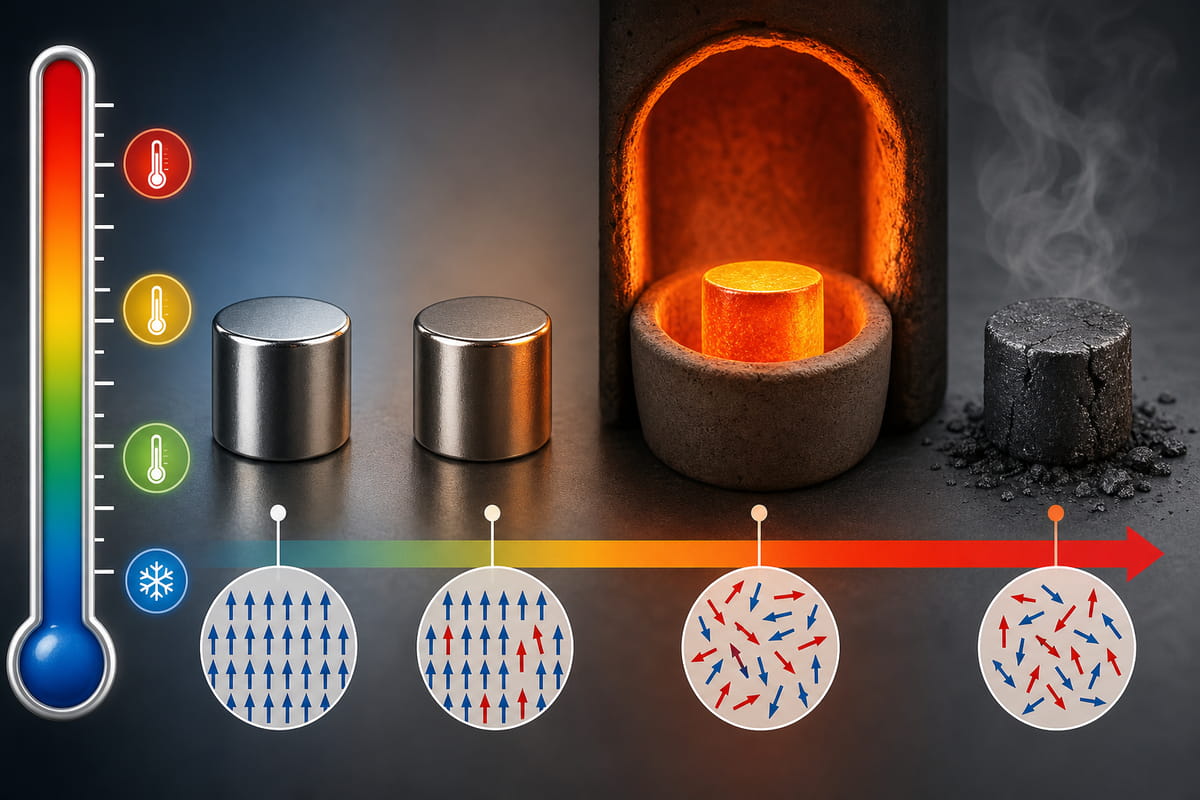
- Both have the same heat limit. Standard N42 and N45 magnet max out at 80°C (176°F). Need more heat? Look for grades with suffixes like SH or UH.
- Start with N42. Only upgrade to N45 for motors, medical equipment, or compact industrial applications where every bit of strength counts and you can’t increase size.
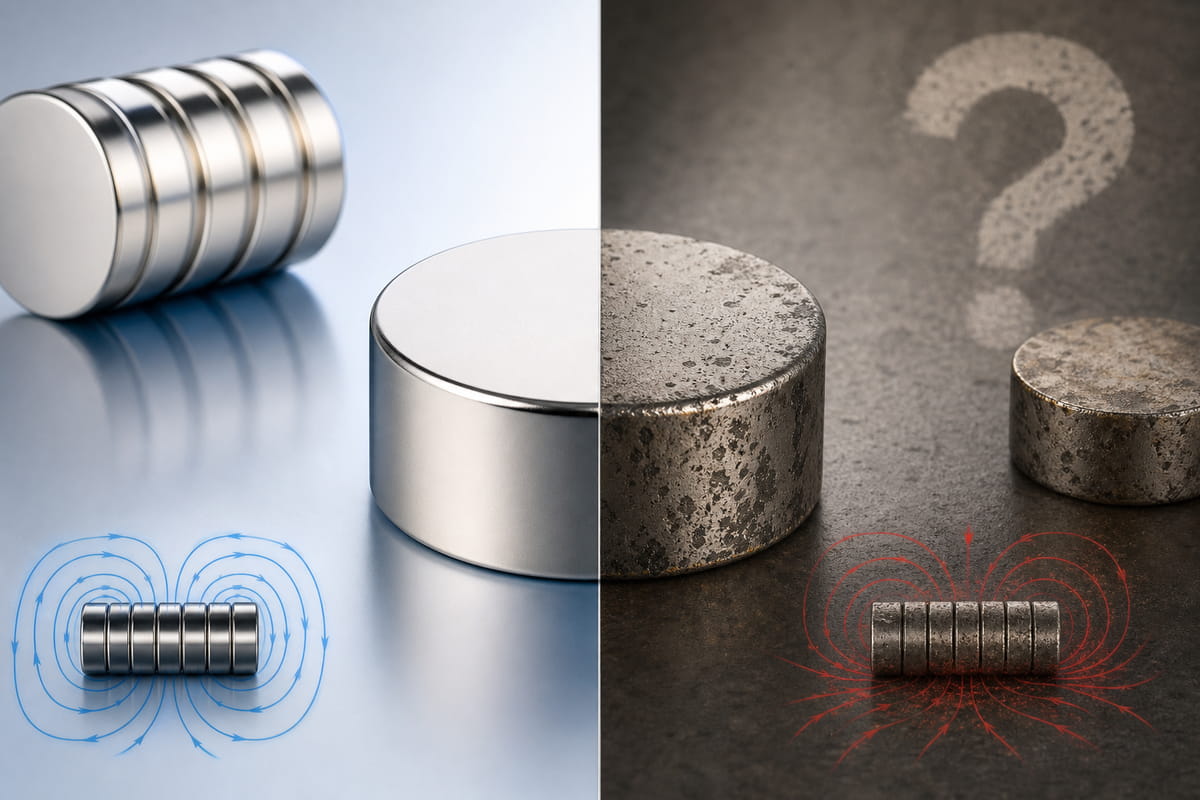
When you’re staring at two magnets that look identical. Same size. Same shape. Same shiny nickel coating. But one has “N42” stamped on it. The other says “N45 magnet.” And you have no clue which one to buy.
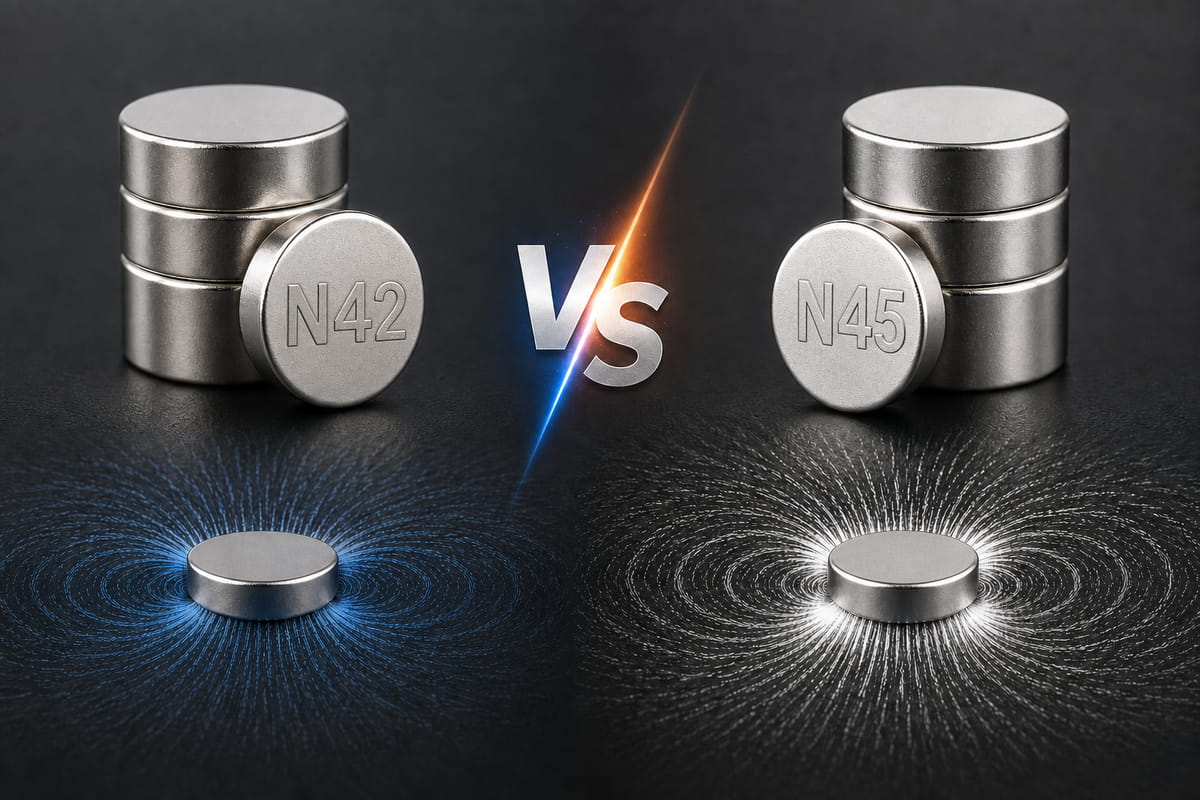
N42 vs N45 magnets comes down to a single question: do you need that extra 5-10% of magnetic strength? Because that’s the real difference between these two grades. And honestly? Most people don’t need it.
In this article, as a professional custom N42 magnets and N45 magnets manufacturer, I will break down all differences between these two neodymium magnet grades for you. And you will also learn when N42 is enough, when N45 is worth it, and what to check before buying.
What Do N42 and N45 Actually Mean?
Before we get into the nitty-gritty, let’s make sure we’re speaking the same language.
Neodymium magnets use a simple grading system. The “N” stands for neodymium. The number? That’s the Maximum Energy Product measured in MGOe (Mega Gauss Oersteds).
Think of it like horsepower for magnets.
The higher the number, the more magnetic energy is packed into the material.
Here’s a quick reference:
| Grade | Energy Product (MGOe) | Relative Strength |
|---|---|---|
| N42 | 40-43 | ~120% of N35 |
| N45 | 43-46 | ~130% of N35 |
That 5-10% strength bump is real. But here’s the catch…
The Real Difference Between N42 and N45
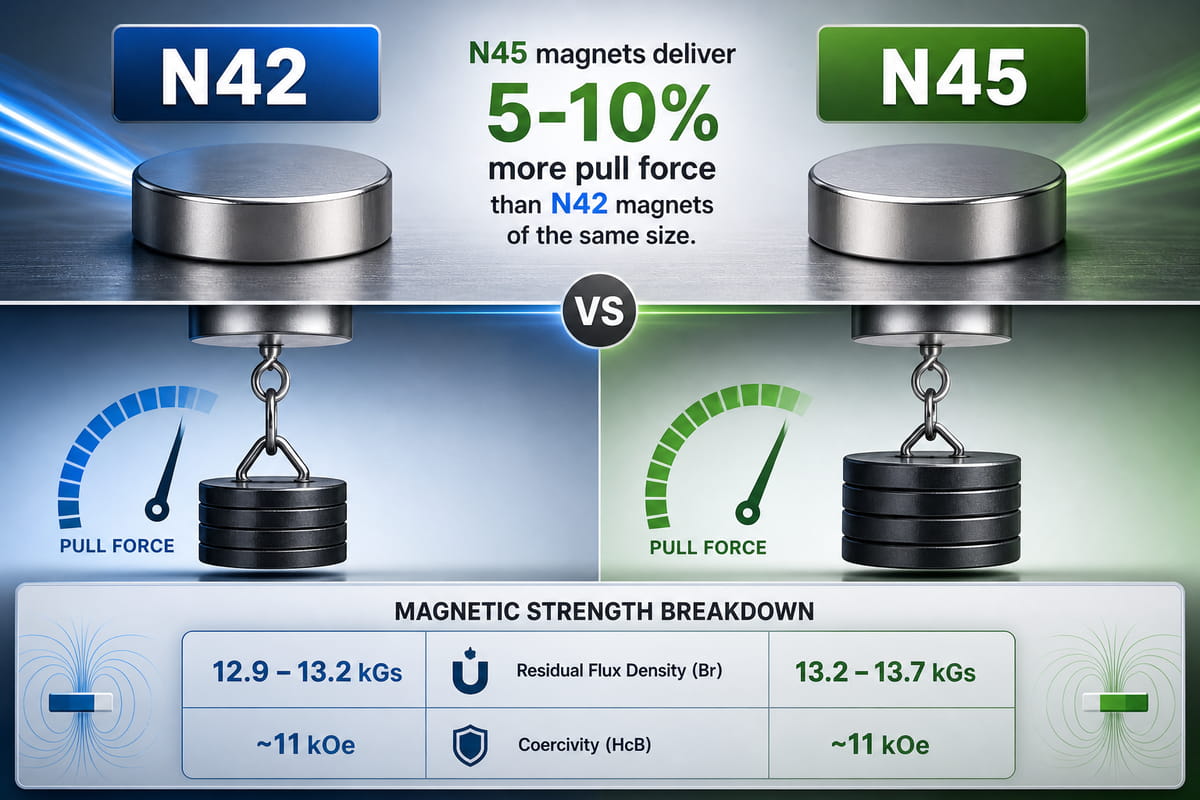
N45 magnets deliver about 5-10% more pull force than N42 magnets of the same size.
That’s it.
Let me give you a concrete example. Take two disc magnets: one N42, one N45. Both are 1 inch in diameter and 1/4 inch thick. The N45 will hold maybe a pound or two more.
Is that worth the extra cost?
It depends entirely on what you’re building.
Magnetic Strength Breakdown
N45 magnets have a higher Residual Flux Density (Br) . That’s the fancy term for how strong the magnetic field is at the surface.
- N42: 12.9-13.2 kGs
- N45: 13.2-13.7 kGs
And their Coercivity (HcB) is similar—both around 11 kOe.
Pro Tip: These numbers matter if you’re designing precision equipment. For most everyday projects? Not so much.
N42 vs N45: Head-to-Head Comparison
Let’s put these two grades in a cage match.
Strength

N45 wins. No question.
If you need maximum pull force in a small package, N45 magnet is the way to go.
But here’s what nobody tells you: the difference is marginal. In real-world applications, most people can’t feel the difference between an N42 and N45 magnet of the same size.
Cost
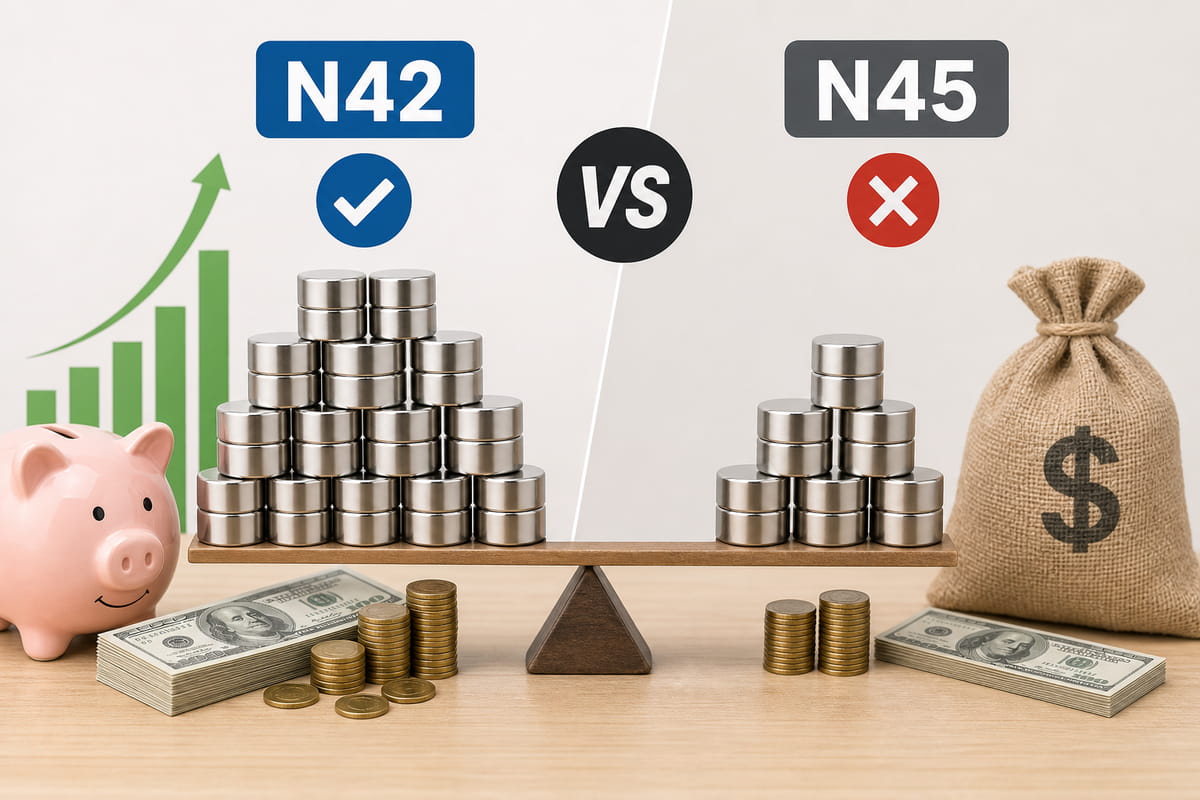
N42 is cheaper. Usually by 10-20%.
If you’re buying N45 magnets in bulk (500 or 1,000 magnets), that adds up fast.
For hobbyists and general use, N42 gives you the best bang for your buck.
Temperature Tolerance
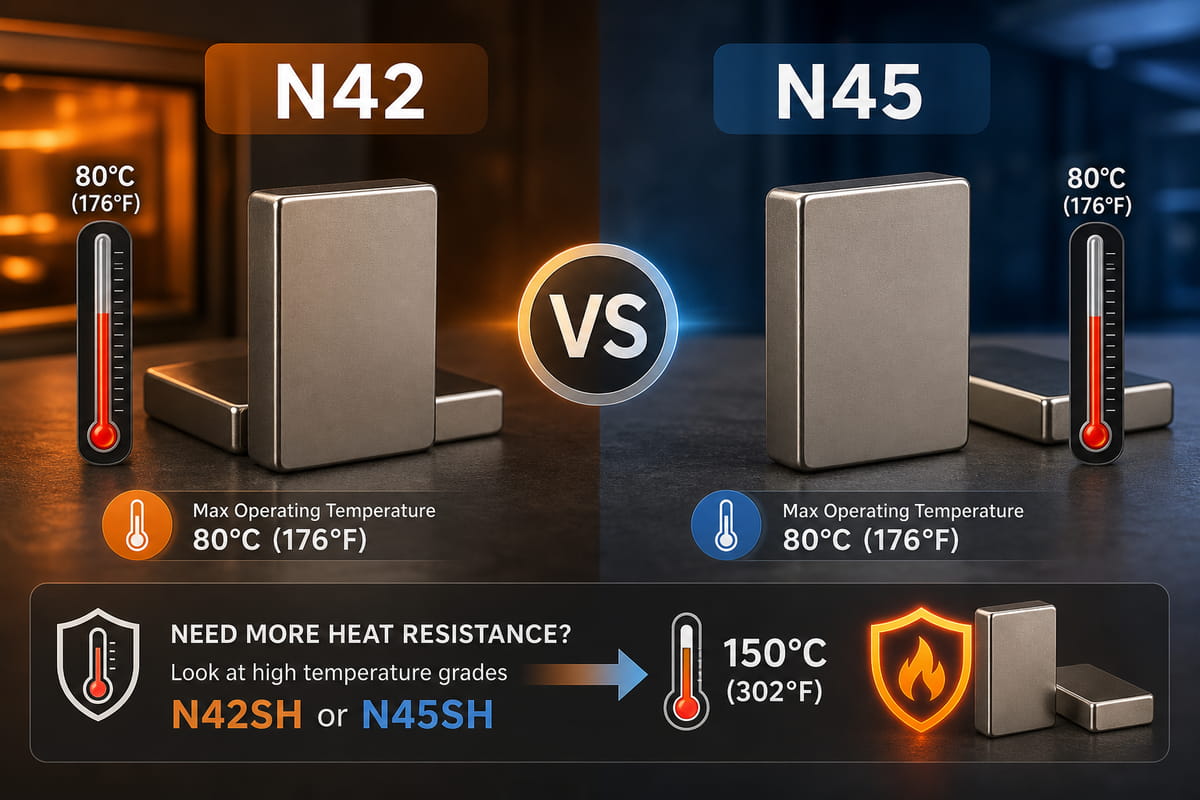
Both grades have the same maximum operating temperature: 80°C (176°F).
Standard N-series magnets (no suffix letters) all top out at 80°C.
Need more heat resistance? You’ll need to look at grades like N42SH or N45SH, which can handle 150°C.
Applications

N42 magnet is ideal for:
- General-purpose holding
- Magnetic clasps and closures
- Toys and crafts
- Sensors and switches
- Cost-sensitive projects
N45 magnet is better for:
- Electric motors (especially where size is tight)
- Medical equipment
- Industrial machinery
- Applications where every bit of strength counts
Sound good?
The “Size vs. Grade” Trap
Here’s something most people get wrong.
Size matters more than grade.
Let me show you what I mean.
Say you have an N45 disc magnet that’s 30mm diameter and 10mm tall. It holds about 20 kg.
Now compare it to an N42 disc magnet that’s 30mm diameter and 15mm tall. That N42 holds 24 kg—even though it’s a “weaker” grade.
Why?
Because the larger magnet has more volume. And volume often trumps grade when it comes to overall pull force.
The bottom line? Don’t obsess over N42 vs N45 magnets if you can just get a slightly bigger N42.
N42 vs N45 vs N52: Where Do They Fit?
You might be wondering where N52 fits into this picture.
N52 is the strongest standard grade. It packs up to 53 MGOe—about 20% more than N42.
But here’s the thing: N52 magnets are more brittle and more expensive. And they lose strength faster in heat.
| Grade | Energy Product | Price vs N42 | Best For |
|---|---|---|---|
| N42 | 40-43 MGOe | Baseline | General use, cost-sensitive |
| N45 | 43-46 MGOe | +10-20% | Motors, medical, tight spaces |
| N52 | 49-53 MGOe | +30-50% | High-performance, compact |
My personal recommendation? Start with N42. Only upgrade to N45 if you truly need that extra 5-10% strength.
How to Choose the Right Magnet Grade
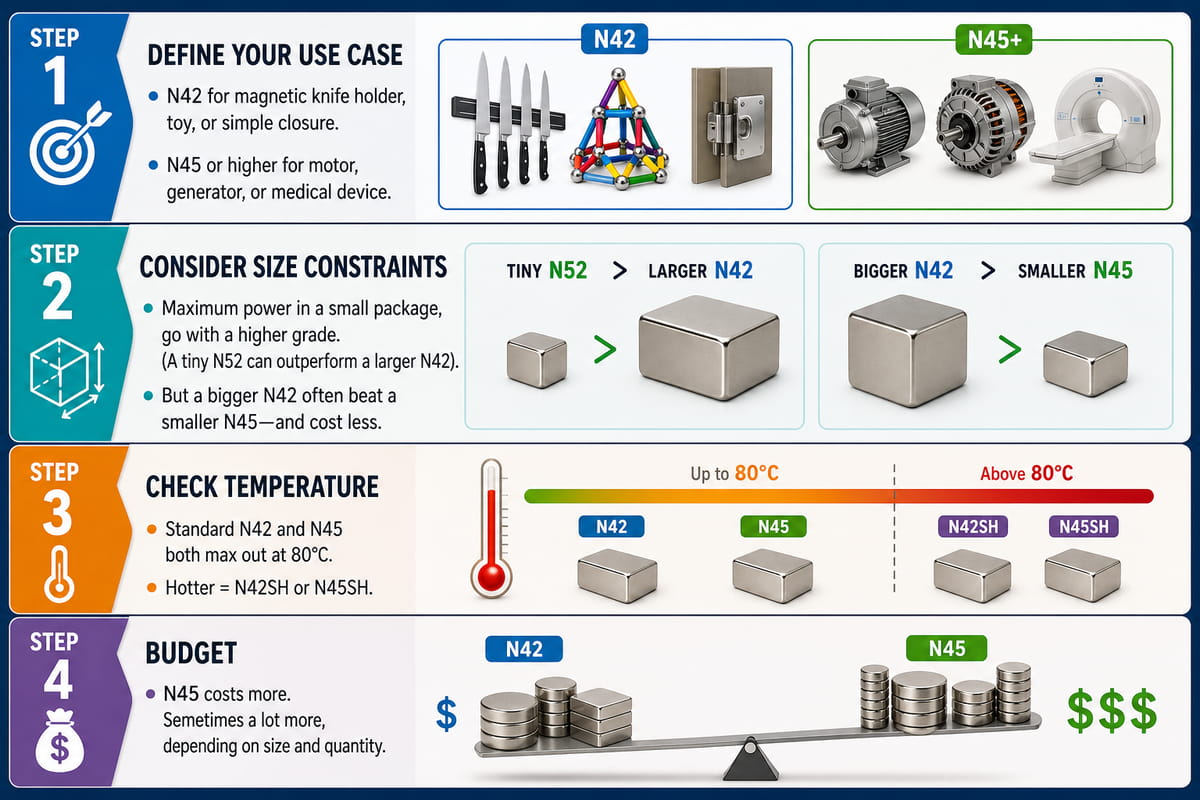
Here’s my step-by-step process for picking the right grade.
Step 1: Define Your Use Case
What are you actually building?
If it’s a magnetic knife holder, a toy, or a simple closure—N42 is perfect.
If it’s a motor, generator, or medical device—consider N45 or higher.
Step 2: Consider Size Constraints
Do you have limited space?
If you need maximum power in a small package, go with a higher grade. A tiny N52 can outperform a larger N42.
But if you have room to spare, a bigger N42 will often beat a smaller N45—and cost less.
Step 3: Check Temperature
Will your magnet get hot?
Standard N42 and N45 both max out at 80°C. If your application runs hotter, you’ll need specialty grades like N42SH or N45SH.
Step 4: Budget
How much are you willing to spend?
N45 costs more. Sometimes a lot more, depending on size and quantity.
For hobbyists and small businesses, N42 is usually the smarter choice.
Common Mistakes People Make
I’ve seen the same mistakes over and over.
Mistake #1: Buying the highest grade possible
Just because N52 exists doesn’t mean you need it. Most projects work fine with N42.
Mistake #2: Ignoring size
Remember: a big N42 beats a small N45. Don’t fixate on grade.
Mistake #3: Forgetting about coatings
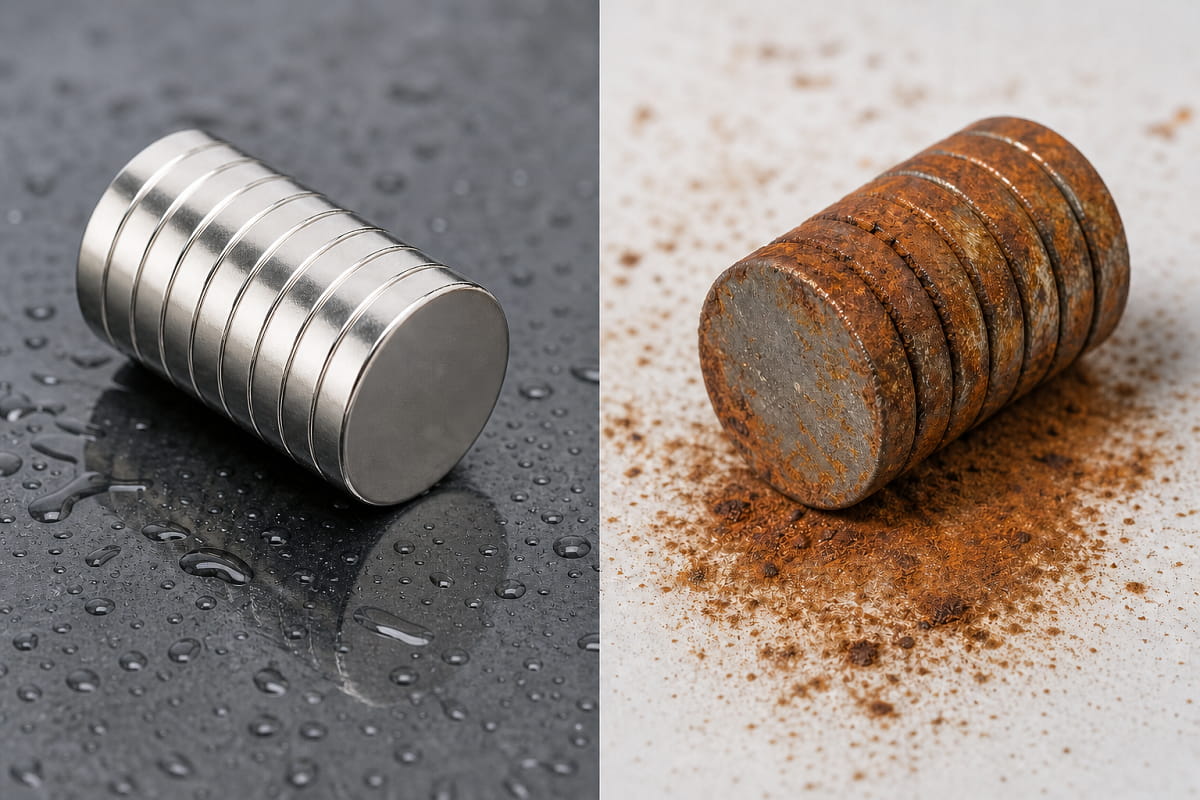
Neodymium magnets rust. Make sure yours has a good nickel, epoxy, or rubber coating.
Mistake #4: Not checking temperature
If your magnet gets hot, it loses strength. Permanently.
The Verdict
For 90% of people, N42 magnets are the right choice.
They’re strong enough for almost anything. They’re affordable. And they’re widely available.
N45 makes sense when you need that extra push and can’t go bigger. Think motors, medical devices, or compact industrial equipment.
But for crafts, holding applications, science projects, and general use? N42 all day.
Oh, and one more thing: whatever grade you pick, make sure you handle these magnets safely. They’re strong enough to pinch skin, damage electronics, and wipe credit cards.
Treat them with respect.
At the end of the day, N42 vs N45 magnets isn’t about which one is “better.” It’s about which one fits your specific needs—and your budget.
Start with N42. Upgrade to N45 only if you have a clear reason.
Trust me, your wallet will thank you.