Quick Summary:
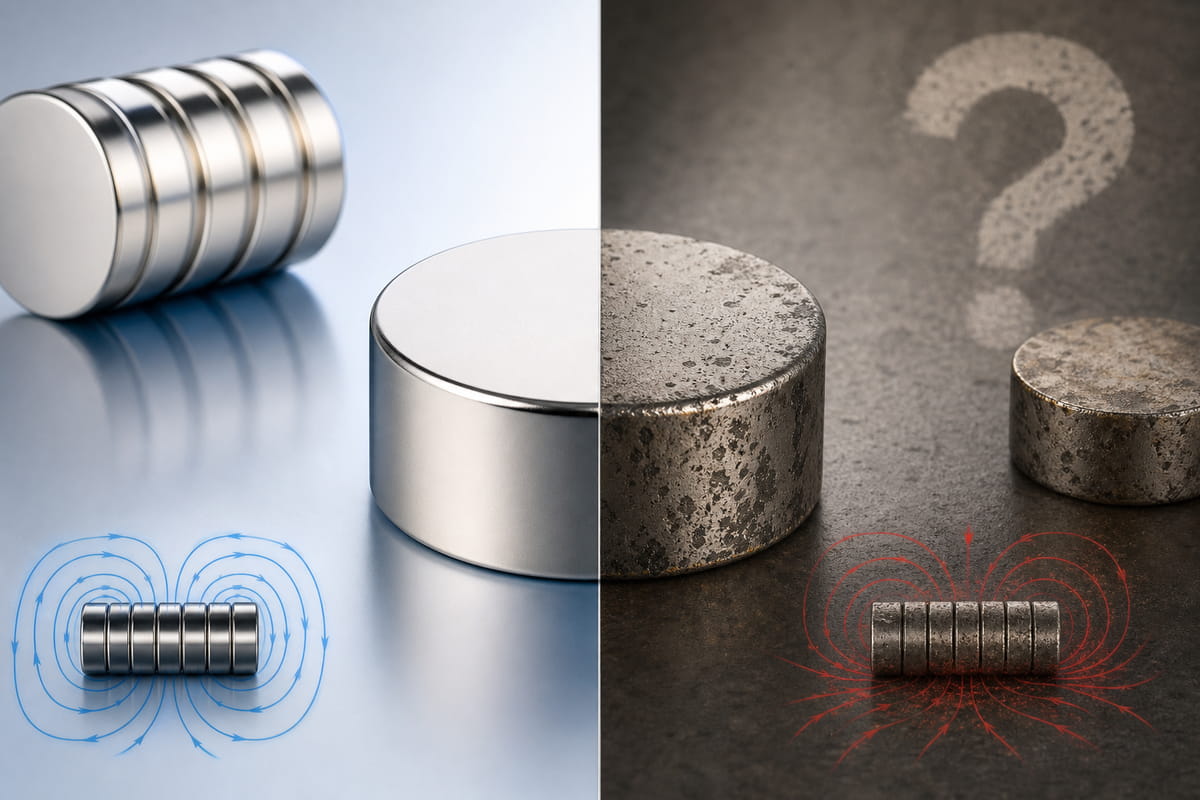
- Bar magnets produce an invisible magnetic field with field lines that flow from north to south externally and form closed loops. The field is strongest at the poles and weakest at the center; field line density indicates strength.
- Cutting a bar magnet never isolates a pole—you always end up with two smaller magnets, each with its own north and south.
- Understanding the magnetic field for bar magnet explains how compasses, motors, speakers, and even MRI machines work.
The magnetic field for bar magnets is one of the most fascinating invisible forces in nature. And once you understand how it works, you’ll start seeing magnetism everywhere—from your refrigerator door to the Earth itself.
A bar magnet creates an invisible region of magnetic force around it. This field is what makes magnets attract and repel things. And it’s governed by some specific rules that are actually pretty simple to grasp.
Sound good? Let’s dive in.
What Is a Bar Magnet?
A bar magnet is a rectangular piece of magnetic material—usually iron, steel, or an alloy like ALNICO (aluminum, nickel, and cobalt). It’s a permanent magnet, which means it keeps its magnetic properties without needing any external power source.
Two key things to know:
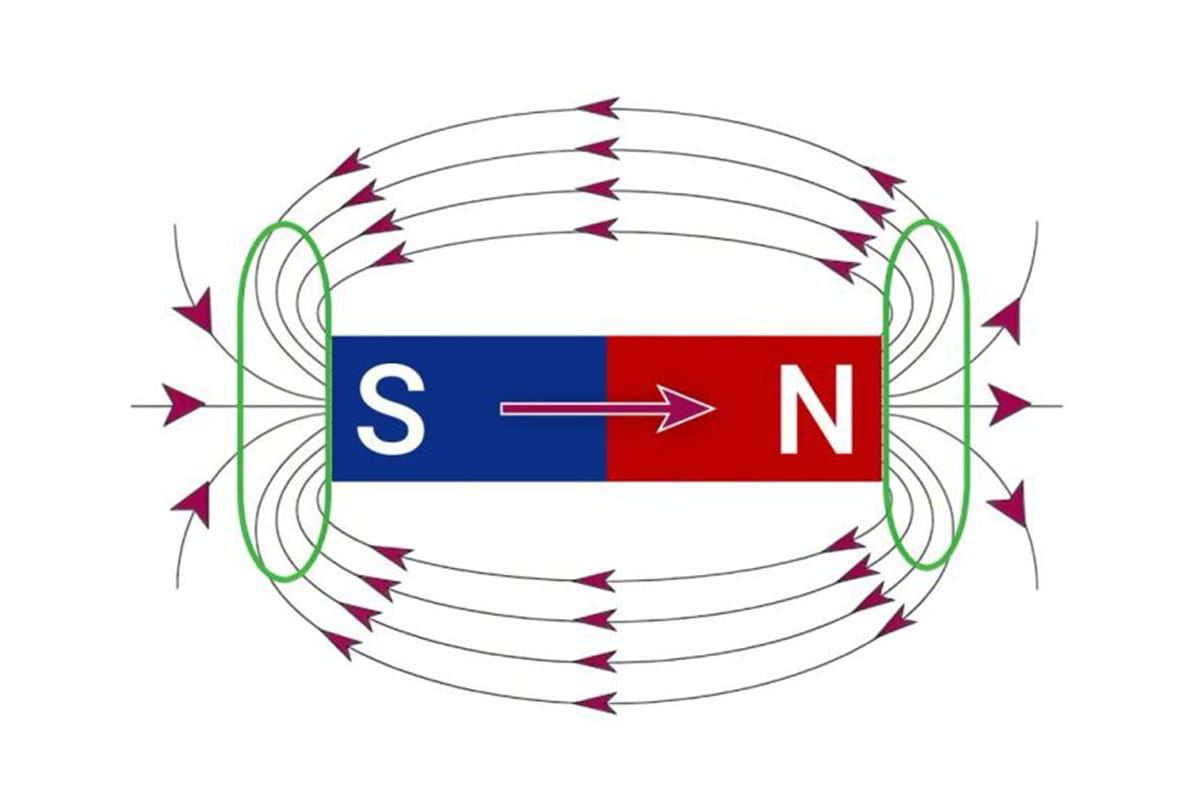
- Every bar magnet has two poles: North (N) and South (S)
- The magnetic force is strongest at the poles and weakest at the center
When you suspend a bar magnet freely, it will always align itself with Earth’s magnetic field. The end pointing north is the north pole. The end pointing south is the south pole.
Pro Tip: This is why compasses work. The needle inside is actually a tiny magnet that aligns with Earth’s magnetic field.
The Invisible Force Field
So what exactly is the magnetic field for bar magnet?
Think of it like this:
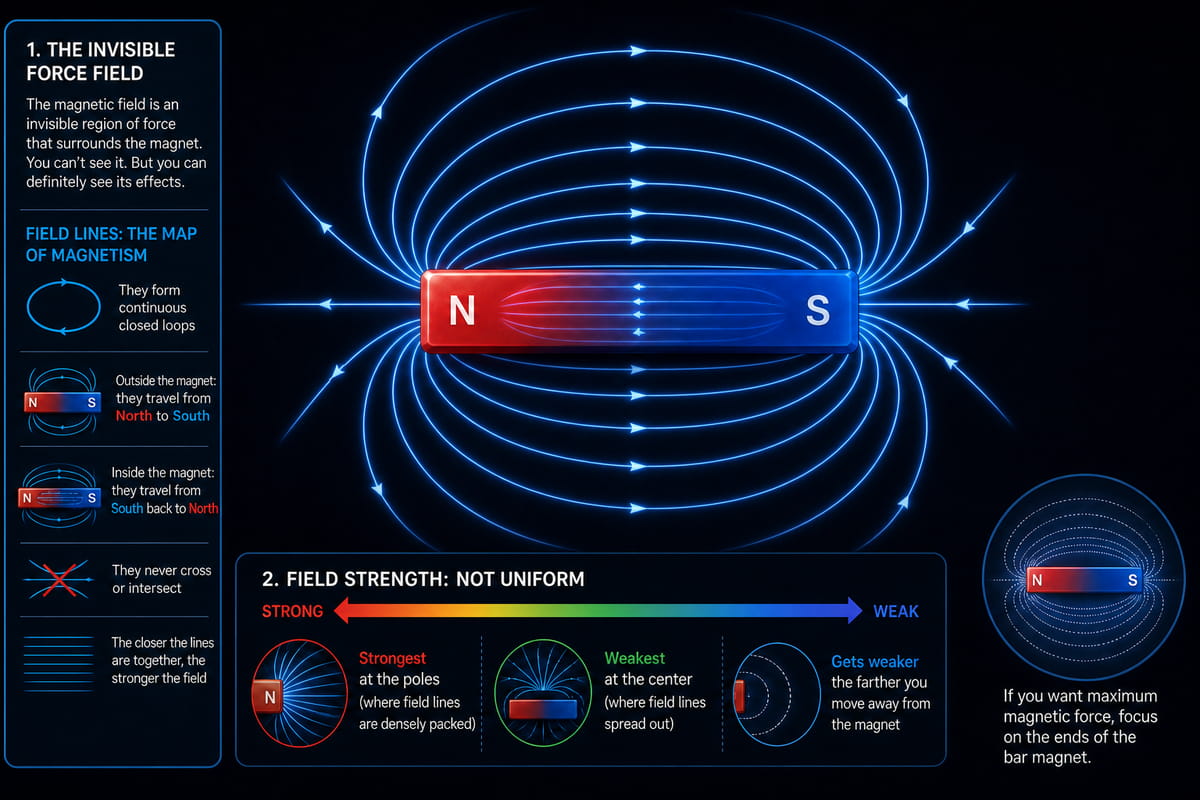
The magnetic field is an invisible region of force that surrounds the magnet. You can’t see it. But you can definitely see its effects.
Here are the key characteristics:
Field Lines: The Map of Magnetism
Magnetic field lines are the easiest way to visualize what’s happening. Here’s how they work:
- They form continuous closed loops
- Outside the magnet: they travel from North to South
- Inside the magnet: they travel from South back to North
- They never cross or intersect
- The closer the lines are together, the stronger the field
In my experience, this is the concept that trips people up the most. But it’s actually pretty straightforward once you see it.
Field Strength: Not Uniform
The magnetic field is not equally strong everywhere around the magnet.
- Strongest at the poles (where field lines are densely packed)
- Weakest at the center (where field lines spread out)
- Gets weaker the farther you move away from the magnet
Bottom line? If you want maximum magnetic force, focus on the ends of the bar magnet.
Visualizing the Magnetic Field
You don’t need fancy equipment to see the magnetic field. Here are two tried-and-true methods:
Method 1: Iron Filings
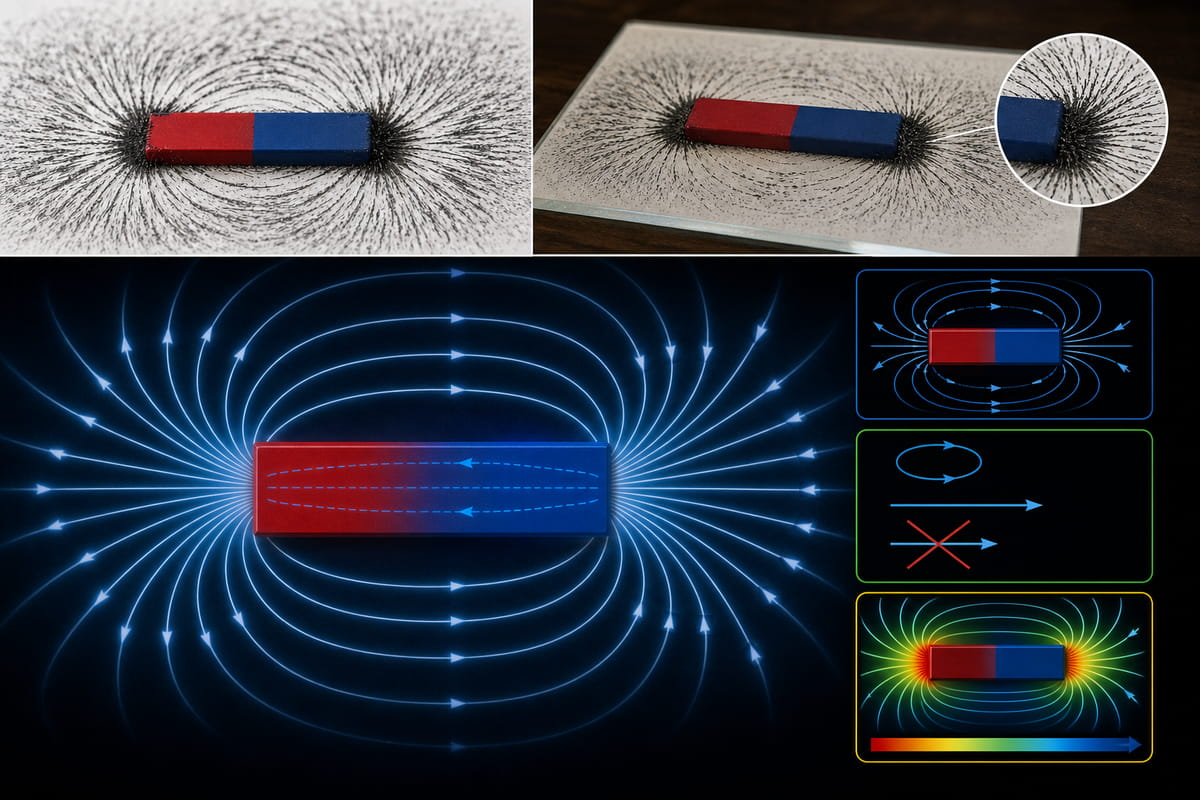
Place a sheet of paper over a bar magnet. Sprinkle iron filings on top. Gently tap the paper.
The filings will arrange themselves along the invisible field lines. You’ll see them cluster heavily at the poles and spread out toward the center.
It’s one of those “wow” moments that makes physics fun.
Method 2: Plotting Compass
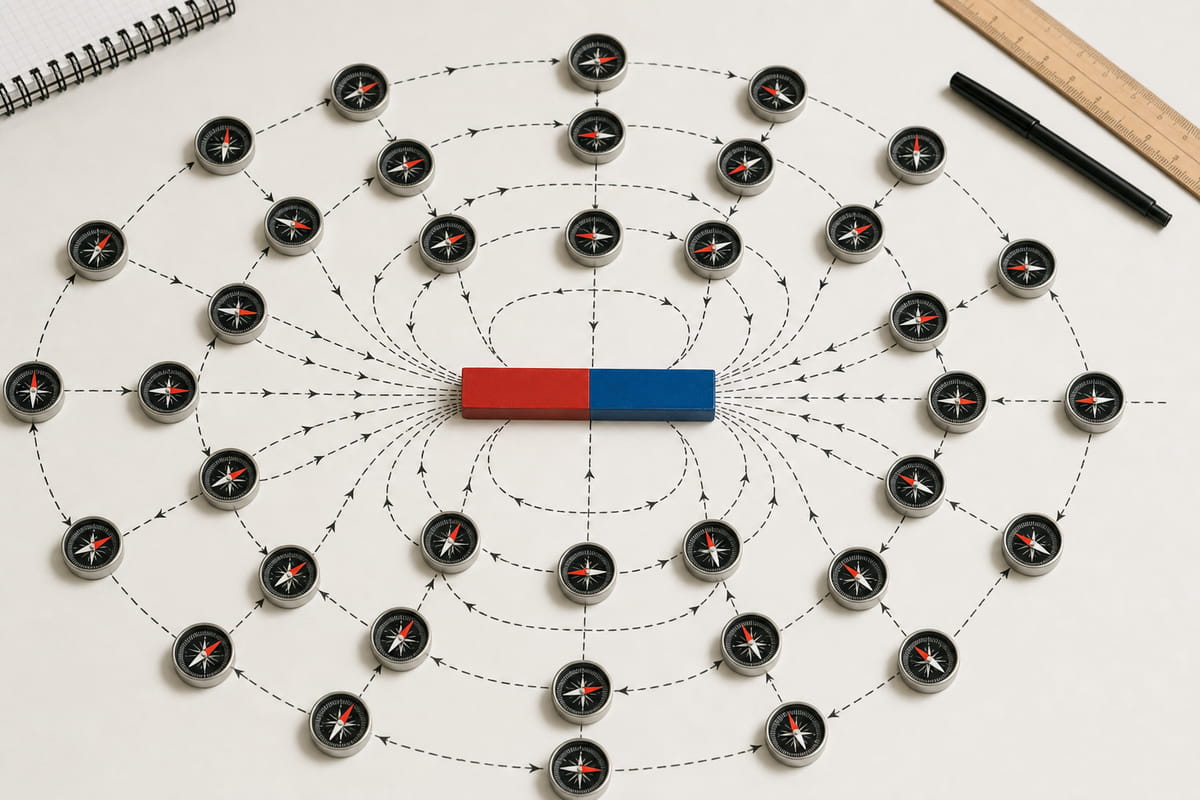
Place a small compass at different points around the magnet. The needle will point along the field line at that location. Mark the direction at each point, and you can trace the exact path of the field lines.
Pro Tip: This method is great for getting precise measurements. It’s what scientists use in labs.
Key Properties of the Magnetic Field
Let’s break down the important stuff:
1. Attraction and Repulsion
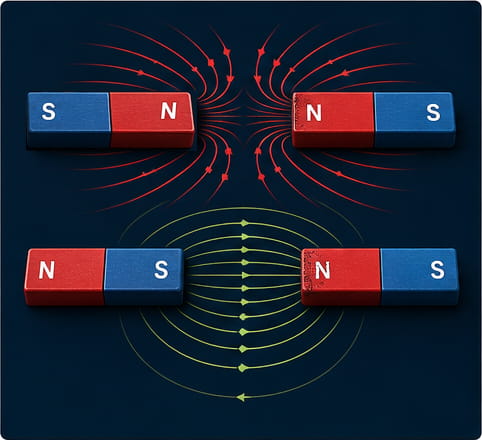
Like poles repel. Opposite poles attract.
- North repels North
- South repels South
- North attracts South
This is the fundamental rule of magnetic interaction. It’s also why you can feel resistance when trying to push two north poles together.
2. Magnetic Induction

Here’s something cool:
A bar magnet can magnetize nearby ferromagnetic materials (like iron or steel). This is called magnetic induction.
So if you bring a paperclip near a bar magnet, the paperclip becomes temporarily magnetized. That’s why it gets attracted to the magnet—regardless of which pole faces it.
3. Cutting a Magnet
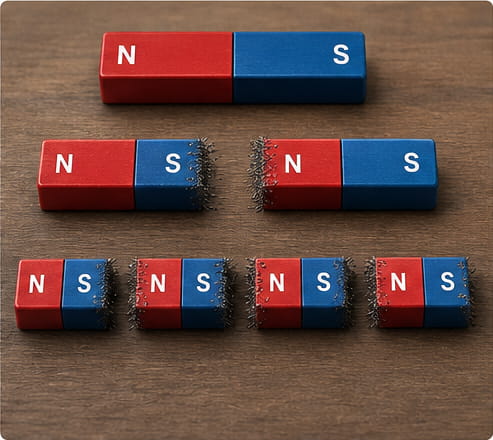
What happens if you cut a bar magnet in half?
You might think you’d get a north pole and a south pole separately.
Nope.
You get two complete magnets, each with its own north and south pole.
Cut it again? Same thing. This happens because magnetism comes from the alignment of tiny magnetic domains at the atomic level. You can’t isolate a single pole—magnetic monopoles don’t exist in nature.
The Bar Magnet as a Magnetic Dipole
Here’s where things get interesting:
A bar magnet acts like a magnetic dipole. This means it has two opposite poles separated by a distance. The magnetic moment points from the south pole to the north pole.
Analogy to an Electric Dipole
The magnetic field for bar magnet is remarkably similar to the electric field of an electric dipole. For large distances (much larger than the magnet’s length), the formulas are almost identical:
On the axial line (end-on position):
B= 4π μ 0 ⋅ r 3 2m
On the equatorial line (broadside position):
B= 4π μ 0 ⋅ r 3 m
Where m is the magnetic moment and r is the distance from the center.
Bar Magnet in a Uniform Magnetic Field
Here’s a practical scenario:
When you place a bar magnet in a uniform magnetic field, it experiences a torque. This torque tries to align the magnet with the external field.
The formula is:
τ=mBsinθ
Where θ is the angle between the magnetic moment and the field direction.
Potential energy of the dipole in the field:
U=−mBcosθ
The lowest energy (most stable) occurs when the magnet is aligned with the field. The highest energy (least stable) occurs when it’s anti-aligned.
Real-World Applications
Understanding the magnetic field for bar magnet isn’t just academic. It has real-world implications:
Compasses and Navigation
Every compass relies on the Earth behaving like a giant bar magnet. The needle aligns with Earth’s magnetic field, pointing north-south.
Sound Devices
Speakers, microphones, and headphones all use bar magnets. The magnetic field converts electrical signals into sound waves.
Motors and Generators
Electric motors and generators depend heavily on bar magnets. They convert electrical energy into mechanical motion—and vice versa.
Medical Equipment
MRI machines use powerful magnetic fields to create detailed images of the human body. Understanding how bar magnets work is foundational to this technology.
Common Questions About Bar Magnets
Q: Where is the magnetic field of a bar magnet strongest?
A: At the poles. The field lines are most densely packed at the north and south ends. The center has the weakest field.
Q: Can you separate the north and south poles of a bar magnet?
A: No. Cutting a bar magnet creates two smaller magnets, each with its own north and south pole. Magnetic monopoles don’t exist.
Q: Why does a compass needle always point north?
A: The Earth itself acts like a giant bar magnet. The compass needle aligns with Earth’s magnetic field, pointing toward the magnetic north pole.
Q: How does a bar magnet produce a magnetic field without moving charges?
A: Inside the magnet, tiny magnetic domains are aligned. These domains create a net magnetic field. The field is the same type as one produced by an electromagnet—it’s just generated by aligned atomic dipoles rather than flowing current.
Summary
Let’s recap what we’ve covered:
- A bar magnet has two poles (north and south)
- Magnetic field lines form closed loops from north to south (externally) and south to north (internally)
- The field is strongest at the poles
- The magnet behaves like a magnetic dipole
- It experiences torque in a uniform external field
- You can’t isolate magnetic poles
- The magnetic field for bar magnet is analogous to the electric field of an electric dipole
Bottom line?
Understanding the magnetic field for bar magnet opens up a whole world of practical applications. From compasses to MRI machines, this fundamental force shapes our technology every single day.
And the best part? You don’t need to be a physicist to grasp these concepts. They’re based on simple, repeatable observations that anyone can make.
So next time you see a magnet, take a closer look. That invisible force field is doing some pretty amazing things.