Quick Answer:
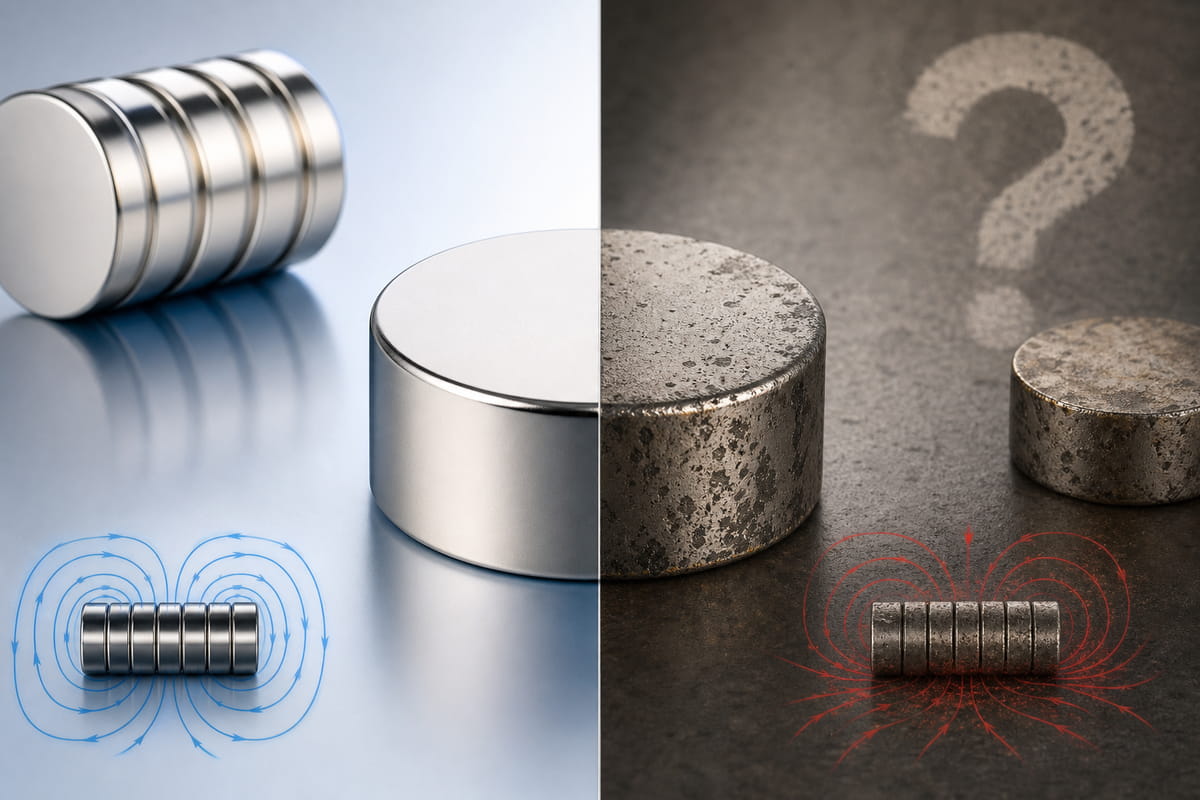
Bar magnets work through the microscopic alignment of atoms. Inside the metal, billions of tiny magnetic regions called “domains” all point in the same direction. This creates a unified magnetic field that flows from the North pole to the South pole.
Ever held two magnets and felt that invisible force pushing them apart… or snapping them together?
It’s like magic, right?
But here’s the deal: there’s actually a super simple explanation for how this works. And once you understand it, you’ll see magnets everywhere—in your phone, your car, your refrigerator, heck, even in that compass you used as a kid.
In this article, as a professional custom bar magnets manufacturer, let me explain it in detail.
How Do Bar Magnets Work?
Step #1: Everything Starts with Electrons
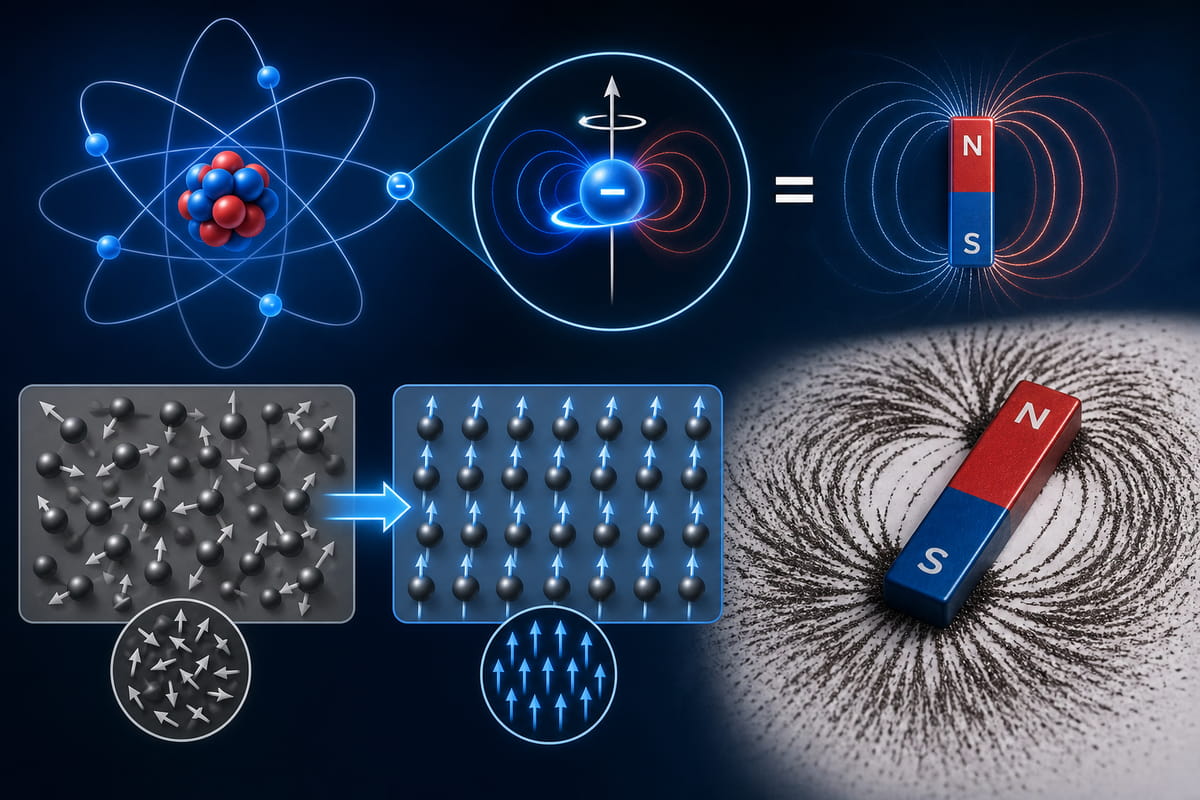
Here’s something wild:
Every electron is like a tiny magnet.
Seriously. Electrons spin and orbit inside atoms, and that movement creates a magnetic field. In most materials, these fields cancel each other out—they point in random directions, so nothing happens.
But in materials like iron, nickel, and cobalt, something different happens.
These materials have unpaired electrons that don’t cancel out. They can align. And when they do… boom. You’ve got a magnet.
Step #2: The “Domains” Inside Your Bar Magnet
This is the part that blew my mind when I first learned it.
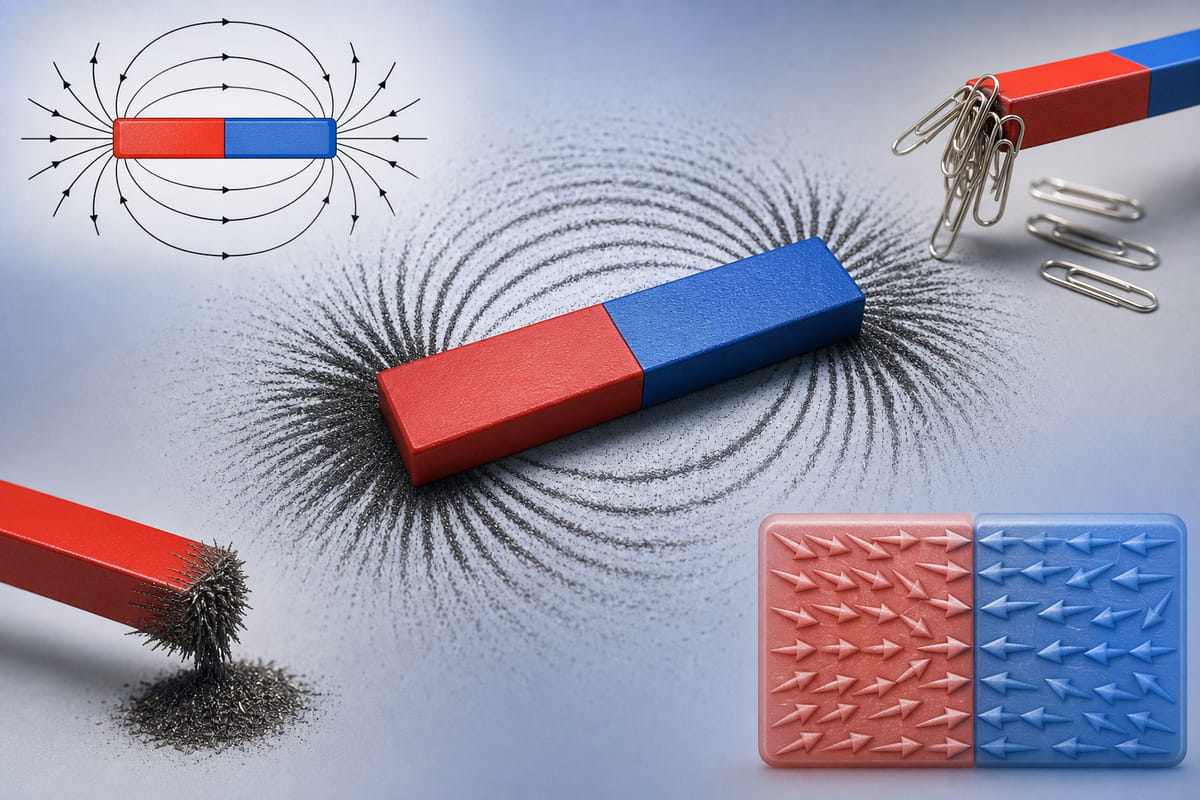
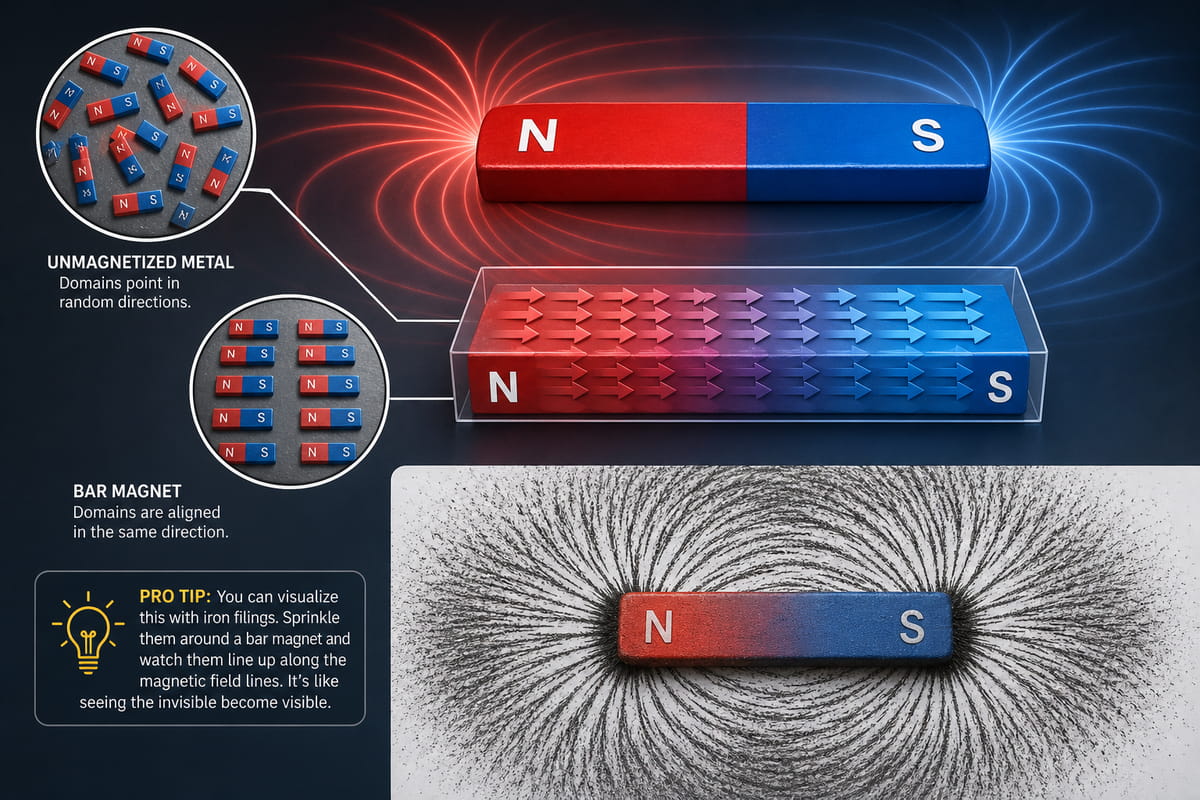
Inside a bar magnet, there are millions of tiny regions called magnetic domains. Think of each domain as a mini-magnet—complete with its own North and South pole.
In an unmagnetized piece of metal, these domains point every which way. Random. Like a crowd of people all running in different directions.
But in a bar magnet? They’re lined up. Perfectly. All pointing the same direction.
That alignment is what creates the magnetic field you can actually feel.
Pro Tip: You can visualize this with iron filings. Sprinkle them around a bar magnet and watch them line up along the magnetic field lines. It’s like seeing the invisible become visible.
Step #3: The Poles
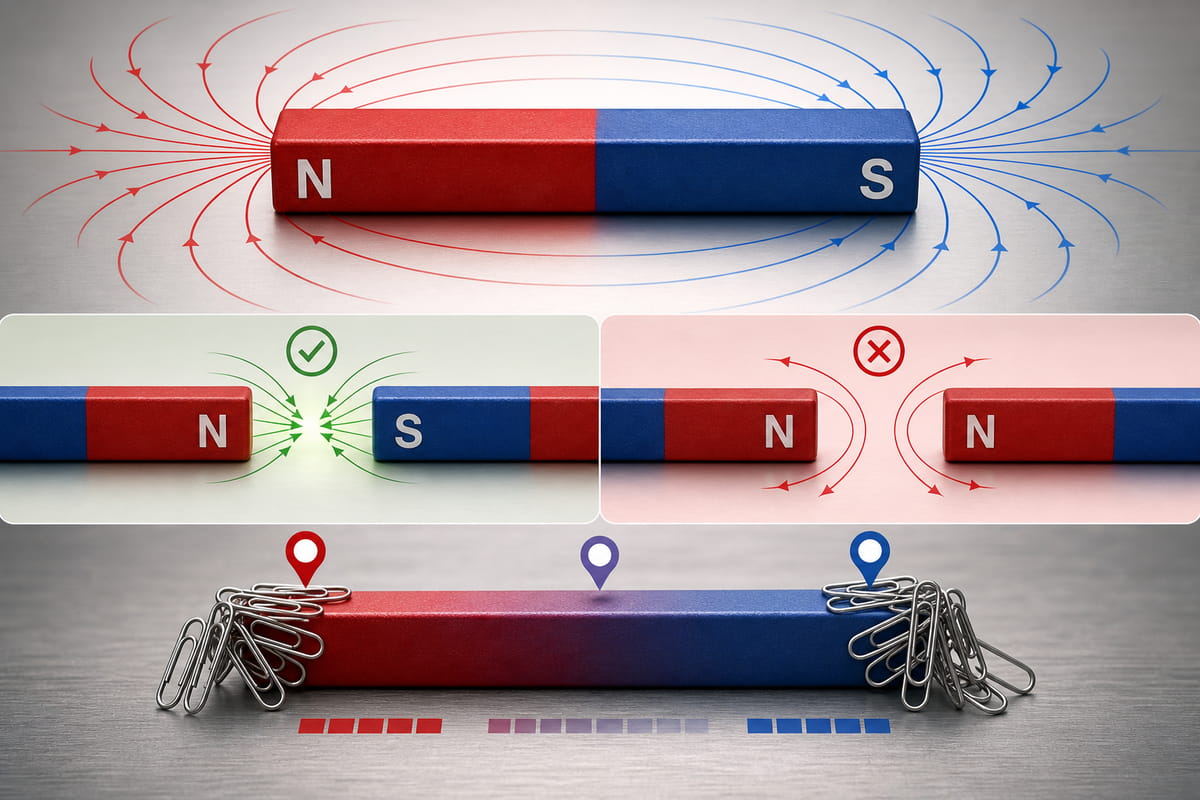
Every bar magnet has two ends: North and South.
Here’s the rule:
- Opposite poles attract (North + South = snap together)
- Like poles repel (North + North = push apart)
The magnetic force is strongest at the poles. The center of the magnet? Weakest point. That’s why a bar magnet picks up paper clips best at its ends.
The Secret Sauce: Magnetic Domains Alignment
I want to go a little deeper here because this is where the real magic happens.
How do bar magnets work at the atomic level?
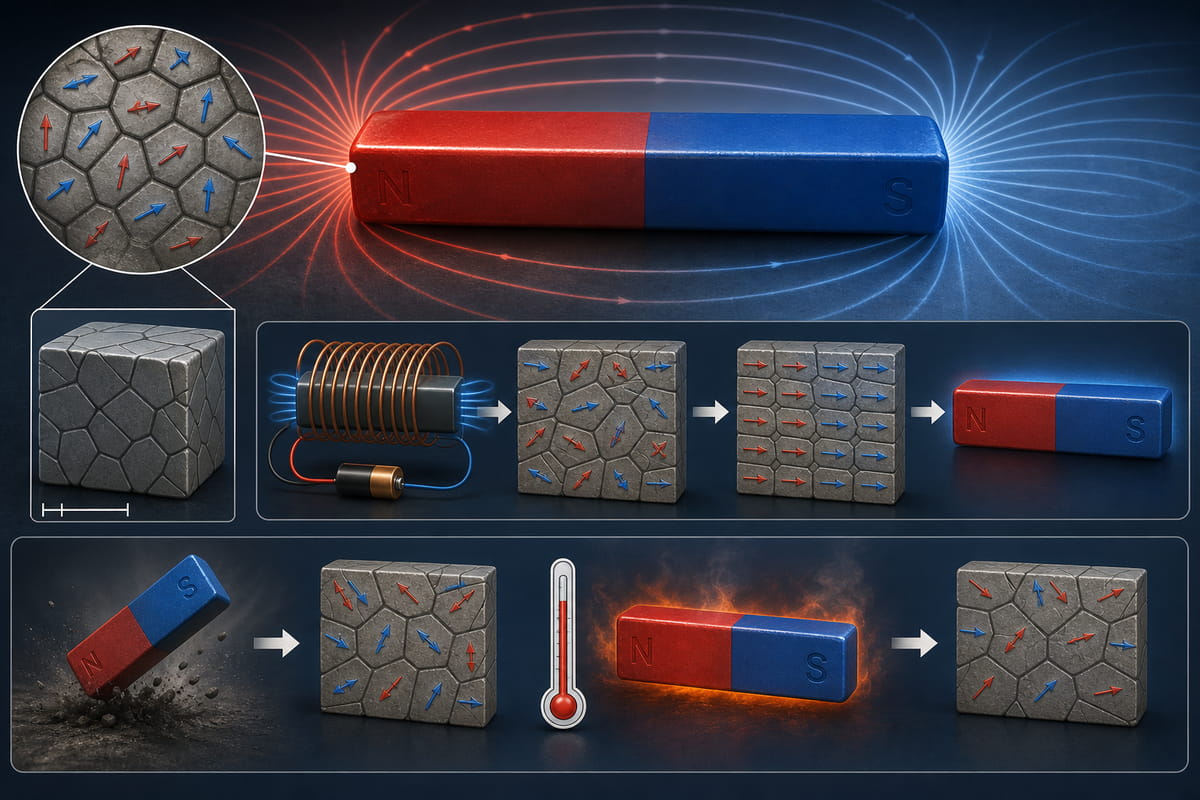
In a ferromagnetic material like iron, atoms group together into those domains I mentioned. Each domain is maybe 0.01 to 0.1 millimeters wide. That’s tiny—but it contains billions of atoms.
When you magnetize a bar magnet (during manufacturing), you expose it to a strong external magnetic field. This forces all those domains to rotate and align.
Once they’re aligned, they stay that way.
That’s what makes a bar magnet a permanent magnet.
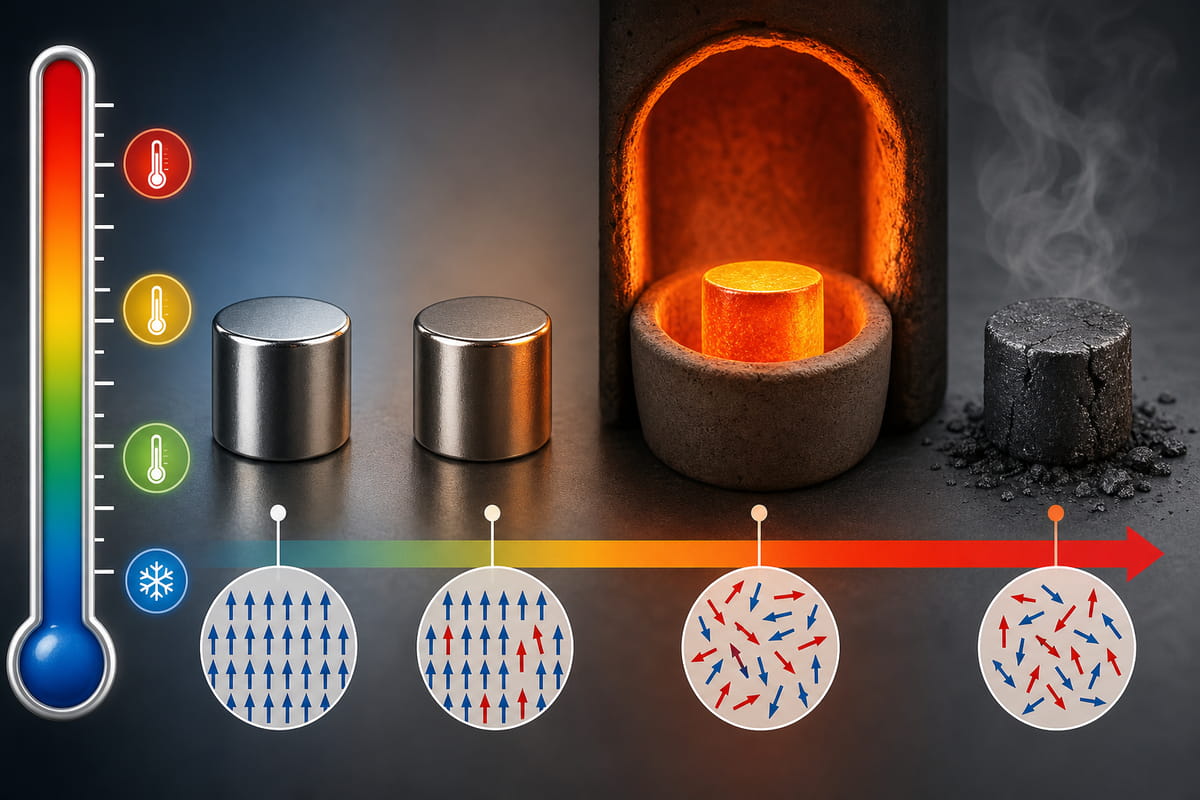
But here’s the thing: If you drop a bar magnet or heat it up too much, those domains can get knocked out of alignment. And your magnet gets weaker.
Why Magnets Push and Pull
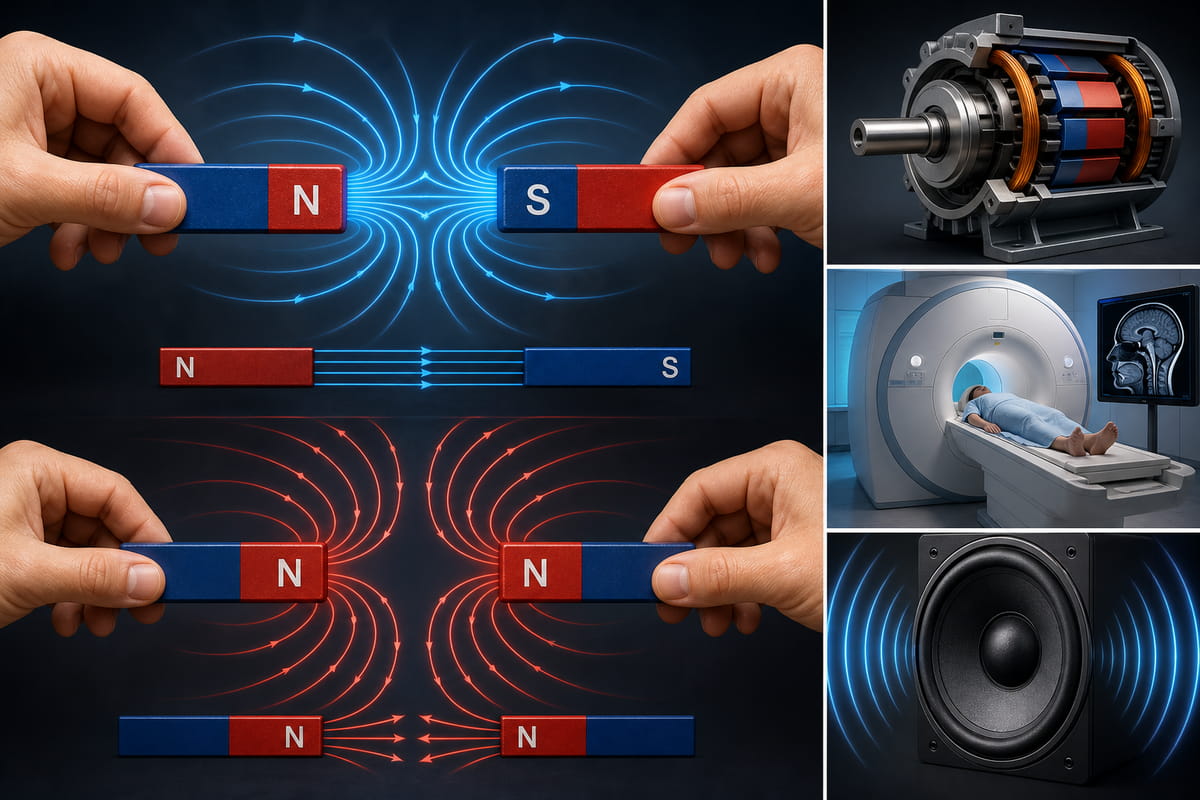
Let me give you a real-world example.
Grab two bar magnets. Bring the North pole of one close to the South pole of another.
Feel that pull?
The magnetic field lines flowing out of the North pole of the first magnet are connecting to the South pole of the second magnet. The lines are trying to complete a loop. So they pull together.
Now flip one magnet around. Bring North to North.
Suddenly, those field lines are pushing against each other. The magnets resist. They push apart.
This isn’t just theory—this is how electric motors work. It’s how MRI machines create detailed images of your body. It’s how your speakers produce sound.
The Big Myth: Cutting a Magnet in Half
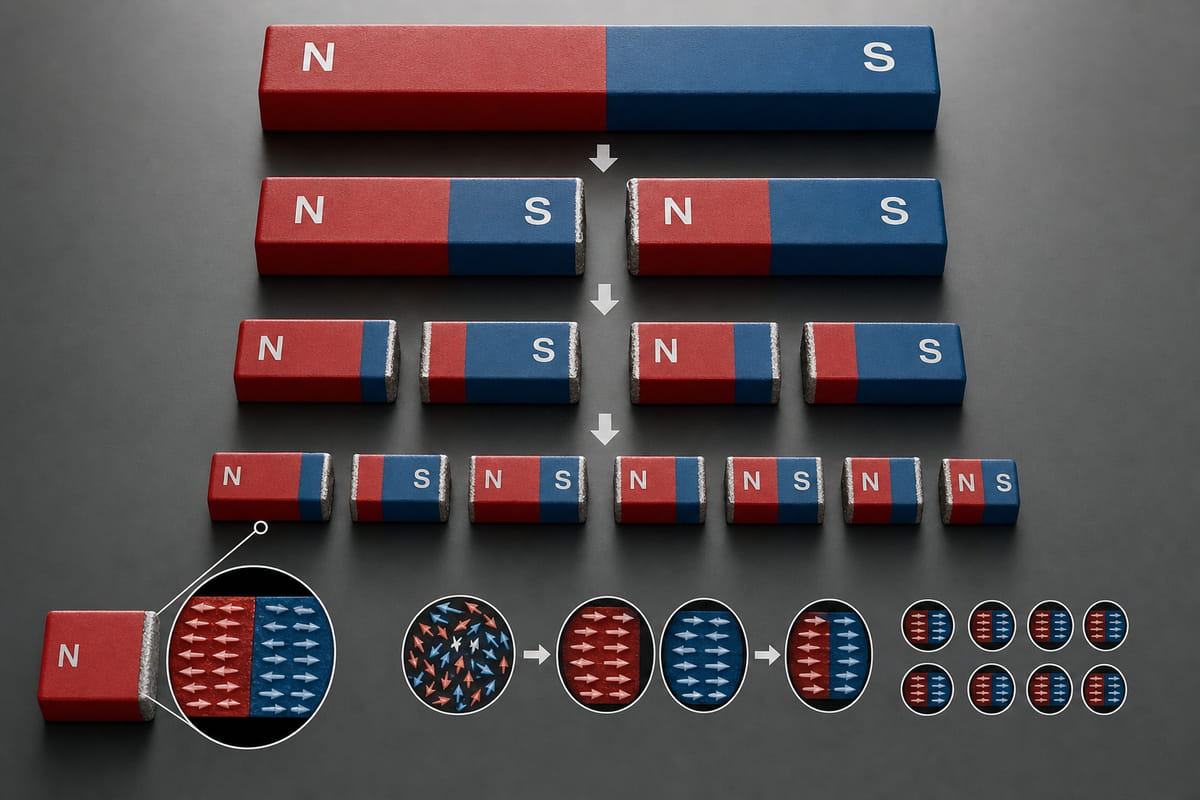
You ever heard someone say: “If you cut a magnet in half, you get a North pole and a South pole separately”?
Nope. That’s not how it works.
When you cut a bar magnet in half, you don’t isolate a pole. Instead, the atomic domains inside each half realign. You end up with two brand new bar magnets, each with its own North and South pole.
Cut those in half? Now you’ve got four magnets.
Cut those in half? Eight.
You can keep going until the pieces are too small to be useful, but each piece will still have both poles.
This is because magnets are dipoles—they always have two poles. There’s no such thing as a magnetic monopole (as far as we know).
Why Are Bar Magnets So Powerful?
You might be wondering: “If all magnets work the same way, why are some so much stronger than others?”
Great question.
The power of a bar magnet depends on three things:
1. Material Composition
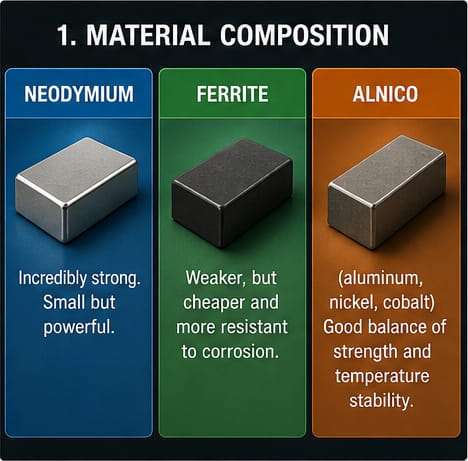
- Neodymium magnets? Incredibly strong. Small but powerful.
- Ferrite magnets? Weaker, but cheaper and more resistant to corrosion.
- Alnico magnets (aluminum, nickel, cobalt)? Good balance of strength and temperature stability.
2. Domain Alignment Quality
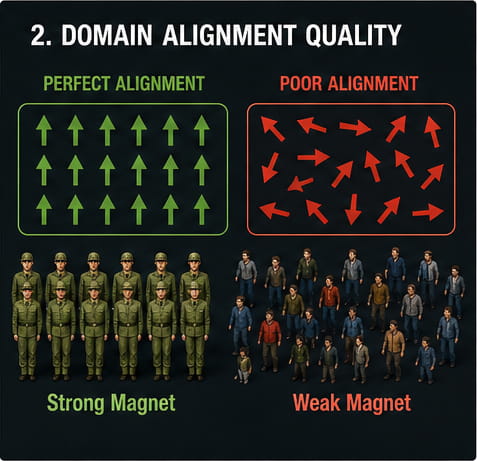
The more perfectly the domains are aligned during manufacturing, the stronger the magnet. Think of it like soldiers standing at attention versus a disorganized crowd.
3. Size and Shape
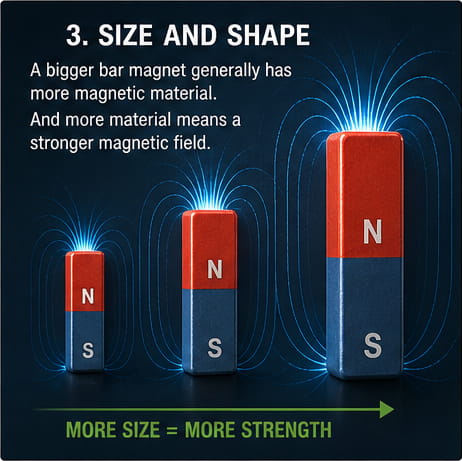
A bigger bar magnet generally has more magnetic material. And more material means a stronger magnetic field.
Here’s a quick comparison:
| Factor | Effect on Strength |
|---|---|
| Material | Neodymium > Alnico > Ferrite |
| Size | Bigger = stronger (usually) |
| Alignment | Perfect alignment = maximum strength |
| Temperature | Heat weakens or destroys magnetism |
What Makes a Bar Magnet Tick?
Let’s talk about the specific properties of bar magnets that make them so useful.
Permanent Magnetism

Bar magnets are permanent. Once they’re magnetized, they stay magnetized—unless you expose them to extreme heat or a strong opposing magnetic field.
Two Distinct Poles

Every bar magnet has a North and South pole. Period. And these poles follow the rule we talked about: opposites attract, likes repel.
Defined Magnetic Field Lines
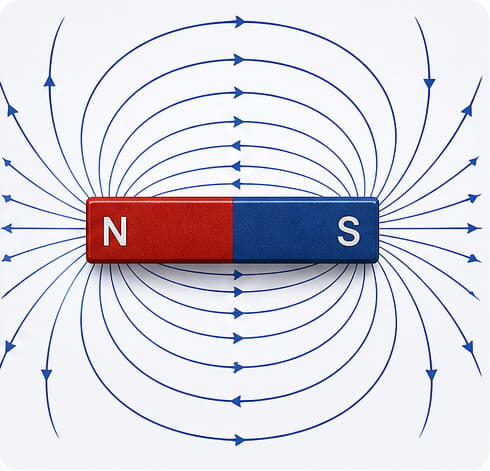
The magnetic field around a bar magnet is predictable. It flows from North to South outside the magnet, and from South to North inside. These lines never cross or break. They form continuous loops.
Attraction to Ferromagnetic Materials
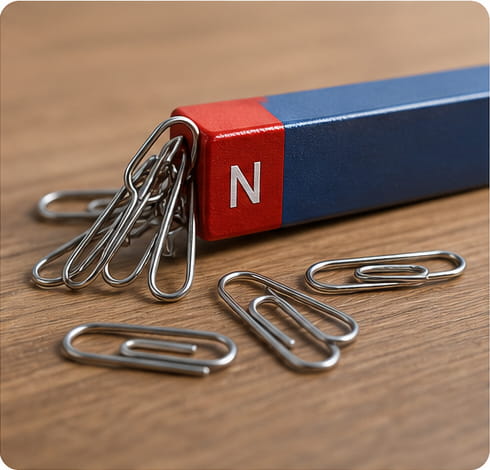
A bar magnet doesn’t just attract other magnets. It also pulls on iron, nickel, cobalt, and anything with those metals inside.
That’s why a paper clip sticks to a magnet. The clip is made of steel (which contains iron). The magnet’s field temporarily aligns the domains inside the clip, turning it into a temporary magnet.
Real-World Applications of Bar Magnets
Okay, so now you know how do bar magnets work. But where do they actually show up in your life?
Everyday Uses
- Refrigerator magnets – holding your grocery list
- Compasses – the needle is a tiny bar magnet that aligns with Earth’s magnetic field
- Cabinet latches – magnetic closures keep doors shut
- Tool holders – keeping screwdrivers and wrenches organized in your garage
Industrial Applications
- Magnetic separators – removing metal contaminants from food and raw materials
- Electric motors – converting electrical energy into motion
- Generators – converting motion into electricity
- Speakers and microphones – converting electrical signals into sound
Medical Use
- MRI machines – use powerful magnets to create detailed images of the body
- Magnetic therapy products – some people use magnets for pain relief (though the science is debated)
How to Keep Your Bar Magnet Working
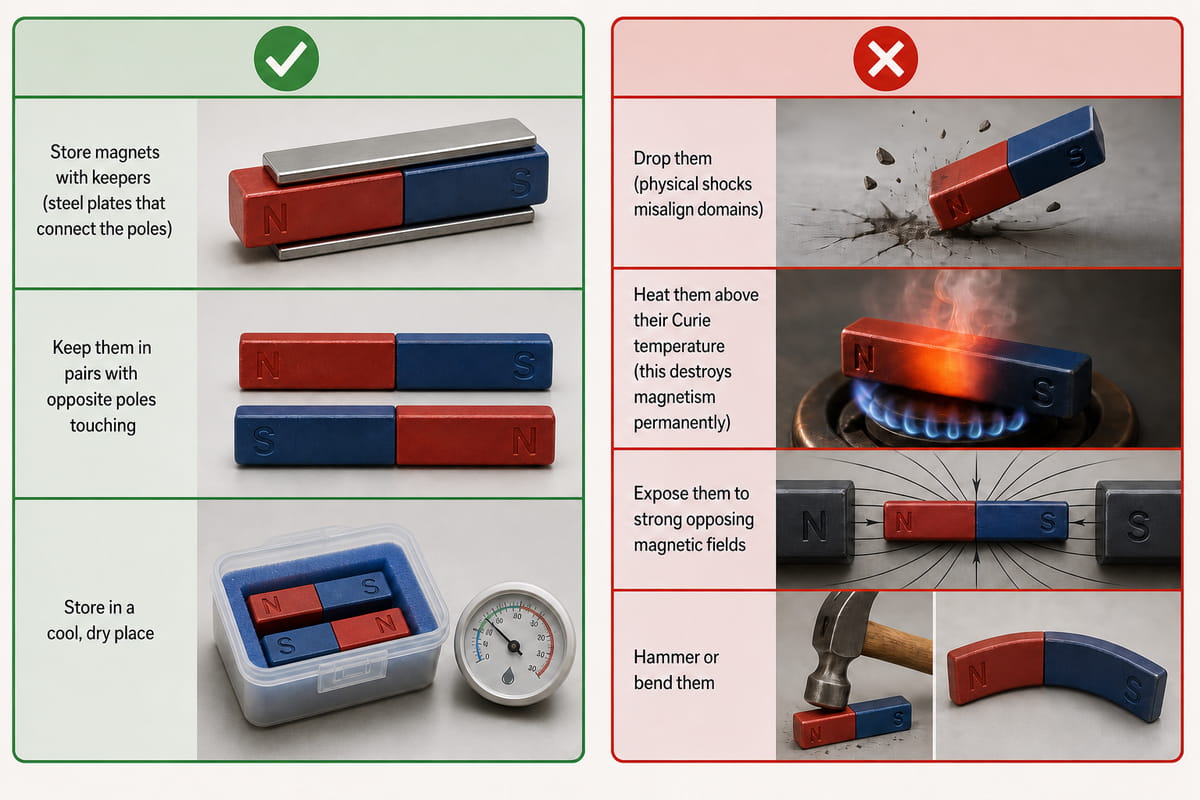
I’ve seen people treat magnets like they’re indestructible. They’re not.
Here’s how to keep yours in peak condition:
Do:
- Store magnets with keepers (steel plates that connect the poles)
- Keep them in pairs with opposite poles touching
- Store in a cool, dry place
Don’t:
- Drop them (physical shocks misalign domains)
- Heat them above their Curie temperature (this destroys magnetism permanently)
- Expose them to strong opposing magnetic fields
- Hammer or bend them
Pro Tip: If you need to demagnetize a bar magnet, heat it up or hit it with a strong alternating magnetic field. But honestly? Most of the time you want your magnet to keep its strength. So treat it with care.
Common Questions About Bar Magnets
Can a bar magnet lose its magnetism?
Yes. Heat, physical shock, and exposure to opposing magnetic fields can all weaken or destroy a magnet’s strength.
What’s the difference between a bar magnet and an electromagnet?
A bar magnet is permanent—always on. An electromagnet only works when electricity flows through a coil of wire wrapped around a metal core. You can turn an electromagnet on and off.
How strong is a typical bar magnet?
Depends on the material:
- Small ferrite bar magnet: about 5–100 mT (millitesla)
- Small neodymium bar magnet: 200–1,000 mT
- Industrial magnets: even stronger
Can I make my own bar magnet?
Yes! You can magnetize a steel rod by:
1. Stroking it repeatedly with a strong permanent magnet in one direction
2. Wrapping it with wire and running DC current through the coil
Final Thoughts
How do bar magnets work? At their core, it’s all about aligned atoms. Those tiny magnetic domains inside the metal all point the same direction, creating a unified magnetic field that flows from North to South.
This simple principle powers everything from your kid’s science experiment to massive industrial machinery. Once you understand it, you start seeing magnets everywhere—and appreciating just how amazing these invisible forces really are.
Now I’m curious: have you ever done any experiments with bar magnets? Drop a comment and let me know what you discovered.
Because honestly? The best way to really get magnetism is to get your hands on a bar magnet and start playing.
Go grab one. You’ll see exactly what I mean.