Quick Summary:
Bar magnets follow one rule: like poles repel and unlike poles attract. They interact through an invisible magnetic field that’s strongest at the poles and weakest in the center.
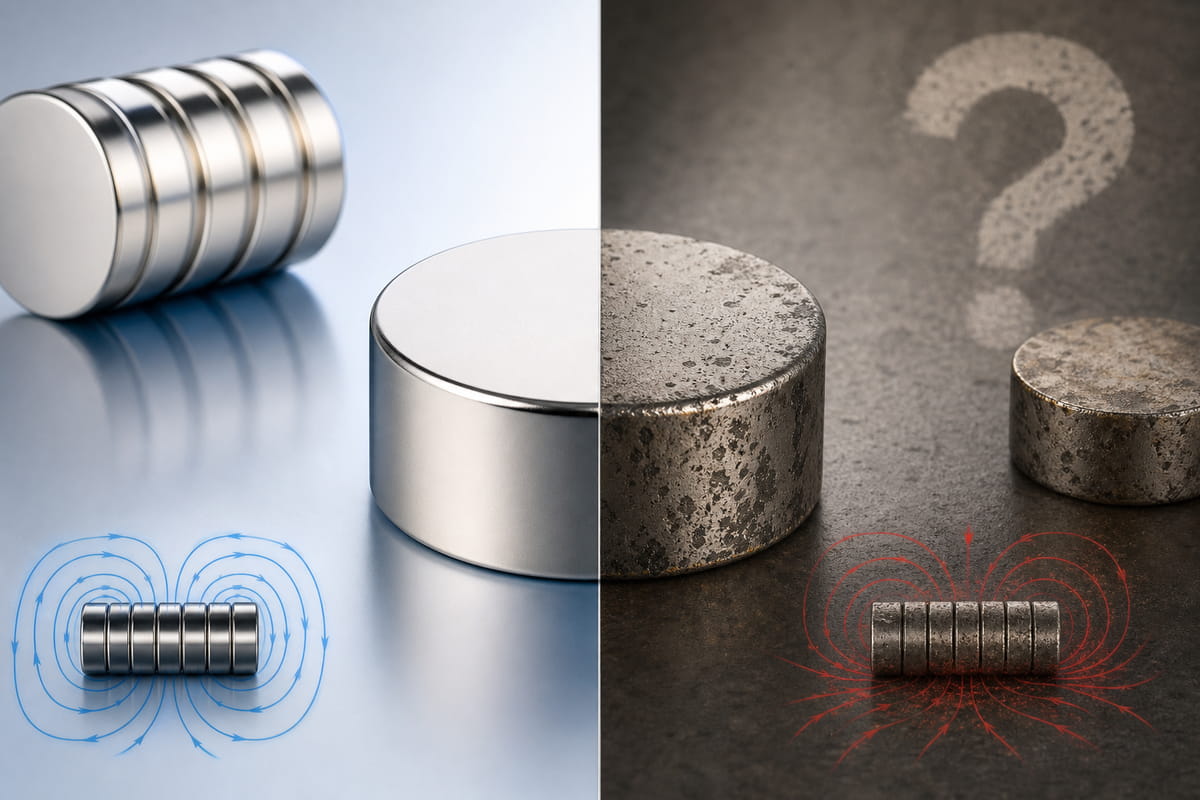
This behavior comes from microscopic magnetic domains that all line up in the same direction, which is also why breaking a magnet in half creates two complete smaller magnets.
If you grab two bar magnets. Bring them close together. You’d hold two close together, and they’d either snap together or push apart like they hated each other.
It felt like magic, right?
Well, it’s not magic. It’s physics. And once you understand how do bar magnets interact with each other, a whole world of practical applications opens up.
How do bar magnets interact with each other? There’s actually a simple rule that explains everything. And as a professional custom bar magnets manufacturer, I’m going to break it down for you piece by piece.
The Simple Rule: Like Repels, Unlike Attracts
Every bar magnet has two ends. We call them poles.
One is the North pole. The other is the South pole.
And here’s the rule you need to remember:
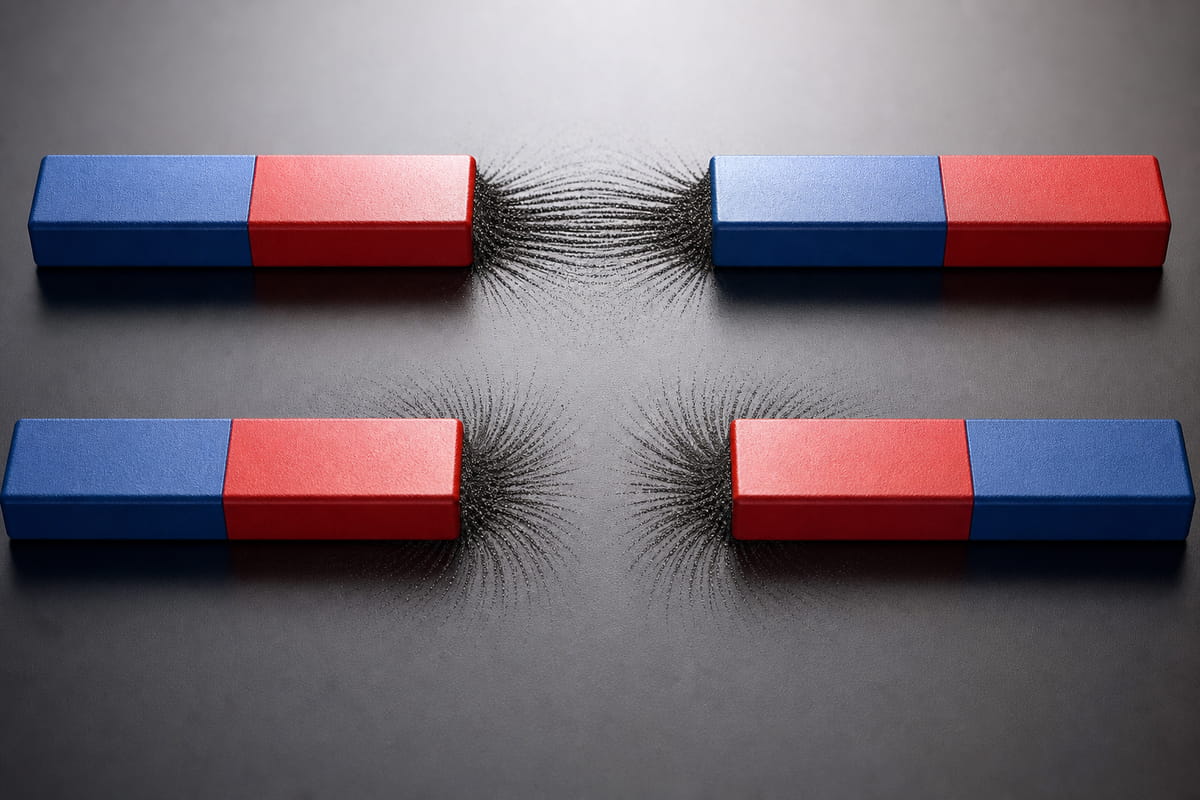
- Opposite poles (North and South) attract each other
- Like poles (North-North or South-South) repel each other
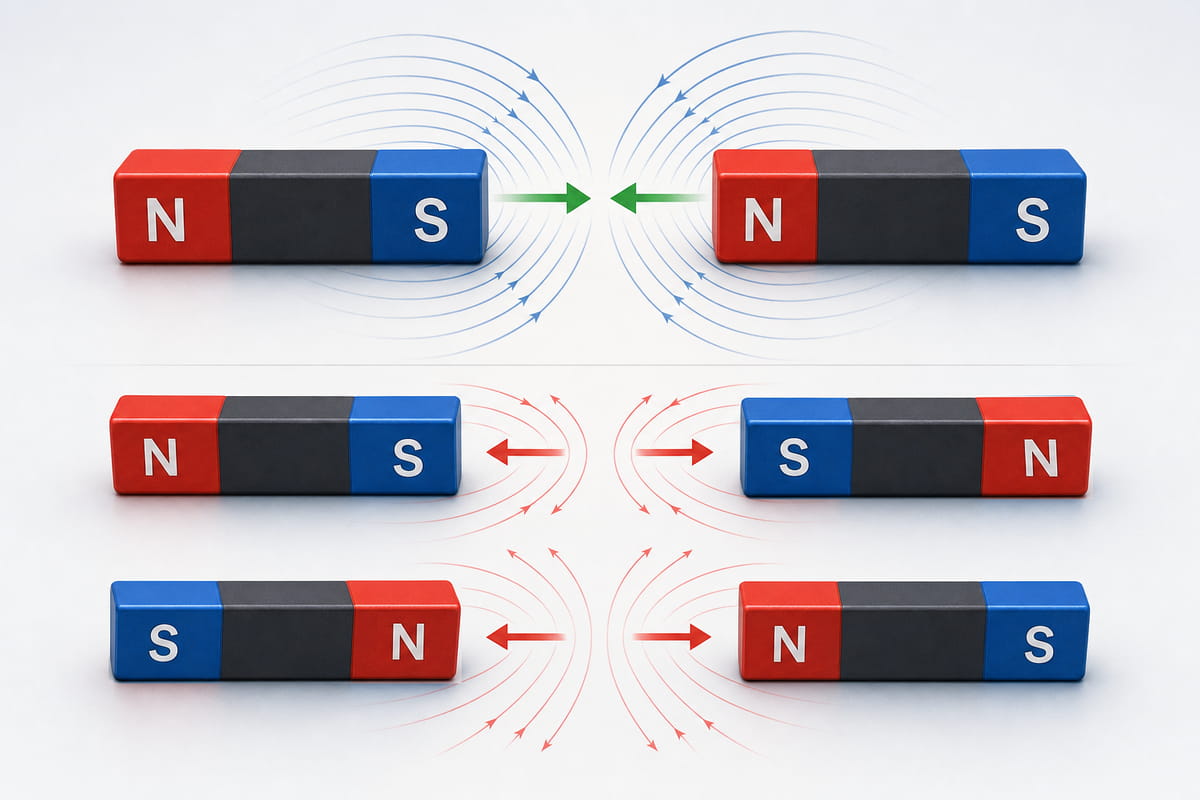
That’s it. That’s the foundation of how do bar magnets interact with each other.
Sound good?
Good. Because now we’re going to dig deeper into why this happens.
But Why Does This Actually Happen?
You might be thinking: “Okay, I get the rule. But why do opposite poles attract?”
Great question.
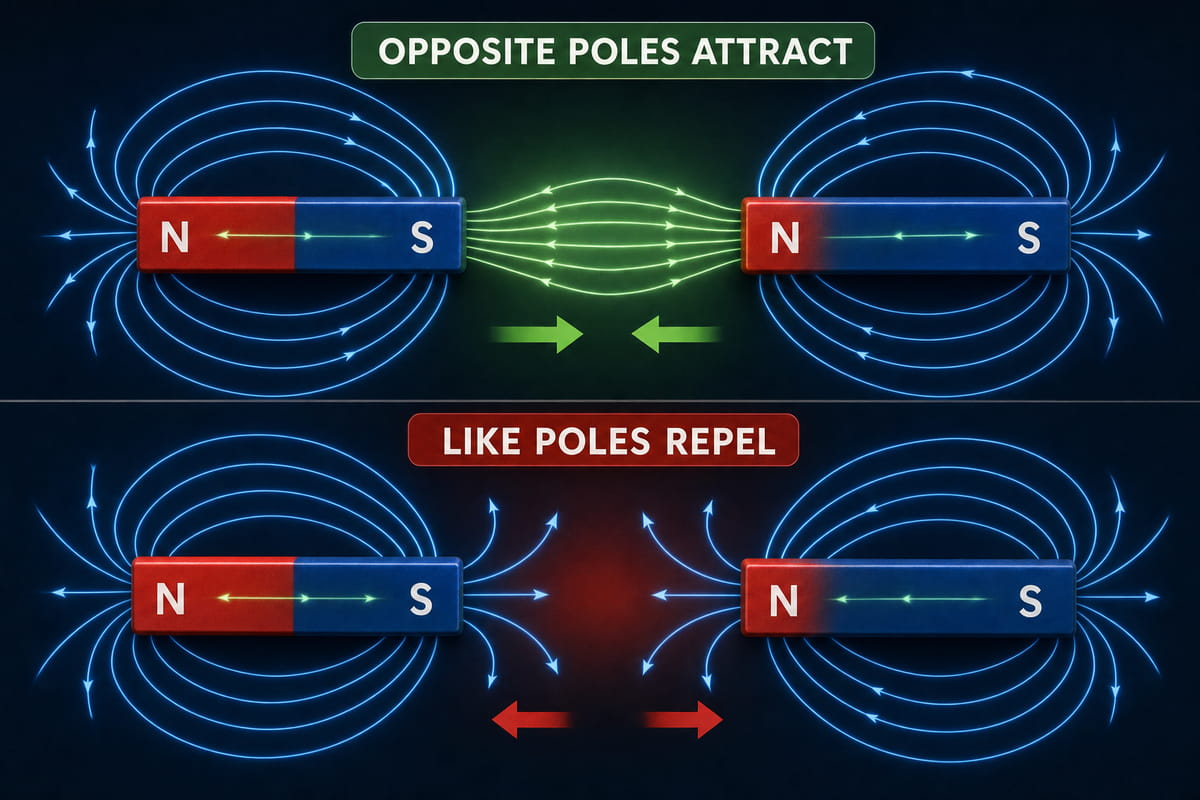
Every bar magnet creates an invisible area of influence around it. We call this a magnetic field.
These fields contain lines of force. They flow from the North pole to the South pole outside the magnet. Inside the magnet? They flow from South to North. Continuous loop.
Now here’s where it gets interesting.
When you bring a North pole close to a South pole, the magnetic field lines from both magnets link up. They connect. This creates a strong attractive force that pulls the magnets together.
But when you try to push two North poles together? The field lines push against each other. They refuse to connect. This creates a repelling force that pushes the magnets apart.
Pro Tip: You can actually see this happening. Sprinkle some iron filings on a piece of paper. Place it over two bar magnets. The filings will arrange themselves in patterns that show you exactly what’s going on with the magnetic field.
The Energy Angle (Simple Version)
Here’s something most people don’t know:
Magnets are lazy.
Okay, that’s not the scientific term. But it helps explain things.
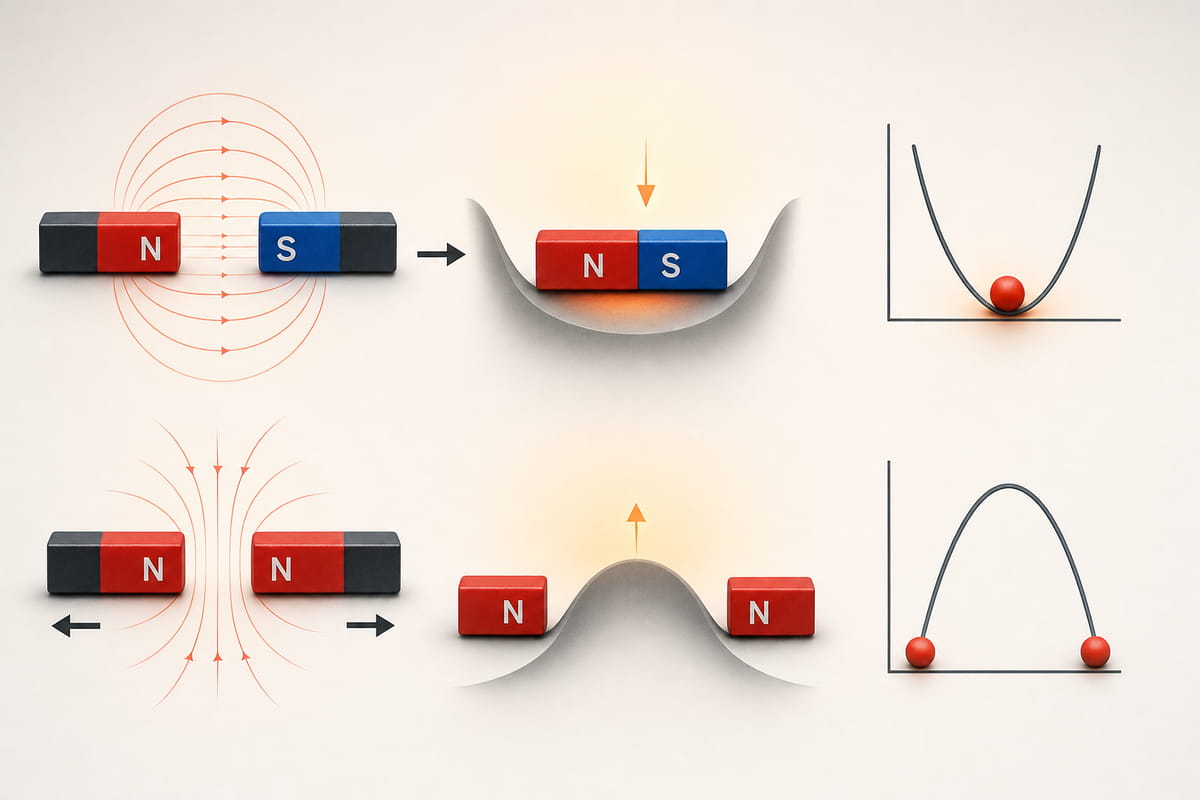
Magnets naturally move to the position where they have the least amount of stored energy. When opposite poles face each other, the magnets move closer together. This lowers their energy state. When like poles face each other, moving apart lowers their energy state.
That’s it. That’s the real reason how do bar magnets interact with each other.
What About When Magnets Attract Metal?
You’ve probably noticed that bar magnets also attract certain metals. Iron. Nickel. Cobalt.
But this is actually a different type of interaction.
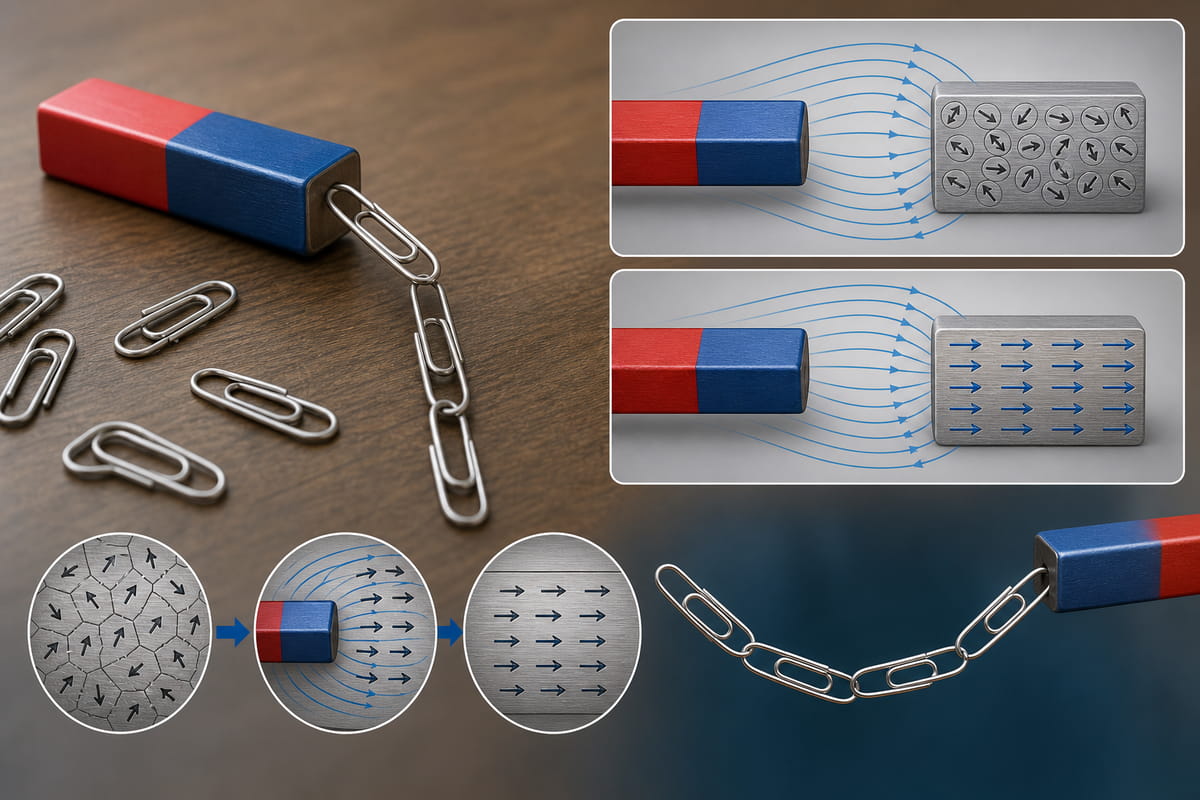
When a bar magnet gets close to a piece of iron, something cool happens inside the iron. Tiny regions called magnetic domains start to align with the magnet’s field.
Think of each domain as a microscopic magnet pointing in a random direction. When your bar magnet comes near, those domains “line up” temporarily. The iron becomes a temporary magnet.
This is why a paperclip sticks to a magnet. It’s also why you can create a chain of paperclips. Each one becomes temporarily magnetized.
Real-World Examples of Bar Magnet Interactions
Let me show you where how do bar magnets interact with each other matters in the real world.
Example 1: Magnetic Separators

Industrial facilities use powerful bar magnets to separate iron and steel from other materials. Think recycling plants. Conveyor belts carry mixed materials past strong magnets. Ferrous metals get pulled out. Everything else passes through.
Example 2: Electric Motors
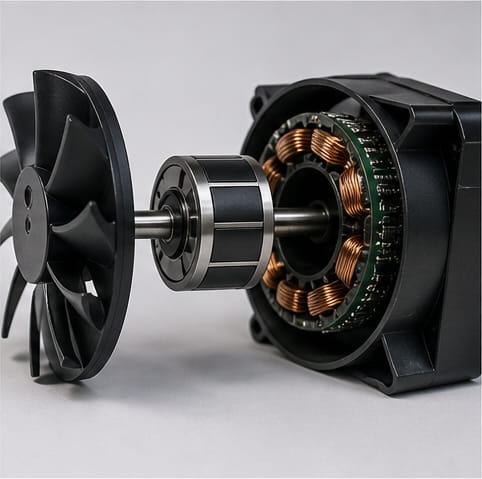
Electric motors work because magnets interact with each other. Electromagnets generate magnetic fields that push against permanent magnets. This creates rotation. Your blender. Your electric toothbrush. Your laptop’s cooling fan. All rely on magnets interacting.
Example 3: Magnetic Resonance Imaging (MRI)
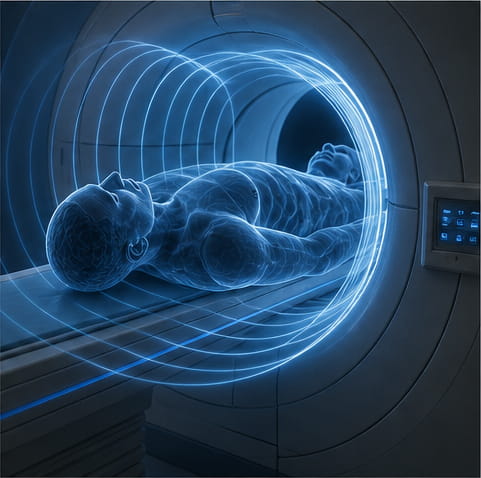
MRI machines use extremely strong magnets. They create a powerful magnetic field that aligns hydrogen atoms in your body. Radio waves knock those atoms out of alignment. When they snap back, they release energy. Sensors detect that energy and create detailed images.
The interaction between these powerful magnets and the atoms in your body? That’s the foundation of modern medical imaging.
Common Questions (Answered)
What happens if you break a bar magnet in half?
You get two smaller magnets. Each one has its own North and South pole.
Why? Because the magnetic domains inside are already aligned. Breaking the magnet creates two complete magnets.
Where is a bar magnet strongest?
At the poles. The magnetic force is most concentrated at the ends of the bar. The middle? Much weaker.
You can test this yourself. Put a bar magnet under a piece of paper. Sprinkle iron filings on top. You’ll see the filings cluster around the ends and thin out in the middle.
Can a bar magnet lose its strength?
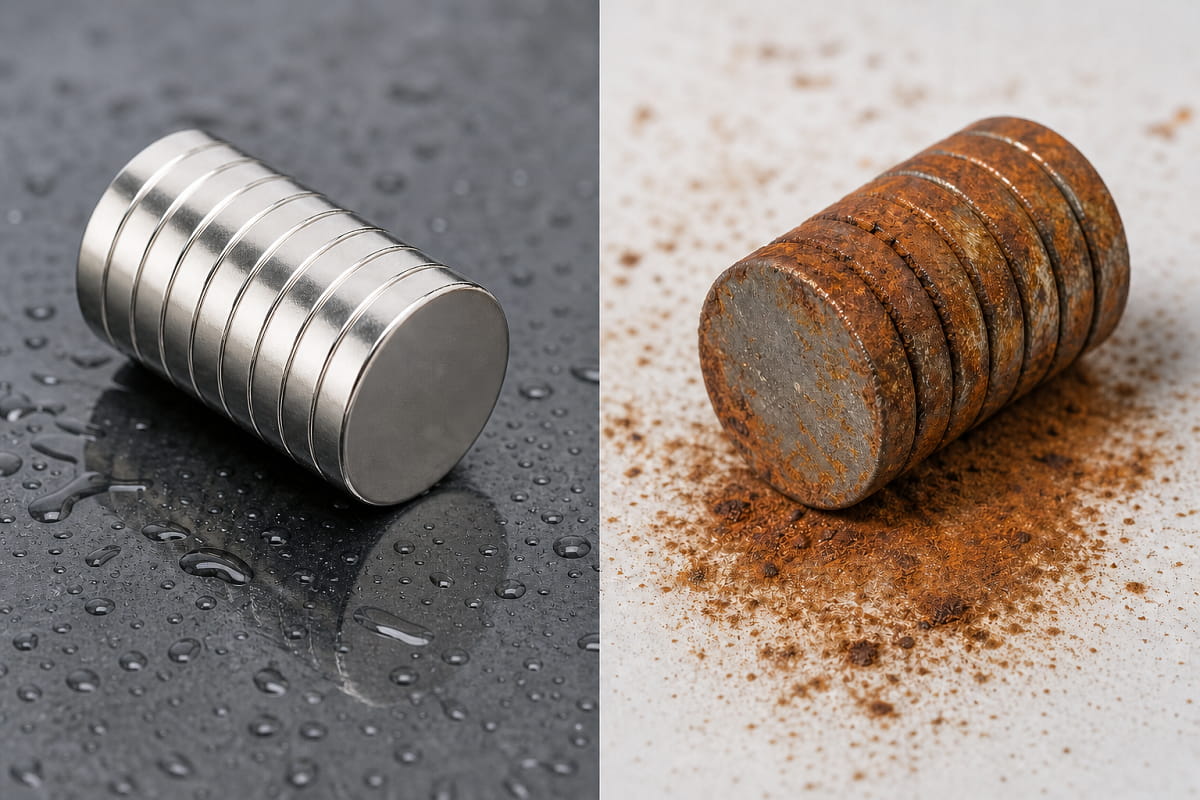
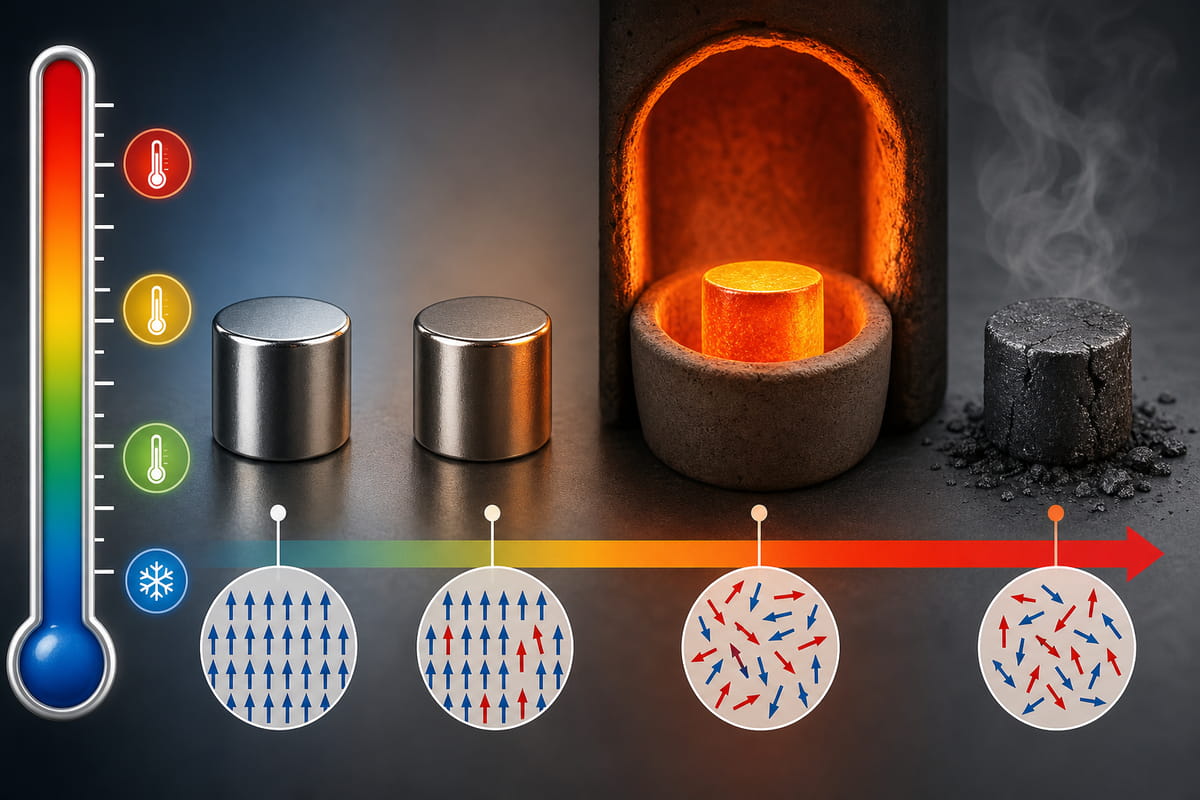
Yes. Extreme heat can demagnetize a magnet. Strong opposing magnetic fields can also weaken it. And physically dropping it? That can mess up the domain alignment.
Store magnets carefully. Keep them in pairs with opposite poles together. Use “keepers” (metal plates that connect the poles) for long-term storage.
Pro Tip: How to Determine the Poles of an Unmarked Magnet
Not all bar magnets come with “N” and “S” stamped on them.
No problem.
Grab a compass. Bring it near the magnet. The end of the compass needle that normally points to Earth’s North will swing around and point to the South pole of your magnet.
Why? Because opposite poles attract. The compass needle is a magnet too.
If you don’t have a compass? Float the bar magnet in water. It will rotate until its North pole points toward Earth’s North. (Earth is basically a giant magnet.)
Types of Bar Magnets (And Why It Matters)
Not all bar magnets are created equal.
Alnico Bar Magnets
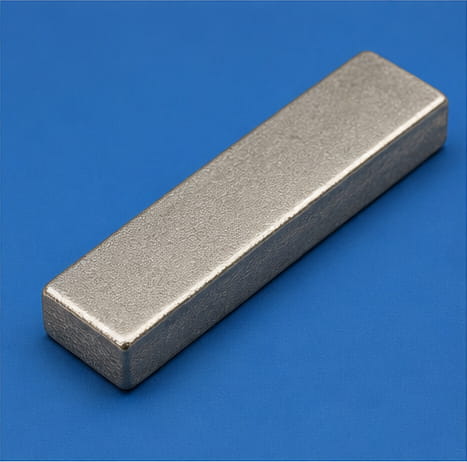
Made from aluminum, nickel, and cobalt. Strong and durable. Common in school science labs.
Ferrite Bar Magnets
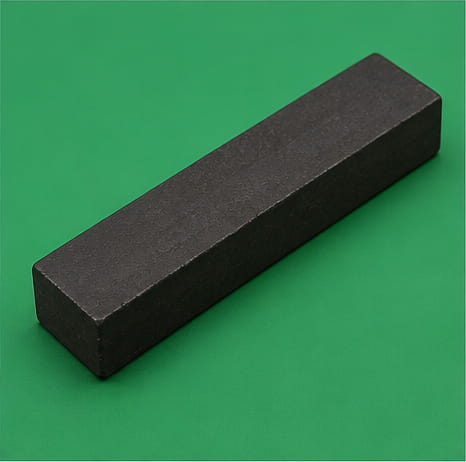
Made from iron oxide and ceramic materials. Affordable. Found in refrigerator magnets and speakers.
Neodymium Bar Magnets
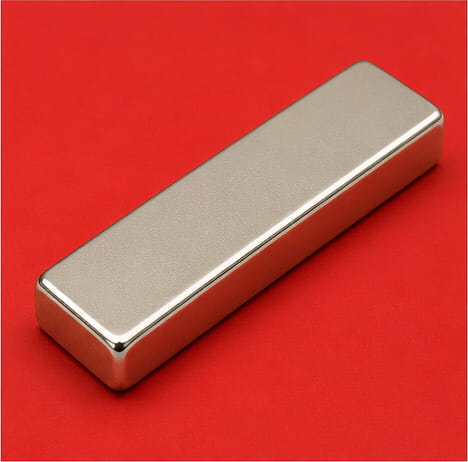
The strongest commercially available magnets. Made from neodymium, iron, and boron. Used in headphones, hard drives, and electric motors.
Samarium Cobalt Bar Magnets
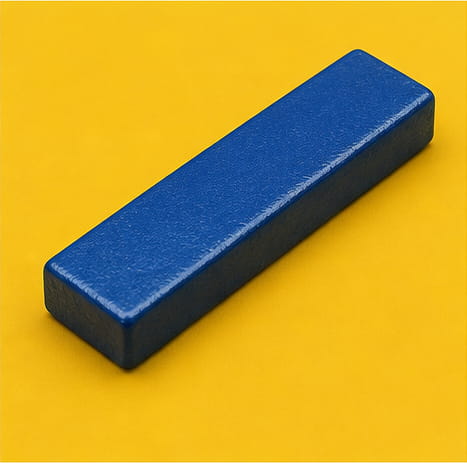
Expensive. But they maintain their strength at high temperatures. Used in aerospace and military applications.
Each type interacts differently with other magnets. A neodymium magnet can lift hundreds of times its own weight. A ferrite magnet? Much weaker.
The Bottom Line?
Understanding how do bar magnets interact with each other comes down to one simple principle: opposite poles attract, like poles repel.
But here’s what I want you to take away:
This isn’t just science class trivia. This principle powers the modern world. Electric motors. Medical imaging. Recycling. Speakers. Data storage.
Every single one of these technologies relies on the interactions between magnets.
So the next time you see two magnets snap together or push apart, you’ll know exactly what’s happening. The magnetic fields are connecting or repelling. The domains are aligning. And the magnets are just trying to find their lowest energy state.
Pretty cool, right?
Now go grab a couple of bar magnets and test this stuff out yourself. I promise you’ll never look at them the same way again.