Quick Summary:
- N52 is roughly 40–50% stronger than N35 of the same size, but it costs 30–50% more, is more prone to chipping, and has a lower maximum operating temperature (60°C vs 80°C).
- N35 is the default, cost-effective choice for 90% of general applications like crafts, closures, and sensors. If space is tight and you need maximum force in a small package, N52 is ideal.
- For most projects, start with N35 unless you specifically need the extra strength—or consider N42 as a middle-ground sweet spot.
Ever picked up a magnet that was way too strong for your project? Or worse—one that wasn’t nearly strong enough? I’ve been there. And when it comes to N35 vs N52 magnets, choosing the wrong grade can literally make or break your design.
Pick N52 when N35 would’ve worked? You’re burning cash. Go with N35 when you really needed N52? Your application fails. Here’s the deal: Both are neodymium magnets, but they’re NOT interchangeable.
In this guide, as a professional custom N35 magnets and N52 magnets manufacturer, I will break down the five key differences—magnetic strength, size, cost, durability, and temperature resistance—so you can confidently pick the right grade for your project without overspending or underpowering.
What Do N35 and N52 Actually Mean?
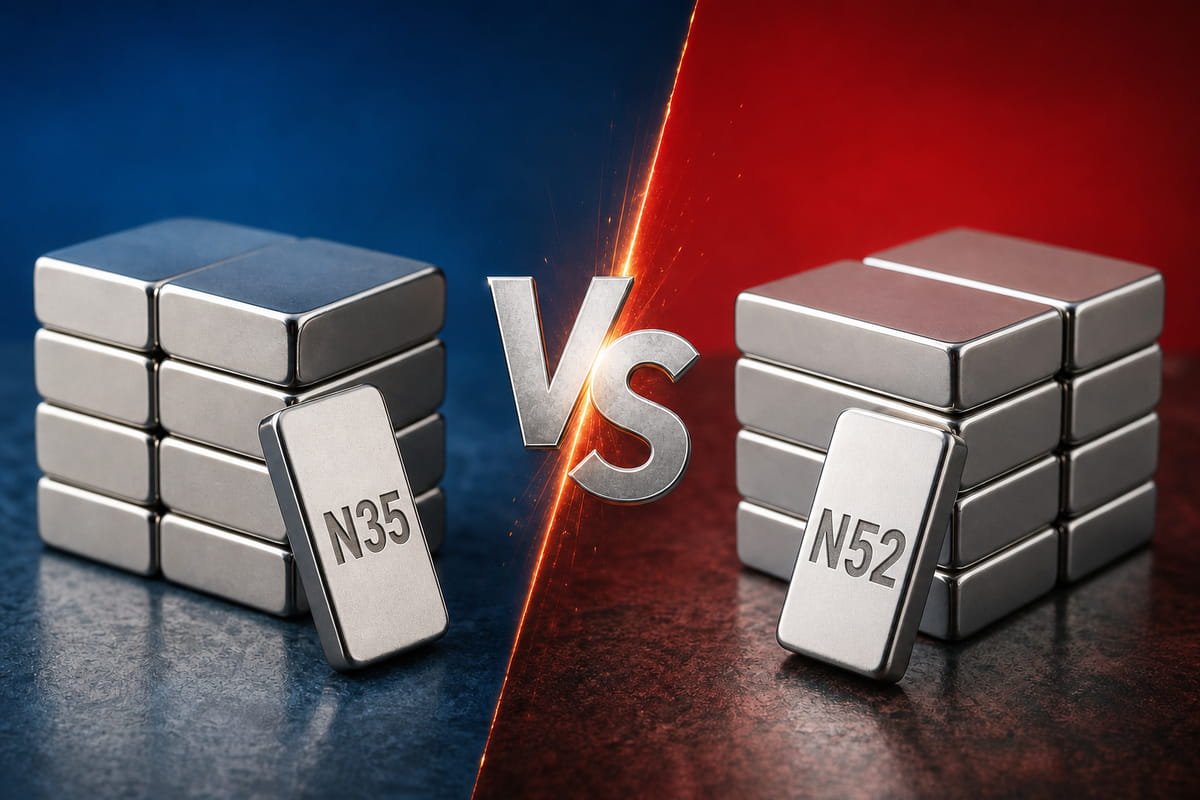
The “N” stands for neodymium. The number? That’s the maximum energy product measured in MegaGauss-Oersteds (MGOe).
Think of it like horsepower in cars. Higher number = more power.
N35: Around 35 MGOe. Surface field typically between 11,700 and 12,100 Gauss.
N52: Around 52 MGOe. Surface field between 14,300 and 14,800 Gauss.
That’s not just a small bump. An N52 magnet produces roughly 40-50% more magnetic pull force than an N35 magnet of the exact same size.
But here’s the thing:
More power doesn’t automatically mean “better.” It depends on what you’re building.
N35 vs N52 Magnets: Head-to-Head Comparison
Let me walk you through the five key differences you actually need to care about.
1. Magnetic Strength
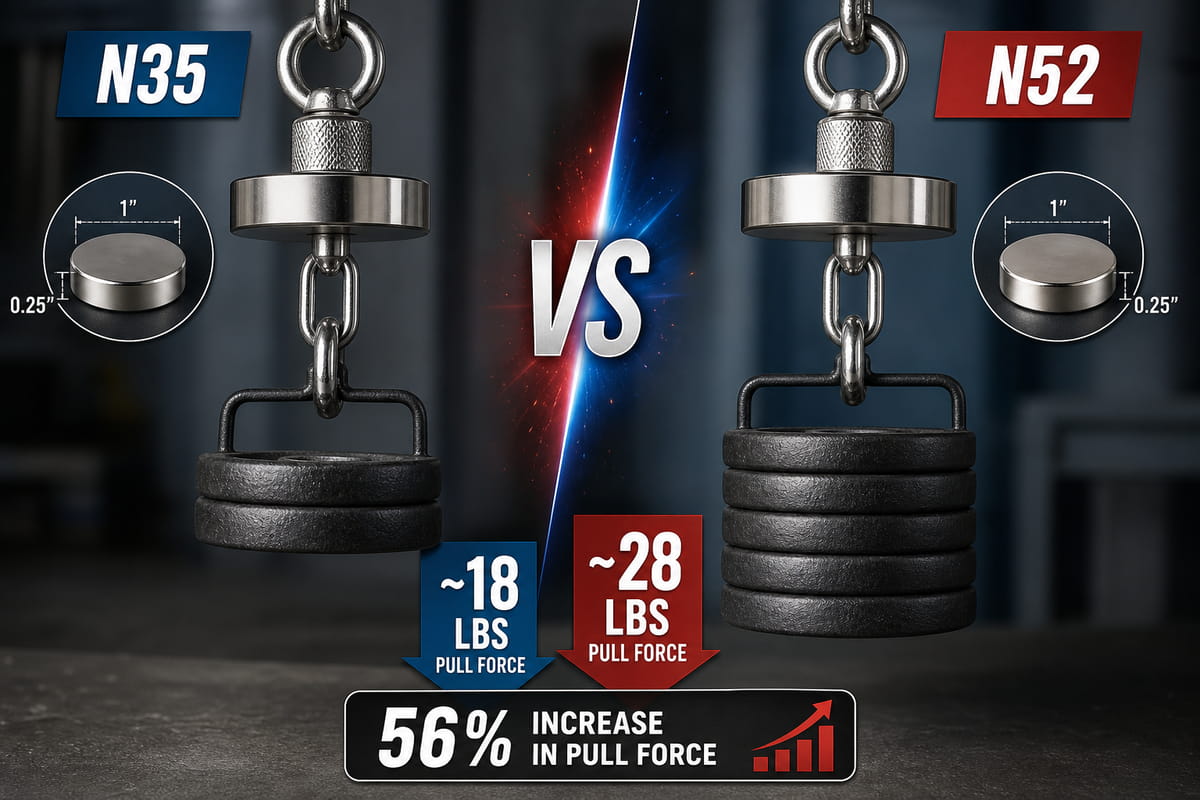
This one’s obvious. N52 magnet packs way more punch.
I recently tested identical disc magnets (1″ diameter x 0.25″ thick) in both grades:
- N35: ~18 lbs pull force
- N52: ~28 lbs pull force
That’s a 56% increase from the exact same size magnet.
But here’s the real question: Do you actually NEED that extra strength?
For 90% of applications, N35 is plenty. These magnets can already hold 10-20 times their own weight.
2. Size and Space Constraints
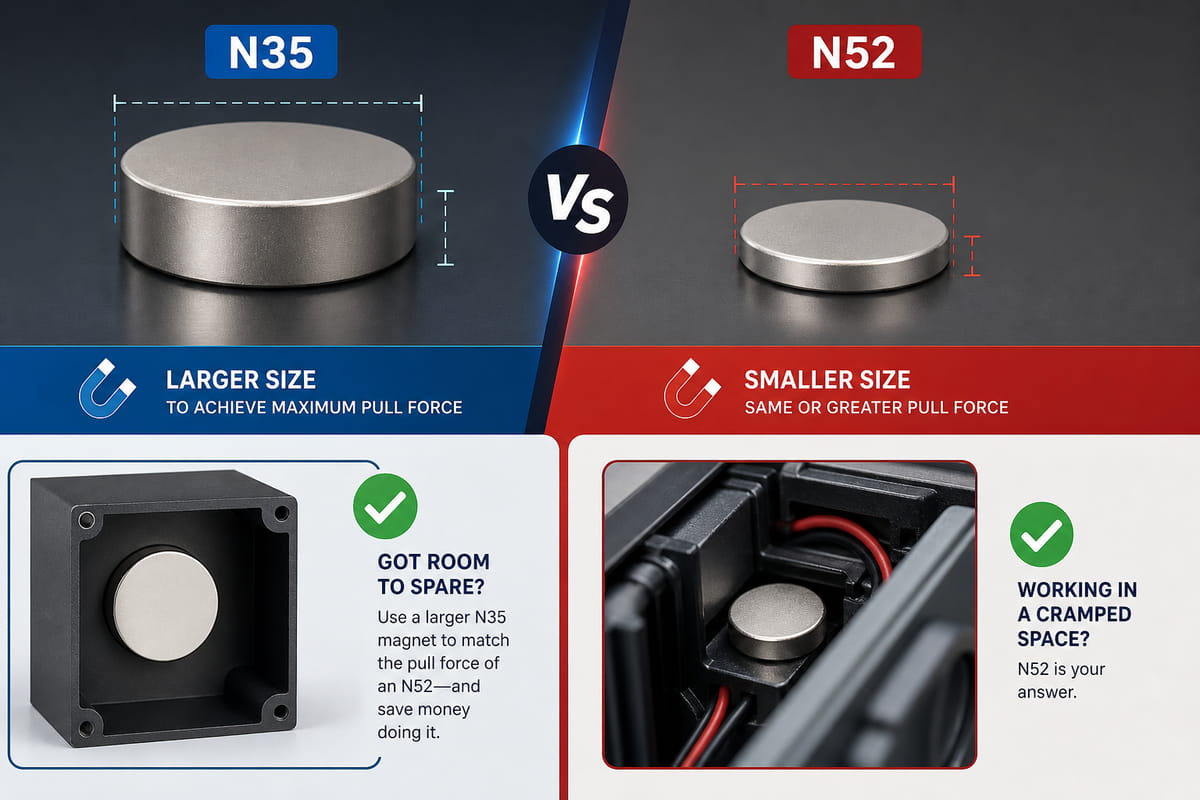
This is where N52 magnet really shines.
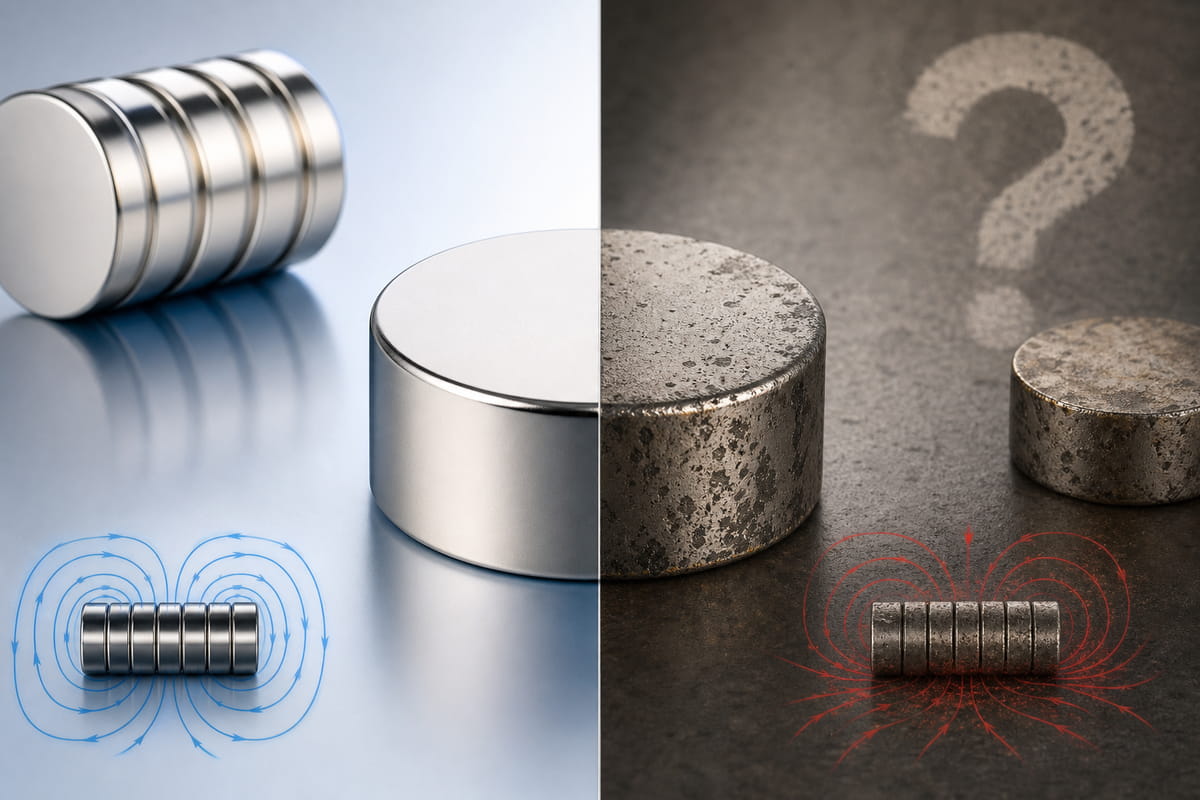
Because N52 has a denser magnetic field, you can achieve maximum magnetic performance in a significantly smaller and lighter design.
Working in a cramped space? N52 magnet is your answer.
Got room to spare? Use a larger N35 magnet to match the pull force of an N52—and save money doing it.
3. Cost

N35: Much more affordable. Widely mass-produced. It’s the “default” grade for most applications.
N52: Can cost 30% to 50% more—sometimes even double. Why? Tighter manufacturing tolerances and higher concentrations of pure neodymium.
I’ve personally seen projects where switching from N52 to N35 cut material costs by 40% without sacrificing performance. You just need to adjust the magnet size.
4. Durability and Brittleness
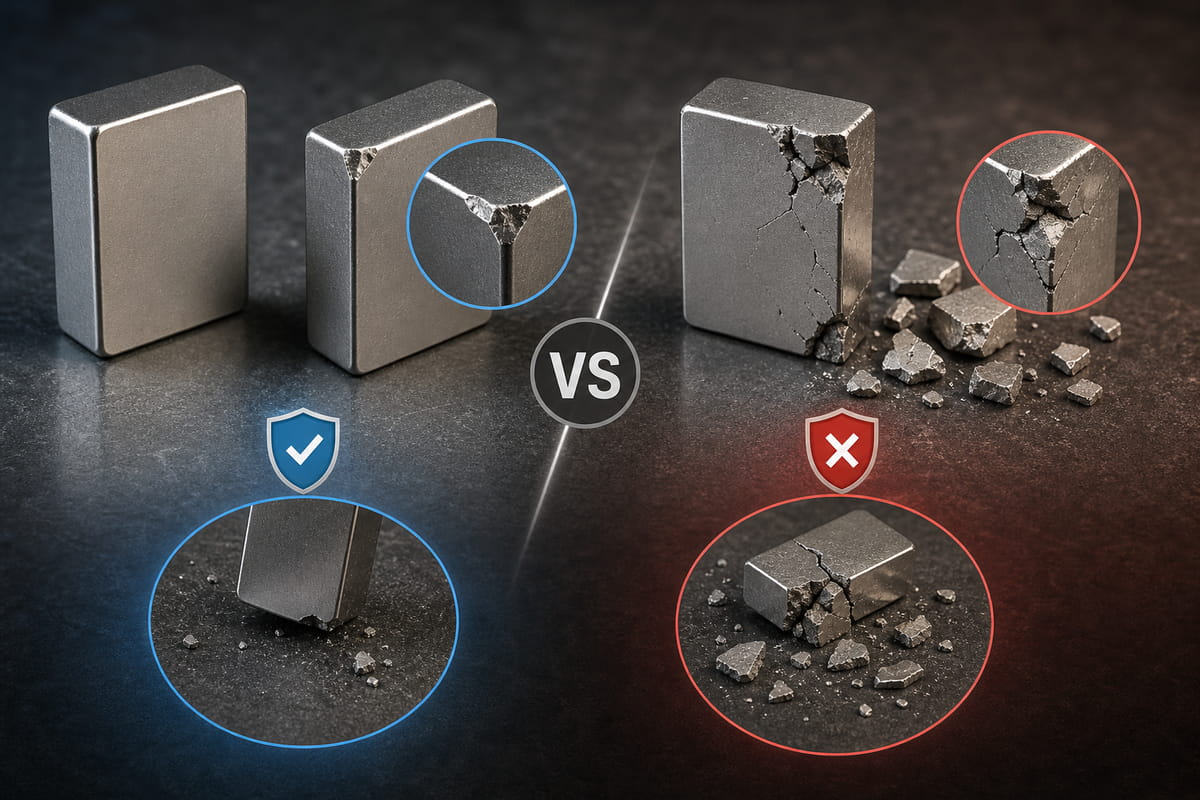
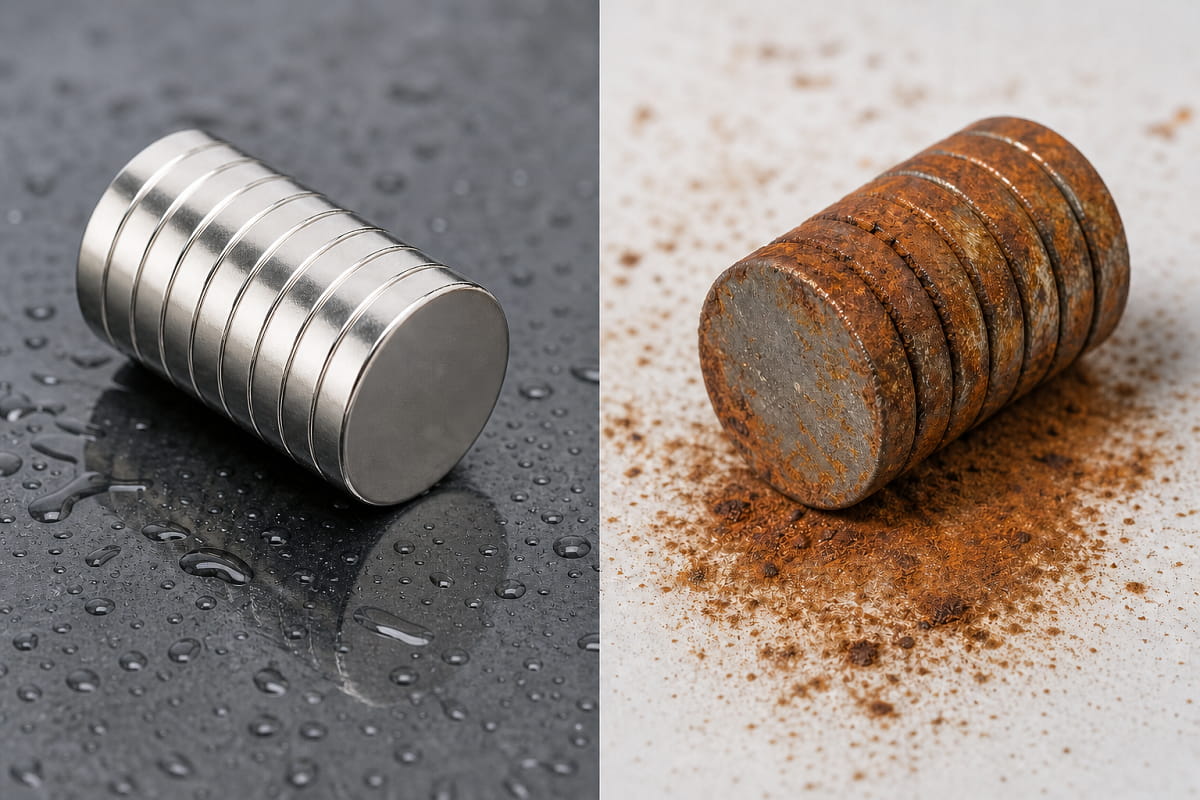
Both grades are brittle. That’s just how neodymium magnets are.
But N52 magnet is more fragile.
Think of it this way: stronger magnets contain higher internal stresses. That makes N52s more prone to chipping or cracking on impact.
Pro Tip: If your magnet will experience mechanical stress or you’re new to working with neodymium, start with N35. It’s more forgiving.
5. Temperature Resistance
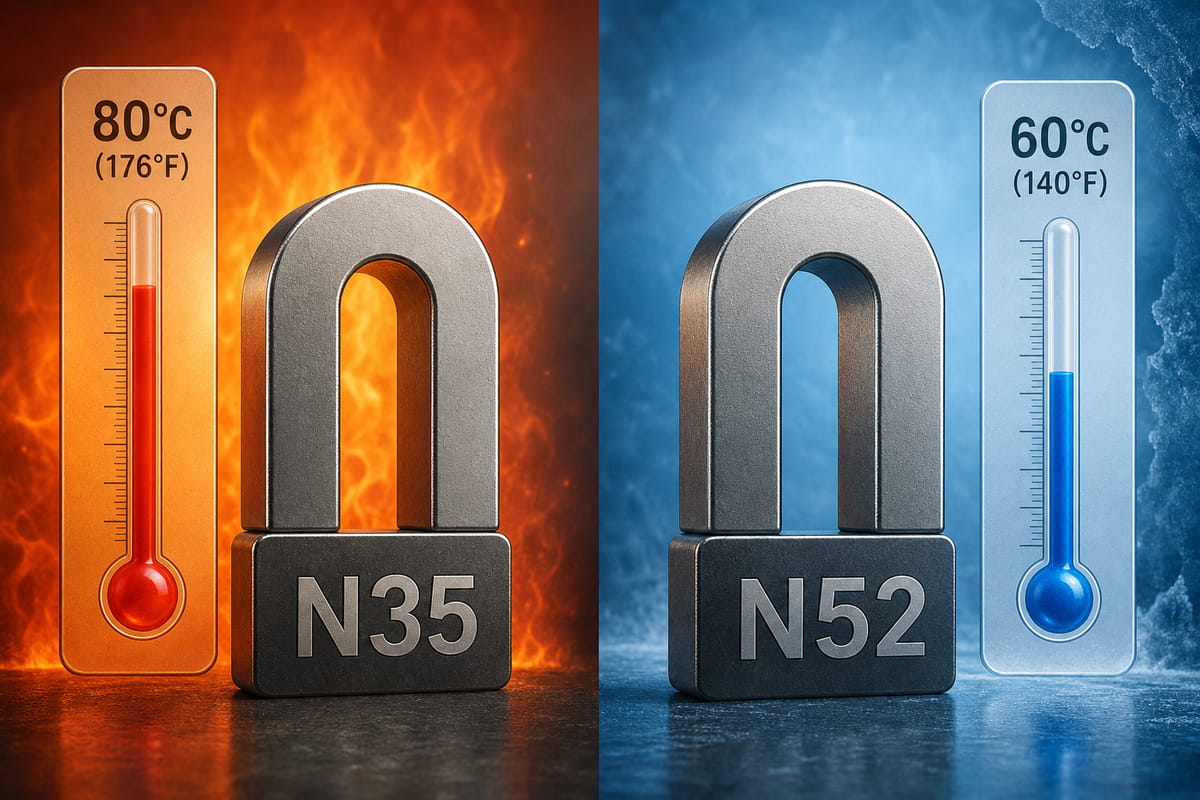
This one surprises most people:
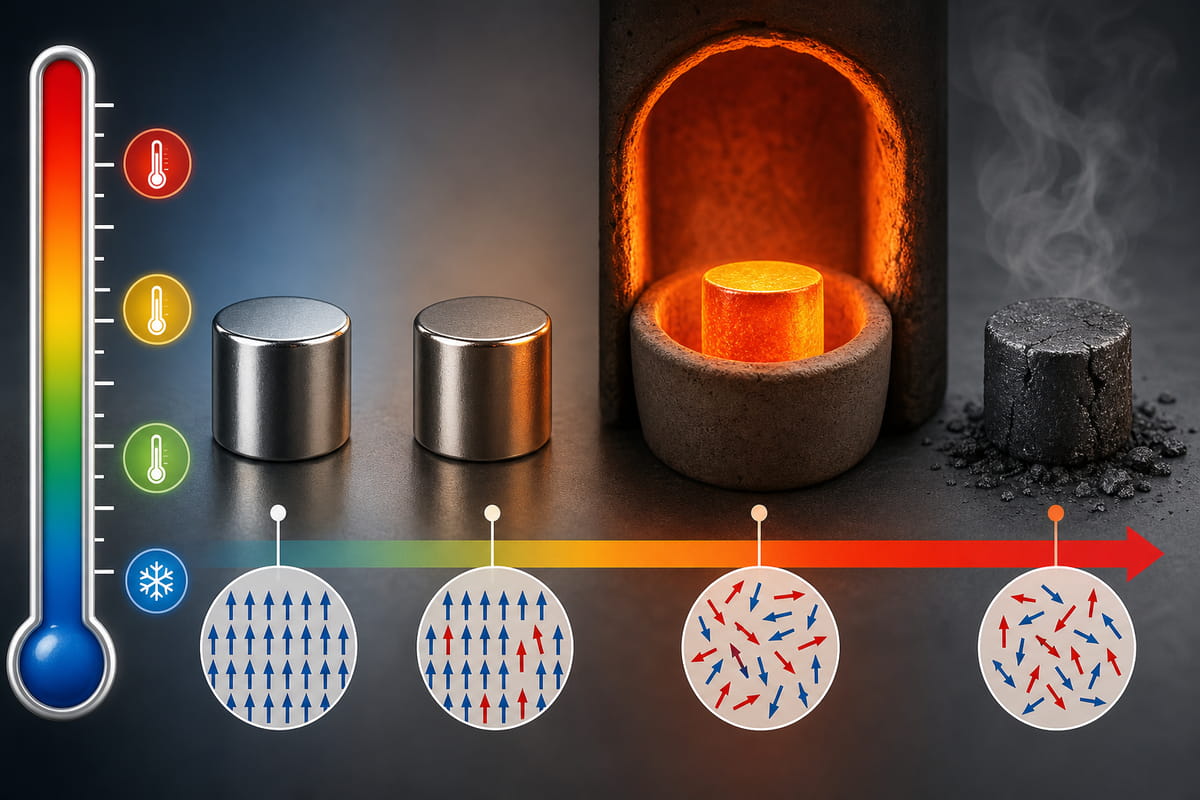
N35: Can handle up to 80°C (176°F)
N52: Typically limited to 60°C (140°F)
That 20-degree difference matters—especially in motors, outdoor equipment, or any application where heat builds up.
| Attribute | N35 Magnet | N52 Magnet |
|---|---|---|
| Max Energy Product | 35 MGOe | 52 MGOe |
| Surface Field | ~11,700 Gauss | ~14,500 Gauss |
| Relative Strength | Baseline | ~49% stronger |
| Cost | Budget-friendly | 30-50% more |
| Max Temp | 80°C | 60°C |
| Brittleness | Moderate | More prone to chipping |
When to Choose Each
When Should You Choose N35 Magnets?

In my experience, N35 is the right choice when:
1. You’re cost-sensitive. Buying in bulk? Working with a tight budget? N35 delivers excellent bang for your buck.
2. You need general-purpose strength. Applications like:
- Cabinet closures
- Tool holders
- Craft projects
- Fridge magnets
- Educational kits
- Basic sensors
3. Temperature matters. That extra 20°C of heat resistance can be crucial for outdoor or industrial uses.
4. You’re new to neodymium magnets. Start with N35. They’re more forgiving and safer to handle.
Pro Tip: For most consumer products, N35 is plenty strong. I’ve used it in dozens of projects. It’s my go-to unless I specifically need maximum strength.
When Should You Choose N52 Magnets?
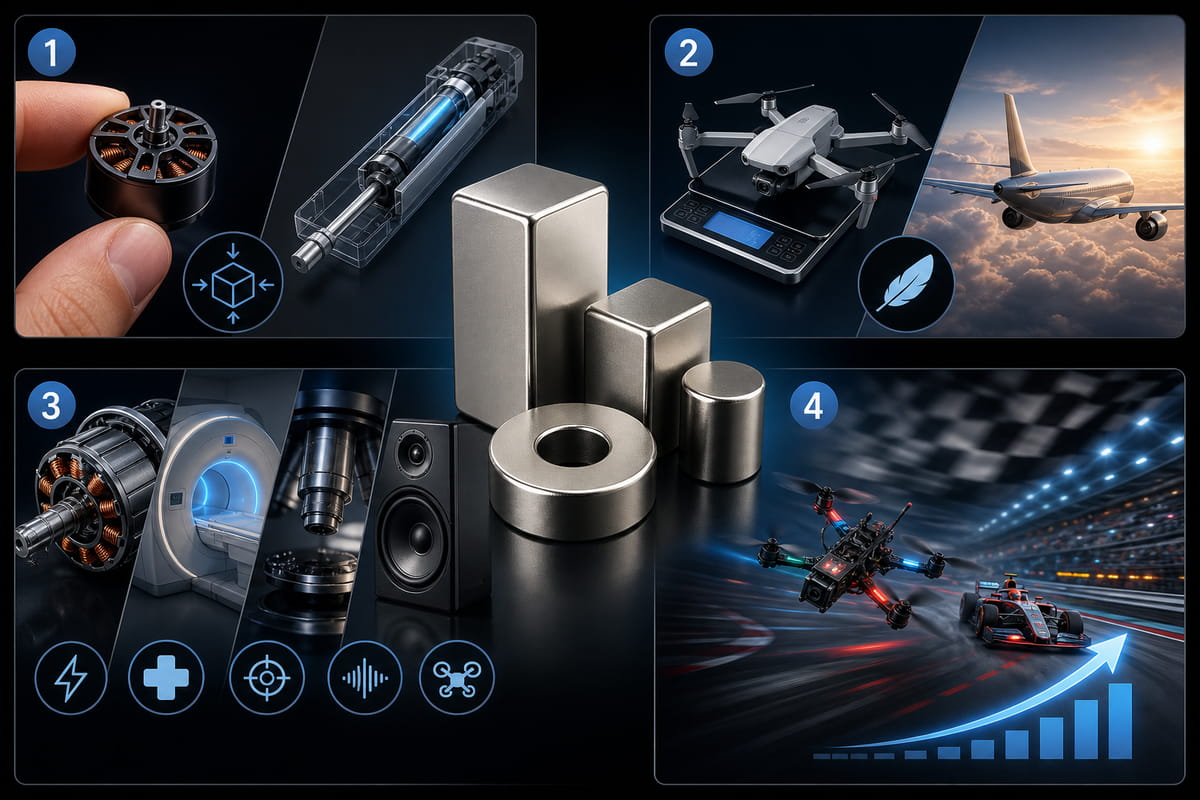
N52 magnet shines when:
1. Space is tight. Building a compact motor? Designing a miniature actuator? N52 gives you maximum force in minimum volume.
2. Weight matters. In aerospace or portable devices, using a smaller N52 instead of a larger N35 can save critical grams.
3. Performance is non-negotiable. High-end applications like:
- High-efficiency electric motors
- Advanced medical devices
- Precision instruments
- Premium audio equipment
- Racing drone motors
4. You need a competitive edge. Sometimes that extra 49% strength separates your product from the competition.
Real-World Example
I worked with an engineer who switched from N35 to N52 in a drone motor. Results?
- 22% increase in thrust
- 18% reduction in motor size
- 15% improvement in flight time
Was it worth the extra cost? For a high-end racing drone? Absolutely.
What About the Middle Ground?

Here’s something most guides skip:
N42 magnets exist.
And for many applications, N42 is the sweet spot. It’s about 20% stronger than N35 but costs significantly less than N52.
If you’re unsure which grade you need, N42 is a safe compromise. It gives you extra magnetic performance without the premium price tag of N52.
Safety Considerations
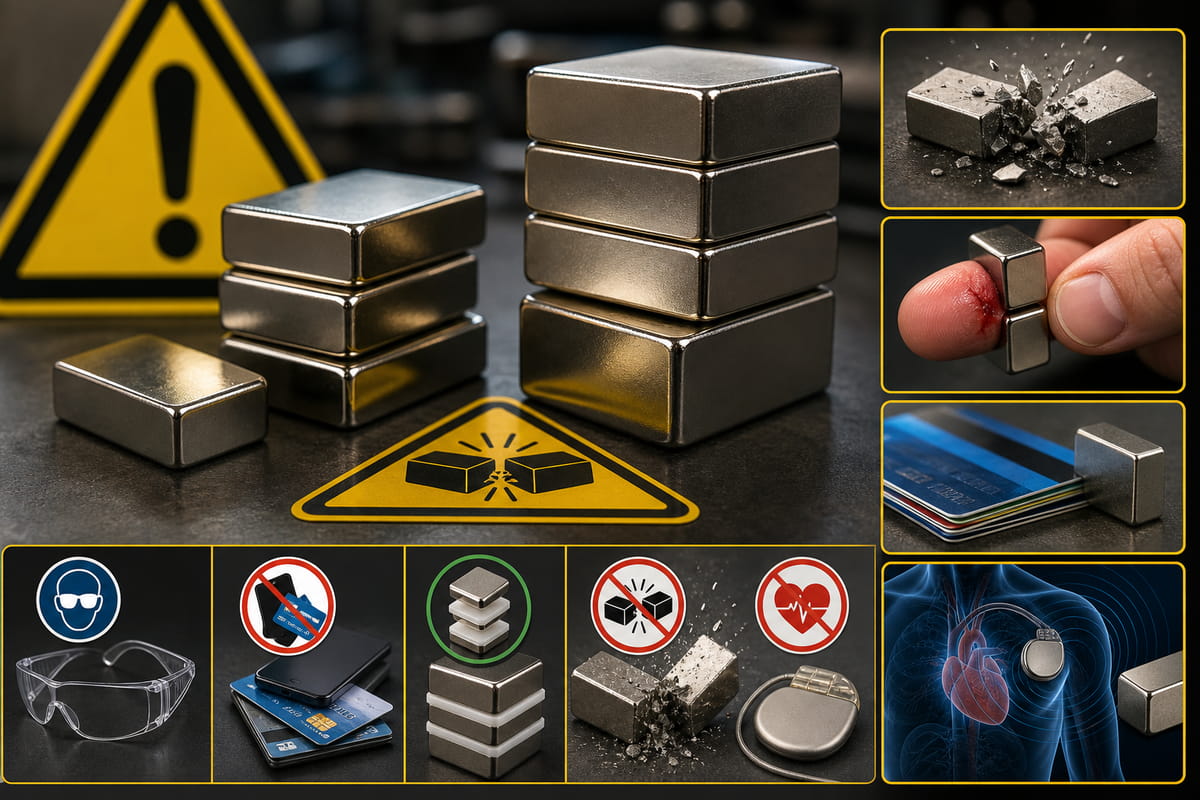
Both grades are crazy strong. Respect them.
N52 magnets are particularly hazardous. I’ve seen them:
- Snap together and shatter (flying fragments are dangerous)
- Pinch fingers hard enough to break skin
- Erase credit cards from 6 inches away
- Damage pacemakers and medical devices
Safety tips:
- Always wear safety glasses when handling
- Keep them away from electronics and credit cards
- Store with spacers between magnets
- Never let them snap together uncontrolled
Bottom line? Start with N35 if you’re new to strong magnets.
How to Choose between N35 and N52 Magnets: A Simple Framework
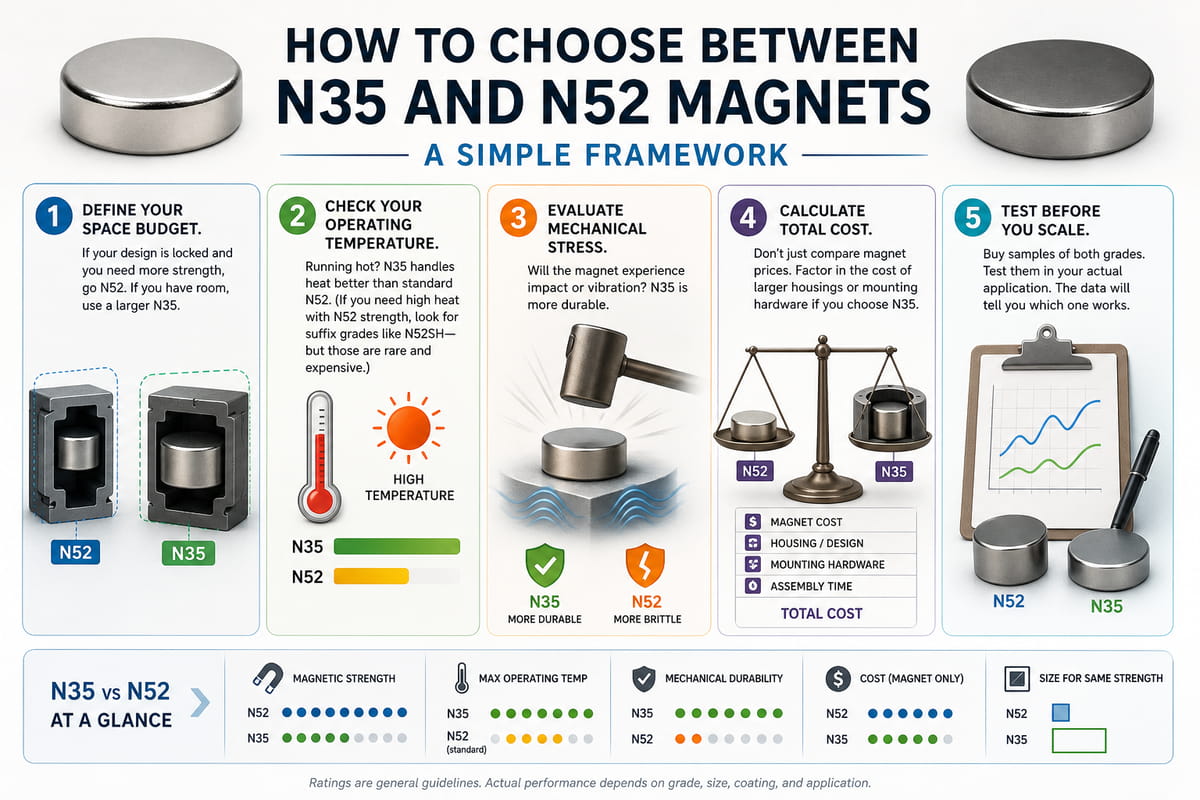
Follow these steps:
- 1. Define your space budget. If your design is locked and you need more strength, go N52. If you have room, use a larger N35.
- 2. Check your operating temperature. Running hot? N35 handles heat better than standard N52. (If you need high heat with N52 strength, look for suffix grades like N52SH—but those are rare and expensive.)
- 3. Evaluate mechanical stress. Will the magnet experience impact or vibration? N35 is more durable.
- 4. Calculate total cost. Don’t just compare magnet prices. Factor in the cost of larger housings or mounting hardware if you choose N35.
- 5. Test before you scale. Buy samples of both grades. Test them in your actual application. The data will tell you which one works.
Conclusion
So what’s the verdict on N35 vs N52 magnets?
Both are incredible materials. The “best” choice depends entirely on your specific needs.
- Choose N35 when you want reliable, cost-effective magnetic power for general applications. It’s the safe, smart choice for 90% of projects.
- Choose N52 when you need maximum strength, space is limited, or performance is worth the premium.
My advice? Start with N35 unless you have a specific reason to need N52’s extra power. You can always upgrade later.
Remember: both grades are light-years ahead of ceramic or ferrite magnets. You really can’t go wrong with either option.
Just match the grade to your needs, respect the power these magnets pack, and you’ll be amazed at what you can build.
P.S. — Need help figuring out which grade fits your specific application? Drop me a comment below. I’ve helped hundreds of engineers and makers pick the right magnets for their projects.