Quick Summary:
Bar magnets are permanent magnets used in sensors, motors, speakers, and industrial magnetic separators for removing metal contaminants. They are also standard tools for classroom experiments and DIY compasses.
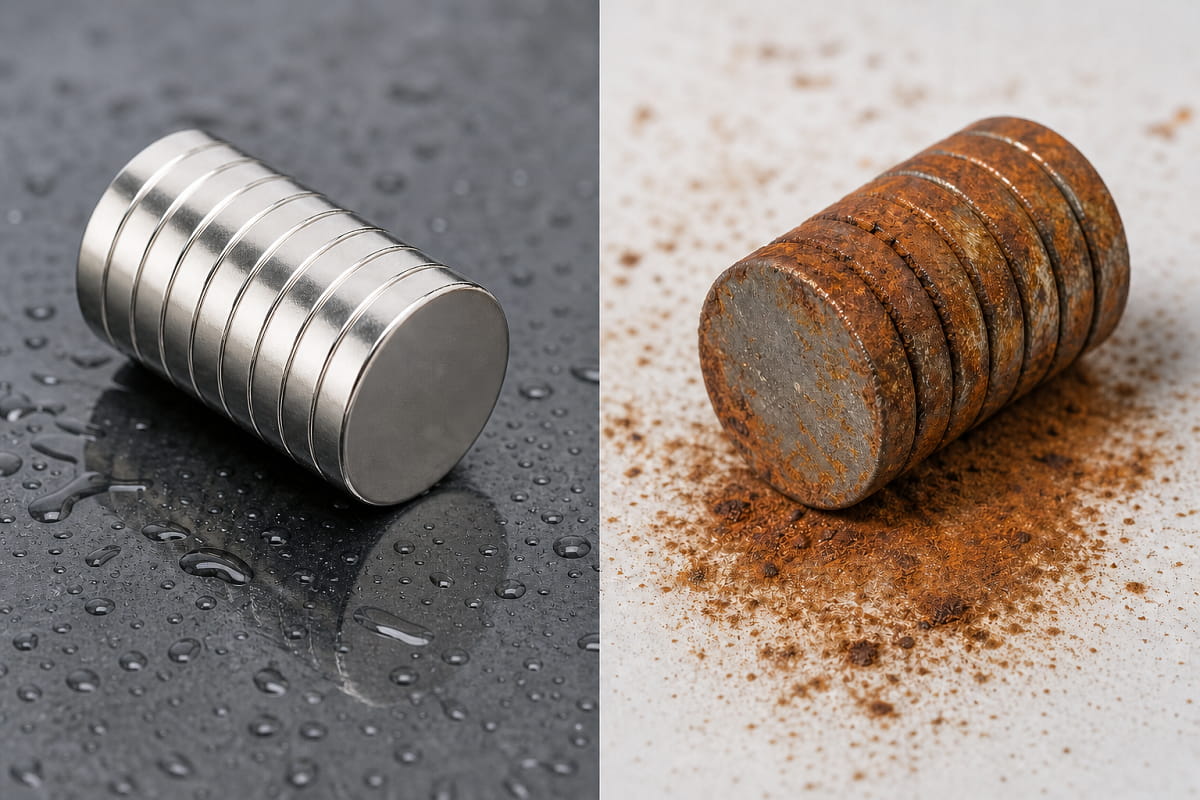
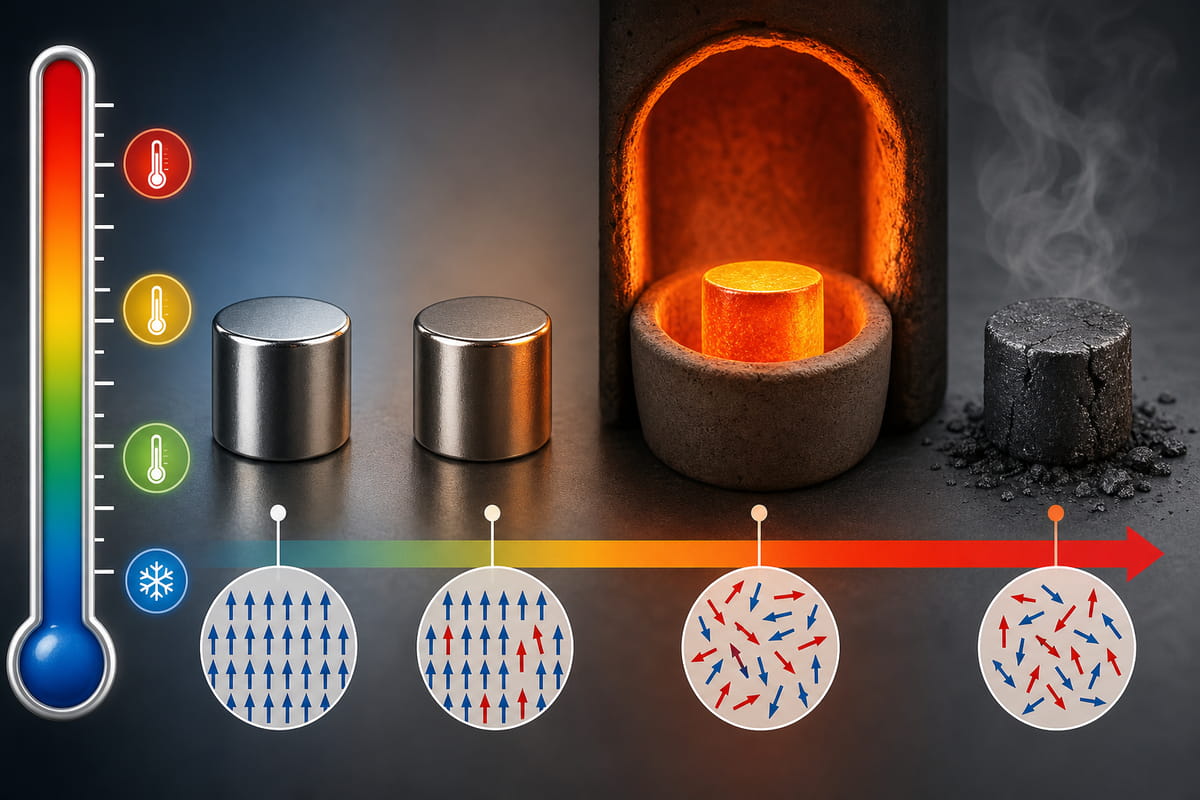
However, their magnetism can weaken over time if dropped, heated, or exposed to strong opposing fields. For reliable performance, choose a magnet strength suitable for your specific application (e.g., neodymium for sensors, alnico for high-heat environments).
Bar magnets are everywhere, they’re in your speakers, and your fridge. Even the door latch on your cabinet.
And in 2026, they’re more important than ever.
In this guide, as a professional custom bar magnets manufacturer, I’m going to show you exactly the uses of bar magnets — from simple classroom experiments to high-tech industrial applications.
Let’s dive in.
What Is a Bar Magnet?
A bar magnet is a rectangular (or cylindrical) piece of magnetic material. Usually made from alnico (aluminum, nickel, cobalt), neodymium, or ferrite.
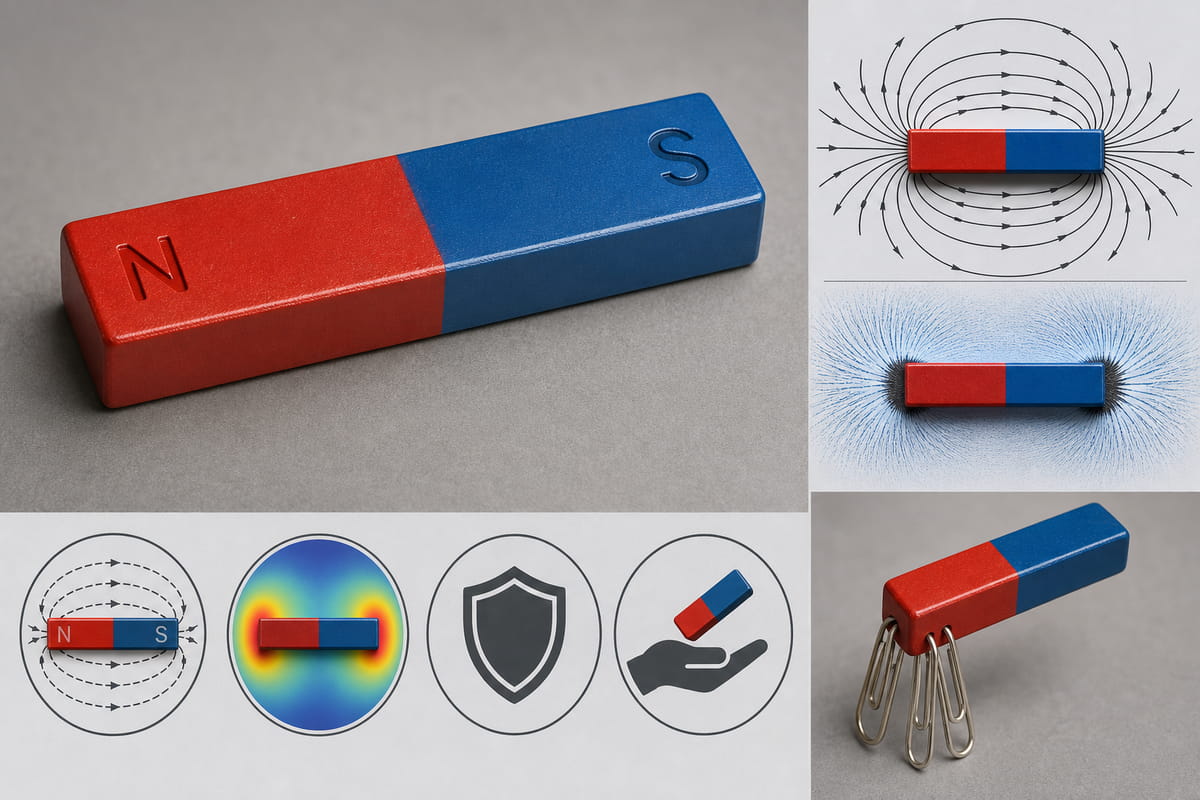
Here’s what makes them special:
- Two poles — north and south, one at each end
- Strongest at the poles — the magnetic field is weakest in the middle
- Permanent magnetism — they stay magnetized without electricity
- Simple shape — easy to handle and integrate into devices
Think of it like this:
A bar magnet is the “Swiss Army knife” of magnets. Simple, reliable, and incredibly versatile.
Now let’s get to the 11 real world uses of bar magnets.
What Are Bar Magnets Used For?
1. Educational Demonstrations
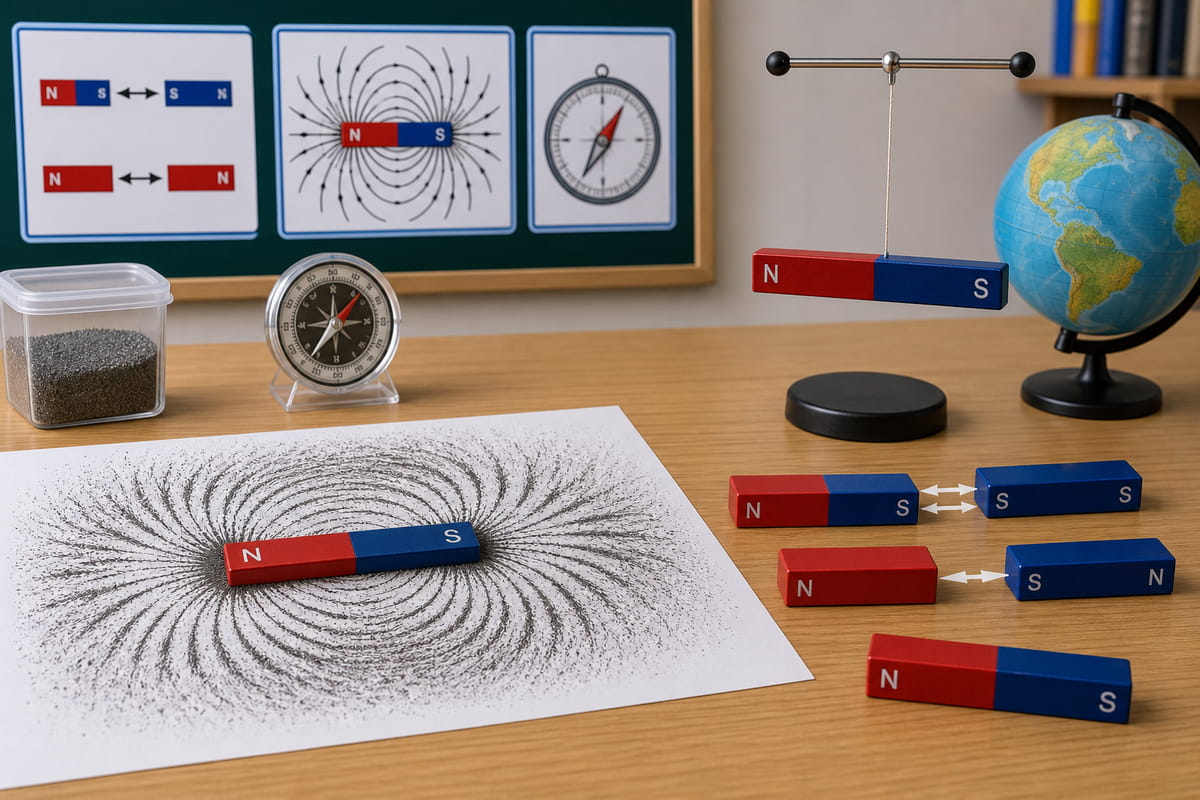
This is where most people first encounter bar magnets.
You’ve probably done this yourself:
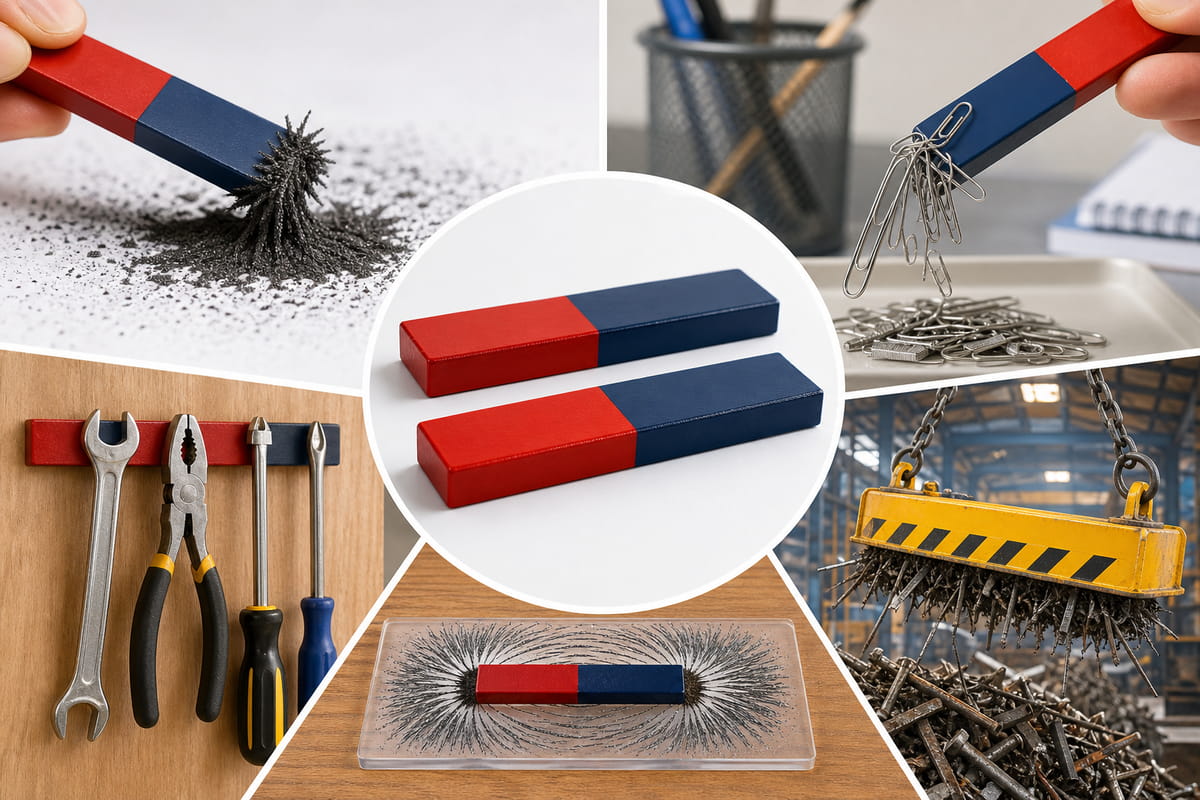
Sprinkle iron filings on a sheet of paper. Place a bar magnet underneath. Watch the filings arrange themselves into those beautiful curved lines.
That’s the magnetic field, visualized.
Why it works:
Bar magnets are perfect for teaching because they’re easy to handle and their field lines are clear and predictable. Students can see:
- Attraction and repulsion — opposite poles attract, like poles repel
- Magnetic field mapping — using iron filings or a compass
- Polarity identification — suspended bar magnet always points north-south
Pro Tip: If you’re a teacher, get a set of colored bar magnets (red for north, blue for south). It makes the concepts click instantly.
2. Sensors and Switches

Here’s something you probably didn’t know:
That automatic door at the grocery store? It might use a bar magnet.
Reed switches are tiny devices that contain two magnetic contacts. When a bar magnet gets close, the contacts snap together. This completes a circuit.
Applications include:
- Proximity sensors — detect when something is nearby
- Position sensors — know where a part is in a machine
- Speed sensors — count rotations in motors
- Magnetic door switches — tell you when a door is open or closed
I personally recommend using neodymium bar magnets for sensors. They’re strong enough to trigger switches from a distance, which gives you more design flexibility.
3. Industrial Magnetic Separation

If you’ve ever eaten breakfast cereal, thank a bar magnet.
No, really.
In food processing plants, bar magnets are used to remove metal contaminants from ingredients. Flour, sugar, spices, grains — they all pass through magnetic separators before reaching your plate.
How it works:
A stainless steel tube houses a powerful bar magnet. The tube is placed in a chute or pipeline. As material flows over it, any ferrous particles (iron, steel, etc.) get stuck to the surface.
Then workers simply clean the bar and put it back.
The same technology is used in:
- Recycling — separate ferrous metals from waste
- Plastics — remove metal fragments from pellets
- Pharmaceuticals — ensure purity of powders and tablets
- Mining — protect crushers from metal debris
Bottom line? Bar magnets are the unsung heroes of quality control.
4. Motors and Generators
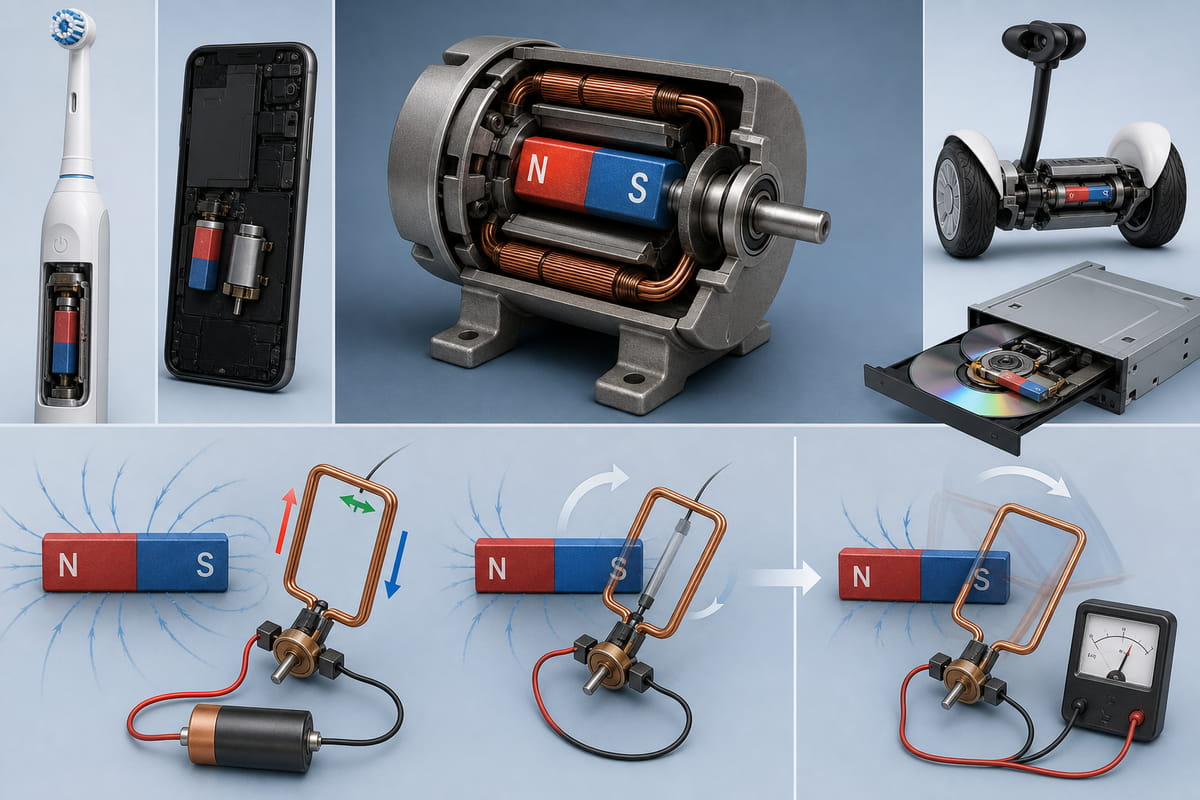
Every electric motor needs a magnetic field to work.
And bar magnets provide that field in many small motors.
Think about:
- Electric toothbrushes
- Vibration motors in smartphones
- Balance car motors — those self-balancing scooters
- CD/DVD drives
These all use bar magnets as the rotor or stator.
Here’s the simple explanation:
When electricity flows through a coil of wire near a bar magnet, it creates a force that spins the coil. That spinning motion is what powers the device.
And generators work in reverse — spinning the coil near a bar magnet creates electricity.
5. Magnetic Door Latches
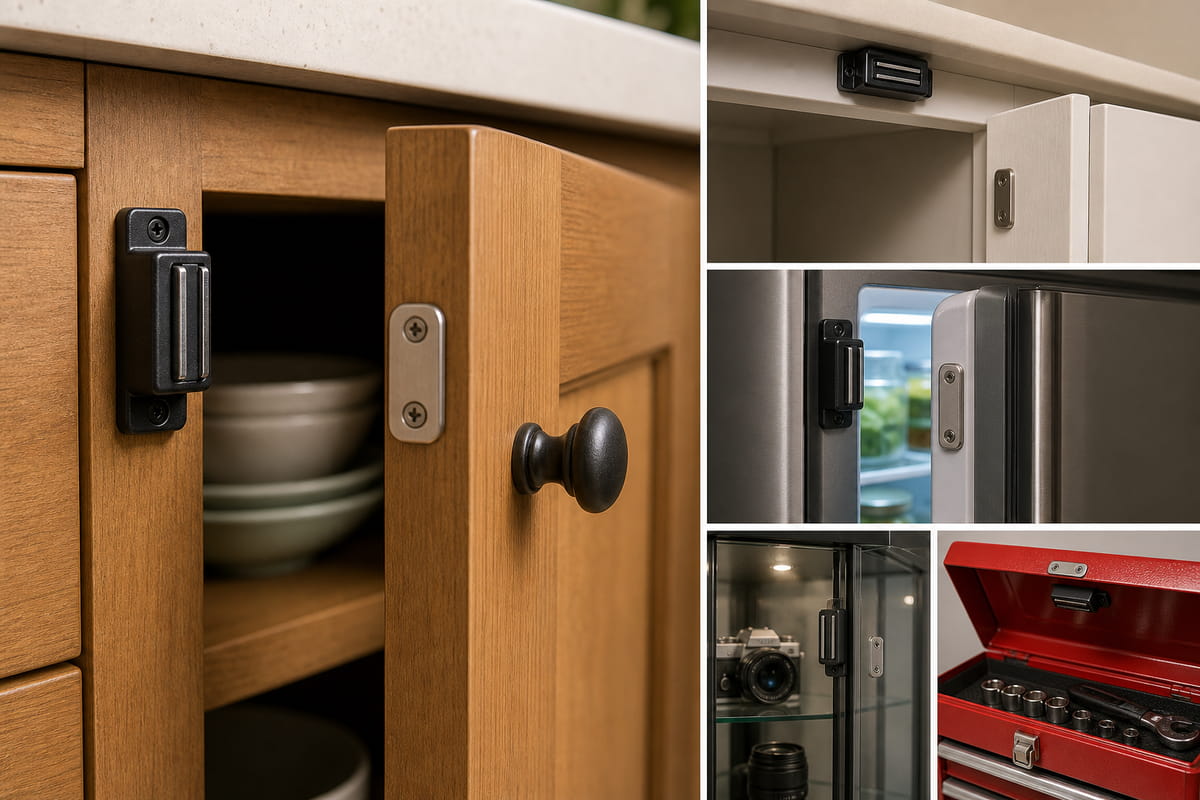
Ever noticed how some cabinet doors close with a satisfying click?
That’s a bar magnet at work.
Bar magnets are commonly used as magnetic door catches or latches. They’re simple, reliable, and never wear out like mechanical springs.
Here’s why they’re better than traditional latches:
- No moving parts — nothing to break
- Silent operation — no loud clanking
- Easy installation — just screw into place
- Self-aligning — the magnet pulls the door shut
You’ll find them in:
- Kitchen cabinets
- Refrigerator doors
- Display cases
- Tool chests
Pro Tip: If your cabinet door is hard to close, check the magnetic latch. Sometimes a little dust on the magnet reduces its grip.
6. Sound Devices
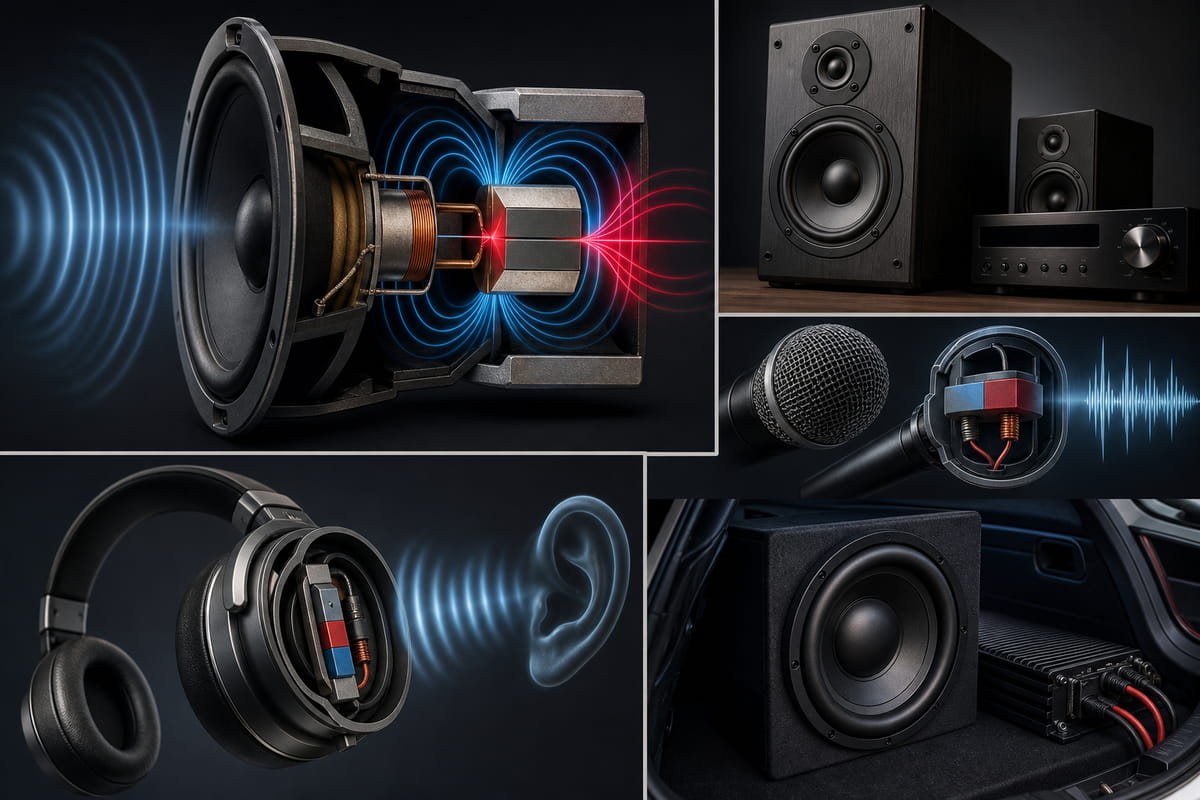
Your speakers are full of magnets.
In fact, without bar magnets, you wouldn’t be able to hear the audio in your life.
Here’s the science:
A bar magnet sits inside a coil of wire attached to a speaker cone. When an electrical signal (your music) flows through the coil, it creates an alternating magnetic field. That field pushes and pulls against the bar magnet, causing the cone to vibrate. And that vibration = sound.
Same principle works in:
- Microphones — sound vibrations create electrical signals
- Headphones — tiny bar magnets in each earpiece
- Car audio systems — bigger magnets for more bass
The quality of the magnet directly affects sound quality. That’s why high-end speakers use neodymium bar magnets — they’re incredibly strong for their size.
7. Lab Stirrers
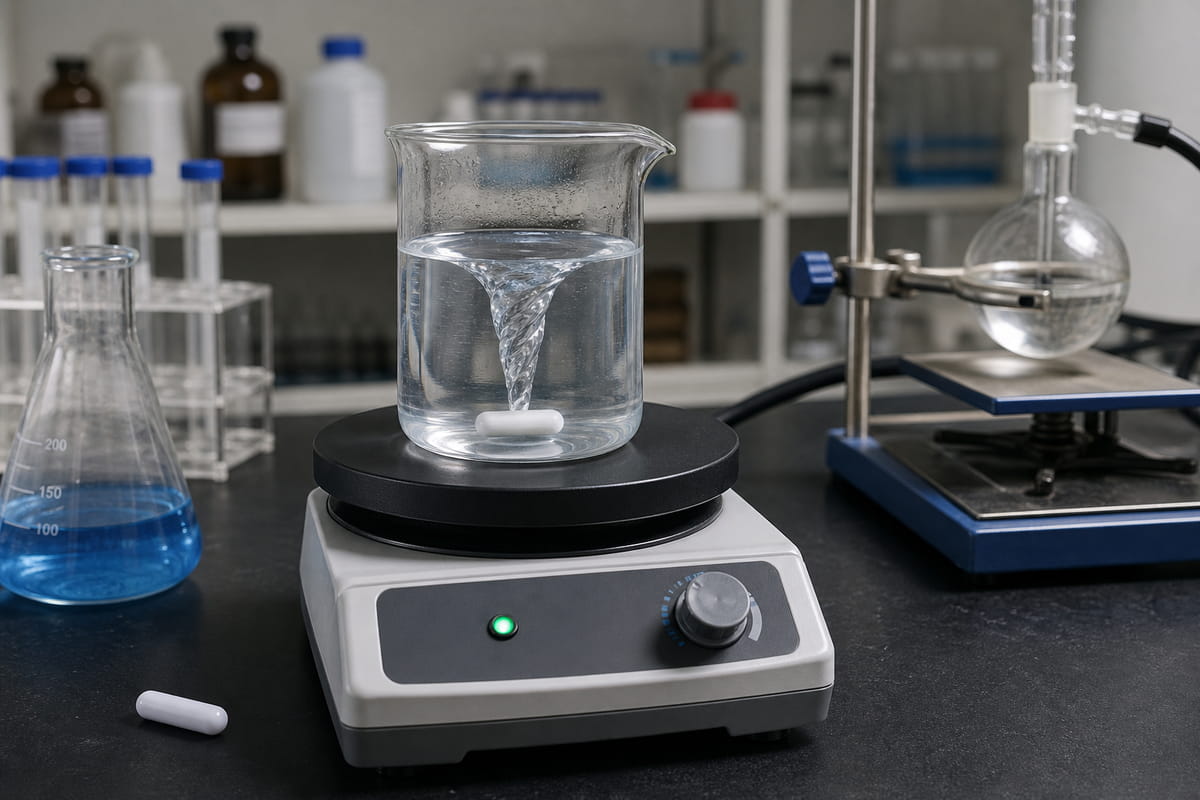
If you’ve ever done chemistry experiments, you’ve seen magnetic stirrers.
They look like this:
A small platform with a rotating magnet inside. You put a beaker with liquid on top, drop in a tiny magnetic stir bar (essentially a miniature bar magnet), and turn it on.
The spinning magnetic field causes the stir bar to rotate, mixing your solution.
Why this is awesome:
- No need to open the container — prevents contamination
- Consistent stirring speed — better than hand stirring
- Works with closed systems — you can stir under vacuum or inert gas
This is standard equipment in labs worldwide. And it all relies on a simple bar magnet.
8. Making a Compass
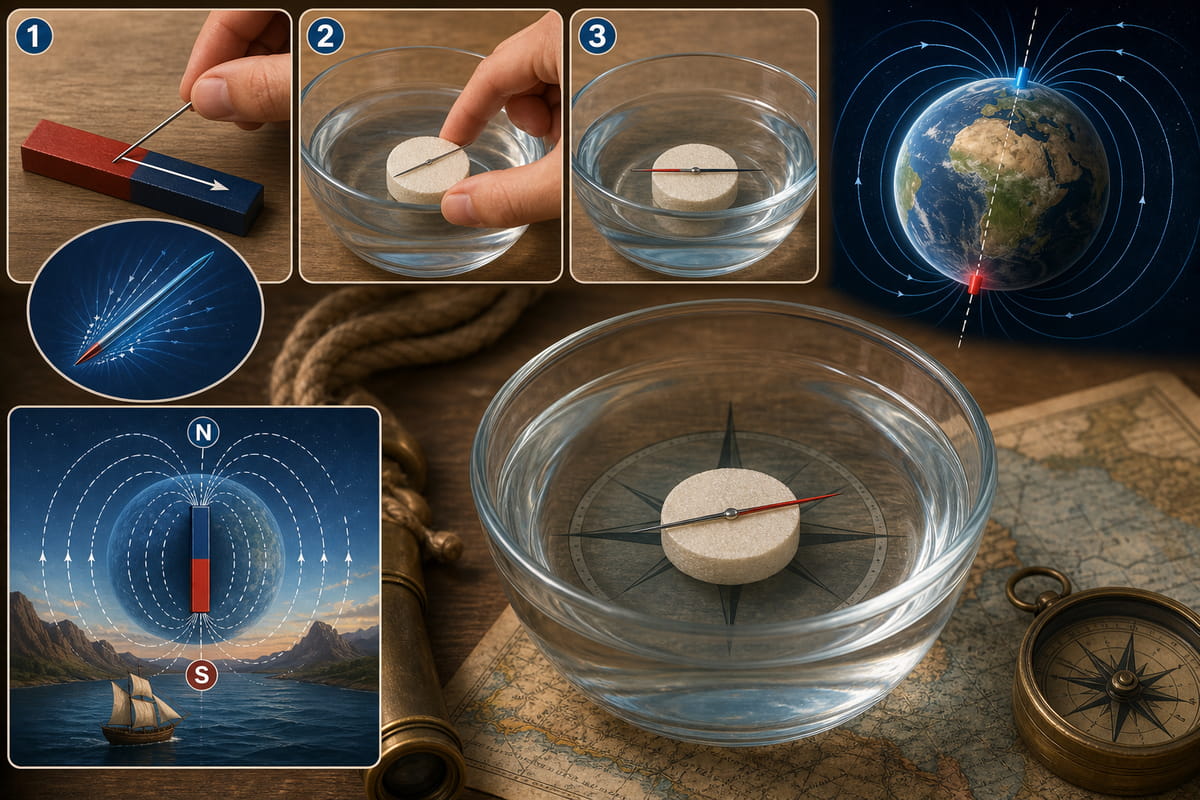
You can make a compass in about 30 seconds with a bar magnet.
Here’s how:
- 1. Magnetize a sewing needle by stroking it along a bar magnet 50 times (always in the same direction)
- 2. Float the needle on a piece of cork or foam in a bowl of water
- 3. Watch it align with Earth’s magnetic field
The end that points north is the needle’s north pole.
Why it works:
Earth itself acts like a giant bar magnet. Its magnetic field lines run from the south pole to the north pole (geographic). A freely suspended magnet will align with those lines.
This is the same principle that guided sailors for centuries. And it’s a fantastic classroom demonstration.
9. Magnetizing Other Objects
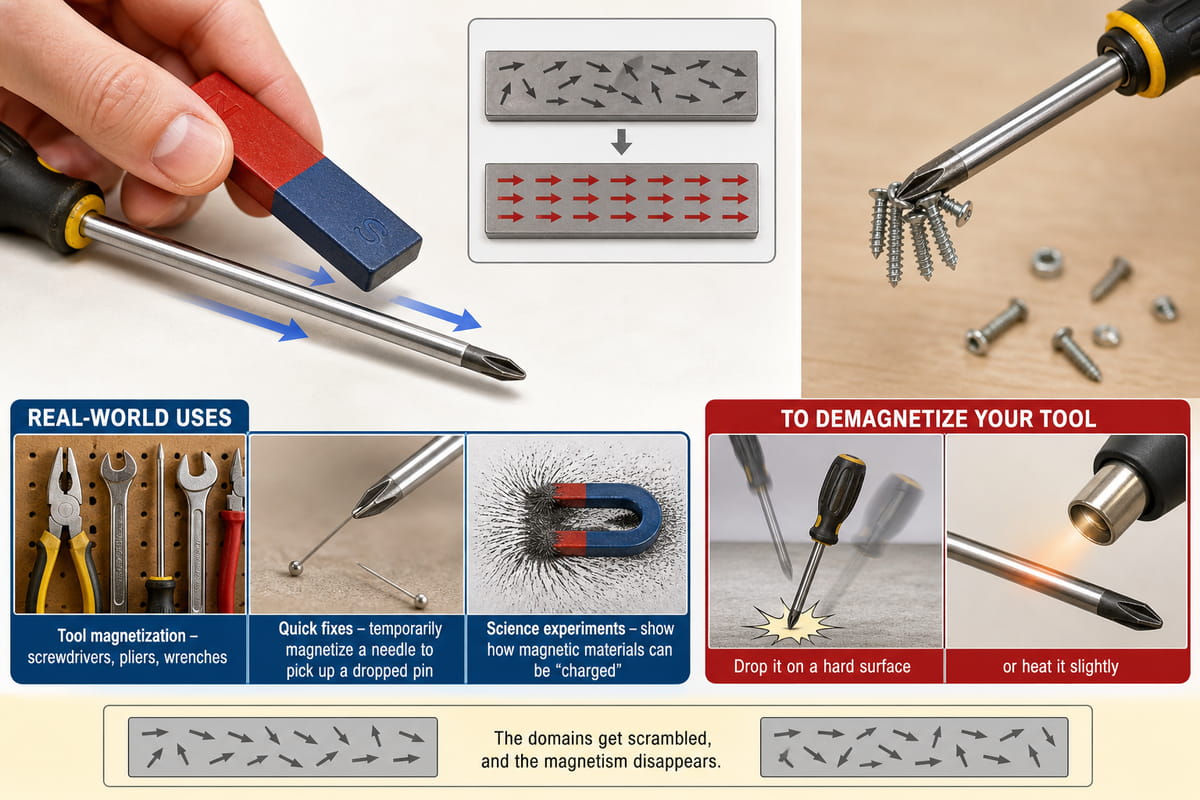
Bar magnets can “teach” other metals to become magnetic.
For example:
Rub a bar magnet along a steel screwdriver several times. Now that screwdriver can pick up small screws.
This works because the magnetic field aligns the magnetic domains inside the steel. The effect is temporary — it fades over time or with impact.
Real-world uses:
- Tool magnetization — screwdrivers, pliers, wrenches
- Quick fixes — temporarily magnetize a needle to pick up a dropped pin
- Science experiments — show how magnetic materials can be “charged”
To demagnetize your tool, just drop it on a hard surface or heat it slightly. The domains get scrambled, and the magnetism disappears.
10. Magnetic Curtains and Drapes

This one might surprise you.
Bar magnets are used in magnetic door curtains — those strips of plastic or fabric that hang in doorways (like in warehouses to keep insects out, or in freezers to keep cold air in).
Instead of traditional hooks or zippers, small bar magnets embedded in the curtain edges snap together. This makes it easy to walk through (the magnets separate) and automatically closes behind you (they snap back together).
You’ll also see them in:
- Mosquito nets for doors
- Screen curtains
- Shower curtains
Quick and convenient.
11. DIY Projects and Hobby Use
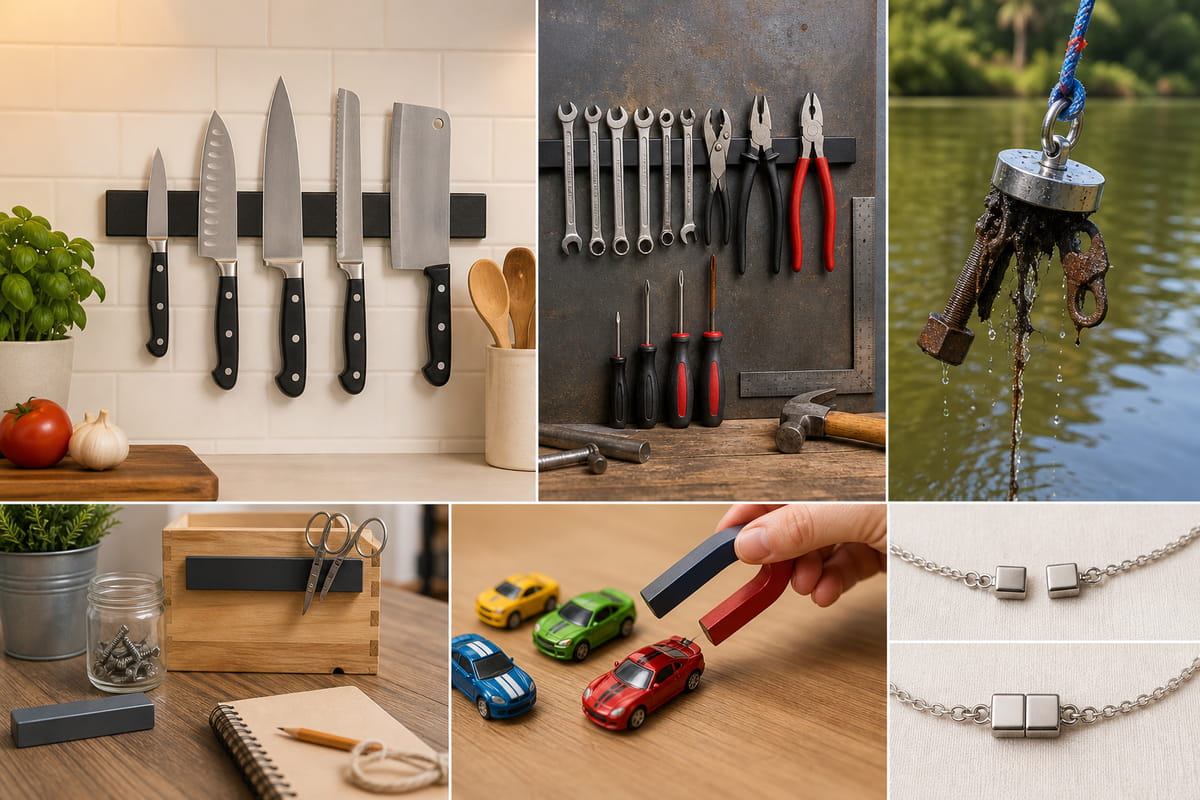
I’ve saved this one for last because it’s the most fun.
Bar magnets are perfect for DIY projects.
Here are a few ideas:
- Magnetic knife holder — mount a bar magnet on the wall for your knives
- Tool organization — stick bar magnets to a steel board to hold wrenches
- Fishing for metal — tie a strong bar magnet to a rope and “go fishing” in ponds for lost metal objects
- Toy cars — attach bar magnets to toy cars and use a horseshoe magnet to “drive” them around
- Magnetic jewelry clasps — small bar magnets make great necklace closures
The possibilities are endless.
In Conclusion
We’ve covered a lot of ground today.
From classroom experiments to industrial separators, from your favorite speakers to the latch on your kitchen cabinet — bar magnets are quietly doing their job everywhere.
Let me recap the top 11 uses:
- 1. Educational demonstrations — teach magnetism
- 2. Sensors and switches — detect position and motion
- 3. Industrial separation — remove metal contaminants
- 4. Motors and generators — convert electricity to motion
- 5. Door latches — hold doors closed
- 6. Sound devices — speakers and microphones
- 7. Lab stirrers — mix liquids without contamination
- 8. Compass making — find direction
- 9. Magnetizing tools — temporarily boost metal objects
- 10. Magnetic curtains — automatic closing
- 11. DIY projects — creative hobby uses
So the next time someone asks you “What are bar magnets used for?”, you’ve got the answer.
They’re simple tools with incredible power.
And now you know exactly where to find them.