Quick Summary:
Bar magnets are rectangular or cylindrical piece of permanent magnets with two poles and a predictable magnetic field. Their force is strongest at the ends (a North pole and a South pole).
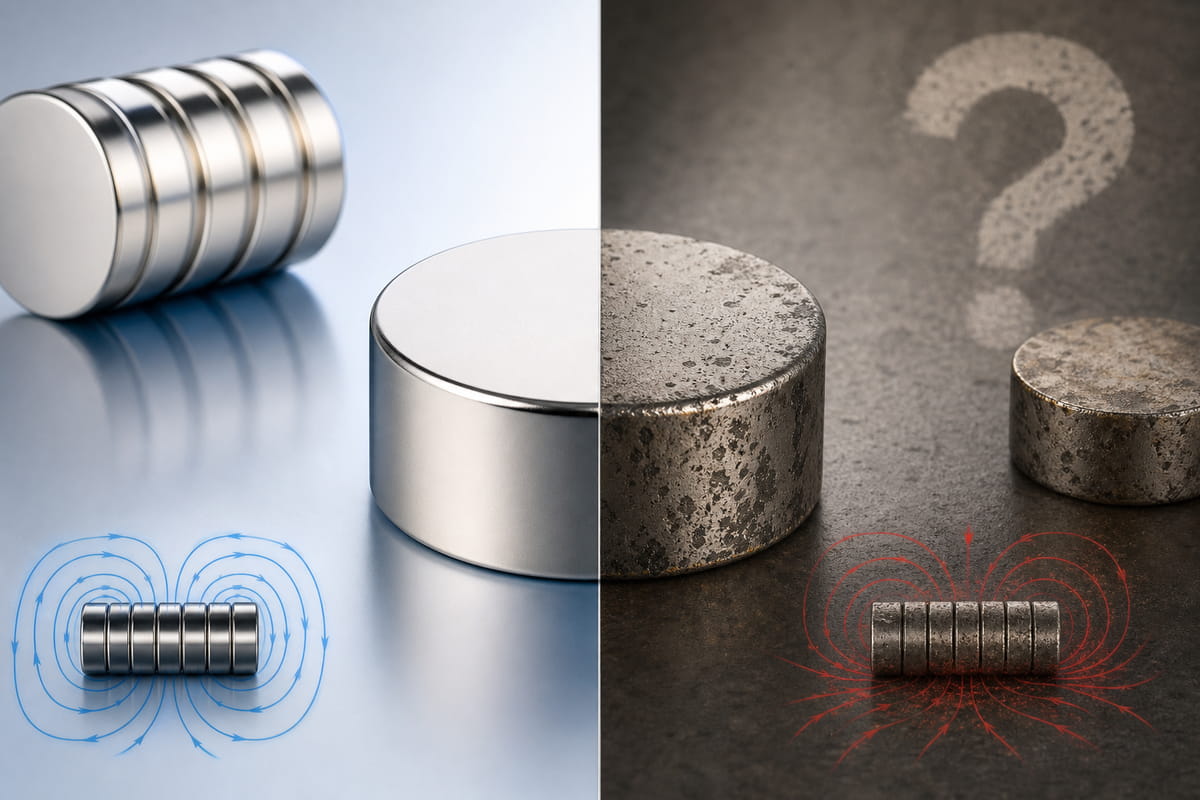
Material choice matters: neodymium offers maximum strength, while ferrite is low-cost and Alnico or SmCo handle heat better.
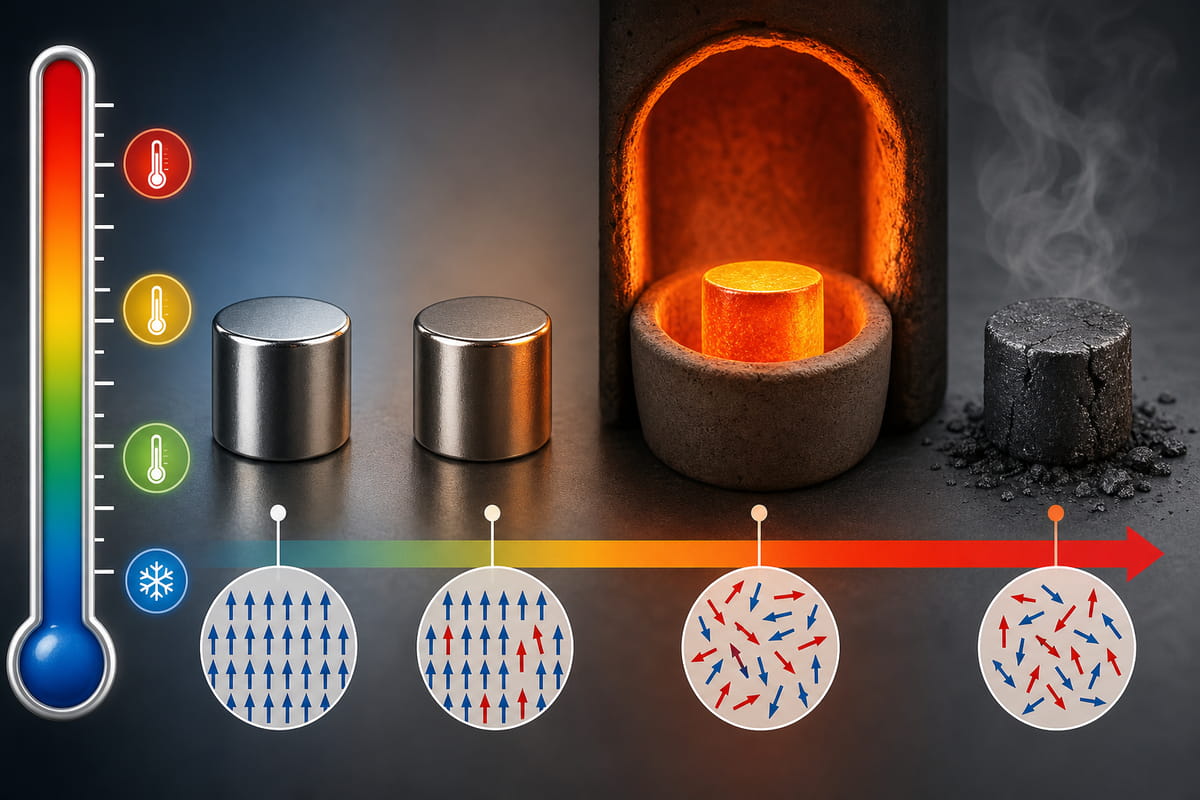
Store them properly to reduce the risk of weakening from heat, shock, or strong opposing fields.
A bar magnet is a rectangular or cylindrical piece of ferromagnetic material that produces a permanent magnetic field with two poles: North and South. Unlike electromagnets, it does not need electricity and stays “on” unless it is damaged by heat, impact, or strong opposing magnetic fields. Its magnetic force is strongest at the ends, and a freely suspended bar magnet will align with Earth’s magnetic field.
As a professional custom bar magnets manufacturer, I wrote this guide to cover how bar magnets work, the main material options, their strengths and limits, practical applications, and when a bar magnet is the right choice over an electromagnet.
What Is a Bar Magnet?
A bar magnet is a rectangular or cylindrical piece of ferromagnetic material that produces a permanent magnetic field. It has two distinct poles—a North pole and a South pole—where the magnetic force is most concentrated.
Unlike electromagnets, bar magnets don’t need electricity to work. They’re always “on.” That’s why they’re used in everything from classroom experiments to industrial separators.
Key Characteristics of Bar Magnets
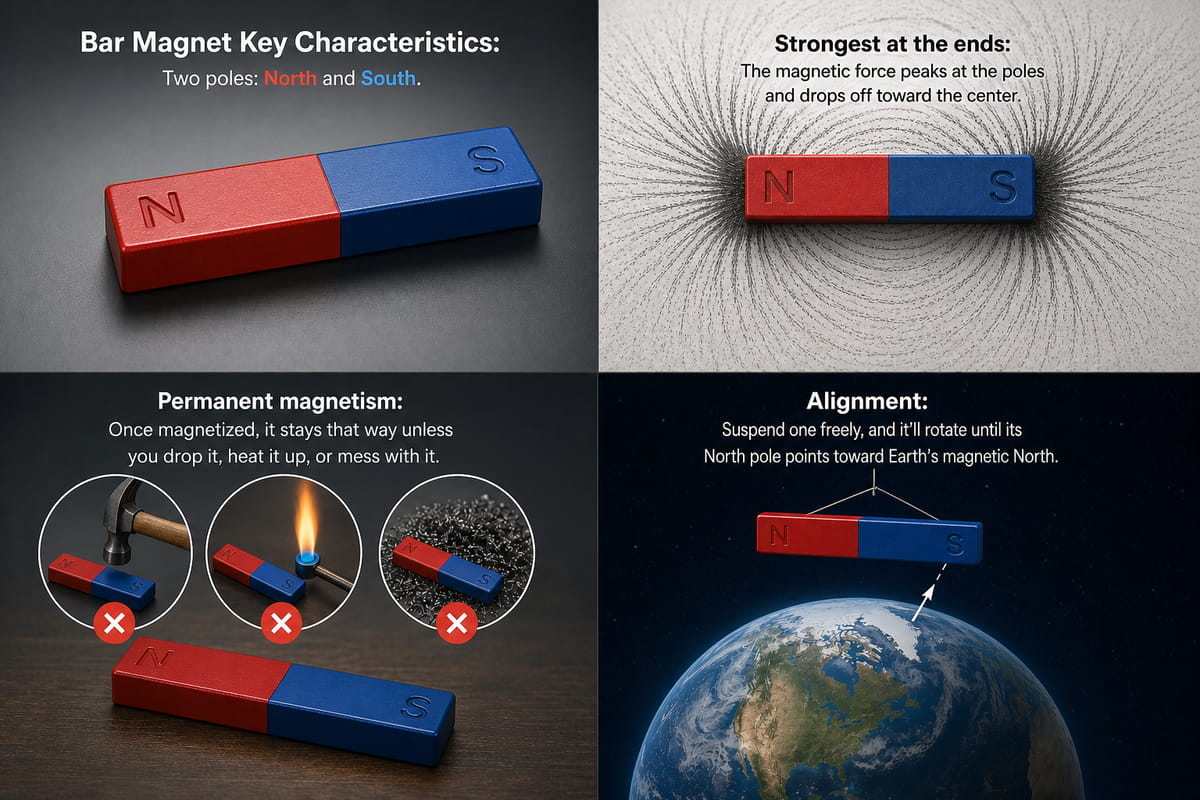
- Two poles: North and South. Every single time.
- Strongest at the ends: The magnetic force peaks at the poles and drops off toward the center.
- Permanent magnetism: Once magnetized, it stays that way (unless you drop it, heat it up, or mess with it).
- Alignment: Suspend one freely, and it’ll rotate until its North pole points toward Earth’s magnetic North.
Sound familiar? That’s exactly how a compass works.
How Does a Bar Magnet Actually Work?
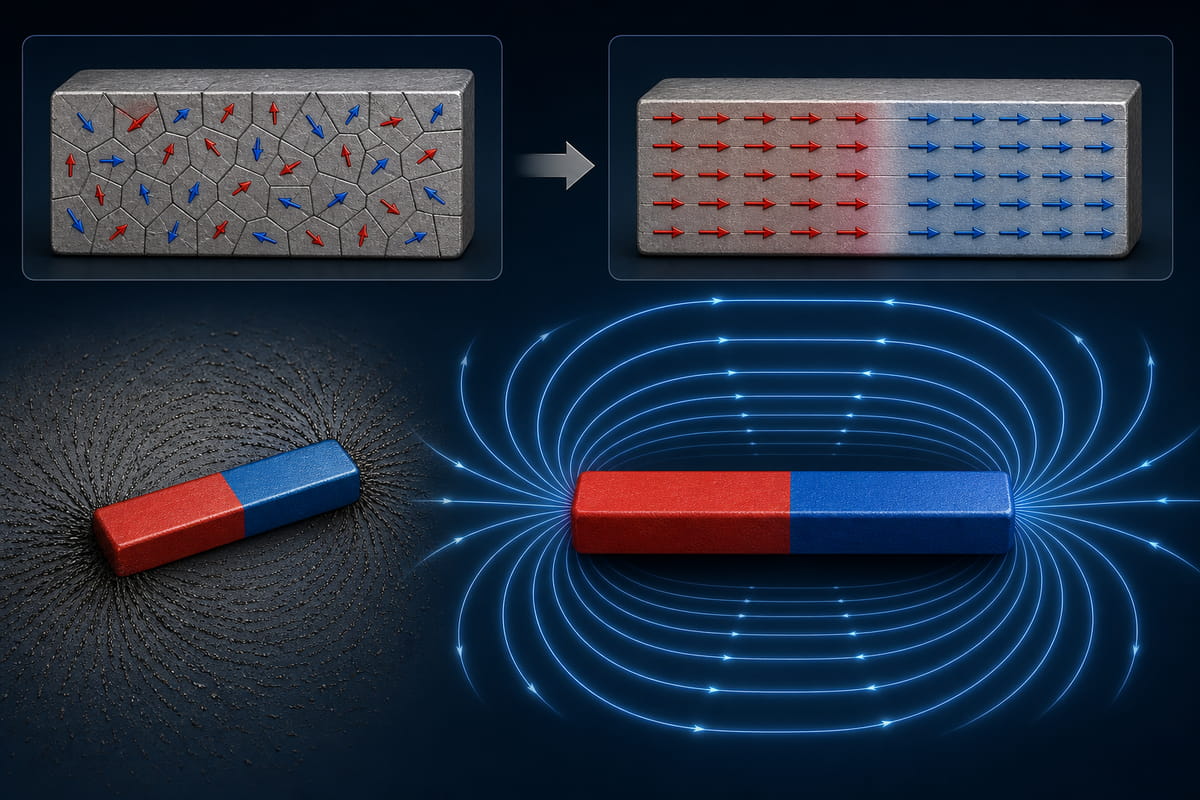
Inside every bar magnet, there are tiny magnetic regions called domains. Think of them like microscopic compass needles all pointing in random directions in an unmagnetized piece of metal.
When you magnetize a bar? Those domains line up.
The result? A unified, strong magnetic field that flows from the North pole to the South pole outside the magnet—and back again inside.
Pro Tip: If you cut a bar magnet in half, you don’t get two separate poles. You get two new bar magnets, each with its own North and South pole. That’s right—magnetic monopoles don’t exist (at least not yet).
The Magnetic Field Around a Bar Magnet
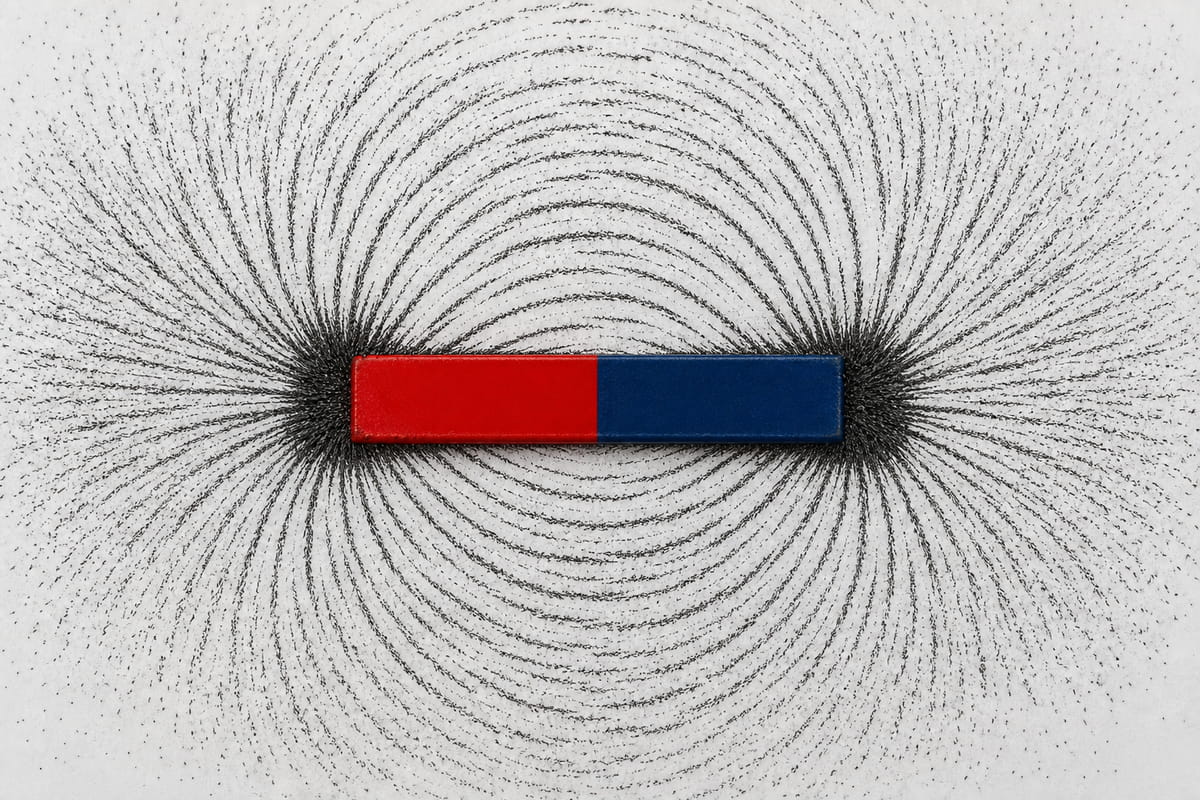
You can’t see it. But you can definitely see its effects.
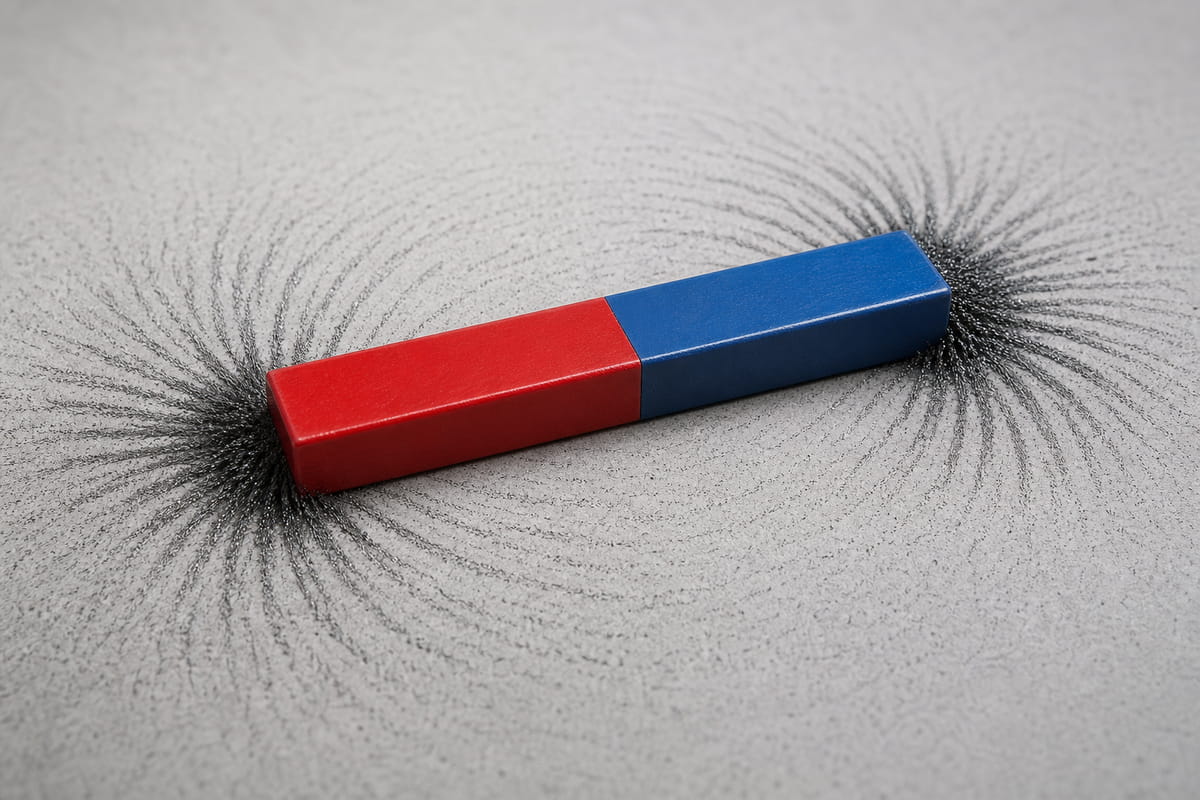
Sprinkle iron filings on a sheet of paper with a bar magnet underneath, and you’ll see the magnetic field lines emerge. They form continuous, non-intersecting loops.
Here’s what you need to know:
- Lines flow from North to South (outside the magnet)
- The closer the lines, the stronger the field
- The field is strongest at the poles
- Lines never cross
In 2026, researchers at Stanford used advanced imaging to map these fields at the nanoscale. The results? Confirmed what we’ve known for centuries—bar magnets are beautifully predictable.
Types of Bar Magnets
Not all bar magnets are created equal. Here are the main types:
By Shape
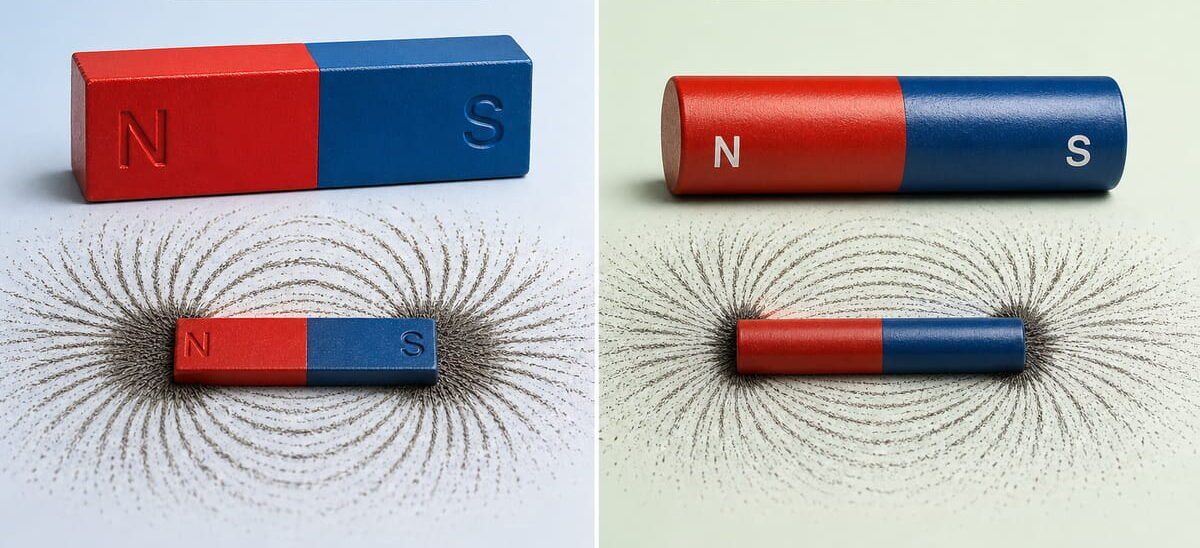
- Rectangular bar magnets: Classic block shape. Used in labs and demos.
- Cylindrical (rod) magnets: Round cross-section. Great for applications needing a concentrated field along the length.
By Material
| Material | Strength | Heat Resistance | Cost |
|---|---|---|---|
| Alnico (Al, Ni, Co, Fe) | Medium | Excellent | Moderate |
| Neodymium (NdFeB) | Very High | Good (up to ~80°C) | High |
| Ferrite (Ceramic) | Low to Medium | Good | Low |
| Samarium Cobalt (SmCo) | High | Excellent | Very High |
My recommendation: If you need maximum strength in a small package, go with neodymium. If you’re working in high-heat environments, Alnico or SmCo is your best bet.
Properties of Bar Magnets
Let me walk you through the properties that make bar magnets so useful.
1. Permanent Magnetism

Bar magnets are permanent magnets. They retain their magnetic field without any external power source. This is a huge advantage over electromagnets.
2. Attraction and Repulsion
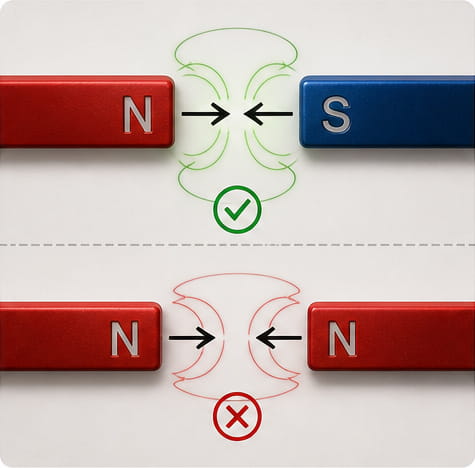
It’s the golden rule of magnetism:
- Opposite poles attract (North + South = pull together)
- Like poles repel (North + North = push apart)
You can demonstrate this with two bar magnets in about five seconds.
3. Directional Alignment

Freely suspend a bar magnet, and it will align itself with Earth’s magnetic field. The North pole points toward geographic North (which is actually a magnetic South pole—but that’s a story for another day).
4. Strength at the Poles
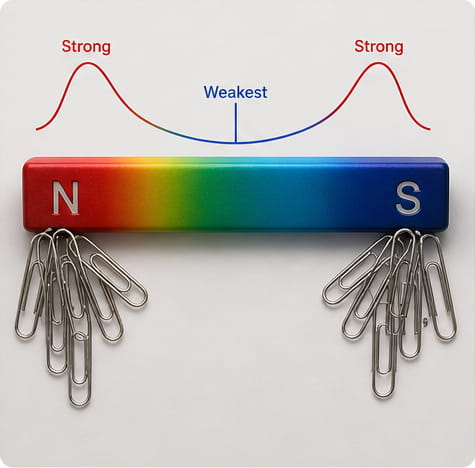
The magnetic force is strongest at the ends and weakest in the middle. That’s why a bar magnet picks up paper clips more easily at its tips.
Common Materials Used in Bar Magnets
Let’s get into the nitty-gritty.
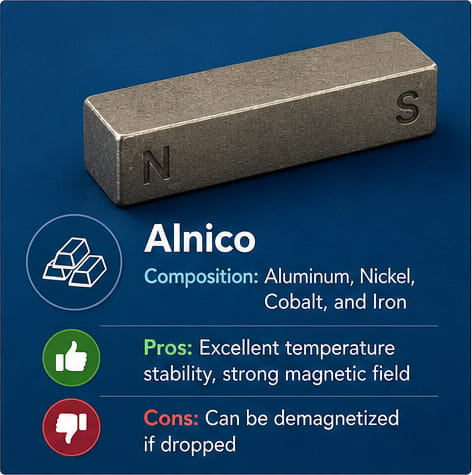
Alnico
- Composition: Aluminum, Nickel, Cobalt, and Iron
- Pros: Excellent temperature stability, strong magnetic field
- Cons: Can be demagnetized if dropped
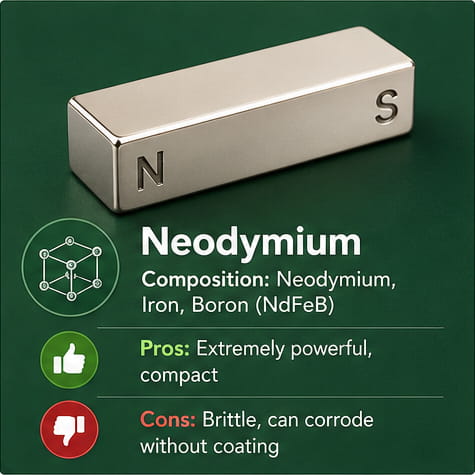
Neodymium
- Composition: Neodymium, Iron, Boron (NdFeB)
- Pros: Extremely powerful, compact
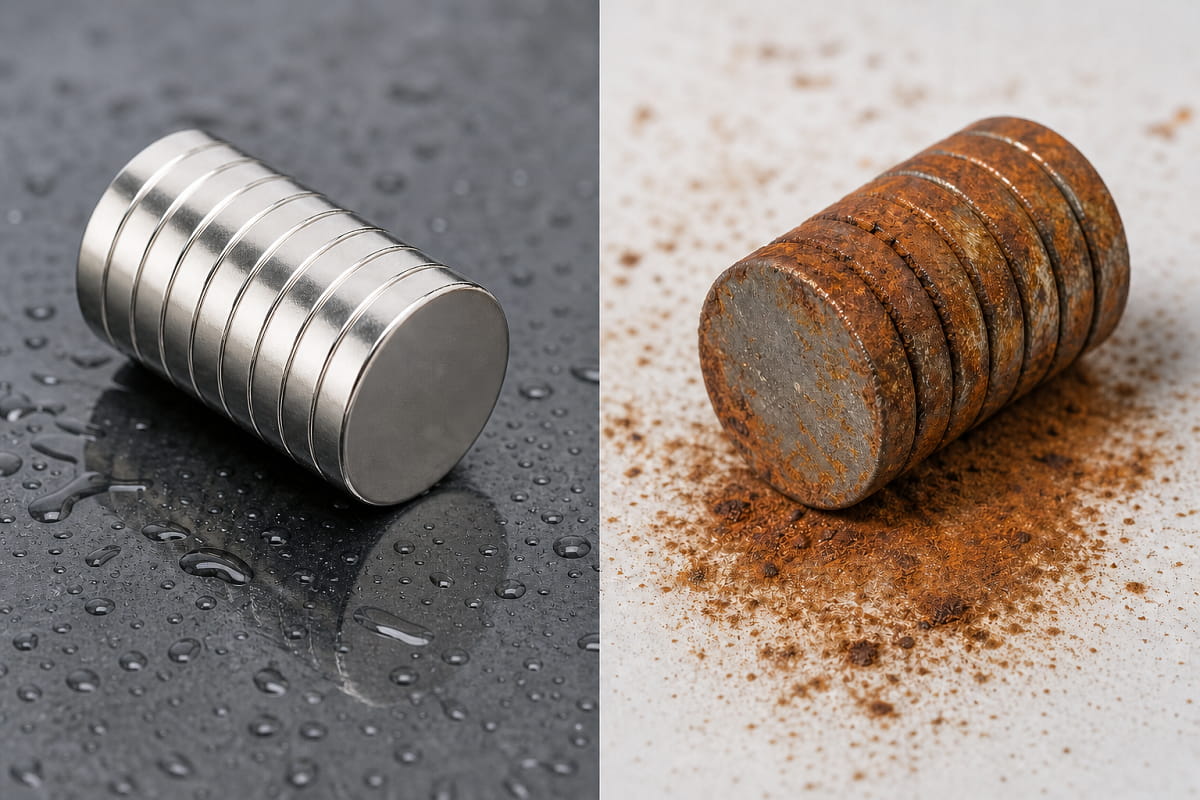
- Cons: Brittle, can corrode without coating
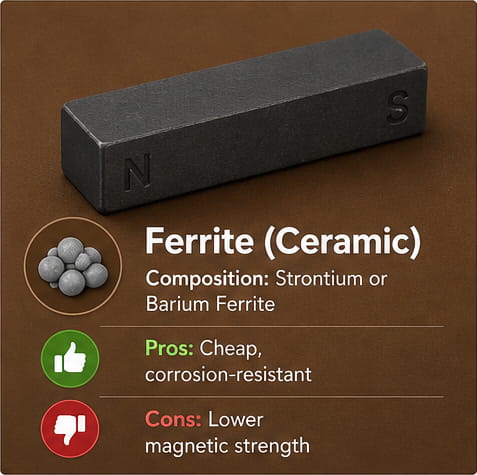
Ferrite (Ceramic)
- Composition: Strontium or Barium Ferrite
- Pros: Cheap, corrosion-resistant
- Cons: Lower magnetic strength
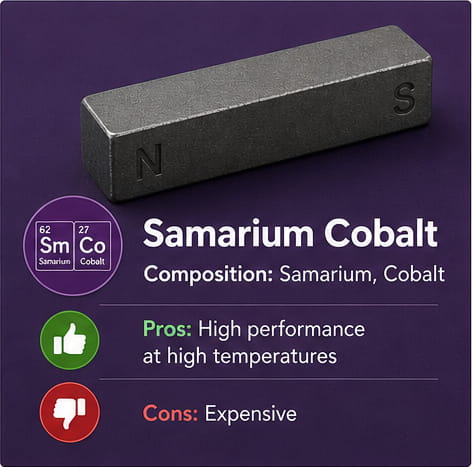
Samarium Cobalt
- Composition: Samarium, Cobalt
- Pros: High performance at high temperatures
- Cons: Expensive
Bottom line? Your choice depends on your application. Need raw power? Neodymium. Need to survive a hot environment? Alnico or SmCo. On a tight budget? Ferrite works just fine.
Practical Applications of Bar Magnets
Bar magnets aren’t just for science fairs. They’re everywhere.
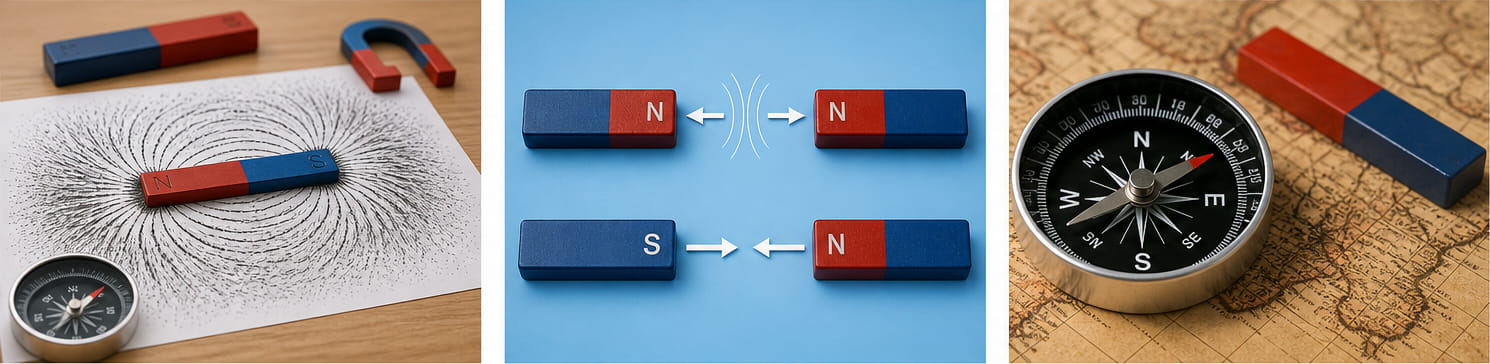
Educational Tools
- Demonstrating magnetic field lines with iron filings
- Teaching attraction and repulsion
- Showing how a compass works

Industrial and Manufacturing
- Magnetic separators: Remove metal contaminants from food, pharmaceuticals, and recycling streams
- Lifting and holding: Crane magnets, jigs, and fixtures
- Sensors and switches: Reed switches, Hall effect sensors
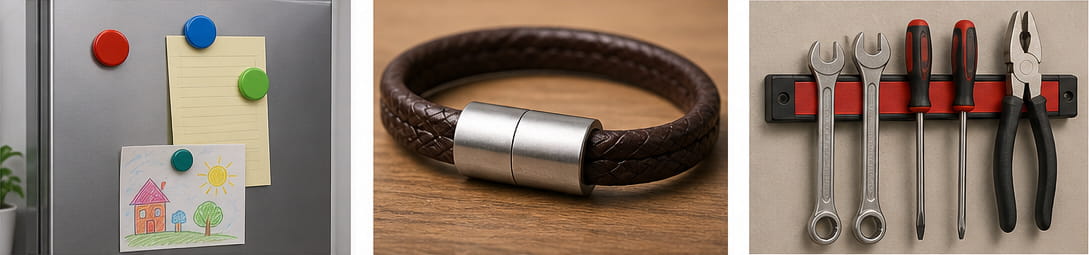
Everyday Uses
- Refrigerator magnets
- Magnetic clasps and closures
- Tool holders and organizers
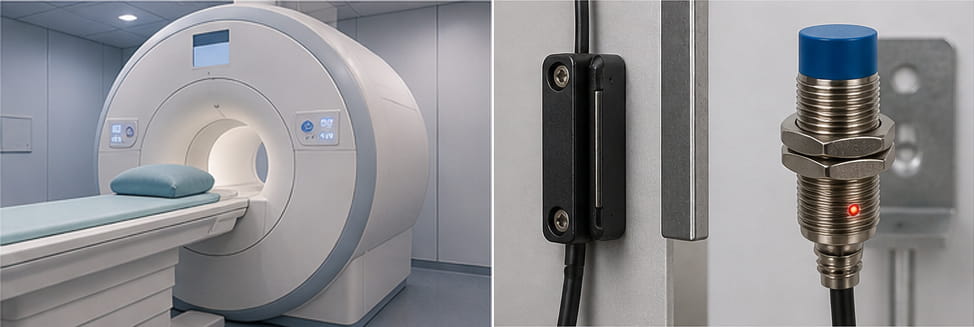
Medical Devices
- MRI machines (huge, powerful bar magnets)
- Magnetic therapy products
Here’s a real-world example:
A food processing plant in Nebraska installed bar magnets in their conveyor system. Result? They removed 99.7% of ferrous contaminants from their product stream. That’s the kind of ROI that pays for itself.
Bar Magnets vs. Electromagnets
Let’s clear up a common confusion.
| Feature | Bar Magnet | Electromagnet |
|---|---|---|
| Power source | None needed | Requires electric current |
| Magnetic field | Fixed | Adjustable |
| On/off control | No | Yes |
| Strength | Fixed by material | Variable with current |
| Cost | Low | Medium to high |
When to use a bar magnet: You need a simple, reliable, always-on magnetic field. No power, no controls, no maintenance.
When to use an electromagnet: You need adjustable strength or the ability to turn the magnetic field on and off.
How to Store and Handle Bar Magnets
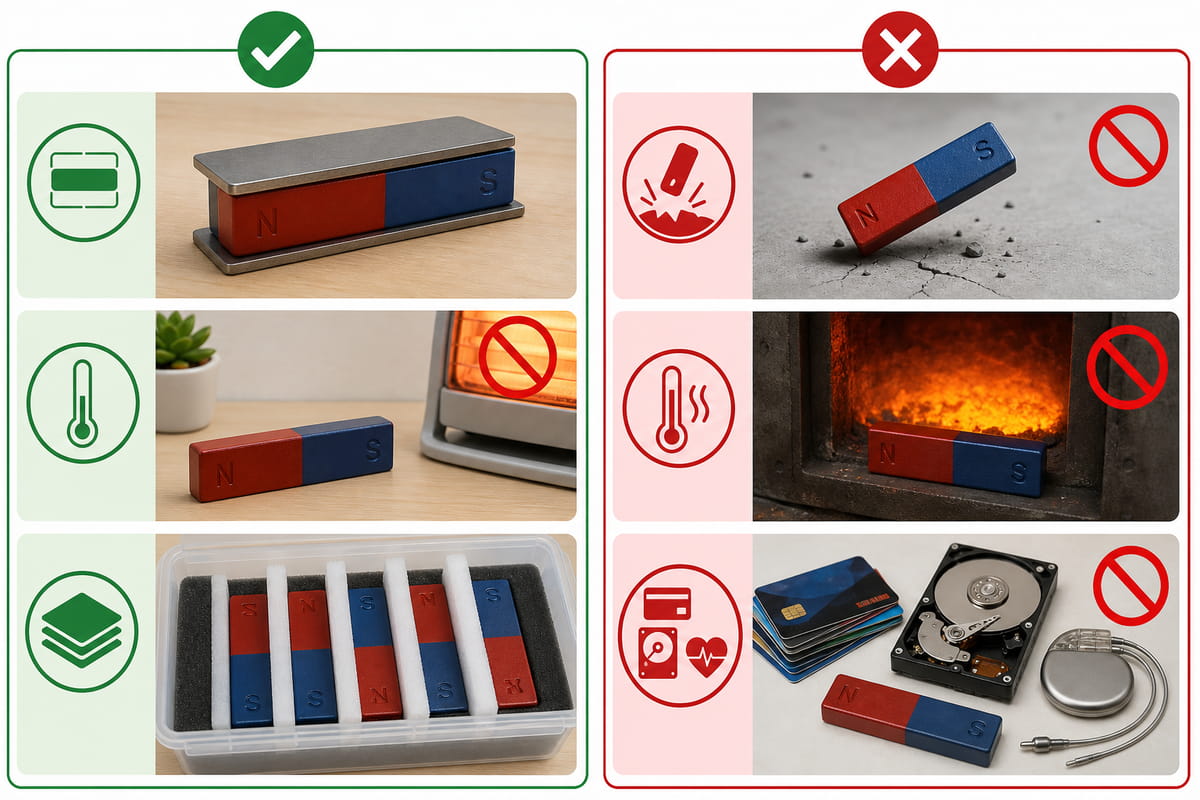
Treat your bar magnets right, and they’ll last for decades.
Do’s
- Store with keepers (soft iron plates) connecting the poles
- Keep away from heat sources
- Use padding between magnets to prevent snapping together
Don’ts
- Don’t drop them (mechanical shock weakens magnetism)
- Don’t expose to high temperatures (above the Curie point = permanent damage)
- Don’t store near credit cards, hard drives, or pacemakers
Pro Tip: For Alnico magnets, always store them with a keeper. This closes the magnetic circuit and helps preserve the magnetic field.
Magnetic Field Lines: A Quick Visual Guide
If you’ve ever done the iron filings experiment, you know what I’m talking about.
The magnetic field lines of a bar magnet:
- 1. Start at the North pole
- 2. Curve outward through space
- 3. Re-enter at the South pole
- 4. Continue through the magnet back to the North pole
These lines form closed loops. They never start or end in empty space.
The density of the lines tells you the field strength. More lines = stronger field.
Frequently Asked Questions
Can bar magnets lose their magnetism?
Yes. Common causes:
- Heat (above the material’s Curie temperature)
- Mechanical shock (dropping or hammering)
- Strong opposing magnetic fields
- Gradual decay over decades
How can I tell which end is North?
Easy. Suspend the bar magnet from a string. The end that points toward geographic North is the North pole. Or use a compass—the needle’s North end points toward the magnet’s South pole.
What happens if I break a bar magnet in half?
You get two smaller bar magnets. Each piece has its own North and South pole. No monopoles. This holds true no matter how many times you cut it.
How strong is a typical bar magnet?
Depends on the material and size:
- Small ferrite/Alnico bar: 5–100 mT at the pole surface
- Small neodymium bar: 200–1,000 mT (0.2–1 Tesla)
- Industrial bars: Can exceed 1 Tesla
Can I make a bar magnet at home?
You can magnetize a ferromagnetic bar using:
- Stroke method: Rub a strong magnet along the bar in one direction repeatedly
- Electric coil: Place the bar inside a solenoid and pass DC current through it
Both methods align the domains. Just don’t expect industrial-grade performance from a DIY job.
The Bottom Line
Bar magnet is a simple, powerful, permanent magnet with two poles and a predictable magnetic field. From classrooms to factories, from compasses to MRI machines, bar magnets are essential tools in science and industry.
Here’s what I want you to take away:
- Bar magnets are permanent magnets—no power required
- They have North and South poles (always)
- The magnetic field is strongest at the poles
- They’re used in education, industry, medicine, and everyday life
- Proper storage ensures they last
Whether you’re a student learning the basics or a professional sourcing magnets for a project, understanding what is a bar magnet gives you a solid foundation.
Now go out there and put that knowledge to work.