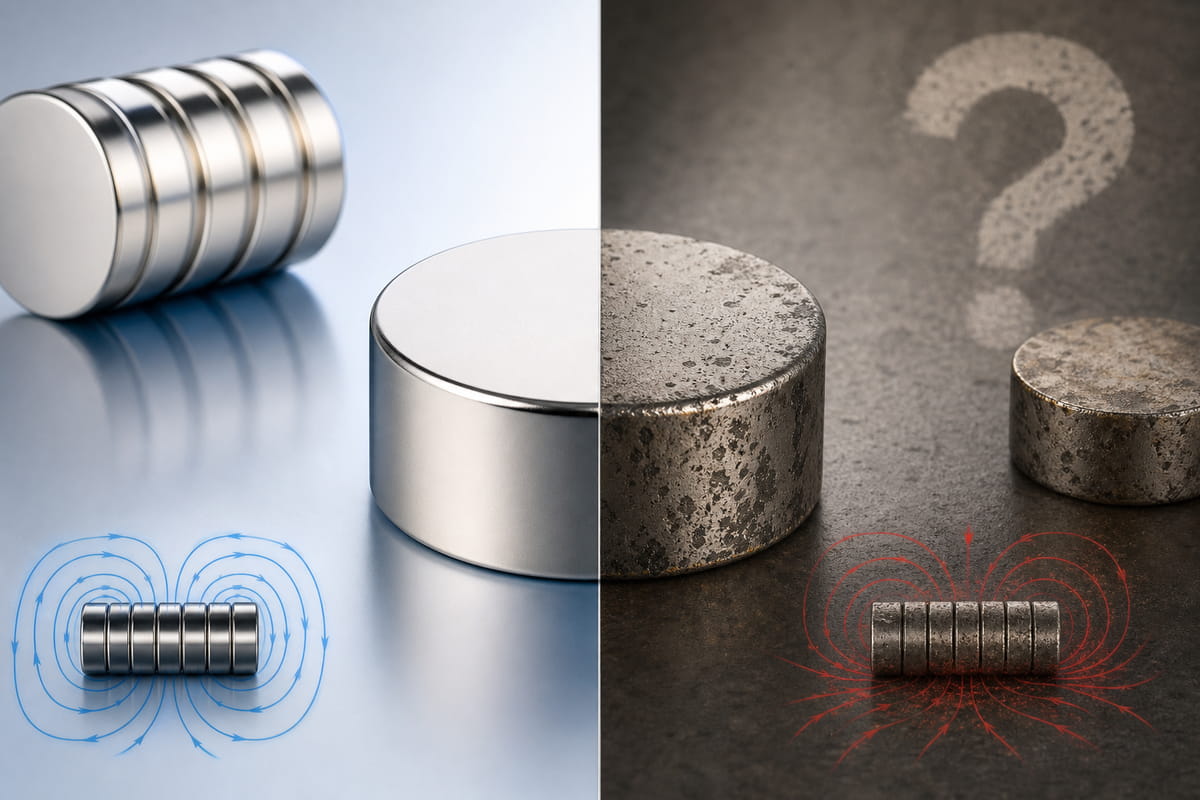
An N55 magnet is a neodymium permanent magnet with a maximum energy product of about 55 MGOe, making it the strongest commercially available grade. It is about 5–6% stronger than N52, which can matter when you need maximum force in the smallest possible space.
In this article, as a professional custom N55 magnets manufacturer, I will share everything about it.
What Is an N55 Magnet?
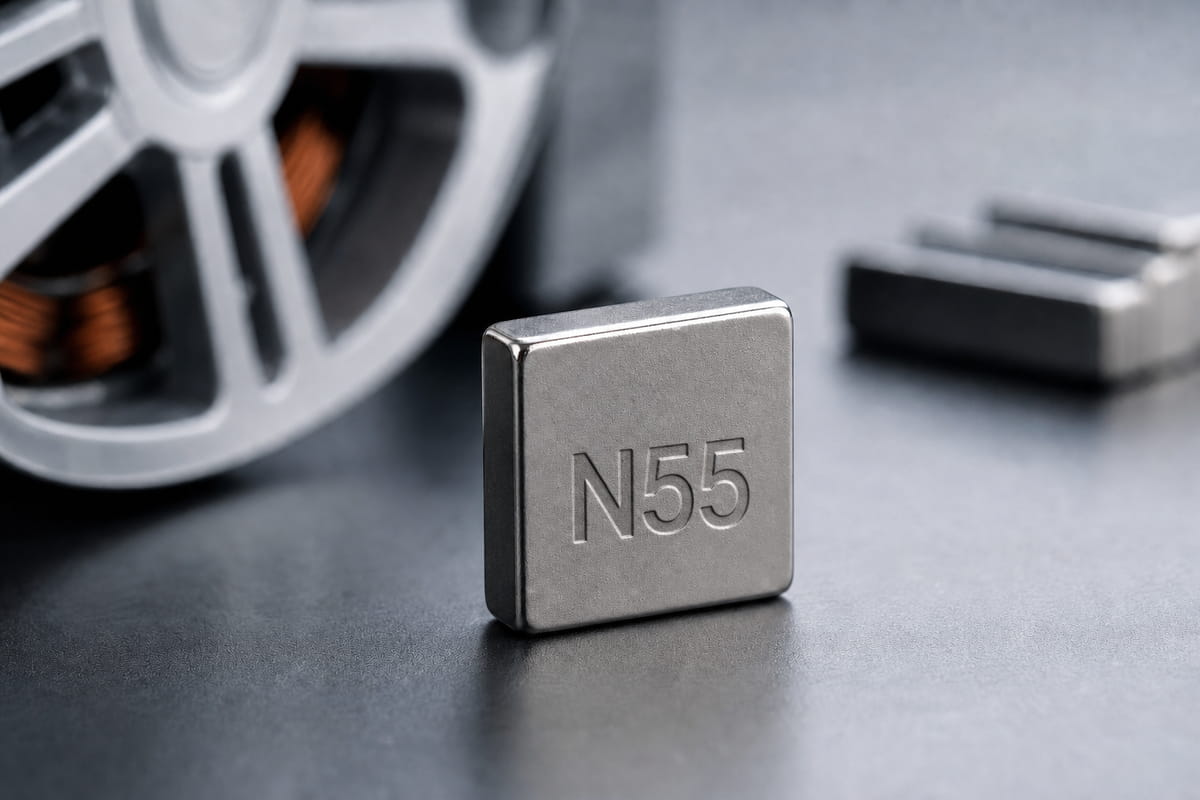
An N55 magnet is a neodymium (rare-earth) permanent magnet with a maximum energy product of roughly 55 MGOe (Mega Gauss Oersteds). The “N” stands for neodymium, and the “55” tells you how powerful it is.
Think of it like this:
- N35 = entry-level strength
- N42 = solid middle ground
- N52 = very strong
- N55 = the king
N55 magnets are about 5–6% stronger than N52 magnets. That might not sound like a huge jump. But when you’re working with limited space, that extra 5–6% can make or break your project.
How Do N55 Magnets Compare to Other Grades?
Here’s a quick comparison table I put together:
| Grade | Max Energy Product (BHmax) | Relative Strength | Best For |
|---|---|---|---|
| N35 | ~35 MGOe | Good | Basic holding, crafts |
| N42 | ~42 MGOe | Better | General industrial use |
| N48 | ~48 MGOe | Strong | Precision tools |
| N50 | ~50 MGOe | Very Strong | Heavy lifting |
| N52 | ~52 MGOe | Extremely Strong | Motors, high-end applications |
| N55 | ~55 MGOe | Strongest Available | Cutting-edge engineering |
Pro Tip: If you think you need N55, you probably don’t. Most applications work perfectly fine with N52. But when you truly need maximum strength in the smallest possible package, N55 is the answer.
The Technical Specs of N55 Magnets
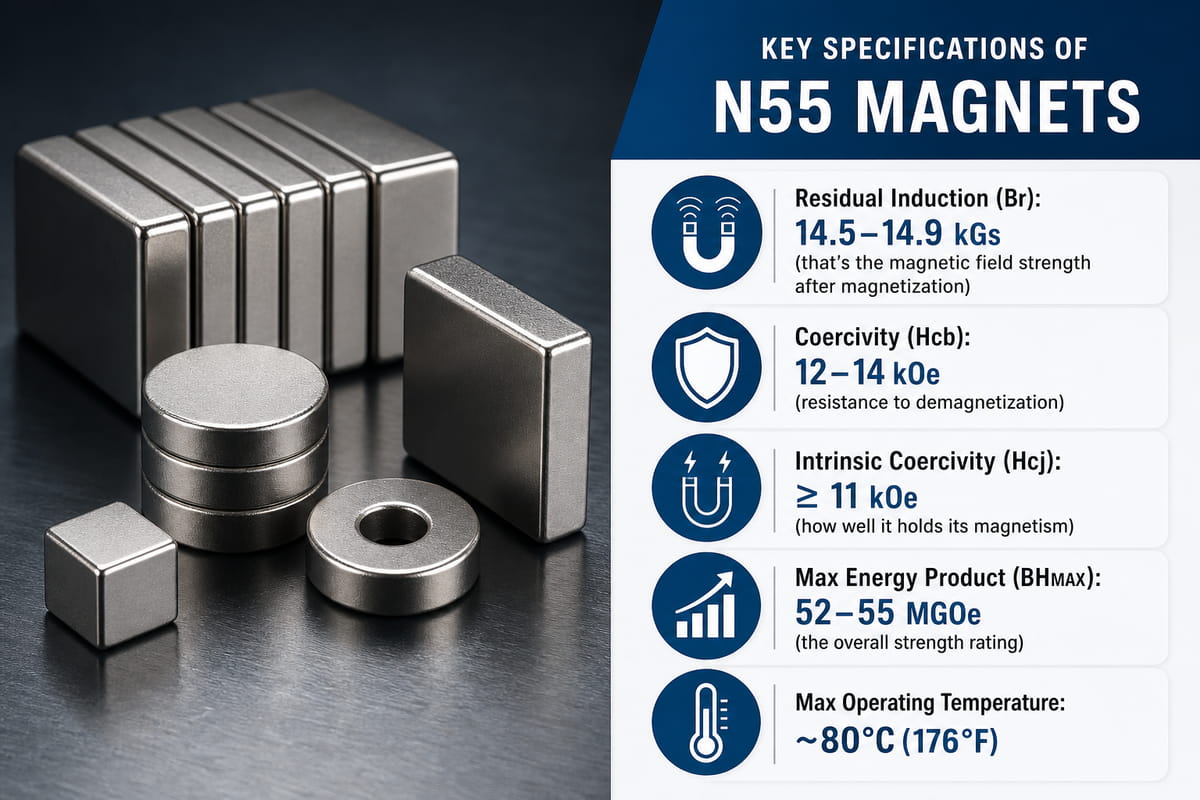
Look, I’m not going to get too technical here. But if you’re into the numbers, here’s what you need to know:
Key Specifications of N55 Magnets:
- Residual Induction (Br): 14.5–14.9 kGs (that’s the magnetic field strength after magnetization)
- Coercivity (Hcb): 12–14 kOe (resistance to demagnetization)
- Intrinsic Coercivity (Hcj): ≥ 11 kOe (how well it holds its magnetism)
- Max Energy Product (BHmax): 52–55 MGOe (the overall strength rating)
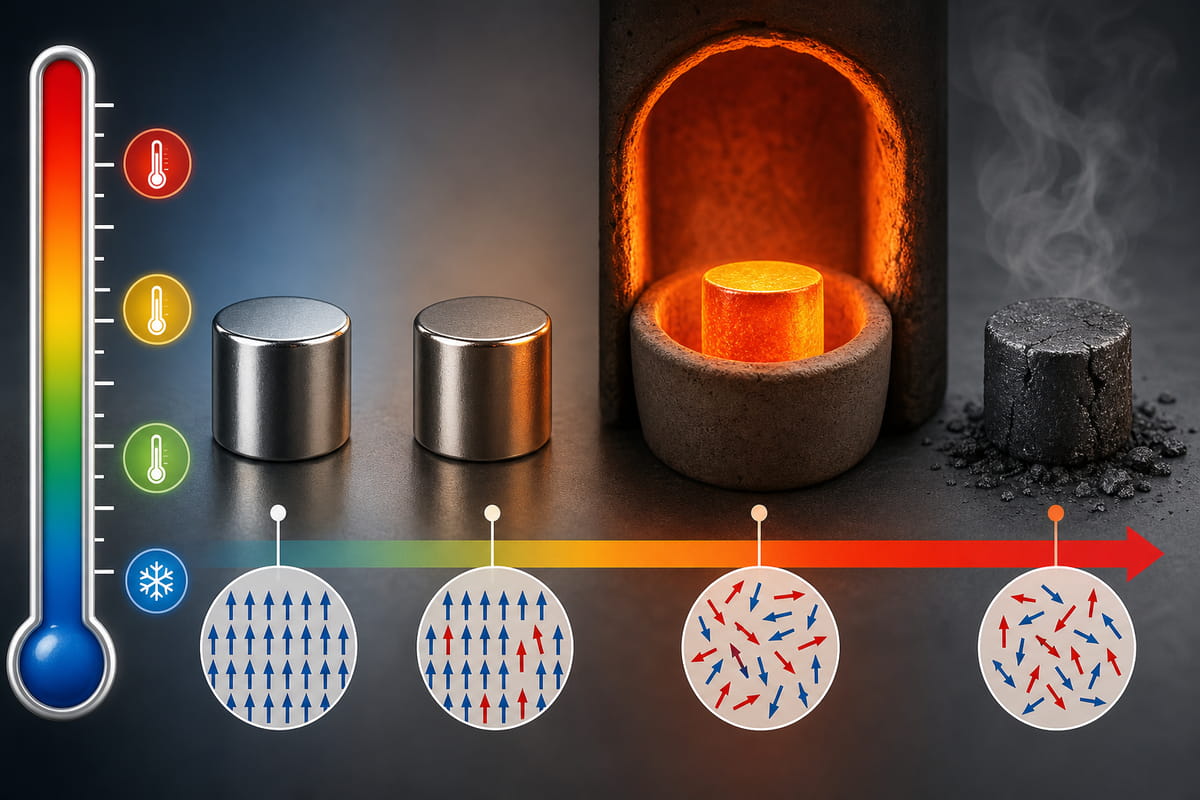
- Max Operating Temperature: ~80°C (176°F)
Now, here’s something interesting.
The theoretical limit for neodymium magnets is about 64 MGOe. N52 already hits about 90% of that limit. So N55 is pushing right up against what’s physically possible with this material.
Pretty wild, right?
Why Would You Need an N55 Magnet?
Great question.
N55 magnets aren’t for everyone. They’re expensive. They’re harder to manufacture. And they have some limitations (more on that in a minute).
But for certain applications, they’re absolutely essential.
1. Miniaturization
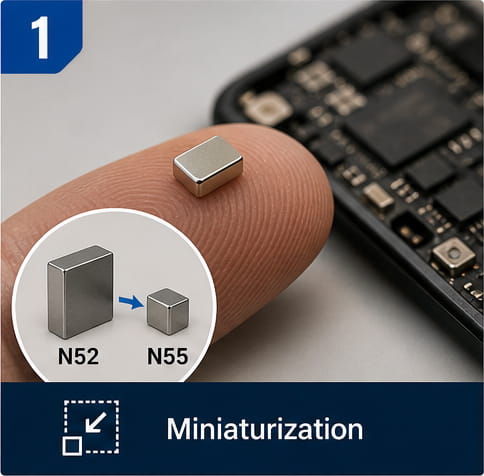
This is the big one.
Let’s say you’re designing a product that needs a strong magnetic field. But you only have a tiny space to work with. An N55 magnet lets you get the same holding force as a larger N52 magnet—in a smaller package.
That’s called the miniaturization process, and it’s a big deal in industries like consumer electronics and medical devices.
2. Electric Vehicles and Motors
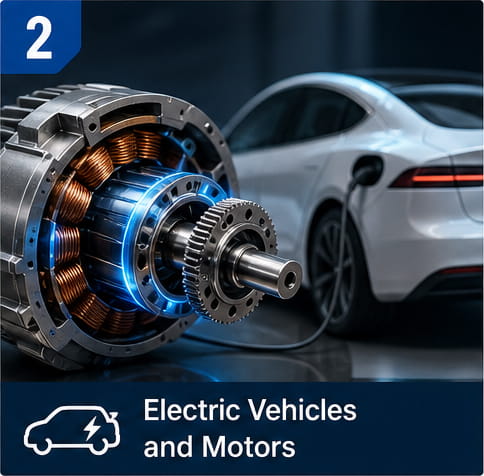
High-performance motors need the strongest magnets possible. N55 magnets help EV manufacturers squeeze more torque and efficiency out of smaller motor designs. That translates to better range and performance.
3. Sensors and Precision Instruments

When you need accurate readings from a magnetic sensor, a stronger magnetic field means better signal-to-noise ratio. N55 magnets deliver that extra kick.
4. Medical Devices

From MRI machines to surgical instruments, N55 magnets provide the reliability and precision that medical applications demand.
5. High-End Hobby Projects

Look, I get it. Sometimes you just want the strongest magnet possible for your wargaming models or science experiments. And N55 delivers.
The Temperature Problem (Important!)
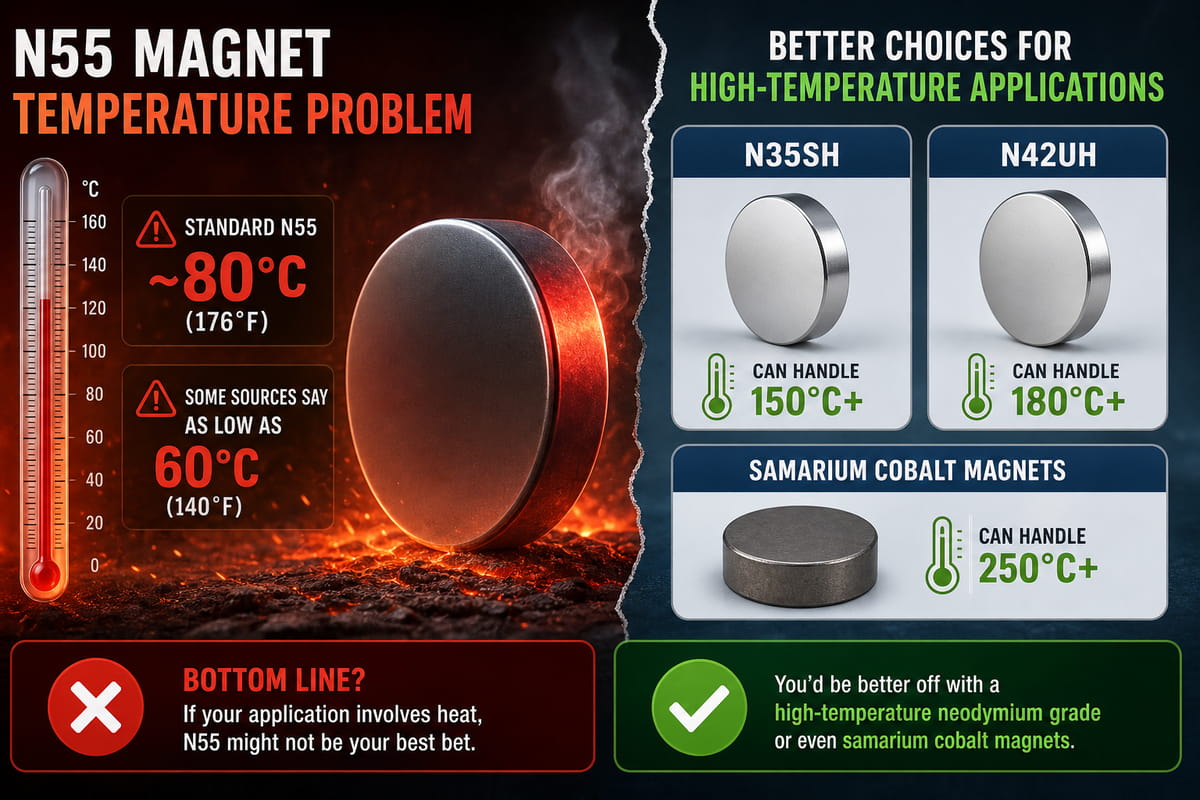
Here’s the thing about N55 magnets that nobody talks about enough.
To achieve that incredible strength, manufacturers have to make some trade-offs. Specifically, they don’t use as many heavy rare-earth elements (like dysprosium) in the composition. Those elements help with heat resistance.
The result? N55 magnets have a lower maximum operating temperature than some other grades.
- Standard N55: ~80°C (176°F)
- Some sources say: As low as 60°C (140°F)
Compare that to high-temperature grades (like N35SH or N42UH) that can handle 150°C or more.
Bottom line? If your application involves heat, N55 might not be your best bet. You’d be better off with a high-temperature neodymium grade or even samarium cobalt magnets.
How Are N55 Magnets Made?
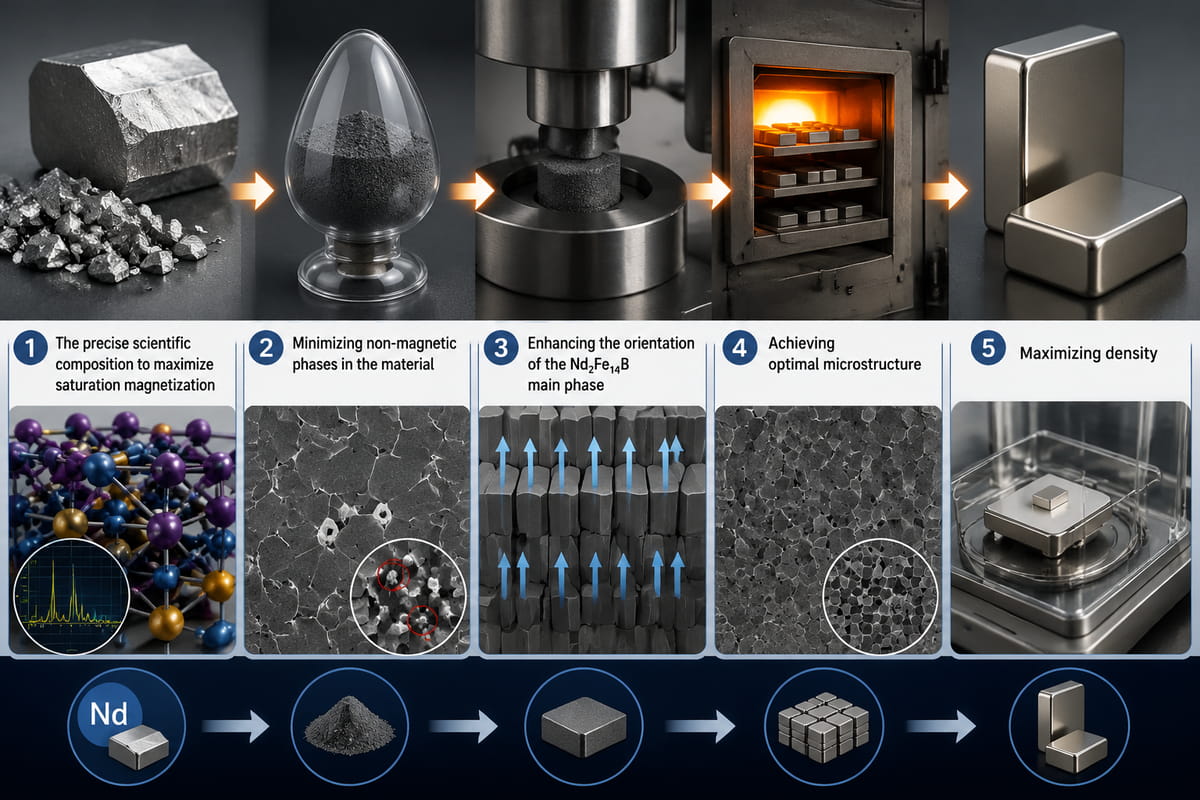
This is where things get interesting.
Most neodymium magnets are made using a praseodymium-neodymium (PrNd) alloy. But N55 magnets are different.
To achieve that higher energy product, manufacturers use pure neodymium metal instead of the alloy. That’s one of the reasons N55 magnets cost significantly more than N52.
The manufacturing process also requires:
- Precise scientific composition to maximize saturation magnetization
- Minimizing non-magnetic phases in the material
- Enhancing the orientation of the Nd2Fe14B main phase
- Achieving optimal microstructure
- Maximizing density
Pro Tip: Because of these challenges, not all “N55” magnets are actually N55. Some manufacturers cut corners. Always buy from reputable suppliers who can provide test data and certifications.
Handling Safety of N55 Magnets

Alright, I need to get serious for a minute.
N55 magnets are dangerous. I’m not exaggerating.
Here’s what can happen if you’re careless:
- Pinching: Those magnets snap together with tremendous force. Fingers, skin, and even bones can get crushed.
- Shattering: Neodymium magnets are brittle. If two large N55 magnets slam together, they can chip or shatter. Flying fragments can cause eye injuries.
- Electronic damage: Keep them away from credit cards, pacemakers, hard drives, and other electronics.
- Impact injuries: Large N55 magnets can cause bone fractures if they attract unexpectedly.
Safety Tips:
- 1. Wear gloves and eye protection
- 2. Slide magnets apart instead of pulling them
- 3. Keep spacers between stored magnets
- 4. Store away from electronics and metal objects
- 5. Keep out of reach of children (these are NOT toys)
N55 Magnets Buying Guide: What to Look For
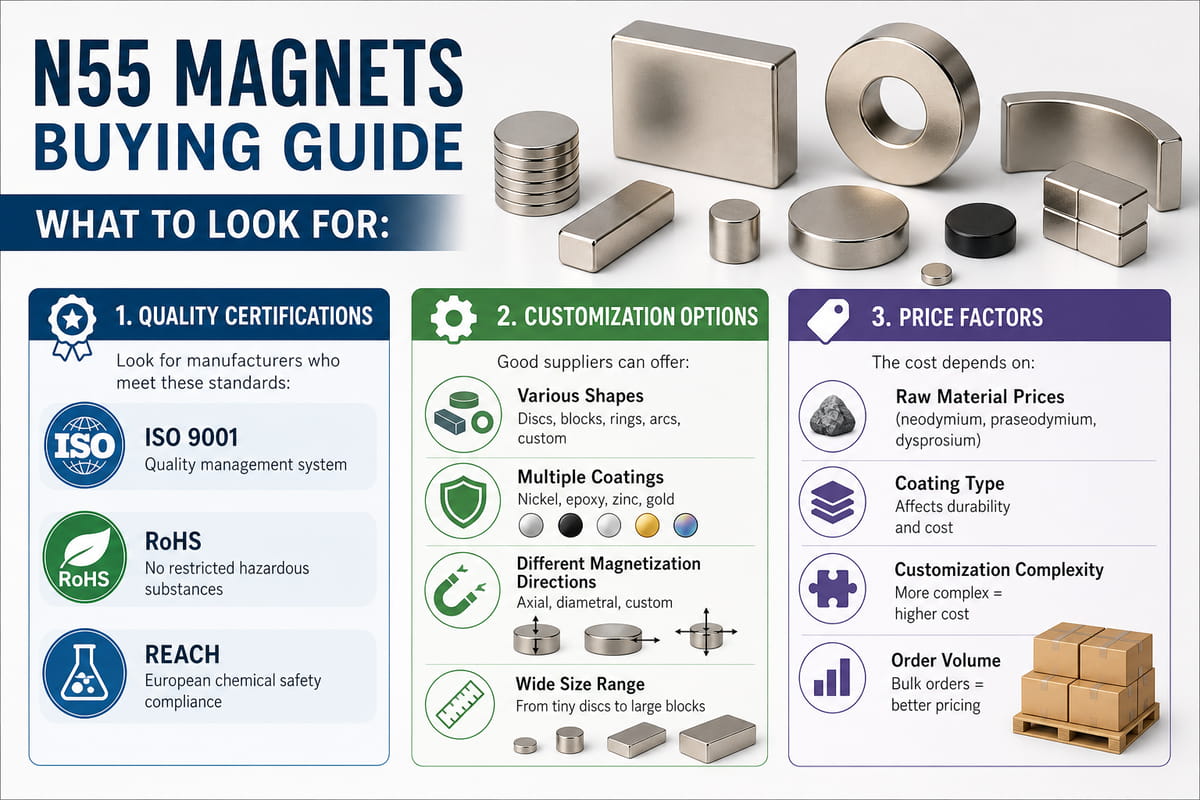
If you’ve decided you need N55 magnets, here’s what to check before buying:
Quality Certifications
Look for manufacturers who meet these standards:
- ISO 9001 – Quality management system
- RoHS – No restricted hazardous substances
- REACH – European chemical safety compliance
Customization Options
Good suppliers can offer:
- Various shapes: discs, blocks, rings, arcs, custom
- Multiple coatings: nickel, epoxy, zinc, gold
- Different magnetization directions: axial, diametral, custom
- Sizes from tiny discs to large blocks
Price Factors
The cost depends on:
- Raw material prices (neodymium, praseodymium, dysprosium)
- Coating type
- Customization complexity
- Order volume (bulk = better pricing)
Common Applications of N55 Magnets
Let me give you some concrete examples of where N55 magnets are actually used:
Electronics and Sensors
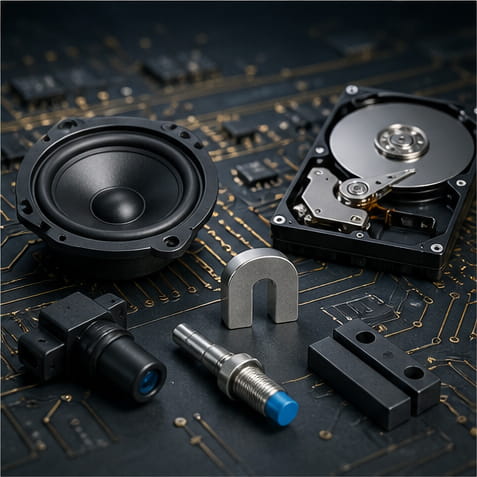
- Precision sensors that need strong, stable magnetic fields
- High-end speakers and headphones
- Hard drive actuators
- Magnetic switches
Automotive Industry

- Electric vehicle motors
- Hybrid drivetrain components
- Advanced driver-assistance systems (ADAS)
- Sensor arrays
Renewable Energy
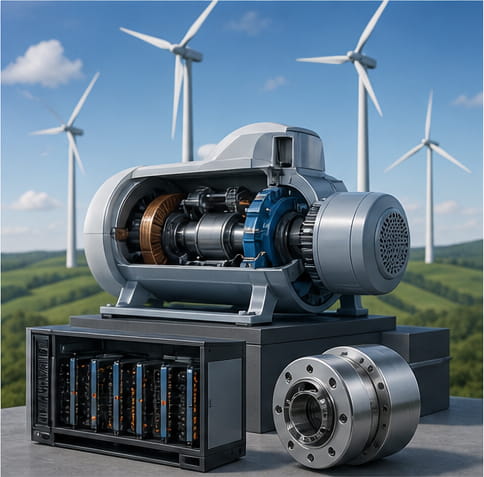
- Wind turbine generators
- Energy storage systems
- Magnetic couplings
Medical Devices

- MRI machines
- Surgical instruments
- Diagnostic equipment
- Magnetic therapy devices
Industrial

- Magnetic separators
- Lifting equipment
- High-performance motors
- Robotics
The Cost Reality of N55 Magnets

Let’s be honest. N55 magnets are expensive.
The price difference between N52 and N55 can be substantial—often 2-3x more per magnet. That’s because:
- 1. Pure neodymium metal costs more than PrNd alloy
- 2. Manufacturing tolerances are tighter
- 3. Yield rates are lower (more magnets get rejected)
- 4. Demand is lower (economies of scale don’t help as much)
My advice: Unless you absolutely need that extra 5-6% of strength, go with N52. It’s more cost-effective and easier to source.
How to Store N55 Magnets
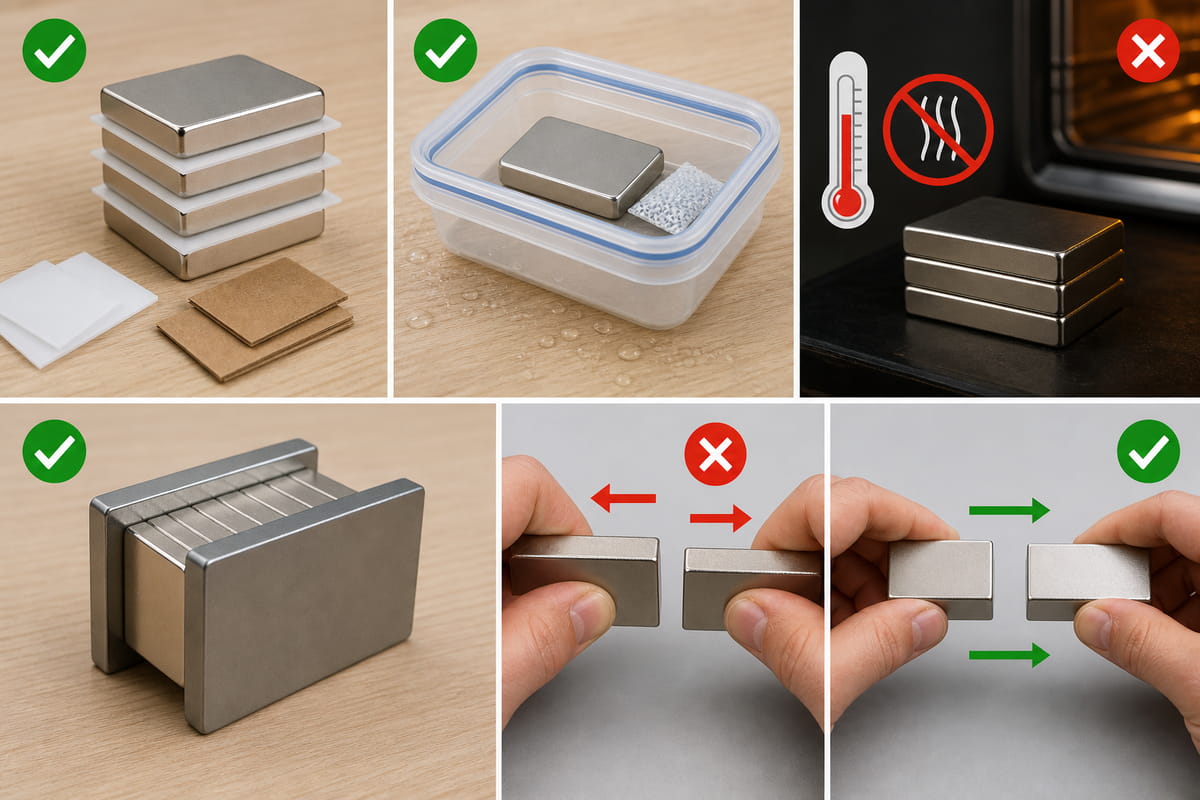
Proper storage is crucial. Here are my recommendations:
- Use spacers: Place non-metallic spacers (plastic, wood, cardboard) between stacked magnets
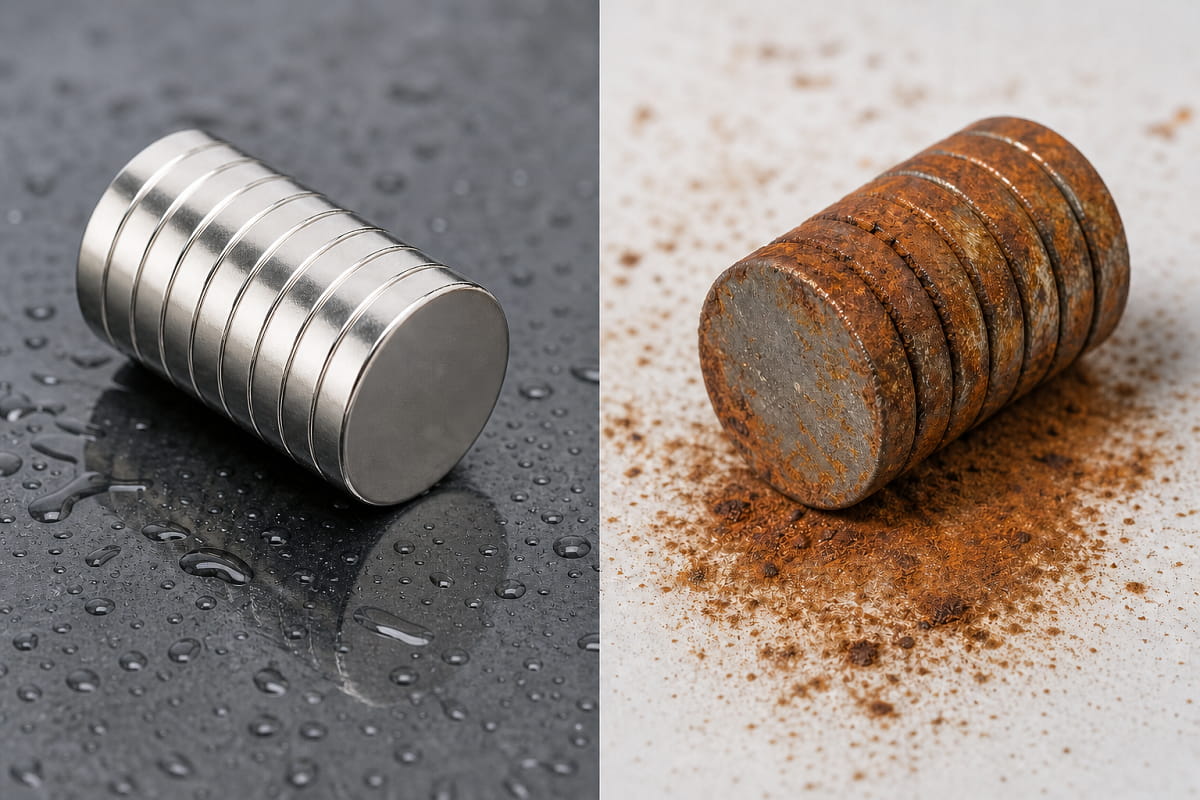
- Keep dry: Moisture damages coatings and leads to corrosion
- Avoid heat: Stay below 80°C (176°F)
- Use a keeper: For larger magnets, a steel keeper closes the magnetic circuit and reduces stray fields
- Separate carefully: Slide magnets apart, don’t pull them straight
Disposal and Recycling
N55 magnets contain rare earth materials. Don’t throw them in the trash.
What to do instead:
- Check with local metal recyclers or e-waste facilities
- Some facilities accept neodymium magnets for rare earth recovery
- Never incinerate them (heating releases harmful fumes)
- Demagnetize by heating above the Curie temperature (310°C/590°F) or using an AC degausser
Choosing the Right Supplier

If you’re sourcing N55 magnets, here’s what to look for:
- 1. Track record – How long have they been in business?
- 2. Test data – Do they provide demagnetization curves and performance data?
- 3. Certifications – ISO, RoHS, REACH compliance
- 4. Custom capabilities – Can they make the shapes and sizes you need?
- 5. Customer feedback – What do other buyers say?
The Bottom Line
So what is an n55 magnet?
It’s the strongest permanently available neodymium magnet grade you can buy. It delivers maximum magnetic strength in the smallest possible package. But it comes with trade-offs: lower temperature tolerance, higher cost, and serious handling risks.
Here’s when to use it:
- You need maximum strength in minimum space
- Temperature is controlled (under 80°C)
- Budget allows for premium pricing
- Safety precautions are in place
Here’s when to skip it:
- You need high-temperature performance
- Budget is tight
- N52 or N50 would work fine
- You’re not experienced handling strong magnets
Frequently Asked Questions
Is N55 stronger than N52?
Yes. N55 is about 5-6% stronger in terms of maximum energy product. But that small percentage difference can matter in space-constrained applications.
Can N55 magnets handle high temperatures?
Not really. Standard N55 magnets max out around 80°C (176°F). Some sources say as low as 60°C. For high-heat applications, look at high-temperature neodymium grades or samarium cobalt.
Are N55 magnets dangerous?
Absolutely. Handle with extreme care. They can cause severe pinching, shattering, and injury. Always wear protective gear.
Why are N55 magnets so expensive?
They require pure neodymium metal (rather than alloy), tighter manufacturing tolerances, and have lower yield rates. Plus, demand is relatively low compared to standard grades.
Can I use N55 magnets for everyday projects?
You can. But for most DIY projects, N52 magnets are more than enough. N55 is overkill for most hobby applications.