Quick Summary:
Store bar magnets in pairs with opposite poles facing each other to create a closed magnetic circuit. Use soft iron keepers across the ends to neutralize the poles and prevent strength loss. Add non-magnetic spacers to avoid chipping or cracking. Keep magnets in a cool, dry place away from electronics and metal shelving to maintain performance and safety.
So you just got your hands on some bar magnets. Maybe you’re using them for a science experiment. Or a DIY project. Or maybe you just like collecting cool stuff.
If you don’t store them properly, they’ll slowly lose their mojo.
And nobody wants weak magnets.
In this guide, as a professional custom bar magnets manufacturer, I’m going to show you how to store bar magnets the right way. So they stay strong for years to come.
Let’s dive in.
Why Proper Storage Matters
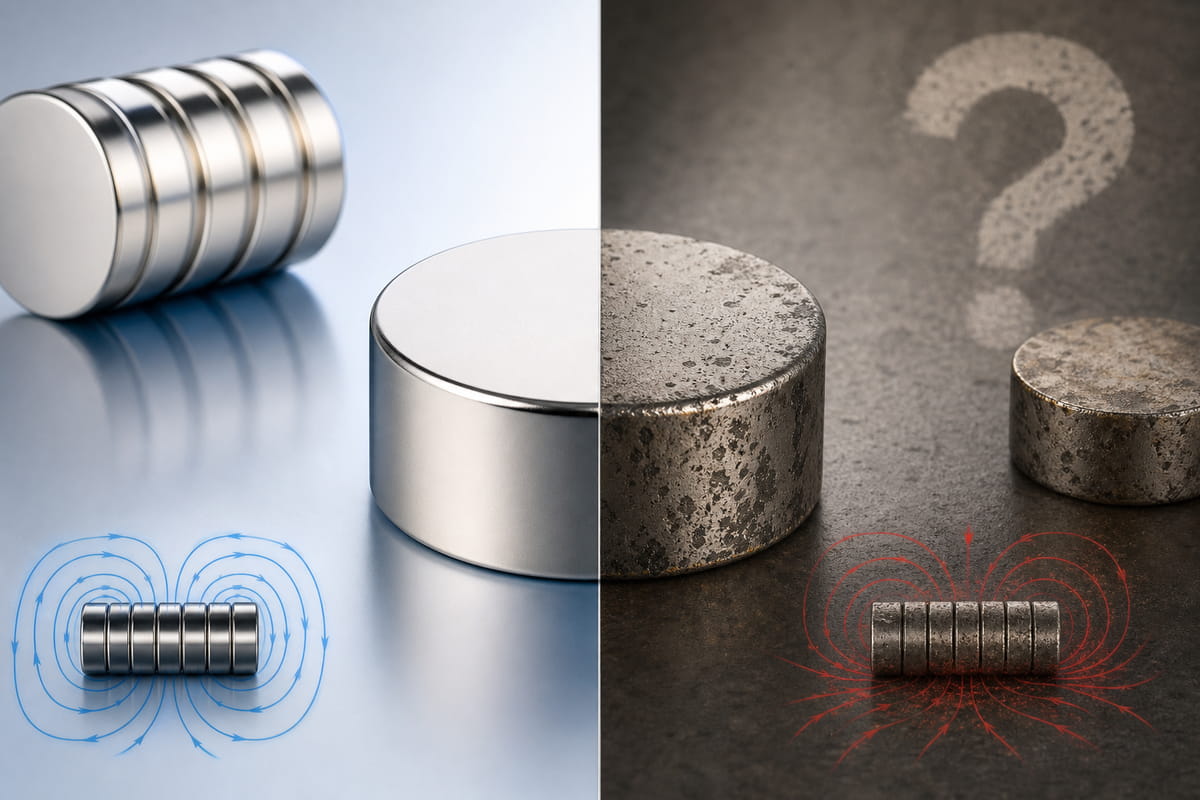
Magnets aren’t like rocks. They don’t just sit there forever.
Over time, magnets can:
- Lose their magnetic strength
- Get chipped or cracked
- Rust or corrode
- Damage nearby electronics
The good news? All of these problems are totally preventable.
Here’s the deal:
When you store bar magnets correctly, they’ll keep over 99% of their strength for decades. Seriously. I’ve seen magnets from the 1960s that still work like new.
Why? Because someone knew what they were doing.
Let’s make sure you’re one of those people.
The Anatomy of a Bar Magnet
Before we get into storage, let’s quickly cover the basics.
Every bar magnet has two poles:
- North pole
- South pole
These poles are where the magnetic field is strongest.
When you store bar magnets, you need to pay attention to which poles are facing each other.
Sound obvious? Maybe.
But you’d be surprised how many people get this wrong.
How to Store Bar Magnets
The #1 Rule: Store in Pairs
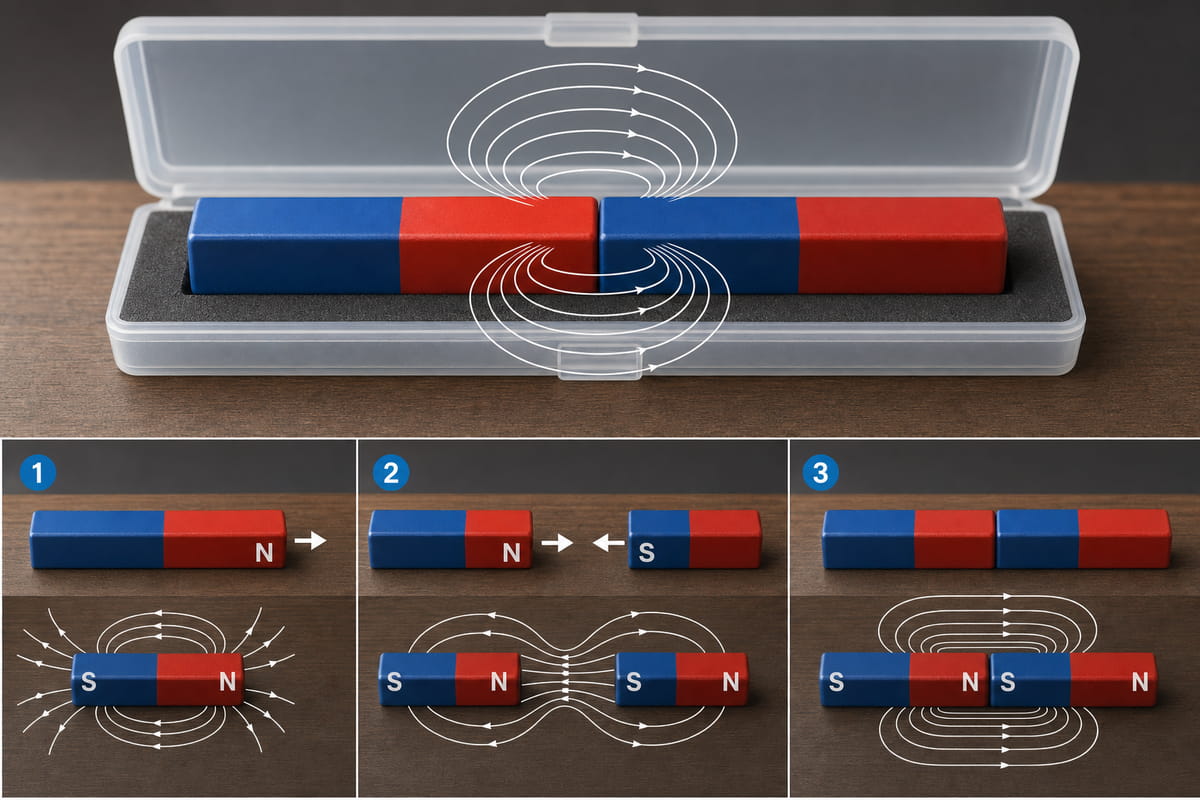
Storing bar magnets starts with one simple rule:
Always store them in pairs. Side by side. With opposite poles facing each other.
Here’s why:
When magnets are stored this way, their magnetic fields loop together. This creates a closed magnetic circuit.
A closed circuit = your magnets stay strong.
But if you leave a magnet sitting alone? Its poles are exposed. Over time, those “free poles” slowly demagnetize the magnet.
Think of it like a battery. If you leave a battery sitting on a shelf, it slowly loses its charge. Same idea with magnets.
So what does this look like in practice?
The setup:
- Place one magnet with its north pole pointing to the right
- Place the second magnet with its south pole pointing to the right
- Slide them together so they’re touching
North meets South. The magnetic field forms a nice loop. Your magnets are happy.
Use The Keeper
Now let’s talk about keepers.
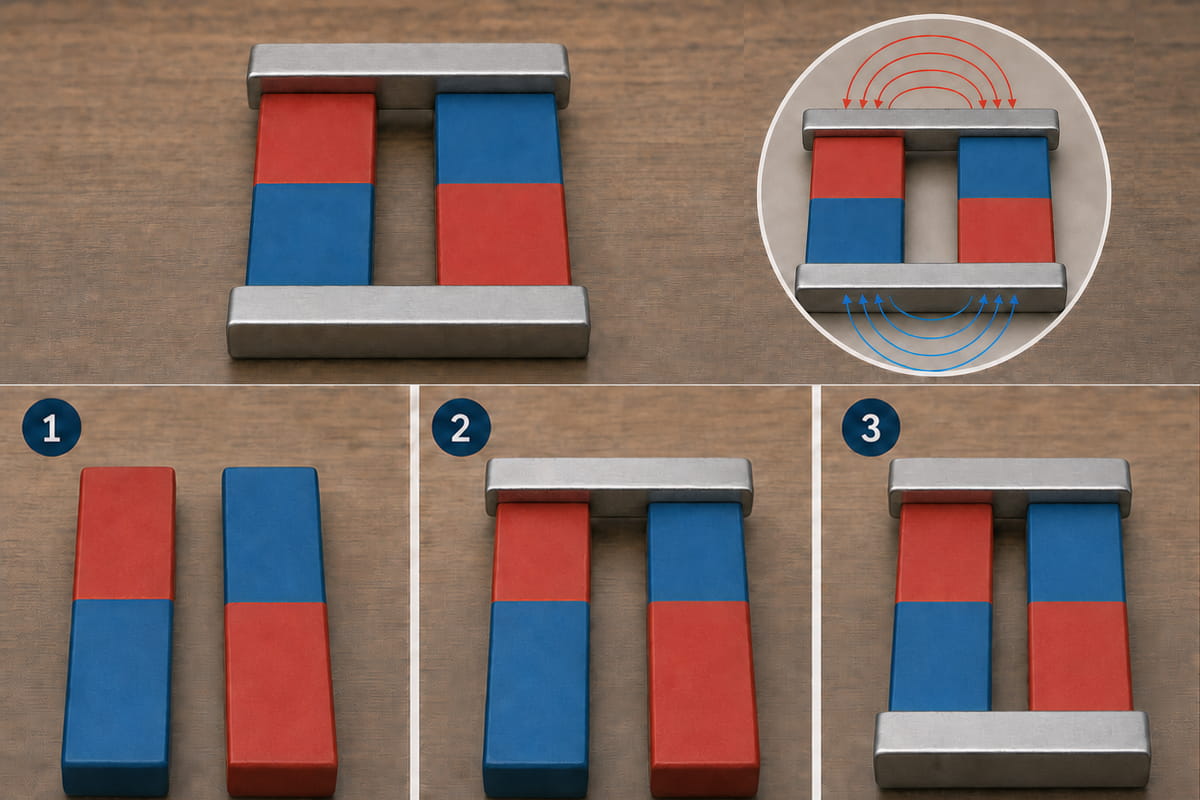
A keeper is just a small piece of soft iron or steel. You place it across the ends of your bar magnets.
Why does this work?
When you place a keeper across the poles, it becomes an induced magnet. It “completes” the magnetic circuit. This neutralizes the poles and prevents them from repelling each other over time.
Here’s what to do:
- 1. Arrange your two bar magnets side by side (opposite poles facing each other)
- 2. Place a keeper across the north ends of both magnets
- 3. Place another keeper across the south ends
That’s it. Three pieces total: two bars and two keepers.
Pro Tip: Make sure your keepers are made of soft iron or mild steel. Avoid hardened steel. Hardened steel can become permanently magnetized, which defeats the purpose.
Use Spacers to Prevent Damage
Here’s a problem nobody talks about:
Bar magnets are brittle.
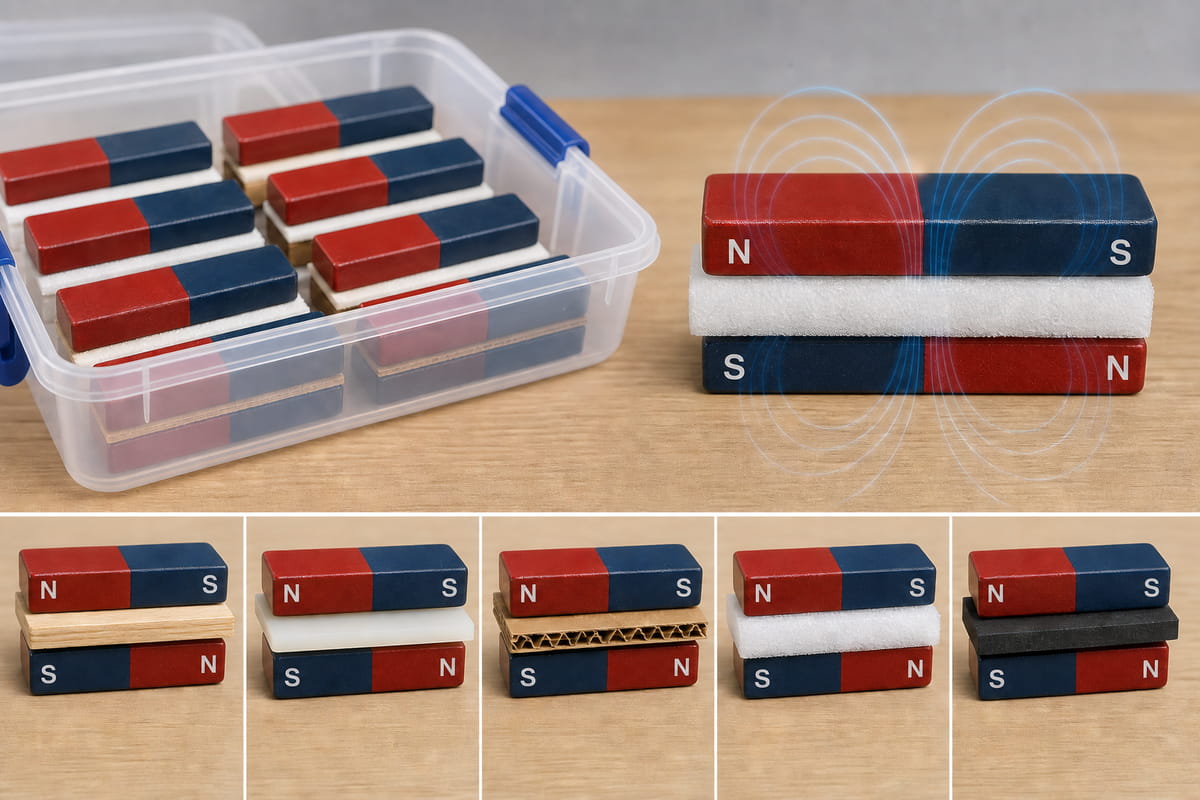
When two strong magnets snap together, they can chip or crack. And once a chip forms, the magnet’s performance drops.
The fix? Spacers.
Place a thin piece of non-magnetic material between your paired magnets. Good options include:
- Wood
- Plastic
- Cardboard
- Foam
- Rubber
This keeps the magnets from slamming into each other while still allowing their fields to connect.
For smaller magnets, a single layer of cardboard works fine. For larger magnets, go with something thicker, like 1/4 inch foam or wood.
Cool and Dry Environment
Where you store your magnets matters almost as much as how you store them.
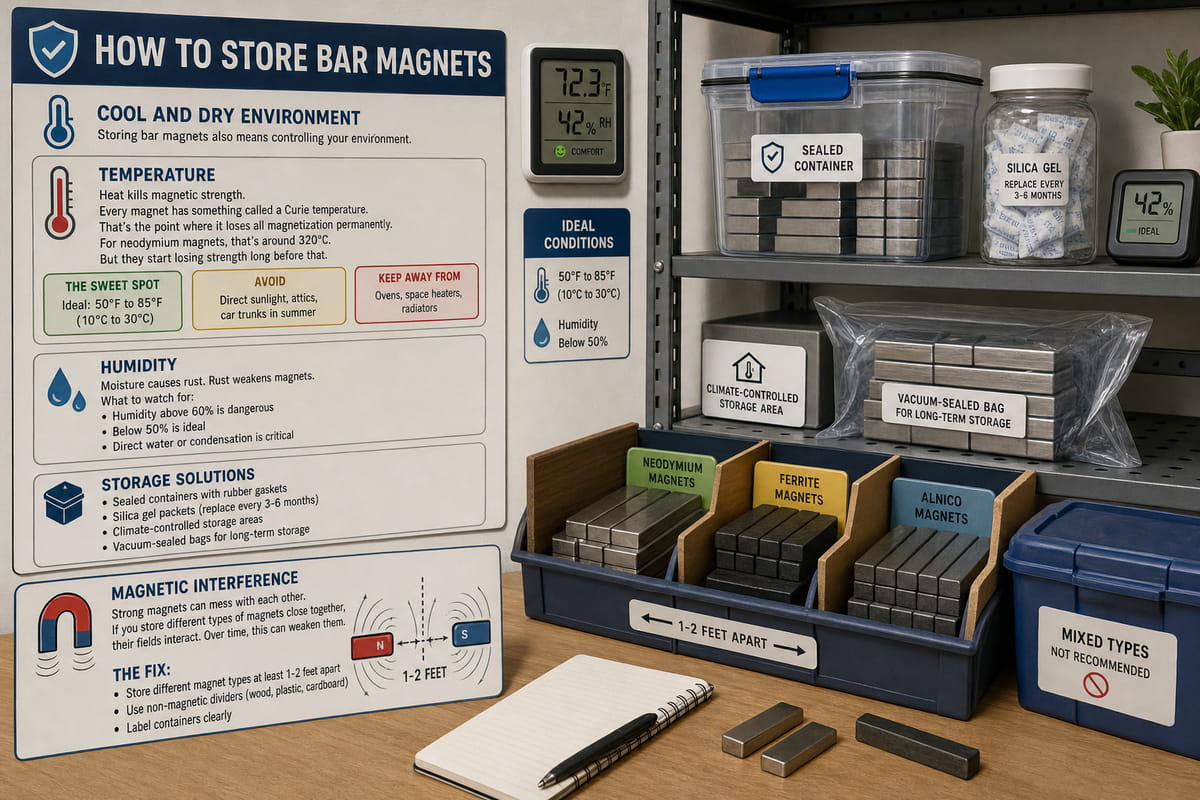
Storing bar magnets also means controlling your environment.
Temperature
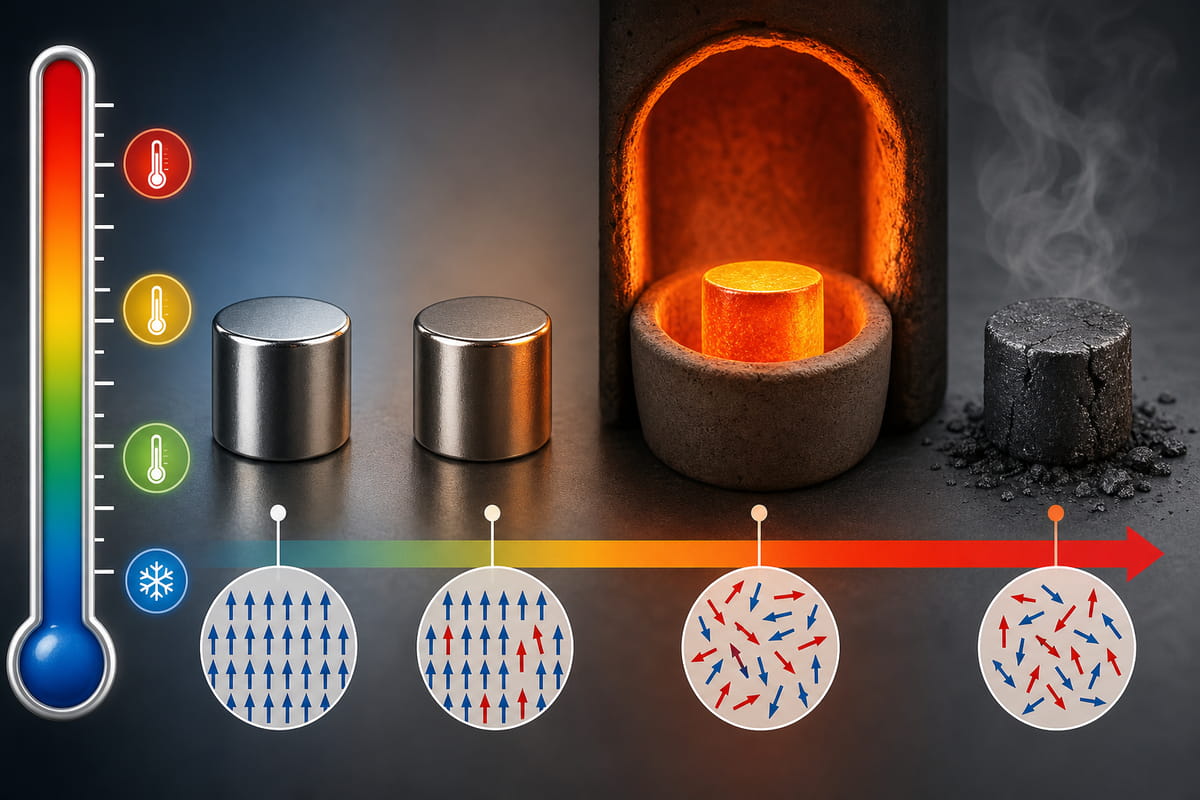
Heat kills magnetic strength. Period.
Every magnet has something called a Curie temperature. That’s the point where it loses all magnetization permanently.
For neodymium magnets, that’s around 320°C. But they start losing strength long before that.
The sweet spot:
- Ideal: 50°F to 85°F (10°C to 30°C)
- Avoid: Direct sunlight, attics, car trunks in summer
- Keep away from: Ovens, space heaters, radiators
Humidity
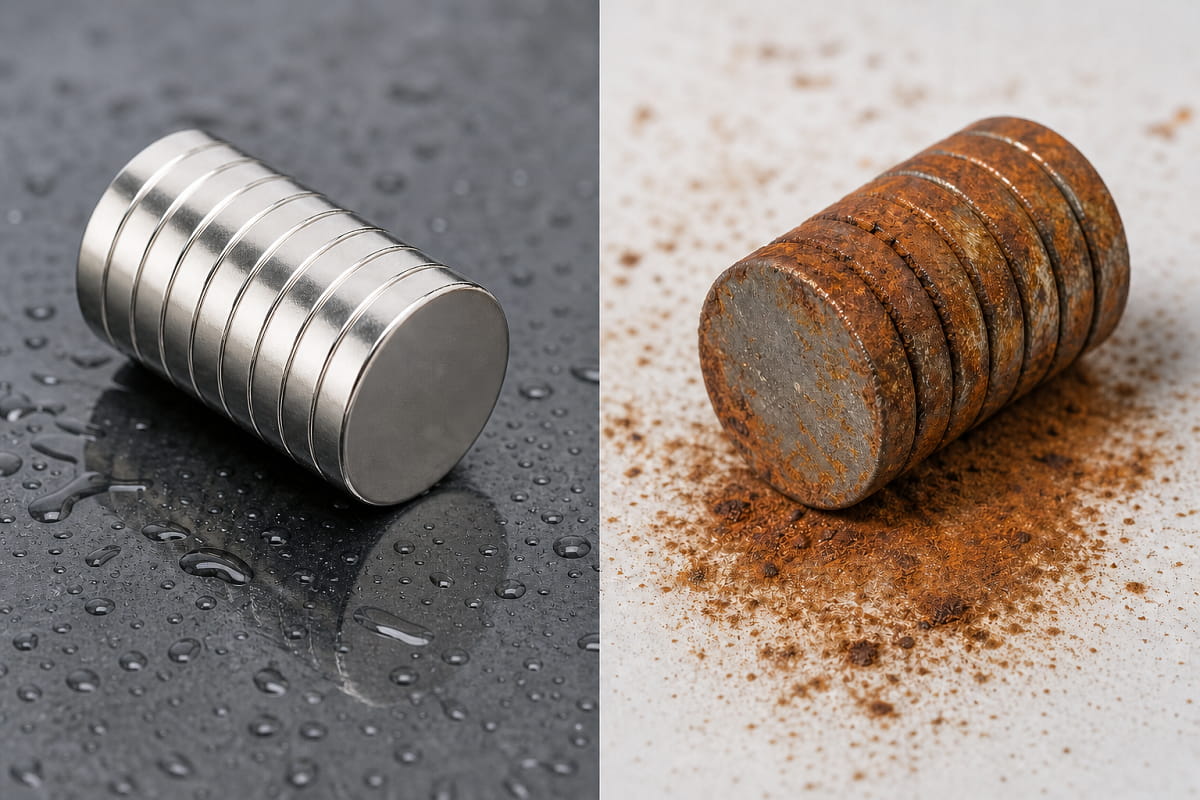
Moisture causes rust. Rust weakens magnets.
What to watch for:
- Humidity above 60% is dangerous
- Below 50% is ideal
- Direct water or condensation is critical
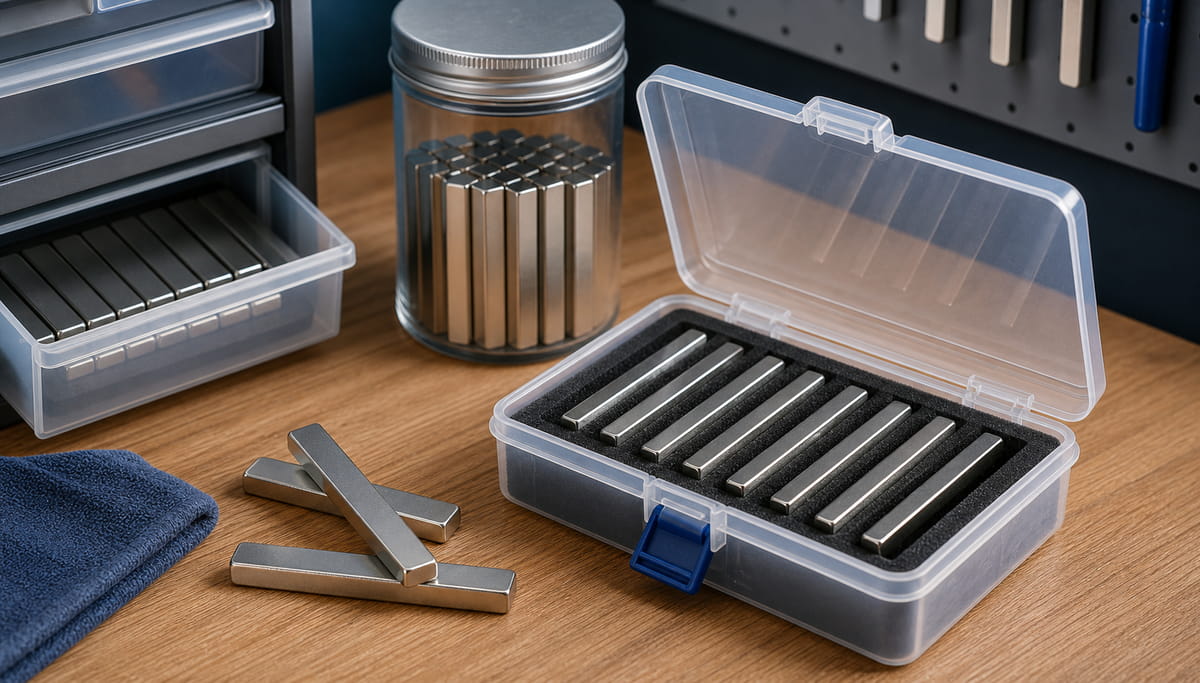
Storage solutions:
- Sealed containers with rubber gaskets
- Silica gel packets (replace every 3-6 months)
- Climate-controlled storage areas
- Vacuum-sealed bags for long-term storage
Magnetic Interference
Strong magnets can mess with each other.
If you store different types of magnets close together, their fields interact. Over time, this can weaken them.
The fix:
- Store different magnet types at least 1-2 feet apart
- Use non-magnetic dividers (wood, plastic, cardboard)
- Label containers clearly
Keep Away from Electronics
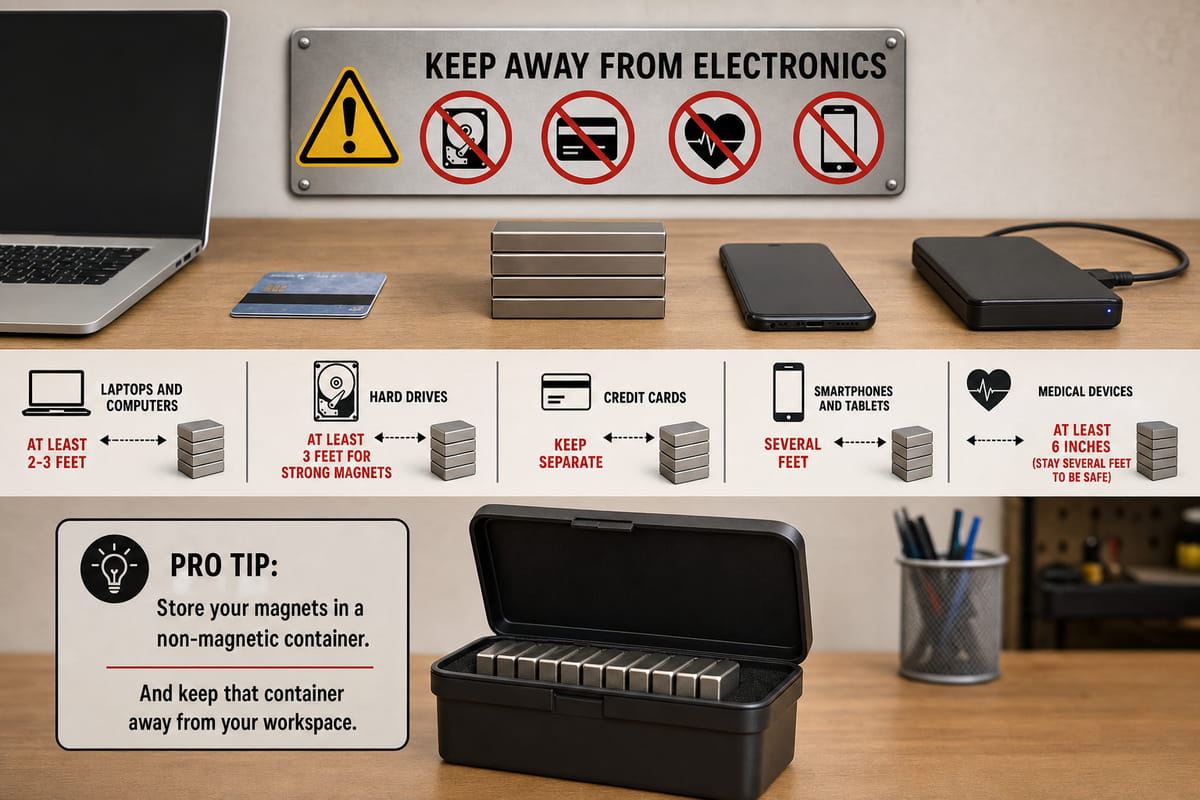
Here’s something nobody tells you:
Your magnets can destroy your electronics.
I’m serious.
A strong neodymium magnet can wipe a hard drive clean in seconds. It can permanently damage credit card strips. It can mess with pacemakers.
Safe distances:
- Laptops and computers: At least 2-3 feet
- Hard drives: At least 3 feet for strong magnets
- Credit cards: Keep separate
- Smartphones and tablets: Several feet
- Medical devices: At least 6 inches (stay several feet to be safe)
Pro Tip: Store your magnets in a non-magnetic container. And keep that container away from your workspace.
3 Common Mistakes to Avoid
Let me save you some headaches.
Here are the biggest mistakes I see people make when storing bar magnets:
Mistake #1: Storing Magnets Alone
I get it. Maybe you only have one magnet.
But storing a single bar magnet is like leaving a phone battery draining. The magnetic field slowly degrades over time.
The fix: Store it with another magnet. Or use a keeper on both ends.
Mistake #2: Stacking Same Poles Together
This one’s classic.
Someone puts two magnets together with north facing north. The magnets repel each other. Over time, this constant repulsion weakens both magnets.
The fix: Always check your poles. North meets South. Every time.
Mistake #3: Storing on Metal Shelves
Metal shelves + magnets = chaos.
When you store magnets on metal shelving, they can suddenly jump or shift. This can cause chips, cracks, or even injuries.
The fix: Use wooden or plastic containers. Or line your shelves with a non-magnetic material.
Different Magnets, Different Needs
Not all bar magnets are created equal.
Here’s how to adjust your storage depending on the type:
Neodymium Magnets
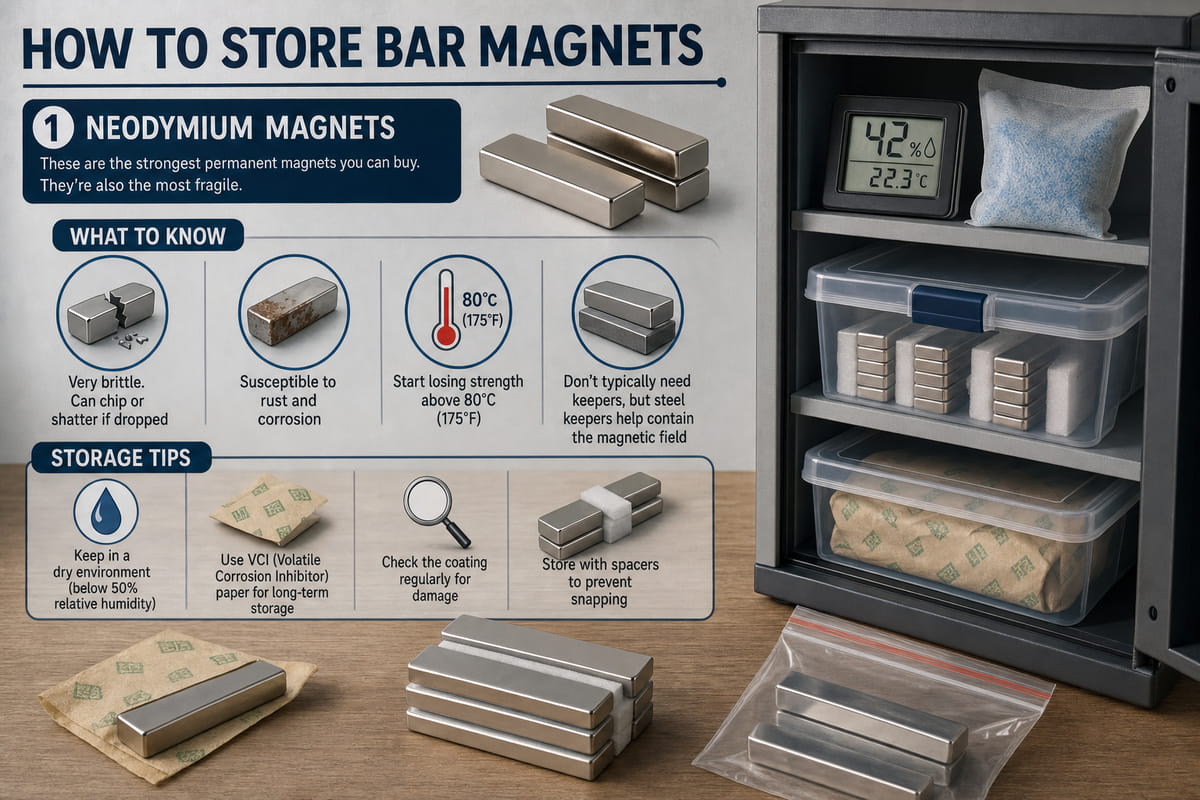
These are the strongest permanent magnets you can buy. They’re also the most fragile.
What to know:
- Very brittle. Can chip or shatter if dropped
- Susceptible to rust and corrosion
- Start losing strength above 80°C (175°F)
- Don’t typically need keepers, but steel keepers help contain the magnetic field
Storage tips:
- Keep in a dry environment (below 50% relative humidity)
- Use VCI (Volatile Corrosion Inhibitor) paper for long-term storage
- Check the coating regularly for damage
- Store with spacers to prevent snapping
Ferrite (Ceramic) Magnets
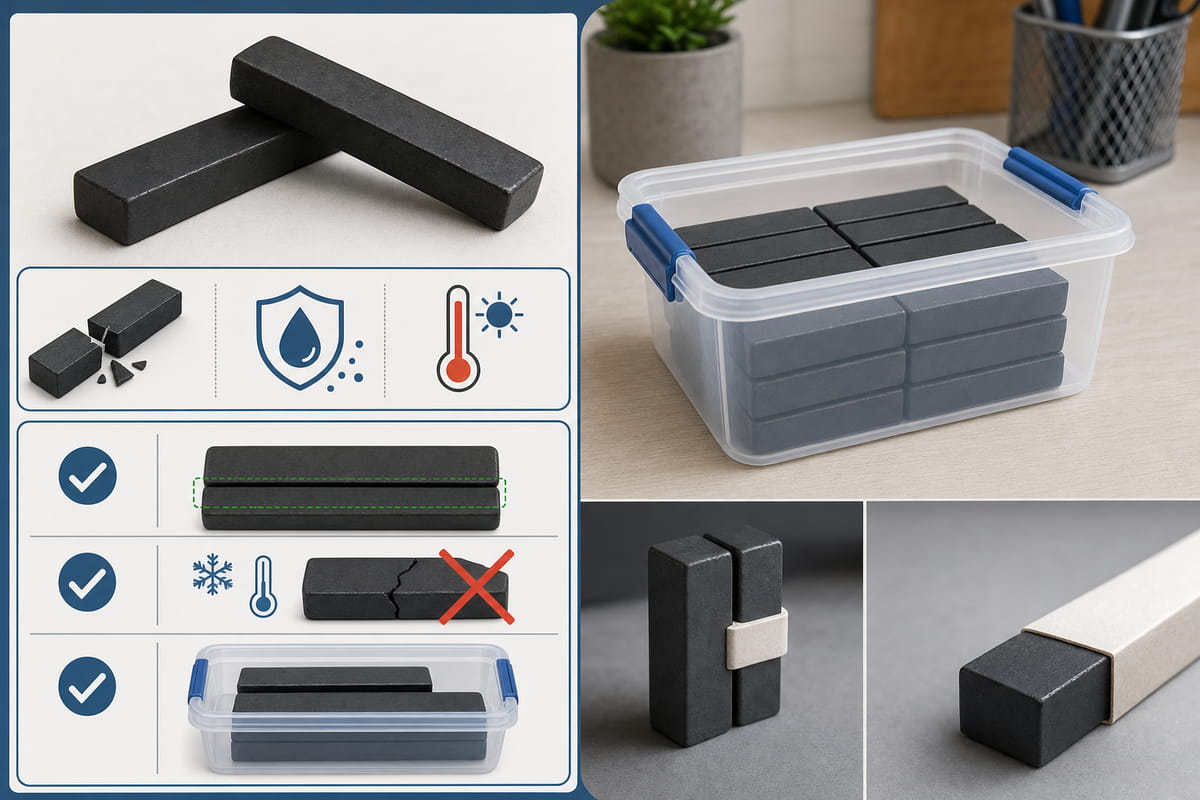
These are the black magnets you probably had in school.
What to know:
- More brittle than neodymium
- Resistant to corrosion naturally
- Can withstand higher temperatures (up to 250°C)
Storage tips:
- Still use keepers or pairs
- Avoid cold temperatures (they can crack)
- Store in closed containers to prevent dust
Alnico Magnets
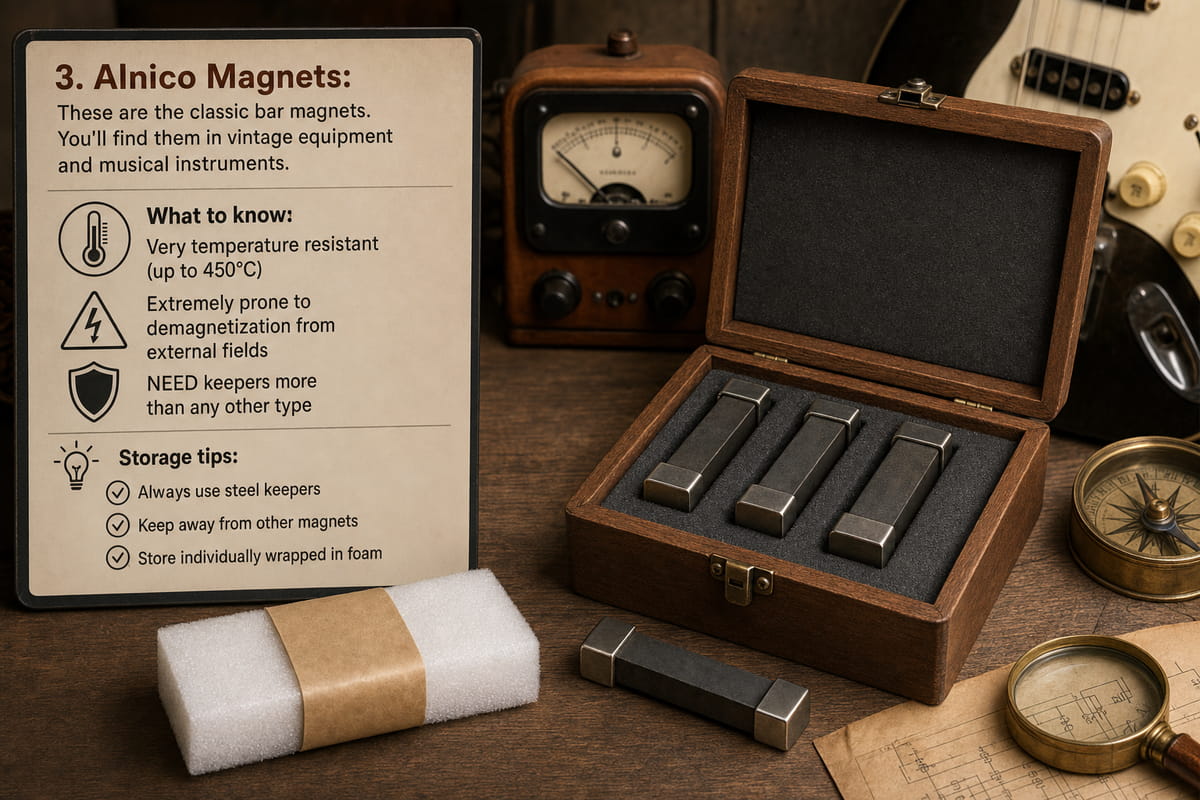
These are the classic bar magnets. You’ll find them in vintage equipment and musical instruments.
What to know:
- Very temperature resistant (up to 450°C)
- Extremely prone to demagnetization from external fields
- NEED keepers more than any other type
Storage tips:
- Always use steel keepers
- Keep away from other magnets
- Store individually wrapped in foam
Long-Term Storage Checklist
If you’re putting magnets away for months or years, follow this checklist:
- [ ] Store in pairs with opposite poles facing
- [ ] Use keepers on both ends
- [ ] Add spacers to prevent chipping
- [ ] Place in a sealed container
- [ ] Add silica gel packets
- [ ] Label container with magnet type and strength
- [ ] Store in cool, dry location
- [ ] Keep away from electronics and medical devices
- [ ] Check every 3-6 months for corrosion
The Bottom Line
Here’s what I want you to remember:
Magnets aren’t complicated. But they do need care.
If you follow these simple steps for how to store bar magnets, they’ll last for decades. Seriously. I’ve seen magnets from the 1950s that still work perfectly.
Why? Because someone knew to use keepers. To store them in pairs. To keep them cool and dry.
Now you know too.
So take care of your magnets. They’ll take care of you.